 Blaine Siding
 Semiahmoo's Climate Is Harder on Siding Than Most Homeowners Realize
Semiahmoo sits right on the water at the edge of Blaine, out on a spit that catches wind and weather straight off Semiahmoo Bay and Drayton Harbor. That waterfront position is exactly what makes the area beautiful, and it's exactly what makes the exterior of a home work harder than it would a few miles inland. Salt-laden air, wind-driven rain, and long stretches of damp, overcast weather are a daily fact of life here, not an occasional event.
Whatcom County as a whole gets a lot of moisture, but homes directly on or near the water take an extra layer of punishment. Salt air accelerates corrosion on anything metal — fasteners, flashing, trim hardware — and it breaks down finishes faster than a typical inland exposure would. Combine that with near-constant humidity and shaded, tree-lined lots common around the peninsula, and you get ideal conditions for moss, algae, and mildew to take hold on siding, roofing, and trim for a good chunk of the year.
None of this means a home in Semiahmoo can't hold up beautifully. It means the exterior materials and installation details matter more here than they do in a drier, more sheltered part of the county.
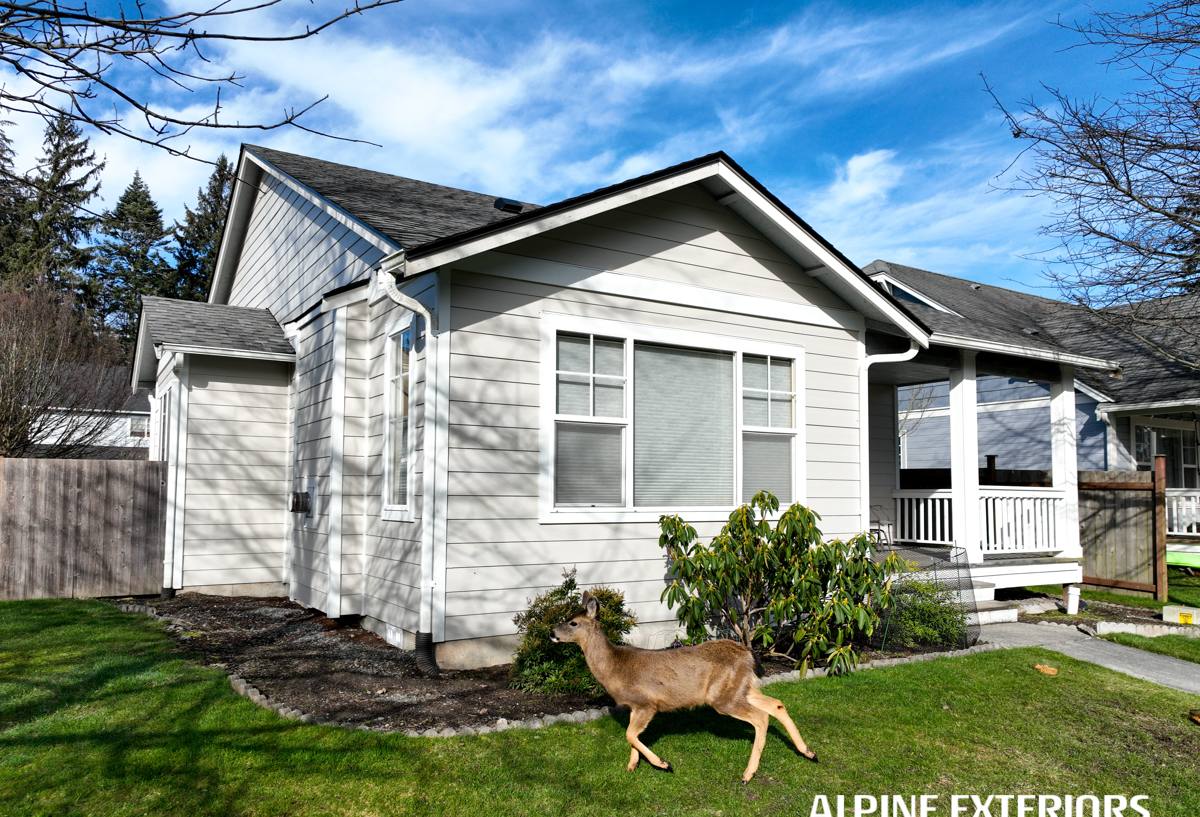
What Salt Air, Rain, and Moss Season Actually Do to a Home
Salt Air and Corrosion
Airborne salt settles on every exterior surface, including the fasteners holding siding and trim in place. Standard fasteners can corrode faster near open water, which is why material choice and fastener spec matter more here than they would fifteen miles inland. Corroded fasteners eventually mean streaking, loose boards, and repairs that could have been avoided with the right hardware from day one.
Wind-Driven Rain
Rain that comes in sideways off the water finds every gap, seam, and poorly flashed joint. Siding systems that rely on face-sealed caulk joints, rather than proper drainage and flashing details, tend to show problems first in exposures like this — sometimes years before the damage becomes visible from the outside.
Moss and Algae Season
Blaine's moss season isn't a few weeks — it's most of the year on shaded, north-facing, or tree-sheltered walls. Materials that hold moisture at the surface give moss and algae something to grip. Materials that shed water and dry quickly give them a lot less to work with.
Why We Standardized on James Hardie Fiber Cement
We install James Hardie fiber cement siding exclusively. We don't install vinyl, LP SmartSide, Cemplank, Allura, or unfinished wood siding like primed spruce or cedar. That's not a marketing position — it's a standard we settled on after years of doing exterior work in exactly this kind of coastal, wet, moss-prone climate.
Fiber cement is made from cement, sand, and cellulose fiber. It doesn't feed mold or fungus the way wood-based products can, it doesn't soften or delaminate the way some engineered wood products can when moisture gets behind them, and it doesn't warp, crack, or fade in the sun the way vinyl can over a long service life. For a home a few hundred feet from saltwater, those aren't small differences — they're the difference between an exterior that ages gracefully and one that needs attention every few years.
The HZ5 Product Line for This Climate
James Hardie engineers its siding by climate zone. The HZ5 line is built for the Pacific Northwest's wet, moderate-humidity conditions — it's formulated to resist moisture damage and hold up to the freeze-thaw swings and prolonged dampness that are normal here. That's a meaningful difference from a generic siding product with no regional engineering behind it at all.
ColorPlus Factory Finish
James Hardie's ColorPlus finish is baked on in a controlled factory environment, not applied on-site with a brush and roller. That gives you a more consistent, UV- and moisture-resistant finish than field painting typically achieves, and it comes with its own finish warranty. In a climate that batters exterior paint with rain and salt air for most of the year, a factory-cured finish is a real advantage, not a nice-to-have.
Being Honest About the Alternatives
Vinyl siding is affordable and low-maintenance in the sense that it doesn't need painting, but it can become brittle over time, isn't rigid enough to resist significant impact, and its seams and J-channels give wind-driven rain more opportunities to find a way behind the cladding. LP SmartSide is a wood-strand product with a resin binder — it performs reasonably well when installed and maintained exactly to spec, but it depends on paint-film integrity and careful edge-sealing to keep moisture out, which is a heavier ongoing maintenance burden in a climate this wet. Unfinished wood siding — cedar or primed spruce — can look beautiful, but it requires the most maintenance of all: regular refinishing, vigilant caulking, and active moss management, or it will show wear fast in a spot exposed to salt air and shade.
We're not saying these products fail everywhere. We're saying that after years of exterior work in Blaine and Whatcom County, fiber cement is what we're willing to warranty and put our name behind for waterfront and near-waterfront homes.
Comparing Siding Options for a Coastal Property
| Factor | Vinyl | LP SmartSide | Cedar / Primed Wood | James Hardie Fiber Cement |
|---|---|---|---|---|
| Salt air resistance | Moderate | Moderate, paint-dependent | Low without diligent upkeep | High |
| Moisture / rot risk | Low material rot, but seams leak | Moderate if paint film fails | High if not maintained | Low |
| Moss/algae resistance | Moderate | Moderate | Low | High |
| Repainting needed | Never, but fades/chalks | Every 7-10 years typically | Every 3-7 years typically | Factory finish, 15-year finish warranty |
| Fire resistance | Low | Moderate | Low | Non-combustible |
Every home and budget is different, and this table is a starting point for a conversation, not a universal rule. What it does show is a consistent pattern: the more exposed a property is to salt air and moisture, the more that gap in performance tends to matter.
Correct Installation Matters as Much as the Material
Even the best siding fails early if it's installed wrong, and coastal exposure has zero tolerance for shortcuts. The details we pay close attention to on Semiahmoo and other waterfront jobs include:
- Proper drainage plane and rainscreen gap behind the siding so any moisture that does get past the face can drain and dry out
- Correct fastener type, spacing, and penetration depth — under-driven or over-driven fasteners are a common failure point in high-wind, high-moisture areas
- Flashing at every window, door, and roof-to-wall transition, installed to shed water outward rather than relying on caulk alone
- Proper clearance between the bottom of the siding and grade, decks, roofs, or hardscape so water doesn't wick up into the board
- Factory-cut and factory-sealed edges wherever possible, since cut edges are where moisture intrusion tends to start
This is also where roofing, windows, and decks tie in. A roof with poor flashing at a wall intersection, a window installed without proper head flashing, or a deck ledger that traps water against the siding can undermine even a well-installed fiber cement exterior. We handle siding, roofing, windows, and decks as connected systems, because on a property exposed to this much weather, they genuinely are connected.
What This Means for Waterfront and Near-Water Homes Specifically
Properties directly on or near the water in Semiahmoo see more direct salt exposure and wind-driven rain than homes set back on higher, more sheltered ground elsewhere in Blaine. If your property is part of a planned community with its own design or architectural guidelines, that's worth factoring into material and color decisions early — we're glad to work within those requirements as part of the estimate and planning process.
Shaded, tree-lined lots common around the peninsula also mean more moss pressure on north- and west-facing walls specifically. When we look at a property here, we're paying attention not just to the siding material but to which elevations are catching the most weather, and detailing those areas accordingly.
Maintenance: What a Semiahmoo Homeowner Should Actually Watch For
Fiber cement siding is genuinely low-maintenance compared to the alternatives, but "low-maintenance" isn't "no-maintenance" anywhere on the water. A simple seasonal check goes a long way:
- Rinse siding periodically to clear accumulated salt residue, pollen, and grime, especially on ocean-facing walls
- Watch shaded and north-facing sections for early moss or algae growth and address it before it spreads
- Check caulking at trim, window, and door joints annually and re-caulk as needed — caulk is a maintenance item on any siding system
- Keep gutters clear so overflow doesn't run down the face of the siding repeatedly
- Trim back vegetation and tree cover that keeps walls shaded and damp longer than necessary
- Have any impact damage or chipped finish repaired promptly rather than leaving it exposed
Why a Local Crew Matters Here
A contractor who mostly works inland, drier parts of Whatcom County can miss the details that matter most for a waterfront exposure — the extra flashing attention, the fastener spec, the drainage detailing. We do exterior work throughout Blaine and the surrounding area, which means we've seen firsthand how salt air, wind, and moss season actually play out on homes like yours over time, not just in a spec sheet. That local, repeat experience is what shapes how carefully we detail every job here, not just the material we hang.
If you're weighing a siding, roofing, window, or deck project for a Semiahmoo property, we're happy to take a look and talk through what your home's specific exposure calls for. Reach out for a free, no-pressure estimate — there's a short form below to get started.