 Blaine Siding
 Living on Birch Point: A Climate That Doesn't Forgive Cheap Materials
Birch Point sits close enough to the water that the weather here isn't quite like inland Whatcom County. Homes get a steady dose of salt-laced air, wind-driven rain that comes in sideways off the Strait, and a gray, wet season that stretches on long enough to grow moss on anything that holds moisture. It's a beautiful place to live, but it's a hard place to be a building material. Siding, trim, and roofing on this stretch of coastline take more abuse than the same products do fifteen or twenty miles inland, and the homes show it — chalky paint, soft trim boards, streaked north walls, moss creeping up from the foundation line.
We work throughout Blaine and the surrounding shoreline communities, and Birch Point is one of the areas where we're most careful about material selection. This isn't a page about scare tactics — it's an honest look at what the local climate does to a home's exterior, and why we've standardized on one siding product instead of offering a menu of options that we know won't hold up the same way out here.
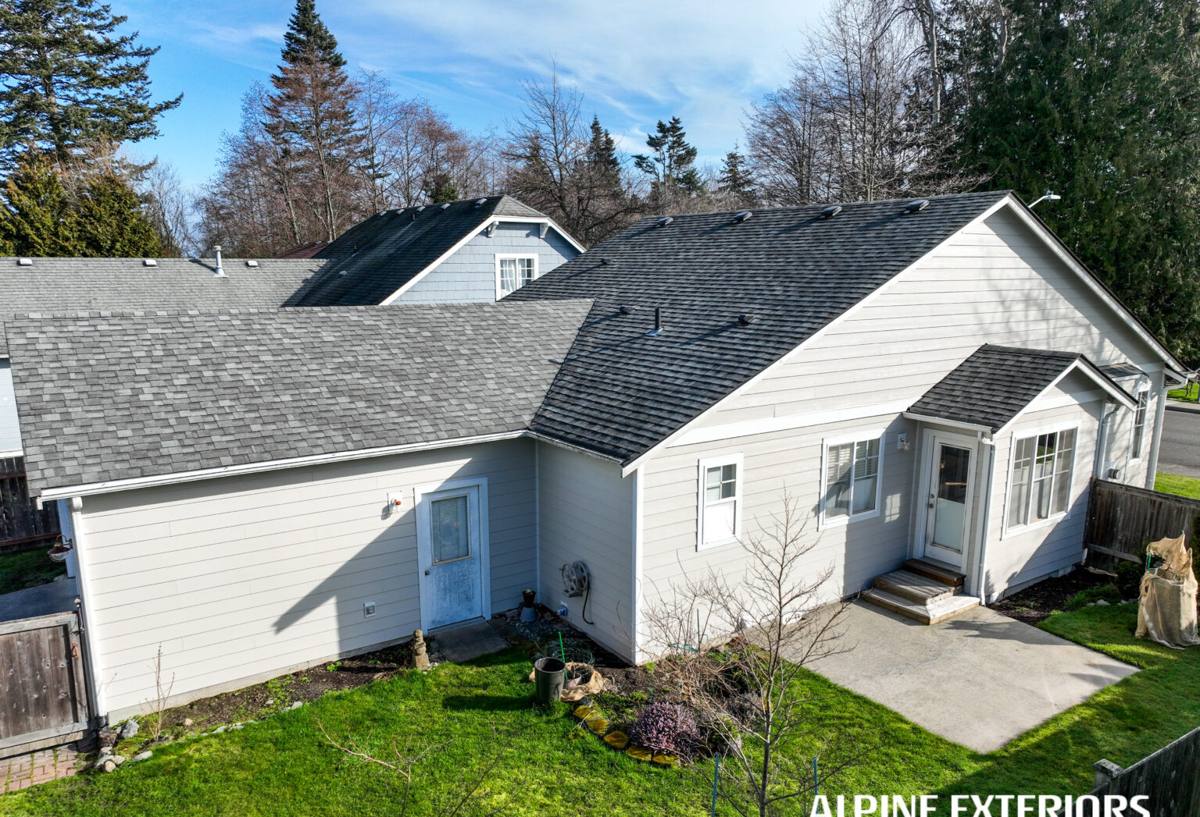
What Coastal Exposure Actually Does to a House
Salt Air
Airborne salt is corrosive and hygroscopic — it pulls moisture out of the air and holds it against whatever surface it lands on. Over years, that means faster corrosion of exposed metal fasteners, faster breakdown of paint films, and a surface that stays damp longer after a storm passes. Materials that aren't formulated for coastal exposure tend to fade, chalk, or degrade noticeably faster on a waterfront lot than the same product would three or four miles inland.
Driving Rain
Blaine sits in the path of weather systems coming off the Strait of Georgia, and homes near the water catch wind-driven rain that gets forced sideways into laps, seams, and trim joints. A siding system with poor water management — or one installed with the wrong gaps, caulking, or flashing details — will eventually let that water behind the cladding. Once moisture gets trapped against sheathing, you're looking at rot, not just cosmetic damage.
Moss and Sustained Dampness
Whatcom County's wet season runs long, and shaded, north-facing walls near mature trees or close neighboring structures can stay damp for weeks at a stretch. Moss and algae take hold on any surface that doesn't dry out, and organic materials — wood trim, some composite products — are far more vulnerable to that kind of sustained moisture than a properly finished fiber cement product.
Why We Only Install James Hardie Fiber Cement
We get asked regularly why we don't offer vinyl, LP SmartSide, Cemplank, Allura, or primed cedar and spruce siding. All of those are legitimate products used across the industry, and each has situations where it makes sense. But we install exteriors for a living in a coastal climate, and we've made a deliberate call to put one product on the homes we work on: James Hardie fiber cement.
Here's the honest reasoning, not the sales pitch:
- Vinyl is affordable and low-maintenance in mild climates, but it expands and contracts with temperature swings, can distort or warp under direct heat exposure, and its color is baked into a thin surface layer that fades over time. In a marine environment, vinyl seams and J-channels also give wind-driven rain more entry points than a lapped fiber cement system.
- LP SmartSide and other engineered wood products perform well when detailed and maintained correctly, but they're wood-based — meaning the failure mode, if moisture gets past the finish, is rot and swelling at cut edges and fastener points. That's a real risk on a site with this much sustained dampness.
- Cemplank and Allura are also fiber cement, and structurally comparable to Hardie in many respects. Our reason for standardizing on Hardie isn't that these are inferior products — it's that we've built our installation training, warranty relationships, and finish system (ColorPlus factory-applied color) around one manufacturer, and we'd rather be genuinely expert in one system than average across several.
- Primed cedar or spruce siding is a beautiful, traditional look, but raw or primed wood requires an ongoing paint and caulk maintenance cycle to stay watertight — a cycle that's harder to keep up with in a climate that's wet more months than it's dry. Wood also remains the most vulnerable of these options to rot once a finish fails.
James Hardie fiber cement is non-combustible, dimensionally stable across our temperature swings, and available in HZ5 formulations engineered specifically for climates with significant moisture exposure. The factory-applied ColorPlus finish is baked on under controlled conditions and backed by its own finish warranty, which matters a great deal in an environment that's hard on paint. It's not a magic material — installed wrong, any siding product will fail — but it gives us the best starting point for a coastal home, and a transferable warranty that means something if you sell the house down the road.
What a Siding Project Looks Like on a Birch Point Home
Every home is different, but a properly done fiber cement installation near the water follows the same basic sequence, and skipping steps here is exactly how coastal homes end up with hidden moisture damage a few years later.
- Tear-off and inspection. Old siding comes off and we inspect the sheathing underneath for existing rot or moisture damage — common on older homes near the water, especially around window and door openings.
- Weather-resistive barrier and flashing. A correctly lapped water-resistive barrier, plus flashing at every window, door, and penetration, is what actually keeps wind-driven rain out — the siding itself is the second line of defense, not the only one.
- Rainscreen or furring where called for. On exposed sites, a small air gap behind the siding lets any moisture that does get past the surface drain and dry out rather than sitting against the sheathing.
- Installation to manufacturer spec. Correct fastener type and spacing, proper gaps at butt joints, and correctly sealed penetrations — all details that matter more here than in a drier climate.
- Trim, caulking, and final finish check. The last line of defense against water intrusion at seams and transitions.
Roofing, Windows, and Decks: The Same Climate, the Same Standards
Siding doesn't work in isolation — it's one part of a building envelope that has to work together against the same salt air and rain. We also handle roofing, window replacement, and decks for homes in this area, and the same climate logic applies to all of them:
- Roofing: flashing details and underlayment matter as much as the shingle or material choice itself, since most coastal roof leaks start at penetrations and valleys, not open field.
- Windows: proper flashing integration with the new siding is critical — a window installed without tying its flashing correctly into the water-resistive barrier is a guaranteed future leak point, regardless of how good the window itself is.
- Decks: exposed to the same salt air and rain, decking and structural framing near the water benefit from materials and fasteners rated for corrosion resistance, plus drainage details that keep water from pooling against ledger boards and posts.
Coordinating siding with roofing, window, and deck work on the same project also means fewer seams between trades — one crew responsible for how the flashing at a window ties into the siding, rather than two separate companies pointing fingers at each other later.
Cost Factors for a Birch Point Exterior Project
We don't post fixed prices because every home's size, access, existing condition, and scope are different, but these are the factors that actually move the number:
| Factor | Why It Matters |
|---|---|
| Existing wall condition | Hidden rot or moisture damage found during tear-off adds repair scope before new siding can go on |
| Home size and complexity | More corners, gables, and trim detail means more labor and material cutting |
| Siding profile and accessories | Lap width, trim style, and accent details (shakes, board-and-batten sections) affect material cost |
| Site access | Waterfront lots with limited access, slopes, or landscaping to protect can add setup time |
| Scope bundling | Combining siding with window or roofing work can reduce duplicate setup and staging costs |
Choosing a Contractor for a Coastal Home
Not every siding crew is set up to handle the details that matter near the water. Before hiring anyone for exterior work in this area, it's worth checking:
- Are they licensed and insured to work in Washington, and will they show you proof without being asked twice?
- Do they have specific experience with fiber cement installation, not just siding in general?
- Can they explain their flashing and water-resistive barrier approach in plain language, not just "we'll seal it up good"?
- Do they offer a manufacturer-backed warranty, and do they explain what voids it?
- Are they familiar with the specific exposure conditions of shoreline properties, or mostly working inland?
- Will they put the scope of work, materials, and timeline in writing before starting?
Maintenance: What Coastal Living Still Requires
Fiber cement with a factory finish is low-maintenance compared to wood or vinyl, but "low-maintenance" doesn't mean "no maintenance" in this climate. A periodic rinse to clear salt residue and organic buildup, prompt attention to any caulking that starts to crack at trim joints, and keeping gutters clear so water isn't sheeting down walls all go a long way toward getting the full lifespan out of the material. None of that is heavy work — it's the kind of thing that takes an afternoon once or twice a year and prevents much bigger problems down the line.
Get a Straight Answer for Your Home
If you're dealing with fading, moss buildup, soft trim, or you're just planning ahead for a home near the water, we're happy to take a look and give you a straightforward assessment — no pressure, no inflated urgency. Reach out for a free estimate and we'll walk the exterior with you and tell you honestly what we see.