 Blaine Siding
 Why Blaine Homes Take a Harder Hit Than Most
Blaine sits at the northwest corner of Whatcom County, right where Georgia Strait, Semiahmoo Bay, and Drayton Harbor meet the Canadian border. That location is beautiful, but it's also a tough spot for exterior building materials. Homes here deal with a combination that inland Whatcom County houses don't see nearly as much: salt-laden marine air, wind-driven rain coming off the water, and a long, wet moss season that can run from October clear through April. Any one of those factors will age siding faster than average. Together, they create conditions where the wrong siding choice or a handful of installation shortcuts can turn into real structural problems within a decade instead of showing wear over thirty or forty years.
This page walks through how moisture actually gets into siding systems, what happens once it's in there, and what to look for on your own home before small issues become expensive ones.
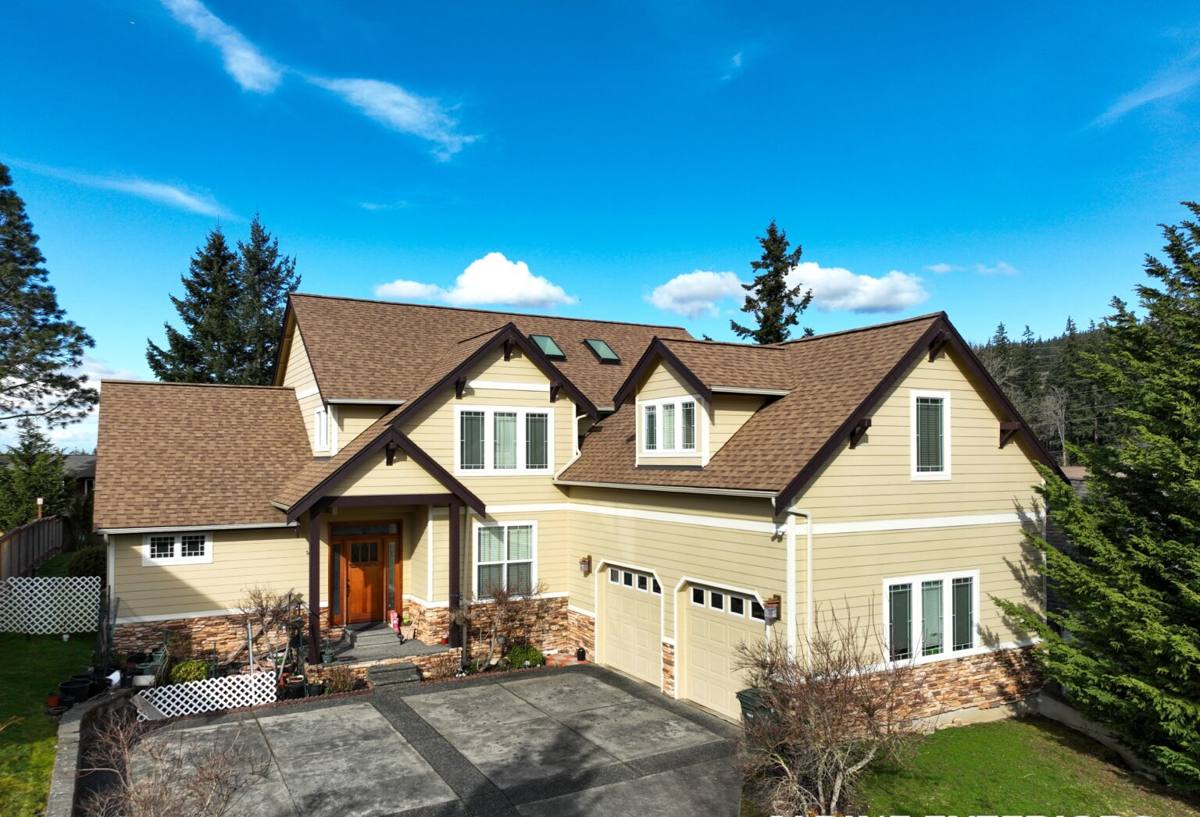
How Water Gets Behind Siding in the First Place
Most people picture siding failure as water soaking straight through the face of the boards. That does happen, but it's rarely the main culprit. The bigger problem is water getting in at the edges, seams, and penetrations, then getting trapped where it can't dry out.
Common entry points
- Butt joints between siding boards or panels that weren't properly caulked or flashed
- Nail holes and fastener penetrations, especially if siding was face-nailed instead of using proper fastening patterns
- Corners, window and door trim, and anywhere two different materials meet
- Bottom edges near grade, decks, or porch roofs where splashback and standing water are constant
- Gaps where siding was installed too tight against trim, decking, or roofing with no drainage gap
In Blaine specifically, driving rain off the Strait means water gets pushed sideways into these joints with more force than a typical rain event inland. A siding system that would hold up fine in a drier part of the state can be overwhelmed here if it wasn't detailed correctly at installation.
What Happens Once Moisture Is Trapped
Wood-based siding products — cedar, primed spruce, LP SmartSide, and similar engineered wood panels — are cellulose at their core. Cellulose absorbs water, and once it's wet, it stays wet longer than most homeowners expect, especially in a climate where the drying window between rain events is short for half the year.
The typical failure sequence
- Water enters through a joint, fastener hole, or unprotected edge
- The wood fiber core absorbs moisture and begins to swell
- Swelling stresses paint or factory coatings, creating micro-cracks that let in even more water
- Trapped moisture with no drying path feeds fungal growth — this is wood rot
- Rot softens the material, and by the time it's visible from the outside, the damage underneath is usually more extensive than it looks
This isn't a knock on any specific manufacturer's engineering — most wood-based products perform reasonably well in drier regions or when maintenance stays on schedule. The issue is that this cycle runs faster in a coastal, high-rainfall environment, and it runs faster still if caulking, paint, or sealant maintenance falls behind by even a year or two.
Moss, Algae, and the Quiet Damage They Cause
Whatcom County's long wet season doesn't just soak siding — it grows things on it. Moss and algae thrive on north-facing walls, shaded siding under tree cover, and any surface that stays damp for extended stretches, which describes a lot of exterior wall area in Blaine from fall through spring.
Moss itself doesn't eat through siding, but it does two things that accelerate damage:
- It holds moisture against the surface — a mossy patch keeps that section of wall wet long after the rest of the siding has dried
- Its root structure works into seams and coating imperfections, widening tiny cracks that then let water in directly
Homeowners often treat moss as a cosmetic annoyance and pressure wash it off once a year. That's better than ignoring it, but pressure washing wood-based or fiber cement siding incorrectly — too close, too much pressure, or angled up under laps — can force water into the exact joints you're trying to protect. Moss control matters, but so does how it's done.
Salt Air: The Factor Inland Contractors Don't Deal With
Salt air is corrosive to metal and can also accelerate the breakdown of some paint and coating systems over time. In Blaine, that means:
- Fasteners, flashing, and hardware need to be rated for coastal exposure, not just standard exterior-grade
- Factory-applied finishes hold up better long-term than field-applied paint, which tends to chalk and fade faster under salt exposure combined with UV
- Metal trim and flashing details deserve extra attention during inspection, since corrosion here can open pathways for water before the siding itself shows any sign of trouble
This is one of the practical reasons a factory-cured finish system matters more here than it might in a drier, inland climate — a coating baked on in a controlled environment simply resists this kind of chemical and UV stress better than most site-applied paint jobs.
Signs Your Siding Already Has Moisture Damage
Rot doesn't usually announce itself early. By the time it's obvious, it's often been developing for a while. Here's what to check for, especially on north- and west-facing walls, near ground level, and around window trim:
| Sign | What It Usually Means |
|---|---|
| Paint bubbling, peeling, or alligatoring | Moisture is pushing through from behind the coating |
| Soft or spongy spots when pressed | Active rot in the substrate |
| Dark staining or streaking at seams | Water is tracking through joints repeatedly |
| Visible swelling or warping of boards | Cellulose fiber has absorbed water and expanded |
| Persistent moss or algae that returns quickly after cleaning | That section stays wet longer than it should — often a drainage or grading issue |
| Musty smell near exterior walls indoors | Moisture has likely reached the wall cavity, not just the siding face |
Any one of these on its own isn't necessarily an emergency, but they're worth a professional look before the next wet season sets in.
What Actually Slows This Process Down
There's no siding material that's immune to Blaine's climate — moisture management is about the whole system, not just the product. That said, material choice does change how forgiving the system is when a joint isn't perfect or maintenance slips for a season.
Factors that make the biggest difference
- Non-cellulose core material — fiber cement doesn't absorb and swell the way wood-based products do, so it's far less prone to the swell-crack-rot cycle
- Factory-cured finish — a coating applied and cured under controlled conditions resists UV and salt exposure better than most field-applied paint
- Correct installation detailing — proper gapping, flashing, caulking, and fastening patterns matter as much as the product itself
- Drainage plane behind the siding — a rainscreen or proper water-resistive barrier gives any moisture that does get in a way to drain and dry
- Routine inspection — catching a failed caulk joint or a cracked board early is far cheaper than replacing rotted sheathing later
This is the core reason our company standardized on James Hardie fiber cement siding and stopped installing wood-based and engineered wood products, including LP SmartSide, primed spruce, and cedar. Those products can perform well in the right conditions with disciplined maintenance, but Blaine's combination of salt air, driving rain, and extended moss season is exactly the environment where a cellulose-based core is working against you. Hardie's fiber cement composition doesn't have the same swelling and rot vulnerability, its ColorPlus factory finish is built to hold up under UV and coastal exposure, and the HZ5 product line is engineered specifically for climates with high moisture exposure. It's also backed by a strong, transferable warranty when installed to manufacturer specification — which matters on a coastal property where the building envelope is under more stress than average.
Maintenance That Actually Protects Your Investment
Regardless of what's currently on your home, a few habits go a long way in this climate:
- Inspect caulking and joints every spring before the next wet season
- Keep gutters clear so water isn't overshooting onto siding below
- Trim back vegetation that keeps walls shaded and damp
- Address moss promptly with proper technique, not aggressive pressure washing
- Repaint or recoat on schedule if your siding relies on field-applied finishes
- Have a professional check trim, flashing, and lower wall sections every few years, since these are the areas that fail first
When Repair Makes Sense vs. When Replacement Does
Not every sign of moisture damage means a full re-side. A localized soft spot, a failed section of caulking, or isolated rot near a single window can often be repaired without touching the rest of the wall. The calculation changes when damage shows up in multiple areas, when it's been present long enough to reach the sheathing, or when the underlying material is simply not suited to the site's exposure — a west-facing wall that takes the brunt of Strait-driven storms, for example, is a different repair conversation than a sheltered, covered porch wall.
A straightforward way to think about it: if the damage is isolated and the material underneath is sound, repair. If damage is recurring across the same material in multiple spots, that's usually a sign the material and the climate aren't a good match, and it's worth evaluating replacement with a product engineered for the exposure you actually have.
If you're noticing any of the signs above, or you just want an honest read on how your current siding is holding up against Blaine's weather, we're happy to take a look. Reach out for a free, no-pressure estimate — there's a form right below this page.