 Blaine Siding
 One Product, One Standard
Homeowners in Blaine sometimes ask why we don't offer a menu of siding brands the way some contractors do. The honest answer is that we made a decision years ago to install James Hardie fiber cement siding exclusively, and we haven't found a reason to change that. This isn't a marketing gimmick or a manufacturer kickback arrangement. It's a practical response to what actually holds up on homes exposed to salt air off the Strait of Georgia, driving winter rain, and the long stretch of gray, damp months that keep moss and algae growing on north-facing walls for most of the year.
When a product line performs consistently across hundreds of installs in this kind of climate, and the alternatives keep showing us the same maintenance headaches and warranty gaps, standardizing stops being a preference and starts being a professional obligation. This page explains the reasoning in plain terms — what the product is, how it's engineered for regions like Whatcom County, and what has to happen on the installation side for it to actually deliver on that engineering.
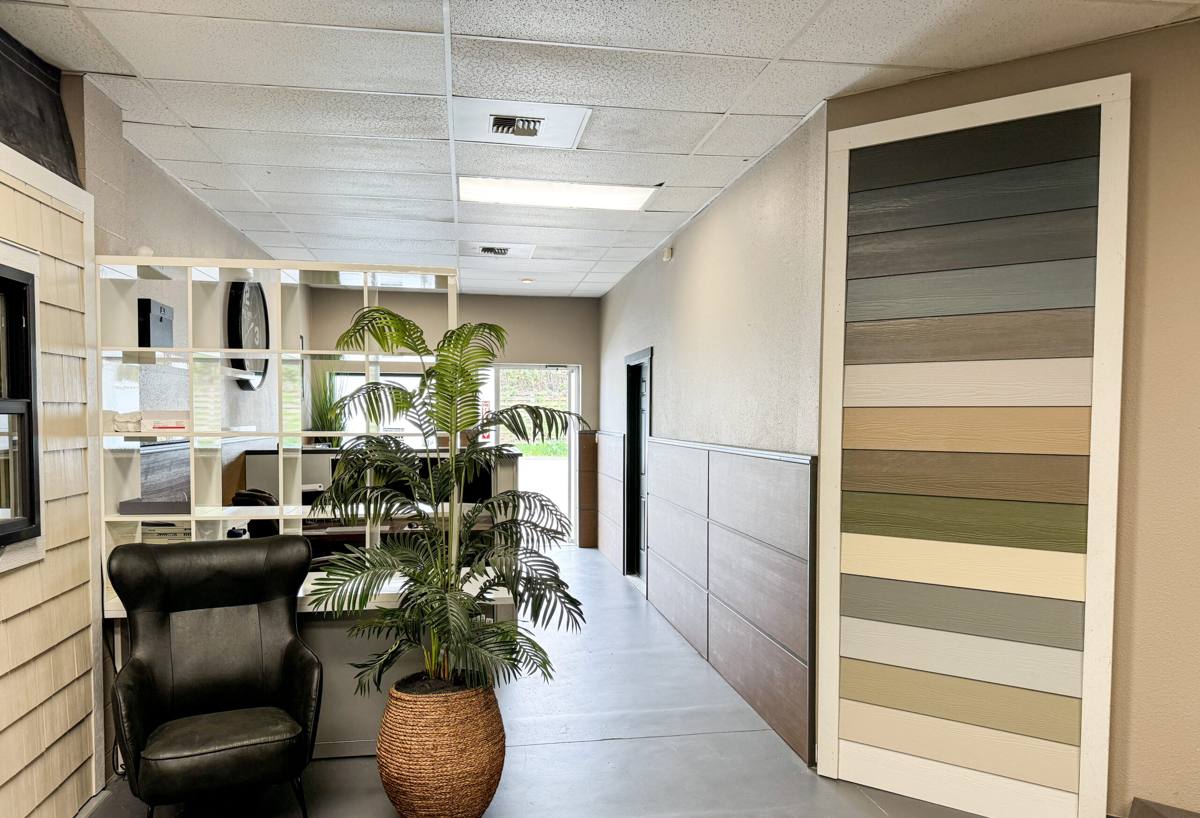
What James Hardie Fiber Cement Actually Is
James Hardie siding is a fiber cement composite made from Portland cement, sand, cellulose fiber, and water, cured under controlled conditions. It is not vinyl, not wood, and not a wood composite like LP SmartSide. The cement base means the material itself doesn't burn, doesn't feed on moisture the way wood fiber products can, and doesn't expand and contract with temperature swings the way vinyl does.
That composition matters most in exactly the conditions Blaine deals with: siding that stays damp for days at a time during fall and winter storms, and that gets a steady dose of salt-laden air off the water. A material that resists moisture absorption at its core, rather than depending entirely on a surface coating to keep water out, has a real advantage over the long haul.
Non-Combustible Doesn't Mean Fireproof
We're careful with this claim because it gets oversold industry-wide. Fiber cement is non-combustible, meaning the material itself will not ignite and contribute fuel to a fire the way wood-based sidings can. It is not a fireproof assembly — trim, soffits, windows, and other components still matter for a home's overall fire performance. But for the siding field itself, non-combustibility is a genuine, verifiable property, not a marketing exaggeration.
Climate-Engineered Product Lines: Why HZ5 Matters Here
James Hardie doesn't sell one formulation everywhere. The company engineers its HZ (HardieZone) product lines for different climate zones, and homes in the Pacific Northwest fall into the HZ5 zone — the formulation built for regions with sustained moisture exposure, freeze-thaw cycling, and, in coastal areas like Blaine, salt air. HZ5 products are engineered with moisture and mold resistance tuned to exactly this kind of environment rather than a generic national spec.
This is one of the concrete reasons we don't install products marketed as one-size-fits-all across the country. A siding formulated primarily for dry, moderate climates is being asked to do a job it wasn't engineered for once it's on a Whatcom County wall facing forty-plus inches of annual rainfall and a marine air layer that never really lets a north wall dry out completely between storms.
ColorPlus Technology: The Finish Is Part of the System
A siding board is only as good as its finish, and this is where we see the biggest gap between Hardie and the alternatives. ColorPlus is a factory-applied, baked-on finish cured onto the fiber cement under controlled conditions before the boards ever leave the plant. That process produces a more consistent, more UV- and fade-resistant finish than field-applied paint, and it comes with its own dedicated finish warranty separate from the substrate warranty.
Field-painted siding — whether that's primed wood, primed fiber cement, or a job-site paint job on any substrate — depends entirely on paint chemistry, weather conditions during application, and how evenly the crew applies it. In a climate where you're lucky to get a handful of consecutive dry days in the fall, that's a real liability. ColorPlus sidesteps the problem by moving the finish step into a factory environment entirely.
The Hardie Product Lines We Install
"James Hardie" isn't one product — it's a system of lap siding, panel siding, shingle siding, and trim designed to work together. Which lines we recommend depends on the home's architecture and exposure.
| Product Line | Typical Use | Notes for This Climate |
|---|---|---|
| HardiePlank lap siding | Primary wall cladding, most common choice | Available in several exposure widths and textures; HZ5-formulated |
| HardiePanel vertical siding | Board-and-batten look, accent walls, gables | Fewer horizontal seams to manage on high-exposure elevations |
| HardieShingle | Accent gables, Craftsman and cottage styles | Staggered or straight-edge patterns, painted or ColorPlus finish |
| HardieTrim | Corners, fascia, window and door trim | Matched substrate reduces differential movement at joints |
Matching trim and siding from the same manufacturer isn't a small detail. Mismatched expansion rates between a fiber cement board and a wood or composite trim piece is a common source of caulk joint failure and water intrusion at butt joints over time.
The Warranty Structure — and Why It's Transferable
James Hardie backs its fiber cement products with a long-term limited warranty on the substrate, plus a separate ColorPlus finish warranty. Two details matter more than the headline term length. First, the warranty is transferable to subsequent homeowners, which is relevant in a market like Blaine where houses change hands and buyers ask about siding condition and remaining warranty during inspections. Second, Hardie warranty coverage explicitly depends on installation according to the manufacturer's published instructions — flashing details, fastener spacing, clearances above grade and roofing, and joint treatment all have to be done to spec or the warranty can be affected.
That second point is exactly why we treat installation as inseparable from product quality. A perfect board installed with the wrong clearance above a deck or driveway, or without correct flashing at a window head, isn't actually delivering what the product is capable of.
What Correct Installation Requires
We won't install any siding product, Hardie included, without following the manufacturer's installation requirements to the letter. On a coastal Whatcom County home, the details below aren't optional extras — they're the difference between siding that performs for decades and siding that traps moisture behind it.
- Minimum clearance maintained between siding bottom edge and grade, decks, patios, and roof lines
- Correct fastener type, spacing, and penetration depth per the Hardie installation manual
- Weather-resistive barrier installed and lapped correctly before any siding goes up
- Flashing integrated at every window, door, and penetration — not caulk substituted for flashing
- Butt joints and corners treated per spec, with matched Hardie trim rather than mismatched materials
- Proper gapping and sealant at joints to accommodate the material's minor expansion and contraction
- Field-cut edges sealed or back-primed where the factory finish has been cut through
Blaine's Climate: Salt Air, Driving Rain, and a Long Moss Season
Blaine sits right on the water at the edge of Whatcom County, which means homes here take on a combination of exposures that inland siding jobs simply don't deal with. Salt-laden air moves off the Strait of Georgia and Semiahmoo Bay and settles on exterior surfaces year-round, accelerating corrosion of fasteners and degrading finishes that aren't built to resist it. Add driving rain that comes in sideways during fall and winter storms, and siding on this coast needs a weather-resistive barrier and flashing details that are actually followed, not just specified on paper.
Then there's moss. North and west-facing walls in this part of Whatcom County stay shaded and damp for months at a stretch, and moss and algae growth on siding is one of the most common calls we get from homeowners in the Blaine area. A fiber cement substrate with a factory-cured finish resists staining and biological growth better than bare or lightly primed wood-based products, and it holds up to the occasional soft wash cleaning that moss removal requires without the finish degrading.
Why This Rules Out Some Common Alternatives
Vinyl siding can crack in sustained cold snaps and fades unevenly under UV exposure over time, with no practical way to refinish it short of replacement. Wood-based composite sidings depend on an intact factory coating to keep moisture out of the wood fiber core — once that coating is compromised at a cut edge, fastener hole, or impact point, the core is vulnerable to swelling and rot in exactly the damp conditions Blaine sees for much of the year. Primed cedar and spruce require an ongoing repainting and caulking maintenance schedule that most homeowners underestimate going in. None of these are junk products in the right application. They're just not what we've found holds up, maintenance-free, on this stretch of coastline.
Cost Factors to Understand Before You Compare Bids
| Factor | Why It Affects Price |
|---|---|
| Product line and exposure width | Lap, panel, and shingle profiles carry different material and labor costs |
| ColorPlus vs. field-painted finish | Factory finish costs more up front but removes a recurring maintenance expense |
| Tear-off and substrate condition | Rot repair or sheathing replacement under old siding adds cost before new siding goes on |
| Trim and detail complexity | Homes with more corners, gables, and window trim require more precise (and slower) work |
| Access and site conditions | Waterfront lots, steep grades, and tight setbacks affect staging and labor time |
We'd rather walk a homeowner through these factors honestly during an estimate than quote a number that doesn't reflect what their specific home actually needs.
What This Means for Your Home
Standardizing on one product isn't about limiting your options — it's about only offering what we're willing to stand behind after years of watching what actually performs on Whatcom County homes. If you're planning a siding replacement in Blaine and want a straight answer about what James Hardie would look like on your specific house, including product line, color, and what your existing walls will need before installation, we're glad to come take a look. There's no pressure and no cost for a written estimate.