 Blaine Siding
 Siding Built for Ferndale's Marine Climate
Ferndale sits close enough to the Strait of Georgia and Bellingham Bay that homes here deal with a version of coastal weather most siding products were never designed for. Salt-laden air drifts inland on a regular basis, corroding fasteners and trim that aren't rated for it. Add Whatcom County's long, wet fall-through-spring stretch, and you have siding that spends a good chunk of the year staying damp instead of drying out between storms.
That combination — salt air, driving rain, and a moss season that can run half the year in shaded, north-facing areas — is hard on wood-based and vinyl products in particular. Wood fibers swell and split when they can't dry fully between rain events. Vinyl gets brittle in cold snaps and can warp or buckle when trapped moisture behind it has nowhere to go. Moss and algae take hold anywhere siding stays shaded and damp, and once established, they hold even more moisture against the wall.
We install exterior siding for homes throughout this part of Whatcom County, and Ferndale's climate profile is one we plan around directly rather than treat as an afterthought.
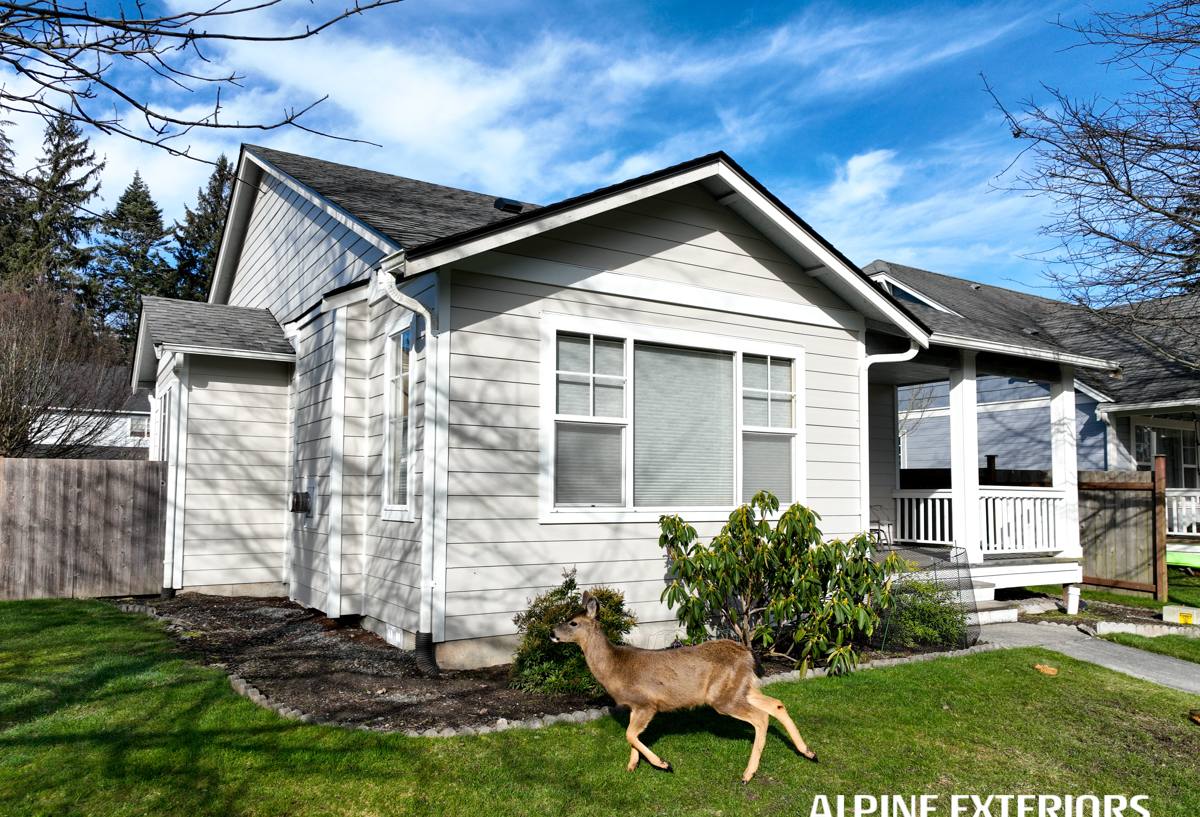
Why We Install Only James Hardie Fiber Cement
We made a deliberate decision to install one siding system — James Hardie fiber cement — and to stop offering LP SmartSide, vinyl, Cemplank, Allura, and primed wood species like spruce or cedar. That's not a knock on every homeowner who has one of those products on their house today. It's a statement about what we're willing to put our name behind going forward, based on how these materials actually perform in this specific climate over the long run.
What the alternatives get right
LP SmartSide is a reasonable engineered-wood product with a lower material cost and can look good when new. Vinyl is inexpensive, quick to install, and low-maintenance in dry climates. Cedar and primed spruce have a genuine, warm appearance a lot of homeowners want. None of these are junk products — they're simply built around trade-offs that don't line up well with a marine environment.
Why we stopped installing them
- Engineered wood siding (LP SmartSide, primed spruce): wood-based cores are vulnerable at cut edges and fastener points; once moisture gets in, it doesn't fully leave in a climate this wet, and swelling or delamination follows.
- Vinyl: contracts and expands with temperature swings, and in a region with steady wind off the water, panels can rattle loose or crack at the locking edges over time. It also can't take a factory-baked finish the way fiber cement can.
- Cemplank and Allura: both are fiber cement competitors to Hardie, and both are reasonable products on paper. Our decision came down to consistency — one manufacturer, one climate-engineered product line (HZ5), one warranty structure, and one factory finish process we trust across every job.
- Cedar: beautiful when maintained, but it demands re-staining or re-sealing on a schedule most homeowners can't keep up with in a climate this wet, and it's the most attractive material to moisture and rot once maintenance lapses.
James Hardie fiber cement is non-combustible, engineered specifically for Pacific Northwest moisture cycles through its HZ5 product line, and finished at the factory with ColorPlus technology rather than field-painted. That factory finish resists fading and chipping far better than a job-site paint job, and it carries a stronger, transferable warranty. When we install it correctly — proper flashing, correct fastener spacing, appropriate clearances — it's the product we've seen hold up best against exactly the conditions Ferndale sees every year.
What We Look For on a Ferndale Home
Every siding job starts with an honest look at the house, not a sales pitch. On homes in this area we're specifically checking for:
- Moss and algae buildup on north- and west-facing walls, and whether it's just cosmetic or has started holding moisture against the substrate
- Corrosion on nails, trim fasteners, and flashing from years of salt-air exposure
- Soft or delaminating spots where old wood or engineered-wood siding has taken on water at seams, corners, and butt joints
- Caulk and trim gaps that have opened up from repeated wet-dry cycling
- Ventilation behind the existing siding — or lack of it — which affects how fast the wall assembly dries out after a storm
That inspection tells us whether a section of wall needs a full siding replacement, whether the sheathing underneath needs attention before new siding goes on, or whether trim and flashing repairs can extend the life of what's already there.
How the Installation Works
Fiber cement performs the way it's supposed to only when it's installed to spec. A few things we hold to on every job:
Water management first
House wrap, flashing at every window, door, and penetration, and correct overlap at seams all happen before a single piece of siding goes up. In a climate that gets as much sustained rain as this one, the water-management layer underneath the siding matters as much as the siding itself.
Fastener and clearance details
Hardie panels need the right nail pattern, the right gap at butt joints, and the right clearance above rooflines, decks, and grade so water has somewhere to go and siding edges aren't sitting in standing moisture. These are the details that separate a fiber cement installation that lasts decades from one that fails early despite using the same material.
Trim and finish work
We use compatible trim systems and factory-finished ColorPlus products wherever possible, which keeps field painting and touch-up to a minimum and preserves the factory warranty on color and finish.
Beyond Siding: Full Exterior Work
Siding rarely fails in isolation. A leaking roof valley, an old window with failed seals, or a rotting deck ledger board can all send moisture into the same wall assembly your siding is trying to protect. Because we handle roofing, windows, and decks alongside siding, we can flag those issues during a siding estimate instead of sending you to three different contractors and hoping they coordinate. That matters most where a roof, window, or deck ties directly into the siding line — those transition points are where poor coordination between trades causes the most callbacks.
Cost Factors for Ferndale Siding Projects
Every home is different, but the same handful of factors drive the bulk of the cost difference between projects in this area.
| Factor | Why It Matters Here |
|---|---|
| Extent of moisture damage under existing siding | Rot or delamination found during tear-off means sheathing repair before new siding goes on |
| Home size and wall complexity | Dormers, gables, and multiple stories add cutting, flashing, and labor time |
| Siding profile and trim package | Lap width, trim style, and accent details affect material and labor cost |
| Access and site conditions | Tight lots, slopes, or landscaping close to the foundation affect staging and scaffolding needs |
| Existing paint or coating removal | Some older siding types require extra prep or disposal handling |
We walk through these factors on-site during an estimate rather than quoting off a phone call, since the condition behind the existing siding is often the biggest cost variable of all.
Choosing a Local Contractor
A crew based near Blaine and working regularly in Whatcom County understands the difference between a coastal-facing wall and an inland-facing one on the same street — and plans flashing, ventilation, and material choices accordingly. That local familiarity is worth checking for when you're vetting any exterior contractor, not just us. A few things worth asking before you hire:
- Are they licensed and insured to do siding work in Washington State?
- Will they show you manufacturer installation instructions, not just a verbal promise, for the specific product they're installing?
- Do they offer a written estimate that breaks out material, labor, and any sheathing or repair contingencies?
- Can they explain how they handle flashing at windows, doors, and roof-to-wall transitions specifically?
- Do they carry a manufacturer-backed warranty on the siding itself, separate from their own workmanship warranty?
Maintaining Hardie Siding in This Climate
Fiber cement is low-maintenance compared to wood or vinyl, but "low-maintenance" doesn't mean "no maintenance" in a place with a moss season this long. A yearly rinse-down of shaded, north-facing walls keeps moss and algae from establishing a foothold. Keeping gutters clear and directing downspouts away from the foundation reduces the splash-back that feeds algae growth at the base of the wall. Beyond that, periodic visual checks of caulk lines and trim joints catch small gaps before they become water intrusion points.
If your siding is showing moss, soft spots, or open seams — or you're planning ahead for a home in Ferndale — we're happy to take a look and walk you through what we see, with no pressure to sign anything on the spot. A free estimate is a good starting point either way.