 Blaine Siding
 Living on the Water Near Blaine Comes With a Maintenance Bill
Sandy Point sits right where the benefits and the burdens of waterfront living meet. The view across the water is the whole reason people build and buy out there, but that same exposure — open water, wind off the Strait, and a marine layer that rolls through for much of the year — puts a level of stress on a home's exterior that inland Whatcom County properties simply don't deal with. We've worked on homes throughout the Blaine area long enough to know that what holds up twenty miles inland doesn't always hold up a few hundred feet from the beach.
This page isn't about scaring anyone into a premature replacement. It's about explaining, plainly, what salt air, driving rain, and a long moss season actually do to exterior materials over years and decades, and what we've found actually stands up to it.
What Salt Air Actually Does to a House
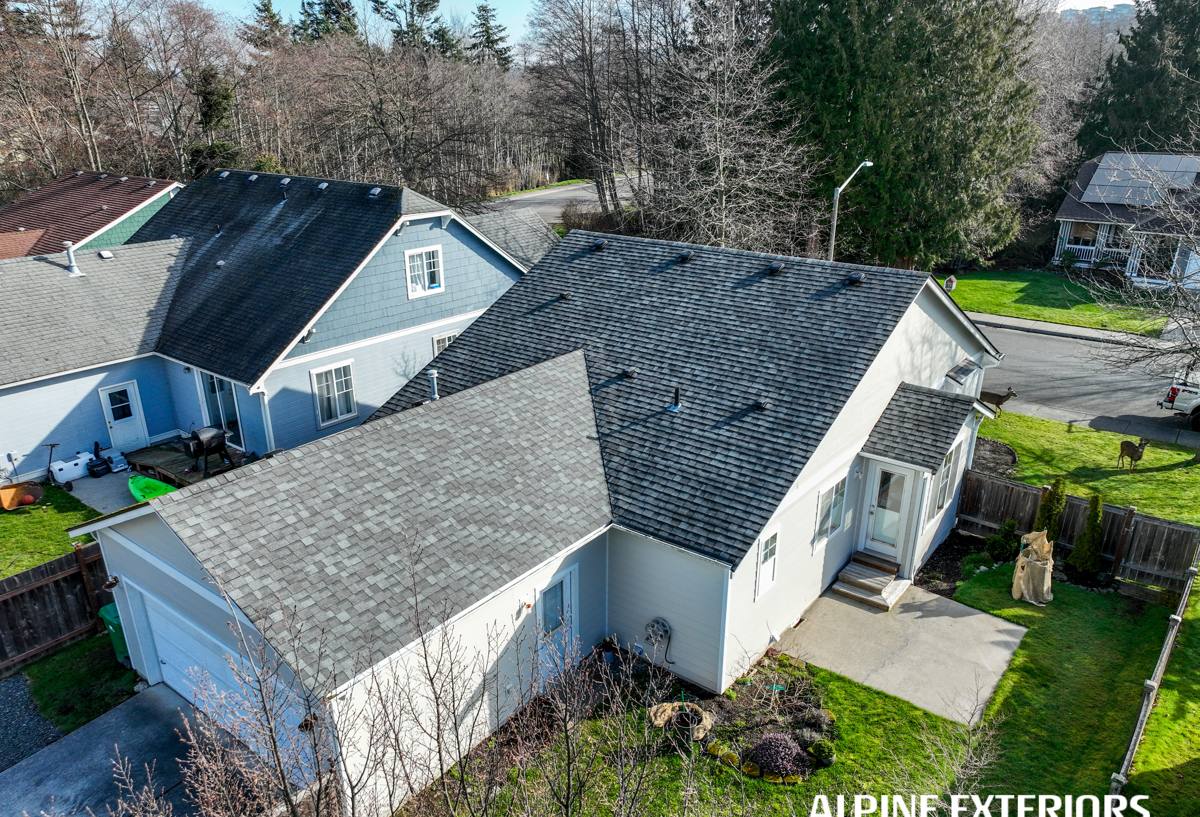
Salt air isn't just a coastal cliché — it's airborne sodium chloride that settles on every exterior surface, and it's chemically aggressive toward a lot of common building materials. It accelerates corrosion on fasteners, hardware, and flashing. It draws moisture, meaning surfaces near the water stay damp longer after a storm than the same surfaces a mile or two inland. And it works its way into any small gap, seam, or crack in a wall system and stays there.
For siding specifically, the practical effects show up as:
- Faster breakdown of paint film and caulking, especially on the ocean-facing wall
- Corrosion at nail heads, staples, and trim fasteners if they aren't rated for coastal exposure
- Accelerated wood decay where salt-laden moisture sits against untreated or exposed wood fiber
- Chalking, fading, and surface degradation on lower-grade coatings well before their rated lifespan
None of this means a waterfront home is doomed to constant repair. It means the materials and the installation details matter more here than they do on a sheltered inland lot.
Driving Rain and Wind-Driven Moisture
Whatcom County gets a lot of rain in a normal year, but what matters more for siding performance than total rainfall is how the rain arrives. On open, wind-exposed sites like Sandy Point, storms don't just fall straight down — they come in sideways, driven by wind off the water. That changes how a wall system has to perform.
Wind-driven rain finds horizontal laps, exposed fastener heads, and poorly flashed penetrations that would never leak on a calmer, more sheltered lot. A siding product and installation detail that's "good enough" in a protected neighborhood a few miles inland can underperform on an exposed waterfront wall. This is why we pay close attention to lap exposure, flashing at windows and doors, and drainage plane details on every coastal job — not just the siding material itself, but everything behind and around it.
Why Drainage Behind the Siding Matters as Much as the Siding
Even the best exterior cladding is only one layer of a wall's defense against water. Behind the visible siding there should be a properly lapped weather-resistant barrier and a drainage path that lets any moisture that does get past the surface find its way back out instead of sitting against the sheathing. On exposed sites, we treat this water-management layer as non-negotiable, because a wall that traps moisture will develop rot and mold regardless of how good the siding looks from the curb.
The Long Moss Season
Western Whatcom County's mild, wet climate is exactly the kind of environment moss and algae thrive in, and homes near the water — with more shade from mature trees, more humidity, and north- and east-facing walls that rarely fully dry — often see it worse than homes on open, sunny inland lots. Moss and algae growth on siding isn't just cosmetic. Sustained organic growth holds moisture against the surface, which shortens the life of paint and caulking and, on wood-based products, accelerates decay underneath.
Roofs face the same issue, often worse, since a roof stays wetter longer and gets more shade from surrounding trees. Gutters clogged with moss and debris are one of the most common causes of water intrusion we see on siding and trim near the eaves — the water has nowhere else to go, so it finds the wall.
Why We Only Install James Hardie Fiber Cement
We get asked fairly often why we don't offer vinyl, LP SmartSide, cedar, or other wood-based siding products. The honest answer is that we standardized on James Hardie fiber cement because it's the product that holds up best against exactly the conditions Sandy Point and the rest of the Blaine coastline deal with.
Fiber cement is non-combustible and dimensionally stable — it doesn't expand and contract with moisture the way wood-based products do, and it doesn't provide the organic material that algae and moss feed on the way untreated or engineered wood substrates can. Vinyl siding can warp and become brittle under UV and temperature swings, and its seams and J-channels give wind-driven rain more opportunities to get behind the cladding. Cedar and primed wood products look great initially but require a maintenance commitment — regular recoating, caulking, and moisture monitoring — that most homeowners underestimate, especially in a climate that barely gives paint time to fully cure between rain events.
James Hardie's HZ5 product line is engineered specifically for climates like ours — freeze-thaw cycles, sustained moisture, and coastal exposure. The ColorPlus factory finish is baked on under controlled conditions rather than field-applied, which means better adhesion and UV resistance than a site-painted surface, and it comes with its own finish warranty backed by the manufacturer. That combination — a stable, non-combustible substrate and a factory finish built for wet climates — is why it's the only siding system we put on homes.
What We Don't Claim
We're not going to tell you vinyl or cedar siding is garbage — plenty of homes wear them fine for years, especially on sheltered, inland lots with attentive owners. Our position is narrower and more practical: on the exposure profile we see on jobs near Blaine's waterfront, the maintenance burden and moisture risk of those alternatives is higher than we're willing to build a warranty and a reputation on, so we don't install them.
It's Not Just Siding — The Whole Envelope Has to Work Together
Siding doesn't work in isolation. On a coastal exposure like Sandy Point, the roof, windows, and siding all have to function as one system for the wall assembly to actually keep water out over the long term. We handle all four exterior trades — siding, roofing, windows, and decks — for exactly this reason. A new Hardie installation with an aging, moss-choked roof or leaking window flashing above it will still end up with water damage, just from a different entry point.
A few things we look at together during a full exterior assessment:
| Component | Coastal Risk Factor | What We Check |
|---|---|---|
| Siding | Salt exposure, wind-driven rain, moss | Substrate condition, fastener corrosion, lap and caulk integrity |
| Roofing | Moss buildup, wind uplift, prolonged wetness | Flashing at penetrations, gutter function, moss/algae growth |
| Windows | Wind-driven rain at frames, seal failure | Flashing integration with siding, seal condition, glass fogging |
| Decks | Standing water, salt corrosion of fasteners | Ledger flashing, fastener condition, drainage |
What Our Process Looks Like for a Sandy Point Home
Every waterfront job starts with an honest look at what's actually happening on the walls, not a sales pitch for a full replacement. Sometimes a home needs a full re-side; other times targeted repairs, better flashing at a few problem spots, and a gutter and moss-management plan will buy years of extra life out of the existing exterior.
When a project does call for new siding, our approach on exposed coastal sites includes:
- A full walk-around inspection, including areas that face the water directly and shaded, moss-prone walls
- Assessment of the existing weather-resistant barrier and drainage plane, replaced or upgraded where needed
- Corrosion-resistant fastening appropriate for coastal exposure
- Careful flashing detail at every window, door, and penetration — the single biggest factor in long-term water performance
- James Hardie HZ5 panels and trim with a ColorPlus factory finish matched to the home
Why a Local Crew Matters Here
A crew that only works inland jobs can miss the details that matter on an exposed waterfront property — proper lap exposure for wind-driven rain, fastener specification for salt exposure, or just knowing which walls in a given neighborhood tend to hold moss and moisture longest. We work throughout Whatcom County, including Blaine and the surrounding waterfront communities, and we bring what we've learned on those jobs to every estimate.
Cost Factors for a Coastal Siding Project
Every home is different, so we won't quote a number without seeing the property, but a few factors consistently move the price on coastal jobs more than they would on a sheltered inland home:
| Factor | Why It Affects Cost |
|---|---|
| Extent of moisture damage behind existing siding | Rotted sheathing or framing found during tear-off requires repair before new siding goes on |
| Wall exposure and access | Water-facing or hard-to-access walls take more time to detail correctly |
| Trim and flashing complexity | Homes with more windows, corners, and rooflines need more flashing labor |
| Existing siding removal | Tear-off and disposal of old material adds labor beyond a straightforward re-side |
| Color and finish selection | Custom ColorPlus finishes and specialty trim profiles vary in material cost |
A Simple Homeowner Checklist
If you own a home in or near Sandy Point, a quick seasonal check can catch problems early, before they turn into a bigger repair:
- Look for moss or algae buildup on north- and east-facing walls and the roof
- Check that gutters are clear and draining, especially after fall leaf drop
- Look for cracked, peeling, or chalking paint on siding, particularly on the water-facing side
- Check caulking around windows and doors for gaps or cracking
- Watch for soft spots or discoloration on siding or trim near ground level or deck ledgers
- Note any fastener heads showing rust staining
If you're seeing any of that, or you just want an honest read on where your home's exterior stands, we're happy to take a look. We offer free, no-pressure estimates for homeowners in Sandy Point and throughout the Blaine area — no obligation, just a straight assessment of what your siding, roof, windows, and decks actually need.