 Blaine Siding
 Board & Batten Siding in Semiahmoo's Marine Climate
Semiahmoo sits close enough to open water that its homes take a different kind of weathering than houses a few miles inland in Blaine or elsewhere in Whatcom County. Salt-laden air off the bay works on metal fasteners and trim year-round, driving rain off Georgia Strait pushes moisture sideways into vertical seams, and the marine layer that settles over shaded north and east elevations keeps them damp long enough for moss to take hold every fall through spring. Board and batten siding is a strong architectural choice here — it reads clean against the coastal setting and has a long history on Pacific Northwest homes — but it is also a style that punishes sloppy installation more than standard lap siding does, because its vertical seams and batten strips create more edges where water can find a way in.
This page is about doing board and batten right for Semiahmoo specifically: what the climate demands, what correct installation actually involves, and why a crew that already works this stretch of coastline handles it differently than a crew that doesn't.
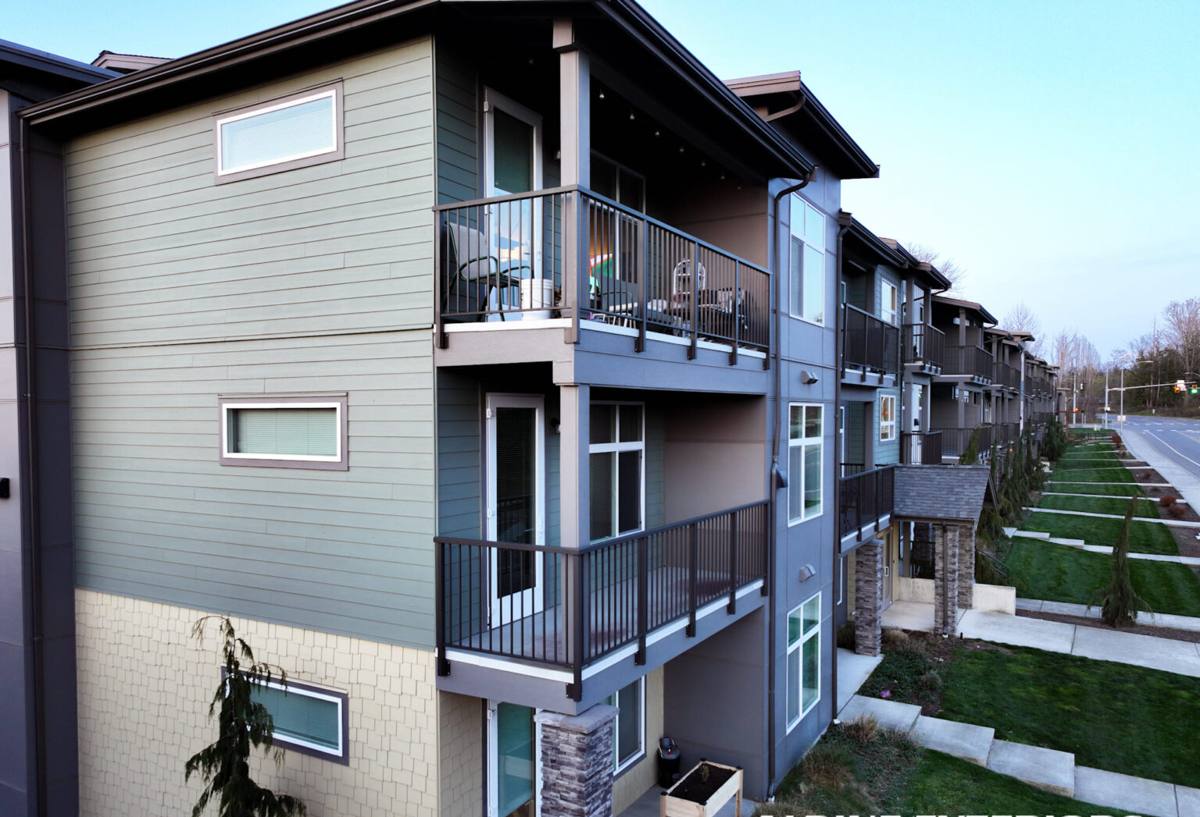
Why Board & Batten Is Different From Standard Lap Siding
Traditional horizontal lap siding sheds water downward by design — each course overlaps the one below it. Board and batten runs vertically, with wide boards or panels butted together and narrower battens covering the seams. Done correctly, this is a proven, durable system. Done carelessly, it has more places for wind-driven rain to catch: the horizontal top and bottom terminations, the vertical seams under each batten, and every fastener line running the full height of the wall.
In a climate like Semiahmoo's, where rain frequently arrives at an angle instead of straight down, those seams and terminations are exactly where problems start if the water management underneath the siding isn't built correctly. The siding itself is only the visible layer — what's behind it matters just as much.
What's Happening Behind the Boards
A correctly built board and batten wall relies on a drainage plane: a weather-resistant barrier, ideally paired with a rainscreen gap, that lets any moisture that does get past the siding drain and dry out instead of sitting against the sheathing. On a home this close to salt water, that gap also matters for airflow — it helps siding and framing dry out faster after the region's long stretches of damp weather, which cuts down on the conditions moss and mildew need to establish themselves.
What Salt Air and Driving Rain Do to This Siding Style Over Time
| Climate Factor | Effect on Board & Batten Siding | How Correct Installation Addresses It |
|---|---|---|
| Salt-laden air | Corrodes standard fasteners and metal trim over time, leading to rust streaking and loosened boards | Stainless steel or marine-grade fasteners and corrosion-resistant flashing, especially on water-facing elevations |
| Wind-driven rain | Pushes moisture sideways into vertical seams and behind battens if gaps aren't sealed correctly | Proper batten spacing, correct fastener placement, and a continuous weather-resistant barrier behind the panels |
| Marine layer / shaded walls | Keeps north- and east-facing walls damp longer, encouraging moss and algae growth | Rainscreen airflow gap to speed drying, plus a factory finish that resists moisture absorption |
| Temperature swings | Causes expansion and contraction that can open gaps at butt joints and trim if materials move differently | Material and fastening approach matched to the product's engineered movement tolerances |
Why We Install James Hardie for Board & Batten Projects
We only install James Hardie fiber cement siding — we don't install vinyl, LP SmartSide, primed spruce, cedar, Cemplank, or Allura, and we're upfront about why. For a vertical siding style in a coastal Whatcom County climate, the material behind the look matters as much as the look itself.
James Hardie's board and batten systems — including HardiePanel vertical siding paired with HardieTrim battens — are non-combustible fiber cement, engineered specifically for high-moisture, high-wind climates through Hardie's HZ10 product designation, which is built for the wetter side of the country. The factory-applied ColorPlus finish is baked on under controlled conditions rather than field-applied, which gives it more consistent coverage and better resistance to fading and moisture absorption than a site-painted finish. That matters on a north-facing wall in Semiahmoo that stays damp for weeks at a stretch — a finish that holds up under sustained moisture, rather than one that needs regular repainting, is the difference between a wall that ages well and one that needs attention every few years.
We're not going to tell you every other siding product is unusable — vinyl and wood board and batten both have their place, and homeowners choose them for good reasons, including upfront cost. But we've standardized on Hardie because, installed correctly, it holds paint and color longer, resists moisture and pests better than wood, and doesn't have the expansion and impact concerns that come with vinyl in this climate. That's the trade-off we're comfortable standing behind.
What a Correct Semiahmoo Board & Batten Installation Involves
- Full inspection of existing sheathing and framing for hidden moisture damage before any new siding goes up
- Removal of old siding and any compromised sheathing rather than siding over problems
- Installation of a continuous, correctly lapped weather-resistant barrier
- A rainscreen gap behind the panels to promote drainage and airflow
- Correct batten spacing and fastening per manufacturer specifications, not "close enough"
- Stainless steel or otherwise corrosion-resistant fasteners on water- and wind-exposed elevations
- Properly flashed and sealed terminations at the roofline, foundation, windows, and doors
- Factory-finished ColorPlus panels installed with touch-up only where the manufacturer specifies, preserving the factory warranty
Our Process for Semiahmoo Homes
1. On-Site Assessment
We walk the exterior with you, looking at which elevations take the brunt of wind and rain off the water, where moss or staining already shows up, and what's happening behind the current siding if it's failing. This tells us where extra attention — fastener choice, flashing detail, rainscreen depth — actually matters versus where a standard approach is fine.
2. Straightforward Scope and Estimate
You get a clear breakdown of what's being replaced, what stays, and why — no vague line items. If your home is part of a community with exterior design guidelines, we're glad to work within those requirements as part of the plan.
3. Tear-Off and Sheathing Check
We don't install new siding over old problems. If sheathing has taken on moisture damage, we address it before anything new goes up — covering it over just hides the issue and shortens the life of the new siding.
4. Water Management First, Siding Second
The weather barrier and rainscreen go in before a single piece of Hardie panel or batten is installed. This is the layer that actually protects the wall long-term, and it's also the layer that's invisible once the job is done — which is exactly why it's worth asking about before hiring anyone.
5. Installation to Manufacturer Specification
Panel and batten spacing, fastener type and placement, and finish touch-up are all done to James Hardie's published specifications for the HZ10 climate zone. This is what keeps the manufacturer's warranty intact and what actually determines how the siding performs in years three, ten, and twenty.
Moss, Staining, and Maintenance on Shaded Elevations
Even with the best installation, north- and east-facing walls in Semiahmoo's marine layer will stay damp longer than south-facing walls that get more sun and wind exposure. That's not a defect — it's the local climate. What correct installation controls is how much that dampness affects the siding itself: a rainscreen gap lets walls dry out between wet stretches instead of staying saturated, and a factory finish resists moisture absorption better than a field-applied coating. Periodic gentle washing of shaded elevations is still a reasonable part of home maintenance in this area, the same way a roof or deck needs occasional attention — correct siding installation reduces the underlying problem, it doesn't eliminate the local climate.
Why Local Experience in Semiahmoo Matters
A crew that works this specific stretch of Whatcom County coastline knows which elevations on a Semiahmoo home typically need corrosion-resistant fasteners versus standard ones, how far wind-driven rain actually travels up a wall during a winter storm off the strait, and which shaded corners tend to grow moss regardless of siding choice. That's the kind of judgment that comes from doing the work here repeatedly, not from a generic install checklist. It shows up in small decisions — fastener grade on a water-facing gable, batten spacing on a wall that catches more wind than its neighbor — that don't cost much more to get right the first time, but cost real money to fix later if they're missed.
Get a Free Estimate for Your Semiahmoo Home
If you're considering board and batten siding for a home in Semiahmoo, we're happy to take a look, walk you through what your specific exposure and elevations call for, and give you a straightforward, no-pressure estimate using the form below.