 Blaine Siding
 Siding Built for the Nooksack Area's Climate
Nooksack sits inland from the water compared to our home base in Blaine, but it still shares the defining trait of Whatcom County weather: persistent moisture. Rain off the Pacific rolls through the Nooksack River valley for months at a stretch, humidity lingers in the low areas near the river, and salt-tinged marine air still finds its way inland on the prevailing westerly winds coming off the Strait of Georgia and the Salish Sea. For siding, that combination is a slow, steady stress test. It's not one big storm that ruins a wall — it's years of dampness that never fully dries out between rain events.
Add in a long moss season that stretches from fall through spring, and you have a climate that rewards siding materials that resist moisture intrusion and punishes ones that don't. This is the same reasoning that shapes every exterior project we take on across our Whatcom County service area, and it's why we've standardized on one siding product rather than offering a menu of options with very different long-term outcomes.
What Driving Rain Does to a Wall Over Time
Wind-driven rain doesn't just fall straight down — it gets pushed sideways into siding seams, butt joints, and anything with an exposed edge. Over years, water that gets behind or into siding material (rather than shedding off the surface) is what causes swelling, delamination, and rot at the studs behind the cladding. The Nooksack area's exposure to sustained wet weather, especially on west- and south-facing walls, means this slow intrusion is a real factor in how long a siding job actually lasts, not just how it looks on installation day.
Moss, Mildew, and Shaded Siding
Homes tucked near trees along the river or on shaded lots hold onto moisture longer after a rain, which is exactly the environment moss and mildew need to take hold. On some siding materials, that means ongoing pressure-washing and refinishing to keep growth from working into the surface. It's a maintenance cost that adds up over the life of a house, and it's a big part of why material choice matters more here than it would in a drier climate.
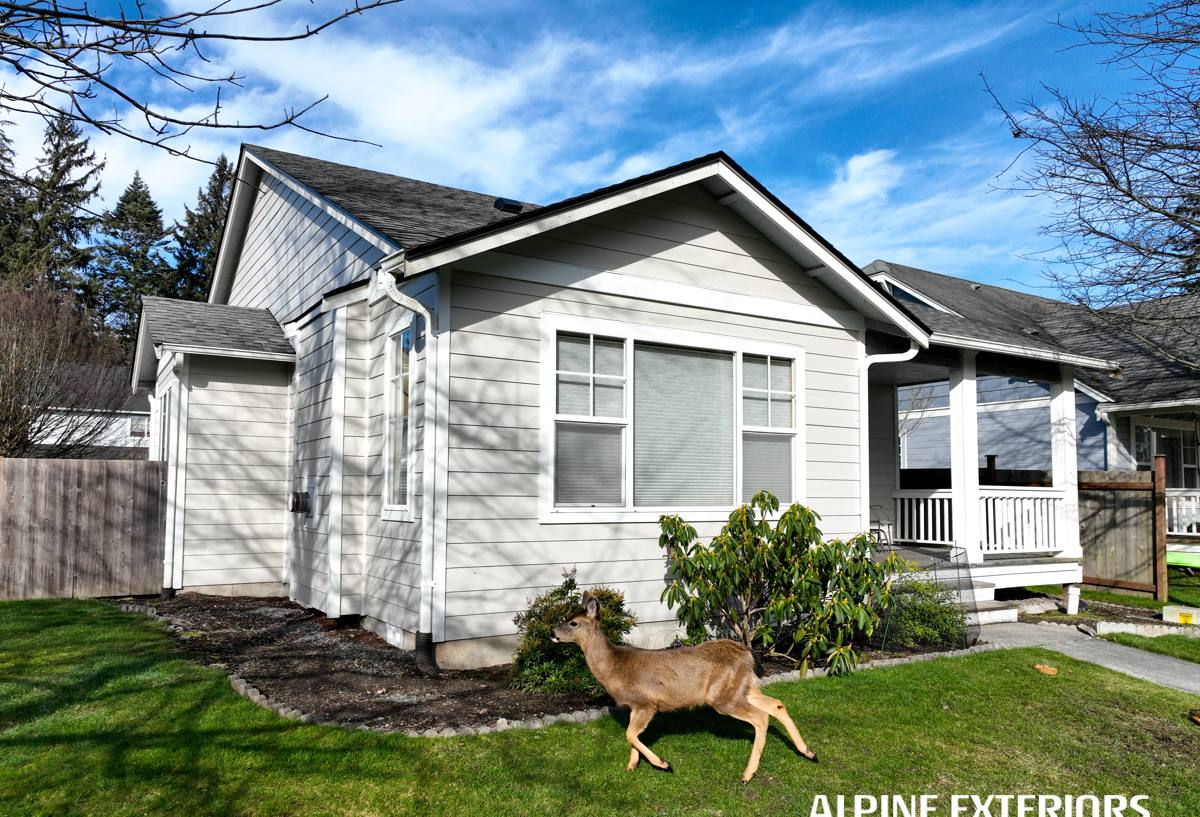
Why a Local Crew Matters for This Area
Being based out of Blaine means our crews already understand Whatcom County conditions — the rain patterns, the permitting process with the county and local municipalities, and the way homes in this region are typically built. That's different from working with a large regional or national outfit that rotates crews through unfamiliar territory. A local crew shows up knowing what this climate does to a house, and that shapes decisions on flashing, house wrap, trim details, and gaps that get made on-site, not just what's written on a spec sheet.
- Faster response for warranty callbacks or follow-up questions after the job is done
- Familiarity with Whatcom County inspection and permitting expectations
- Crews who've seen how this specific climate ages different siding products over time
- Accountability — we're not driving back to a distant office once the project wraps
Signs Your Current Siding Is Losing the Fight
Most siding problems in this region show up gradually, which means homeowners often live with early warning signs for a year or two before addressing them. Knowing what to look for can save you from a much larger repair bill down the road.
Visual Cues Worth a Closer Look
- Soft or spongy spots when you press on the siding, especially near the bottom courses
- Persistent green or black staining that returns quickly after cleaning
- Visible warping, bowing, or separation at seams and corners
- Paint that's peeling or bubbling rather than just fading
- Rising utility bills that suggest a wall assembly no longer insulating the way it should
None of these on their own mean a full replacement is required. But in a wet climate like ours, deferred siding problems compound faster than they would in a drier region, because the damage stays wet longer between drying cycles.
Why We Install Only James Hardie Fiber Cement
We don't offer vinyl, LP SmartSide, primed wood, or other fiber cement brands as options — not because those products have no merit, but because after years of exterior work in this specific climate, James Hardie is the one product line we're willing to stand behind with our own installation standards and warranty expectations.
What That Decision Comes Down To
Fiber cement as a category resists moisture, insects, and fire better than wood-based or vinyl siding, but not all fiber cement is engineered the same way. James Hardie's HZ5 product line is specifically formulated for wetter, colder Pacific Northwest climates like ours, and the ColorPlus factory-applied finish holds color and resists the kind of fading and chipping that touch-up paint on job-mixed colors tends to show within a few years. It's a non-combustible material, which matters increasingly for insurance considerations in Washington. And the transferable warranty structure protects the investment for a homeowner who may sell the house before the siding's functional life is up.
We're not going to tell you every other product on the market is unusable — plenty of homes wear vinyl or engineered wood siding without catastrophic failure. What we will say is that when we weighed moisture performance, maintenance burden, and long-term appearance against the realities of Whatcom County weather, Hardie fiber cement was the product we were comfortable putting our name behind for every job, not just the ones with a bigger budget.
Comparing Siding Options for a Wet Climate
| Factor | James Hardie Fiber Cement | Vinyl | Engineered Wood (LP SmartSide) |
|---|---|---|---|
| Moisture resistance | Engineered for wet climates (HZ5 line) | Sheds water but seams can trap moisture | Wood-based core, vulnerable if seals fail |
| Fire rating | Non-combustible | Combustible, can melt/warp near heat | Combustible |
| Finish longevity | Factory ColorPlus finish, resists fade | Color molded in but can chalk/fade | Field or factory paint, needs upkeep |
| Typical maintenance | Occasional wash, repaint on long cycle | Low, but cracks/warps in impacts | Regular caulk and paint inspection |
| Warranty structure | Long-term, transferable | Varies widely by manufacturer | Varies, often shorter on finish |
Every material on that list has a place in the broader siding market. Our decision to specialize in one of them is about matching the product to this specific region's weather, not dismissing the others outright.
Beyond Siding: The Full Exterior Picture
Siding rarely fails in isolation. Roofing, windows, and siding all work together as a system to keep water out of a house, and in a climate like Nooksack's, a weak point in one usually shows up as damage in another. We handle roofing, window replacement, and decks alongside siding so that flashing, drainage planes, and transitions between materials get coordinated by one crew rather than pieced together across separate contractors who never talk to each other.
Where This Matters Most
Roof-to-wall flashing, window head flashing, and deck ledger connections are common spots for water intrusion when different trades install their piece without coordinating with what's above or below it. A siding replacement is a good moment to have a second set of eyes on those transitions, even if the roof or windows aren't part of the current project.
Planning a Siding Project in the Nooksack Area
Every home is different, but a few questions tend to shape the scope and timeline of most projects we take on in this region.
- Is the existing siding being fully removed, or is there a need to assess the sheathing and framing underneath first?
- Are there specific moisture-prone areas — near grade, under overhangs, around old deck ledgers — that need extra attention during install?
- Do window or door trim details need to be updated to work with new siding profiles?
- What's the realistic weather window for the work, given our rain patterns?
- Are there HOA or county requirements specific to exterior color or material changes?
Getting clear answers to these before work starts avoids surprises mid-project and helps set an honest timeline rather than an optimistic one.
What a Real Assessment Looks Like
Before we recommend anything, we walk the exterior, look closely at areas prone to moisture — low walls, shaded sections, spots near grade — and check for soft spots or existing damage that isn't visible from the ground. That assessment is what determines whether a project is a straightforward re-side or something that needs sheathing repair first. We'd rather give you an accurate picture upfront than discover problems mid-tear-off.
If you're weighing your options for siding, roofing, windows, or decks on a home in the Nooksack area, we're happy to take a look and give you a straightforward, no-pressure estimate. There's no obligation — just an honest read on where your home stands and what it would take to fix it right.