 Blaine Siding
 Semiahmoo's Waterfront Setting Puts Extra Stress on Siding
Homes on and around the Semiahmoo spit sit about as close to the water as a house in Whatcom County can get. That location is the whole appeal of living here, and it's also exactly why siding fails faster here than it does a few miles inland. Salt-laden air off the bay works into seams and fastener heads year-round. Wind-driven rain off the water hits walls at an angle, not straight down, which pushes moisture into places a standard rain screen wasn't designed for. And the long gray stretch from fall through spring keeps north- and west-facing walls damp long enough for moss and algae to take hold and stay there.
None of that is unusual for this stretch of the Washington coast. But it does mean a siding product and installation detail that works fine in a drier part of the county can underperform on a home that catches wind straight off Semiahmoo Bay. Any siding job here needs to be planned around that exposure specifically, not treated as a standard install.
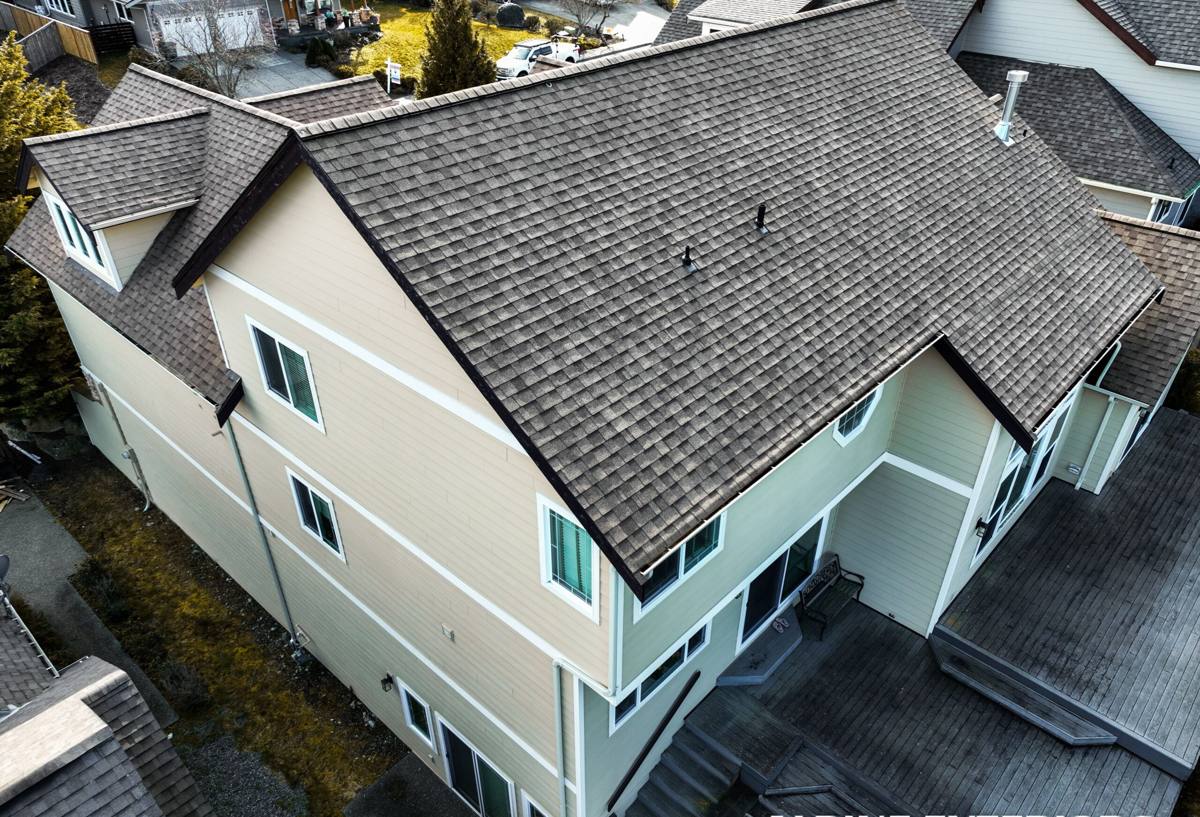
Why We Only Install James Hardie on Homes Like These
We don't install vinyl, LP SmartSide, cedar, primed spruce, or other fiber cement brands. That's not a marketing position — it's a standard we settled on after weighing how each of those products actually holds up against sustained salt air and moisture, and James Hardie is what we're willing to put our name behind here.
Vinyl expands and contracts with temperature swings and can warp or crack in wind exposure over time; it also doesn't hold paint, so fading near the water isn't something you can touch up. Wood-based products, including engineered wood siding, depend on an intact factory coating to keep moisture out — any breach at a cut edge or fastener hole gives water a path into the substrate, and substrate damage from moisture is much harder to catch early than surface wear. Cedar is a beautiful, legitimately traditional choice for this region, but it requires ongoing sealing and refinishing to perform in a salt-air, high-moss environment, and that maintenance schedule only gets less forgiving the closer a home sits to the water.
James Hardie fiber cement doesn't rot, doesn't provide a food source for moss the way bare wood can, and won't corrode from salt exposure the way some metal trims and fasteners can if the wrong hardware is used. It's non-combustible, which matters during dry summer stretches when wildfire smoke and ember risk become a regional concern even out here on the coast. And the ColorPlus factory finish is baked on and warranted against fading and chipping in a way that field-applied paint on any siding material isn't.
The Product Lines That Make Sense for This Exposure
James Hardie makes climate-engineered product lines, and for a Semiahmoo-area home we default to the HZ5 line, engineered for wetter climates with more freeze-thaw cycling and moisture exposure than the HZ10 line built for hot, dry regions. The difference isn't cosmetic — it affects the moisture-management properties baked into the board itself.
- Lap siding (HZ5): The most common choice for full re-sides, available in several exposure widths.
- Board and batten: A vertical option that reads well on the more contemporary homes going up near the water.
- Panel siding: Useful on gable ends and accent walls, often paired with trim boards.
- HardieTrim boards: Non-combustible, factory-finished trim that won't rot the way wood trim does at corners and window returns — a common weak point on older homes here.
What Correct Installation Looks Like on a Semiahmoo Home
James Hardie siding is only as good as the water management system behind it. On a home taking direct wind and rain off the bay, the details that get skipped on a rushed job are exactly the details that matter most here.
Rain screen and drainage gap
A proper rain screen gap behind the siding lets any moisture that gets past the cladding drain and dry out instead of sitting against the sheathing. On a wind-exposed wall, this gap isn't optional — it's the difference between water that drains harmlessly and water that sits.
Flashing at every penetration
Windows, doors, hose bibs, light fixtures, and vent penetrations all need properly lapped flashing, installed so that every layer sheds water down and out rather than trapping it. This is the single most common spot we find failure on older re-sides in wind-driven-rain areas — flashing that was installed but installed backward or without enough overlap.
Fastener spacing and clearance
Hardie's installation manual specifies fastener placement, minimum clearance from the ground and roofline, and gaps at every butt joint and trim intersection to allow for expansion. Skipping these clearances is invisible on install day and shows up as cracking or moisture intrusion within a few years.
Corrosion-resistant fasteners and flashing
In a salt-air environment, using the wrong fastener or flashing metal invites galvanic corrosion. We spec stainless or hot-dip galvanized fasteners and compatible flashing metals specifically because standard hardware corrodes faster this close to the water.
Common Issues We Find on Older Waterfront Homes
When we're called out to look at an existing home near the water, a handful of problems come up repeatedly:
| Issue | Why It Happens Here |
|---|---|
| Moss buildup on north/shaded walls | Limited direct sun and near-constant dampness let moss establish and hold moisture against the wall long-term |
| Corroded fasteners or trim staining | Standard hardware wasn't rated for salt-air exposure |
| Caulk failure at trim and window returns | Wind-driven rain and UV cycling break down sealant faster than in sheltered areas |
| Soft or delaminating wood trim | Bare or under-maintained wood trim absorbing moisture at end grain |
| Paint failure on wood or vinyl fading unevenly | Salt exposure and sun accelerate coating breakdown compared to inland homes |
Our Process for a Semiahmoo Project
We treat every job on this stretch of coastline as a wind-and-moisture project first, a siding project second.
- Walk the exterior and assess exposure. We note which walls take direct wind off the bay and which are more sheltered, since that changes flashing and fastener detailing wall by wall.
- Inspect the sheathing once old siding is off. This is where hidden moisture damage from a prior installation shows up, and it has to be repaired before new siding goes on — not covered over.
- Install or verify the rain screen and weather-resistive barrier. No siding goes over sheathing that hasn't been properly wrapped and gapped.
- Flash every penetration before siding starts. Windows, doors, and fixtures get flashed and inspected before the first course goes up.
- Install to Hardie's published fastening and clearance specs. This is what keeps the manufacturer's warranty intact and is also simply the right way to build in this exposure.
- Final detail and cleanup. Caulking, trim, and touch-up happen last, with attention to the joints most exposed to wind-driven rain.
Cost Factors for a Semiahmoo James Hardie Project
| Factor | Why It Moves the Price |
|---|---|
| Extent of hidden moisture damage | Sheathing repair found after tear-off adds material and labor that can't be scoped until the old siding is off |
| Wall exposure and access | Wind-exposed or hard-to-access elevations near the water take more time to flash and detail correctly |
| Trim complexity | Homes with more window returns, corners, and architectural trim require more HardieTrim board and labor |
| Siding profile chosen | Lap widths, board and batten, and panel systems carry different material and labor costs |
| Color and finish | Factory ColorPlus finishes cost more up front than field-primed boards but remove future repainting from the maintenance picture |
Every quote should be specific to your home's condition and exposure rather than a flat per-square-foot number — a home that's had moisture problems behind old siding costs more to do right than one that hasn't.
Living With Hardie Siding in a Salt-Air, Moss-Prone Climate
James Hardie siding is low-maintenance, not zero-maintenance. A little seasonal attention keeps it performing for the long haul in this climate:
- Rinse salt residue off exterior walls periodically, especially on faces that take direct wind off the water
- Keep gutters clear so overflow doesn't run down the face of the siding
- Trim back vegetation and tree cover that keeps shaded walls damp and encourages moss growth
- Check caulking at trim joints and window returns annually and re-caulk as needed
- Address any moss growth promptly with a gentle wash rather than pressure-washing, which can force water behind the siding
- Watch for any staining around fasteners or flashing, which can signal a corroding component worth replacing early
Why Hiring a Crew That Already Works This Coastline Matters
Installing James Hardie correctly on Camano Island or in a sheltered inland neighborhood is a different job than installing it on a wall that takes wind straight off Semiahmoo Bay. The manufacturer's installation manual is the same everywhere, but the judgment calls about flashing detail, fastener material, and rain screen design come from having actually worked this exposure before — not from reading a spec sheet once.
A crew that regularly works homes around Blaine and the Semiahmoo area already knows which walls need extra attention, which fastener hardware holds up, and what an older home's existing moisture problems typically look like once the siding comes off. That local pattern recognition is worth more than a lower bid from a crew unfamiliar with this stretch of Whatcom County.
If you're planning a re-side or new construction near Semiahmoo, we're happy to walk your home, look at its specific exposure, and put together a straightforward, no-pressure estimate — reach out through the form below.