 Blaine Siding
 Why Semiahmoo Roofs Wear Differently Than Roofs Inland
Semiahmoo sits right where Whatcom County meets salt water, and that location changes what a roof has to survive. A roof a few miles inland deals mostly with rain and cold. A roof out here also deals with salt-laden air moving off Semiahmoo Bay, wind-driven rain that hits shingles sideways instead of straight down, and a moss season that can run most of the year in the shade of mature conifers. None of that means Semiahmoo needs an exotic roofing system. It means the ordinary parts of a roof — flashing, ventilation, fastener choice, underlayment — have to be done correctly and not skipped, because this climate finds every shortcut eventually.
We install new roofs for homes in this stretch of Blaine and Whatcom County regularly, and the failures we get called out to inspect almost never come from bad shingles. They come from a roof that was installed the same way you'd install one in a dry inland climate, without accounting for salt exposure or moss-prone shade.
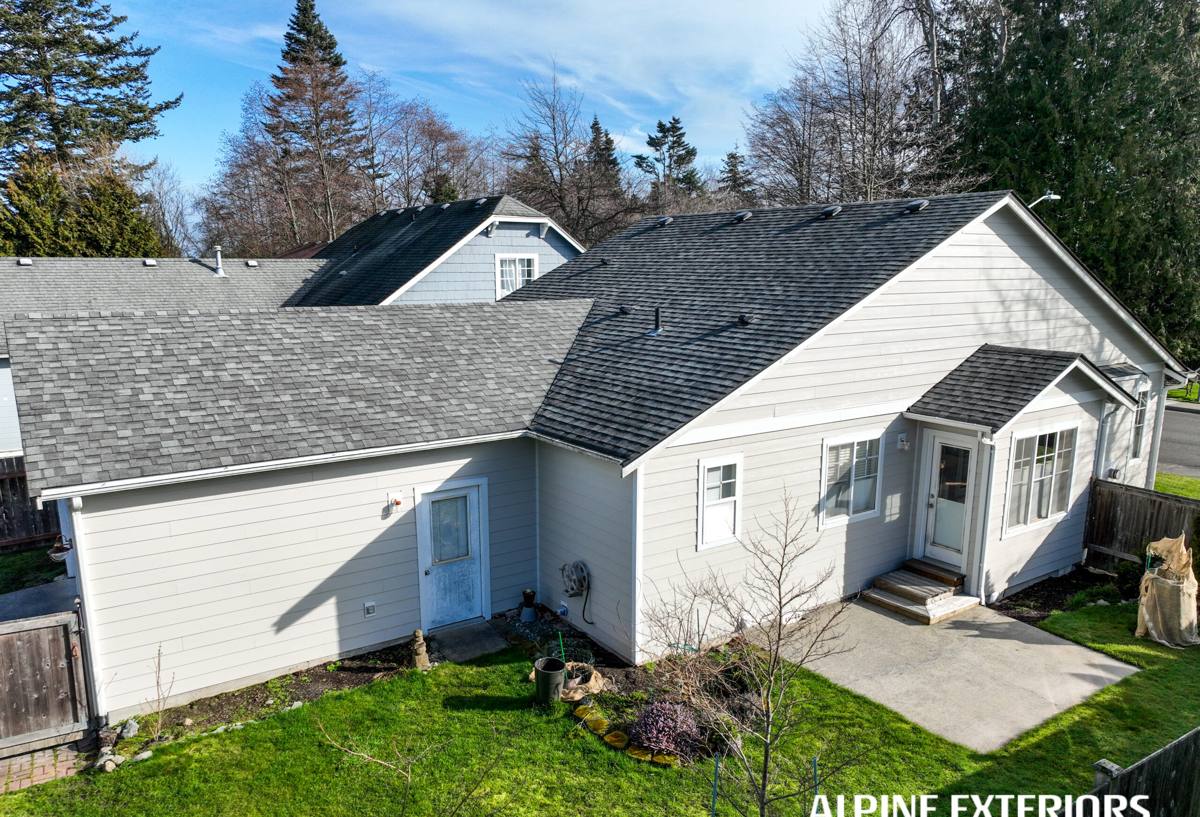
What "New Roof Installation" Actually Involves
A proper new roof is not just stripping old shingles and laying new ones on top of the same deck. Done right, it's a sequence of steps where each layer protects the one under it:
- Full tear-off down to the roof deck — never a layover, which traps moisture and hides deck damage
- Deck inspection and repair — soft, rotted, or delaminated plywood/OSB gets replaced, not covered
- Ice-and-water shield at eaves, valleys, and around every penetration, which matters more here than in drier parts of the state because of how often this roof sees standing moisture
- Synthetic or felt underlayment across the full deck as a secondary water barrier
- New flashing at chimneys, walls, skylights, and roof-to-wall transitions — reused old flashing is one of the most common causes of early leaks
- Proper intake and exhaust ventilation so the attic can actually dry out between rain events
- Field installation of the roofing material itself, with fastener patterns and exposure set to manufacturer spec, not "close enough"
Skip or rush any one of these and the roof will look fine for a year or two before the weak point shows up as a stain on a ceiling.
Choosing the Right Roofing Material for a Semiahmoo Home
There is no single "best" roofing material for every house here — the right choice depends on how exposed the roof is to wind, how much shade it sits under, and what the homeowner wants to spend on upkeep versus lifespan. Here's how the common options actually compare in this specific environment.
| Material | Salt air / corrosion behavior | Moss resistance | Typical lifespan here | Maintenance burden |
|---|---|---|---|---|
| Architectural asphalt shingle (algae-resistant) | Good with corrosion-resistant flashing and fasteners | Fair — needs periodic cleaning under shade | 20-30 years | Low to moderate |
| Standing-seam metal | Very good if coated/finished for coastal exposure; use marine-rated fasteners | Very good — sheds moss growth surface | 40-60 years | Low |
| Cedar shake | Fair — natural material, sensitive to constant damp | Poor without diligent upkeep | 20-30 years with maintenance | High |
| Composite/synthetic shake | Good — engineered to resist moisture cycling | Good | 30-50 years | Low to moderate |
For most Semiahmoo homes we recommend algae-resistant architectural shingles or standing-seam metal, and lean toward metal on roofs with heavy tree cover or direct bay exposure where moss and salt are both a factor. Cedar shake can still be the right call on a home where it matches the existing character of the neighborhood, but we're upfront that it asks for more maintenance in this climate than the alternatives.
Fasteners and Flashing Metal Matter As Much As the Roofing Material
Salt air corrodes uncoated steel fasteners and cheap flashing faster than most homeowners expect — sometimes within a handful of years on roofs close to the water. We use corrosion-resistant fasteners and flashing rated for coastal exposure on every Semiahmoo installation, not just on the homes closest to the bay. It costs a little more upfront and saves a callback five years down the road.
Roof Ventilation and Moisture Control in a Marine Climate
An attic that can't breathe stays damp longer after every rain, and a damp roof deck is exactly what moss, mold, and premature shingle failure feed on. Proper ventilation pulls cooler, drier air in at the eaves and pushes warm, moist air out near the ridge, which keeps the underside of the roof deck from sitting wet.
On a new roof installation, this is the point where ventilation is easiest and cheapest to get right, because the deck and roofing material are already off. Retrofitting ventilation later usually costs more and does less. We check existing intake and exhaust balance on every project and correct it as part of the install rather than leaving an undersized or blocked system in place.
Flashing and Water-Shedding Details That Matter This Close to the Water
Wind-driven rain off Semiahmoo Bay doesn't fall straight down — it can push up under shingle edges and around penetrations that would stay dry in a calmer inland location. That makes a handful of details non-negotiable on a coastal-exposed roof:
- Step flashing at every wall intersection, not continuous "L" flashing caulked in place
- Kick-out flashing where a roof edge meets a wall, so water is directed into the gutter instead of behind the siding
- Sealed, properly lapped valley construction rather than exposed nails in the water path
- Pipe boots and vent flashing rated for long-term UV and moisture exposure, not the cheapest stock option
These are small parts of the total job cost but they're where almost every roof leak we investigate in this area actually starts.
Our Installation Process, Step by Step
- On-site inspection and estimate — we look at the existing roof, attic ventilation, and any moss or moisture staining before quoting anything
- Material selection — we walk through the trade-offs above so the choice fits the home's exposure and the homeowner's budget
- Scheduling around weather — we plan installs for stretches of drier weather where possible and use temporary weather protection if conditions shift mid-project
- Tear-off and deck inspection — old material removed, deck checked and repaired as needed
- Underlayment, flashing, and ventilation installed to the standards above
- Roofing material installed to manufacturer specification for fastening pattern and exposure
- Cleanup and final walkthrough — site cleared of debris and nails, and we go over the finished roof with the homeowner
Signs You Need a New Roof, Not Another Repair
Not every roofing problem needs a full replacement, but there's a point where patching keeps costing more than it saves. Watch for:
- Granule loss heavy enough that shingles look bald or blotchy in patches
- Curling, cracking, or cupped shingle edges across large sections of the roof, not just one spot
- Repeated leaks in different locations after previous repairs
- Soft or spongy spots on the roof deck when walked
- Daylight visible through the roof deck from inside the attic
- A roof already past or near the end of its material's expected lifespan, especially with moss buildup that's been left unaddressed for multiple seasons
If you're only seeing one or two of these on a roof that's otherwise in decent shape, a repair may still make sense — we'll tell you honestly if that's the case rather than push a replacement you don't need yet.
Permits, Timeline, and What to Expect During the Project
Most residential re-roofing projects in Whatcom County require a permit, and we handle that as part of the job rather than leaving it to the homeowner. Timeline depends on roof size and weather, but a typical single-family roof replacement runs a few days once material is on site and weather cooperates. Because this is a marine climate, we build some schedule flexibility into every project rather than promising a start date we can't guarantee against a stretch of rain.
Why Hiring a Crew That Already Works Semiahmoo Matters
A roofing crew that mostly works drier, inland jobs can still install a technically correct roof — but they're less likely to automatically reach for coastal-rated fasteners, size ventilation for a moss-prone shaded lot, or plan flashing details around wind-driven rain, because those aren't problems they see every week. A crew that regularly works Blaine and the Semiahmoo area treats those details as standard practice, not an upgrade, because we've seen what happens on roofs where they were skipped.
If you're weighing a new roof for a Semiahmoo home, we're glad to come take a look, walk you through what your roof actually needs, and put together a straightforward, no-pressure estimate using the form below.