 Blaine Siding
 Why Semiahmoo Roofs Take a Different Kind of Beating
Semiahmoo sits out on the water — bordered by the bay, exposed to open wind off the Strait of Georgia, and close enough to the Canadian border that Pacific storm systems arrive with little to slow them down first. That combination of salt air, sustained wind, and driving rain is harder on a roof than the weather most inland Whatcom County homes deal with. A roof system that would hold up fine a few miles inland can show accelerated wear here — corroded fasteners, lifted shingle tabs, and flashing that's failed years before it should have.
We work storm damage calls in Semiahmoo regularly, not as an occasional stop on the way to somewhere else. That matters because storm damage repair isn't just patchwork — it's diagnosing what a specific storm, on a specific roof, in a specific exposure did, and fixing it so the next storm doesn't find the same weak point.
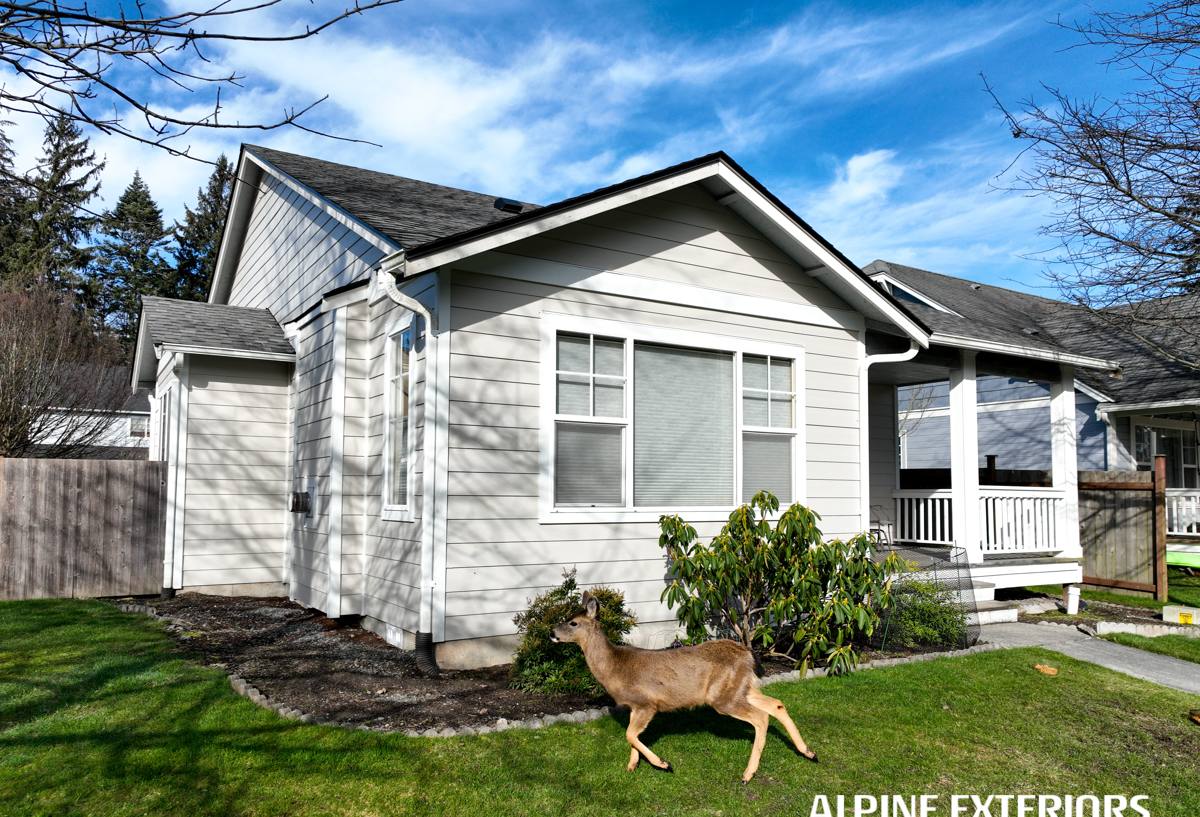
What Storm Damage Actually Looks Like Here
Damage you can see from the ground
Missing or lifted shingles are the obvious one, usually along ridgelines and roof edges where wind uplift is strongest. You might also spot bent or torn gutters, downspouts pulled loose, debris caught on the roof plane, or a section of ridge cap that's clearly out of line. After a windier system, it's common to see branch strikes — punctures or cracked shingles where a limb came down.
Damage you can't see from the ground
The damage that causes real problems is often invisible from the driveway. Wind can lift a shingle just enough to break its seal without tearing it off, which lets wind-driven rain work underneath on the next storm. Flashing around chimneys, skylights, and roof-to-wall transitions can separate slightly at the fasteners — again, no visible tear, just a gap that lets water in during the next heavy rain. Salt-laden air accelerates corrosion on exposed metal fasteners and flashing seams faster in a bayfront exposure like Semiahmoo than it would a few miles inland, so a flashing detail that's fine one season can be compromised the next.
This is why we don't just eyeball a roof from the ground and call it good. Storm damage repair starts with getting up there and checking seals, flashing laps, and fastener condition — not just counting missing shingles.
Salt Air, Moss, and the Whatcom County Aging Curve
Three things compound on Semiahmoo roofs, and they interact with each other:
- Salt air corrodes exposed metal — nail heads, flashing edges, gutter hangers, screws on any metal roofing — faster near open water than inland.
- Driving rain off storms coming through the strait pushes water sideways, not just down, which stresses laps, seals, and flashing details that would be fine under a straight-down rain.
- A long moss season, typical across Whatcom County's damp, shaded roofs, holds moisture against shingles for months at a time. Moss doesn't just look bad — it lifts shingle edges as it grows, which gives wind and rain a place to start.
None of these cause a roof to fail on their own overnight. What they do is shorten the margin a roof has left before storm damage turns into a leak. A roof that's already got moss undermining a few shingle edges is far more vulnerable to the next windstorm than a clean, well-sealed one — which is why storm damage repair on Semiahmoo roofs often turns up moss and corrosion issues alongside the storm's direct damage.
Our Storm Damage Repair Process
1. Fast assessment, not a fast guess
We start with a full roof inspection — not just the obviously damaged section. Storms rarely hit one spot; wind uplift and wind-driven rain tend to hit ridges, edges, valleys, and penetrations across the whole roof. We check the deck underneath damaged areas too, since a torn shingle can hide deck damage that needs to be addressed before anything gets re-covered.
2. Temporary protection when it's needed
If there's an active leak or exposed decking, the priority is keeping water out — tarping or temporary sealing — before we talk about the permanent repair. We won't leave a Semiahmoo roof exposed through another rain system while we wait to schedule the full fix.
3. A written scope before work starts
You get a clear, itemized description of what's damaged, what we're repairing or replacing, and why — including whether a repair is a real fix or a stopgap that buys time toward eventual replacement. No vague "storm repair" line item.
4. The repair itself
Matching shingles or roofing material as closely as possible, replacing compromised flashing rather than just resealing it, and checking fastener condition on the surrounding field, not just the damaged section. If corrosion or lifted seals show up nearby, we flag it — patching around a problem that's about to become the next one isn't a real repair.
5. Cleanup and a final walk-through
Debris, old material, and stray fasteners get cleared from the roof, gutters, and yard. We walk the finished repair with you so you know exactly what was done.
Repair or Replace: How We Decide
Not every storm-damaged roof needs full replacement, and not every roof is worth repairing again. We look at the whole picture before recommending either one.
| Factor | Leans Toward Repair | Leans Toward Replacement |
|---|---|---|
| Age of roofing material | Under roughly 10-12 years, in otherwise good condition | Near or past its expected service life for the material |
| Extent of damage | Isolated area — one slope, one flashing detail, a branch strike | Damage spread across multiple slopes or repeated storm events |
| Underlying deck condition | Deck is sound, dry, and undamaged | Deck shows rot, soft spots, or repeated water staining |
| Moss and corrosion history | Minimal — this storm is the primary issue | Long-term moss damage or fastener corrosion found alongside storm damage |
| Insurance claim scope | Claim covers a defined, limited repair | Adjuster's scope already points to full slope or full roof replacement |
We'll tell you honestly which side of that table your roof falls on. A repair that's really just delaying an unavoidable replacement isn't a favor to a homeowner — it's money spent twice.
Materials That Actually Hold Up on the Coast
Storm repair materials matter more here than in a drier, inland exposure. We use fastener and flashing materials chosen for corrosion resistance in a salt-air environment, and we don't cut corners on underlayment or flashing details just because they're hidden once the job's done — those hidden details are exactly what fail first in a bayfront wind exposure.
| Material | Where It's Used | Why It Matters on Semiahmoo |
|---|---|---|
| Stainless or hot-dip galvanized fasteners | Shingle and flashing attachment | Standard electro-galvanized fasteners corrode faster in salt air, which loosens shingles over time |
| Properly lapped step and counter-flashing | Chimneys, walls, skylights | Wind-driven rain needs a correctly shingled lap, not just a bead of sealant, to stay out |
| Ice-and-water membrane at vulnerable points | Valleys, eaves, penetrations | Backs up the primary roofing where wind-driven rain is most likely to find a gap |
On the product side, our standard is to install materials with a track record for coastal Pacific Northwest exposure, and to be upfront when a product carries real maintenance trade-offs — some flashing and trim options look good initially but demand more upkeep in a salt-air environment than others. We'd rather tell you that before installation than have it become a callback.
Working With Your Insurance Company
Most storm damage repairs on Semiahmoo roofs involve an insurance claim, and the process goes smoother when the documentation is solid from the start.
- We document damage with photos and a written assessment before any repair work begins.
- We can meet an adjuster on-site and walk the roof with them, pointing out damage that isn't obvious from a ground-level or drone-only inspection.
- We provide a clear scope of work and cost breakdown your insurer can review against their own estimate.
- If the adjuster's scope misses damage we found — a common issue with hidden flashing or fastener damage — we'll point it out in writing so you can supplement the claim if needed.
We're not a public adjuster and we don't work for the insurance company — our job is to document what your roof actually needs and make sure that gets factored into the claim, not to inflate or minimize anything either direction.
Post-Storm Checklist for Semiahmoo Homeowners
After a wind or rain event, a quick check can catch problems before they turn into interior damage:
- Walk the yard and check for granules collecting in gutters or at downspout outlets — a sign of shingle wear or damage.
- Look for shingle pieces, flashing fragments, or ridge cap material on the ground.
- Check ceilings and attic spaces (if accessible) for new water stains or damp insulation.
- Note any branches or debris that landed on the roof, even if nothing looks obviously broken.
- Check gutters and downspouts for new dents, separation, or sagging sections.
- If you can safely see the roof from a window or neighboring vantage point, look for shingles that appear lifted, curled, or missing.
If you see any of these, it's worth a professional look before the next storm system moves through — a small, sealed repair now is a lot less disruptive than a ceiling leak later.
Why a Local Blaine Crew Matters for Semiahmoo Storm Repair
Storm damage repair is time-sensitive in a way that a lot of exterior work isn't. When Semiahmoo gets hit, it's usually because a system moved through Whatcom County broadly, which means a lot of roofs need attention at once. A crew that's based in Blaine and already familiar with Semiahmoo's exposure — the wind direction it typically gets hit from, the way salt air ages materials here, the moss patterns on shaded roofs near the water — can respond faster and diagnose more accurately than a crew driving in from outside the area for the first time.
We're not sizing up your roof from a satellite photo or a generic regional average. We know what storm damage tends to look like on a Semiahmoo roof specifically, because we've repaired it before.
If your roof took damage in a recent storm — or you just want a professional set of eyes on it before the next one arrives — we're happy to take a look. Reach out for a free, no-pressure estimate using the form below.