 Blaine Siding
 Siding Built for Semiahmoo's Coastline
Semiahmoo sits right where Whatcom County meets Semiahmoo Bay and the Strait of Georgia, and that location shapes everything about how a home's exterior ages here. Salt-laden air moves off the water and settles on siding, trim, and fasteners year-round. Driving rain off the Pacific comes in sideways during fall and winter storms, testing every seam and joint in a wall assembly. And because this corner of Washington stays cool and damp for most of the year, moss and algae get a long runway to establish themselves on any surface that holds moisture. None of this is unique to one street or one subdivision in Semiahmoo — it's the baseline condition every home here has to be built to handle.
Siding installation in this environment isn't just about picking a product and nailing it up. It's about understanding how salt, water, and organic growth interact with different materials over ten, twenty, and thirty years, and building an assembly that holds up to all three at once.
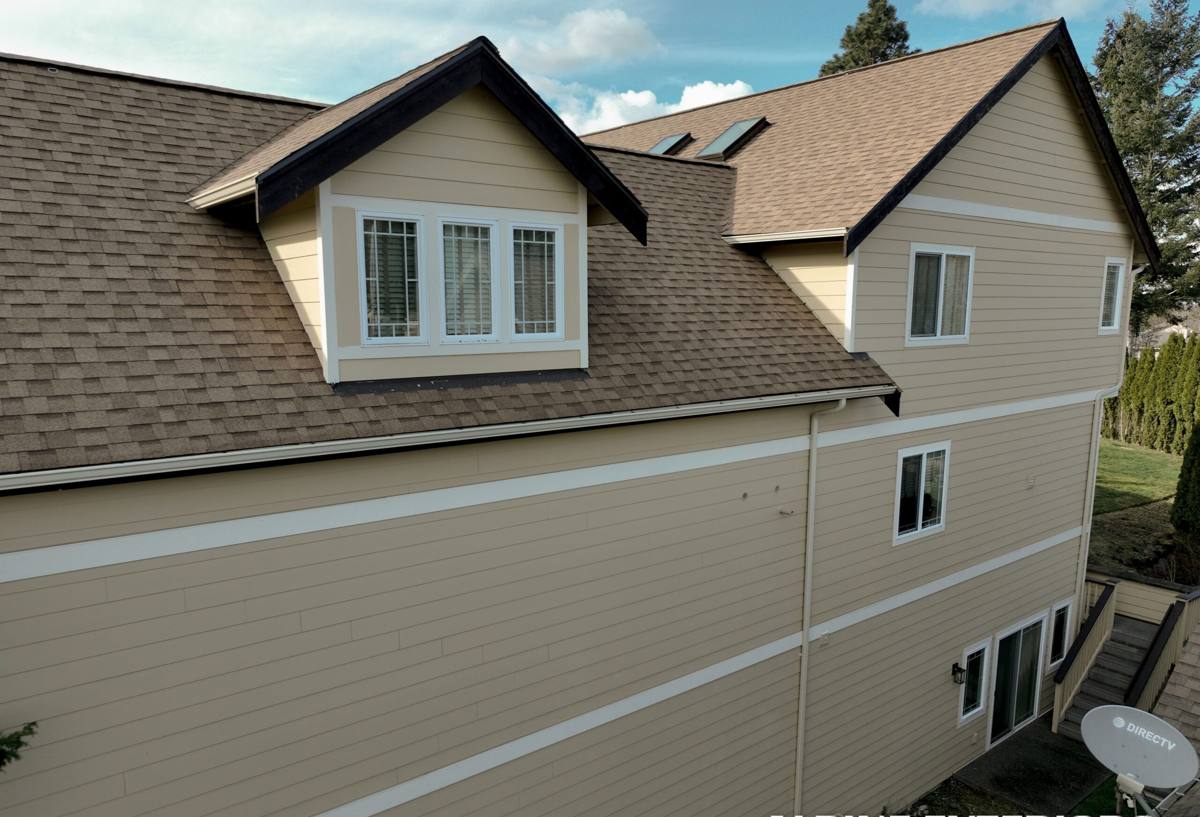
What Salt Air and Driving Rain Actually Do to Siding
Salt Exposure
Airborne salt is corrosive to metal fasteners, flashing, and trim accessories, and it accelerates the breakdown of finishes that aren't formulated to resist it. Over time, salt residue can also hold moisture against a wall surface longer than it would in a drier inland climate, which compounds the next problem.
Driving Rain and Wind-Driven Moisture
Semiahmoo's exposure to weather coming off the water means siding doesn't just get rained on — it gets rained on at an angle, with wind pushing water into laps, seams, and penetrations that a calmer climate would never test. A siding system that isn't detailed correctly at those transition points will eventually let water behind it, and once water gets behind siding, the sheathing and framing underneath are what actually pay the price.
Extended Moss and Algae Season
Cool temperatures, shade from mature trees, and near-constant humidity give moss and algae a much longer growing window in Whatcom County than in drier parts of the state. Surfaces that stay damp — north-facing walls, areas under eaves with poor airflow, anything shaded most of the day — are the first to show green and black staining if the material and finish aren't up to the job.
What Correct Installation Involves
A siding job that's going to hold up in Semiahmoo's conditions is won or lost in the details that aren't visible once the project is done. We treat the following as non-negotiable on every installation:
Weather-Resistive Barrier and Drainage Plane
A continuous, properly lapped weather-resistive barrier goes behind every siding installation, with all seams, penetrations, and window/door openings flashed to shed water downward and outward — never trapping it against the sheathing.
Rain Screen Gap
Where the assembly calls for it, we build in a drainage gap between the back of the siding and the water-resistive barrier. That gap lets any moisture that does get past the siding surface drain and dry out instead of sitting against the wall, which matters more here than almost anywhere else in the state given how much wind-driven rain this area sees.
Fastening and Clearances
Fasteners, spacing, and nailing patterns follow manufacturer specification exactly — not "close enough." We also hold correct clearances from grade, roofing, decks, and other transitions so water has somewhere to go instead of wicking up into the bottom edge of the siding.
Flashing at Every Penetration
Windows, doors, hose bibs, light fixtures, vents — every single penetration through the siding is a potential entry point for water if it isn't flashed correctly. This is one of the most common failure points we find on older homes in coastal Whatcom County, and it's one of the easiest to get right the first time.
Why We Install Only James Hardie Fiber Cement
We install one siding system: James Hardie fiber cement. We made that decision after years of seeing how different materials actually perform in this climate, not just how they look going up. Fiber cement is non-combustible, dimensionally stable in wet-dry cycling, and doesn't feed moss and algae growth the way some organic and wood-based materials can. James Hardie's ColorPlus finish is baked on at the factory under controlled conditions, which gives it more consistent resistance to fading and moisture than field-applied paint. And James Hardie engineers specific product lines — including HZ5 formulations — for regions with exactly the kind of moisture exposure Semiahmoo deals with.
We don't install vinyl, LP SmartSide, Cemplank, Allura, or primed wood species like spruce or cedar. Each of those has legitimate uses somewhere, but each also comes with a real-world trade-off in a salt-air, high-rainfall climate — whether that's moisture sensitivity at cut edges, a maintenance-paint cycle that never really ends, or a warranty structure that doesn't match what we're comfortable standing behind. Refusing to install products we don't trust in this environment is a standard we hold on every job, not a sales pitch.
Comparing Siding Options for a Semiahmoo Home
| Factor | James Hardie Fiber Cement | Vinyl | Wood / Engineered Wood |
|---|---|---|---|
| Moisture behavior in driving rain | Dimensionally stable, engineered for wet climates | Can warp or buckle; seams are weak points | Prone to swelling, rot, and edge damage if moisture gets in |
| Salt air resistance | Factory finish resists fading and salt residue buildup | Can chalk and discolor faster near saltwater | Finish breaks down faster; more frequent repainting |
| Moss/algae resistance | Non-organic material, less hospitable to growth | Moderate; grime and algae can cling to seams | Higher risk, especially on shaded or north-facing walls |
| Fire resistance | Non-combustible | Combustible | Combustible |
| Typical maintenance | Periodic washing; no repainting for years | Low but seams and fasteners degrade over time | Regular repainting/resealing required |
Our Installation Process
1. On-Site Assessment
We start with a walk of the exterior, checking existing siding condition, wall orientation relative to prevailing wind and rain, shaded areas prone to moss, and any signs of past water intrusion around windows, doors, and trim.
2. Tear-Off and Sheathing Check
Old siding comes off and we inspect the sheathing underneath. This is often the first time hidden moisture damage from a previous installation shows up, and it needs to be addressed before anything new goes on the wall.
3. Weather Barrier and Flashing
We install the weather-resistive barrier, flash every window, door, and penetration, and set up drainage detailing appropriate to the wall assembly before a single piece of siding is hung.
4. Hardie Installation
Panels or planks go up per James Hardie's fastening specifications, with correct clearances at grade, roofing, and trim, and attention to how each course laps the one below it to shed water correctly.
5. Trim, Caulking, and Final Detail
Trim, corners, and joints are finished and sealed where specified. We don't rely on caulk to cover up a flashing mistake — sealant is a finishing detail, not a substitute for correct water management underneath.
6. Walkthrough and Cleanup
We walk the finished job with the homeowner, review what was done, and clean up the site completely before we consider the project finished.
What Drives Cost on a Semiahmoo Siding Project
| Cost Factor | Why It Matters |
|---|---|
| Home size and wall complexity | More corners, gables, and transitions mean more cutting, flashing, and labor time |
| Existing siding removal | Tear-off of old material and any sheathing repair adds time before new siding starts |
| Product line and profile | James Hardie offers multiple plank widths, panel styles, and textures at different price points |
| Trim and accessory scope | Corner boards, window trim, and fascia detail add material and labor beyond the field siding |
| Site access | Tight lots, slopes, or limited staging area affect scaffolding and material handling |
We don't quote off square footage alone — every estimate reflects what your specific home actually needs, based on an on-site look, not a phone guess.
Signs a Semiahmoo Home Needs New Siding
- Visible moss, algae, or dark staining that returns quickly after cleaning
- Soft spots, bubbling, or warping anywhere on the siding surface
- Paint that's peeling or bubbling in a pattern, not just wearing evenly
- Gaps or cracking at seams, corners, or around window and door trim
- Musty smell or visible moisture damage on interior walls near exterior corners
- Siding that's original to a home built more than 20-25 years ago in a wood or older composite product
Why Local Experience in Semiahmoo Matters
A siding assembly that works fine in a dry, inland climate can fail within a few years right on the water in Whatcom County. Knowing how wind-driven rain moves across a wall, which orientations collect the most moss, and how salt air interacts with different fastener and finish types isn't generic knowledge — it's specific to working this exact stretch of coastline. A crew that already installs siding regularly in Blaine and the surrounding Semiahmoo area brings that judgment to your project instead of learning it on your house.
Living With Hardie Siding in a Salt-Air, High-Moss Climate
Correctly installed James Hardie siding is low-maintenance, not no-maintenance. A periodic rinse to clear salt residue, pollen, and early moss growth keeps the factory finish looking the way it should. Keeping gutters clear and vegetation trimmed back from walls reduces the shaded, damp conditions that give moss the best foothold. Beyond that, there's no repainting cycle to manage the way there is with wood or engineered wood siding — the finish is built to last for years under exactly the conditions Semiahmoo sees most.
If your Semiahmoo home's siding is showing its age, or you're planning ahead for a project, we're happy to take a look and talk through what correct installation looks like for your specific home. Reach out using the form below for a free, no-pressure estimate.