 Blaine Siding
 Exterior Work on the Peace Arch Waterfront
The stretch of Blaine around Peace Arch sits about as close to the Salish Sea as a home in Whatcom County can get. That location is part of what makes the area desirable — and it's also what makes the exterior of a house work harder than it would a few miles inland. Salt-laden air off Semiahmoo Bay and Boundary Bay, wind-driven rain that comes in sideways off the water, and long stretches of gray, damp weather all land directly on siding, trim, roofing, and window seals. We've worked on homes throughout this part of Blaine long enough to know which materials hold up out here and which ones start showing problems within a few years.
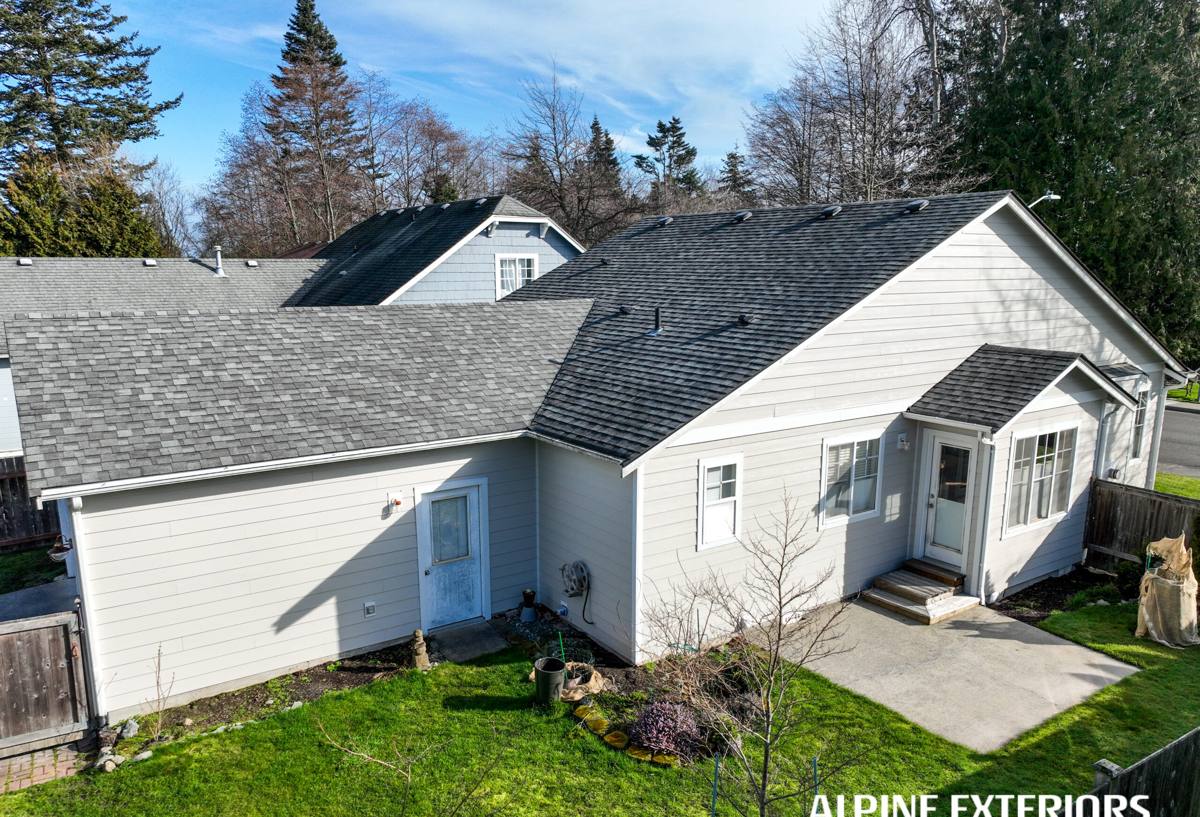
This page is about siding first, since that's the material carrying the brunt of that coastal exposure day in and day out. But we'll also touch on roofing, windows, and decks, because on a property this close to the water, the whole exterior envelope has to work together — a solid siding job doesn't mean much if water is getting in around a window or a deck ledger.
What the Coastal Climate Actually Does to a House
Salt Air and Corrosion
Airborne salt from the bay settles on every exterior surface, not just siding. It accelerates corrosion on fasteners, flashing, and hardware, and it can degrade certain coatings faster than manufacturers' standard testing accounts for. Materials and fastener systems rated for general Pacific Northwest use don't always perform the same way a quarter-mile from saltwater as they do twenty miles inland.
Driving Rain
Blaine gets plenty of rain generally, but the Peace Arch waterfront also catches wind off the water that pushes rain horizontally into wall assemblies, not just straight down onto roofs. That means water management — flashing, house wrap, proper laps, and caulking at penetrations — matters more here than it does on a sheltered inland lot. Siding that relies on face-sealing (caulk and paint alone) to keep water out tends to fail faster under this kind of exposure than siding installed with proper drainage planes and flashing details.
Moss, Algae, and the Long Wet Season
Shaded, north-facing walls and anything under tree cover stay damp for extended stretches through fall, winter, and spring. That's ideal growing conditions for moss and algae on any surface with texture or organic content for them to take hold on. Over years, that persistent moisture and biological growth can work into seams, fastener holes, and butt joints on materials that aren't dimensionally stable or that absorb water into their core.
Mild but Persistent Wet-Dry Cycling
Whatcom County doesn't see the deep freeze-thaw cycles of colder climates, but coastal homes here do go through repeated wetting and drying as weather rolls through. Materials that swell when wet and shrink when dry — over and over, year after year — eventually show it in the form of cupping, warping, or open joints, even without a hard freeze to blame.
How Common Siding Materials Hold Up Out Here
We get asked fairly often why we settled on one product line instead of offering the usual menu of options. Here's an honest look at how the common choices perform under Peace Arch's specific conditions.
| Material | How it handles salt air & driving rain | Long-term concern on this coastline |
|---|---|---|
| Vinyl siding | Doesn't corrode, but panels expand/contract more with temperature and can loosen or warp over time; seams rely on lapping, not sealing | UV and salt exposure can fade and become brittle faster near the water; repairs are visible since color isn't uniform batch to batch |
| LP SmartSide (engineered wood) | Treated to resist moisture, but it's still a wood-strand product at its core | Edges and cut ends need diligent field sealing; sustained damp exposure raises the stakes if any detail is missed during install |
| Cedar / primed wood | Naturally attractive, but wood absorbs moisture directly | Requires the most ongoing maintenance of any option here — repainting, caulking, and moss/mildew treatment on a recurring cycle |
| James Hardie fiber cement | Won't rot, won't absorb water into a wood-fiber core, non-combustible, dimensionally stable across wet/dry cycles | Requires correct installation (proper clearances, flashing, fastening) to get full performance — which is on the installer, not the product |
None of these are "bad" products in every setting. But we've made a professional decision to stop installing the ones that need the most forgiveness from the weather to perform well, because the weather here doesn't offer much forgiveness.
Why We Install James Hardie Fiber Cement — and Nothing Else
We install James Hardie siding exclusively. Not because it's the only decent product on the market, but because after years of coastal exterior work in Blaine and the rest of Whatcom County, it's the one we're comfortable standing behind on a property like this.
- Cement-based composition: Hardie board is made primarily from sand, cement, and cellulose fiber — there's no wood core to absorb moisture and swell, and nothing for moss or mildew to feed on the way they can with organic siding materials.
- Non-combustible: Fiber cement doesn't contribute fuel to a fire, which matters to insurers and to homeowners regardless of proximity to water.
- ColorPlus factory finish: The color is baked on in a controlled factory environment rather than painted on site, which holds up better against UV and salt exposure than field-applied paint and doesn't require repainting on the same schedule as wood siding.
- Climate-engineered HZ product lines: Hardie manufactures HZ5 formulations specifically for wetter, moisture-prone climates like ours — a detail that matters more here than it would in a dry inland region.
- Dimensional stability: It doesn't cup, warp, or swell the way wood-based products can when they cycle through repeated wet and dry periods.
- Transferable warranty: Hardie's warranty structure is one of the stronger ones in the category, and it's transferable to a future owner if the home sells — worth mentioning on a stretch of the county where properties do turn over.
None of that replaces correct installation. Fiber cement is less forgiving of poor detailing than some of the alternatives — clearances, fastener patterns, and flashing all have to be right. That's exactly why we treat installation as seriously as the material choice itself.
How We Install Siding for Coastal Exposure
The product is only half of what determines how a siding job performs here. The other half is the install itself, and on a Peace Arch property we pay particular attention to:
- Proper drainage plane and house wrap behind the siding, not reliance on caulk alone to keep water out
- Correct flashing at windows, doors, and any wall penetrations, since driving rain finds gaps that vertical rain never would
- Manufacturer-specified clearances from grade, roofing, and decks so moisture doesn't wick up into the bottom course
- Fastener spacing and type matched to Hardie's specifications for the exposure level, since corrosion-resistant fasteners matter more this close to saltwater
- Careful caulking and sealing at butt joints and trim, done to spec rather than as an afterthought
These are the kinds of details that don't show up in a walk-around estimate but show up ten years later in whether the siding is still doing its job.
The Rest of the Exterior: Roofing, Windows, and Decks
Siding doesn't work in isolation. On a coastal Blaine property, we look at the whole exterior envelope, because water and salt exposure affect all of it together.
Roofing
A roof that's shedding water properly protects the siding below it — bad flashing at a roofline is one of the more common sources of siding damage we find, even when the siding itself is sound. Moss on roofing in shaded, damp areas is a familiar issue out here and worth addressing before it spreads to walls and gutters.
Windows
Window flashing and sealant are a frequent point of water intrusion on older coastal homes. When we're already opening up a wall for siding work, it's often the right time to address window flashing rather than waiting for a separate project down the line.
Decks
Decks facing the water take their own beating from salt air and sun, and ledger-board connections where a deck meets the house are another common water-entry point that affects the siding right next to it.
Because we handle all four of these trades, we can look at a Peace Arch property as one connected system rather than patching one component while ignoring how it interacts with the rest.
Maintenance in a Salt-Air, High-Moss Environment
Even with a low-maintenance material like fiber cement, homes this close to the water benefit from a bit of regular attention:
- Rinse siding periodically to clear accumulated salt residue, especially on walls facing the water
- Keep gutters and downspouts clear so water isn't overflowing onto siding below
- Trim back vegetation and tree cover on shaded walls to reduce the damp conditions moss favors
- Inspect caulking at trim, windows, and butt joints every year or two and touch up as needed
- Address any moss or algae growth early with an appropriate cleaning approach rather than letting it establish
- Have flashing at rooflines, windows, and decks checked periodically, since these are the most common points where water actually gets behind siding
Why a Local Crew Matters Here
Peace Arch and the Blaine waterfront aren't quite like the rest of Whatcom County, and they're a different exposure profile than most of western Washington generally. A crew that mostly works inland jobs may not think twice about fastener corrosion resistance or wind-driven rain details, because most of their work doesn't demand it. We work this coastline regularly enough to know which details matter here specifically, and we install one siding system precisely because we've seen how it performs under these conditions over time — not because it's the easiest one to sell.
If you're weighing siding, roofing, window, or deck work on a Peace Arch or Blaine property, we're happy to take a look and talk through what your home's specific exposure calls for. Reach out for a free, no-pressure estimate using the form below.