 Blaine Siding
 Everson's Climate: What Your Siding Is Really Up Against
Everson sits inland from the Salish Sea, but weather in Whatcom County doesn't respect town lines. The same marine air that rolls off Puget Sound and the Strait of Georgia carries moisture and a faint salt load well into the county's interior, and Everson gets its share of it. Add in the driving, sideways rain that shows up during fall and winter storm systems, plus a moss season that can run eight months or more in shaded, north-facing spots, and you have an exterior environment that punishes weak materials and sloppy installation work.
None of this is dramatic on any given day. It's cumulative. A house that looks fine in July can be hiding trapped moisture, softened trim, or moss colonies working into seams by the following spring. That slow, quiet damage is why exterior work in this part of Whatcom County has to be chosen and installed with the local climate in mind, not just picked off a showroom sample board.
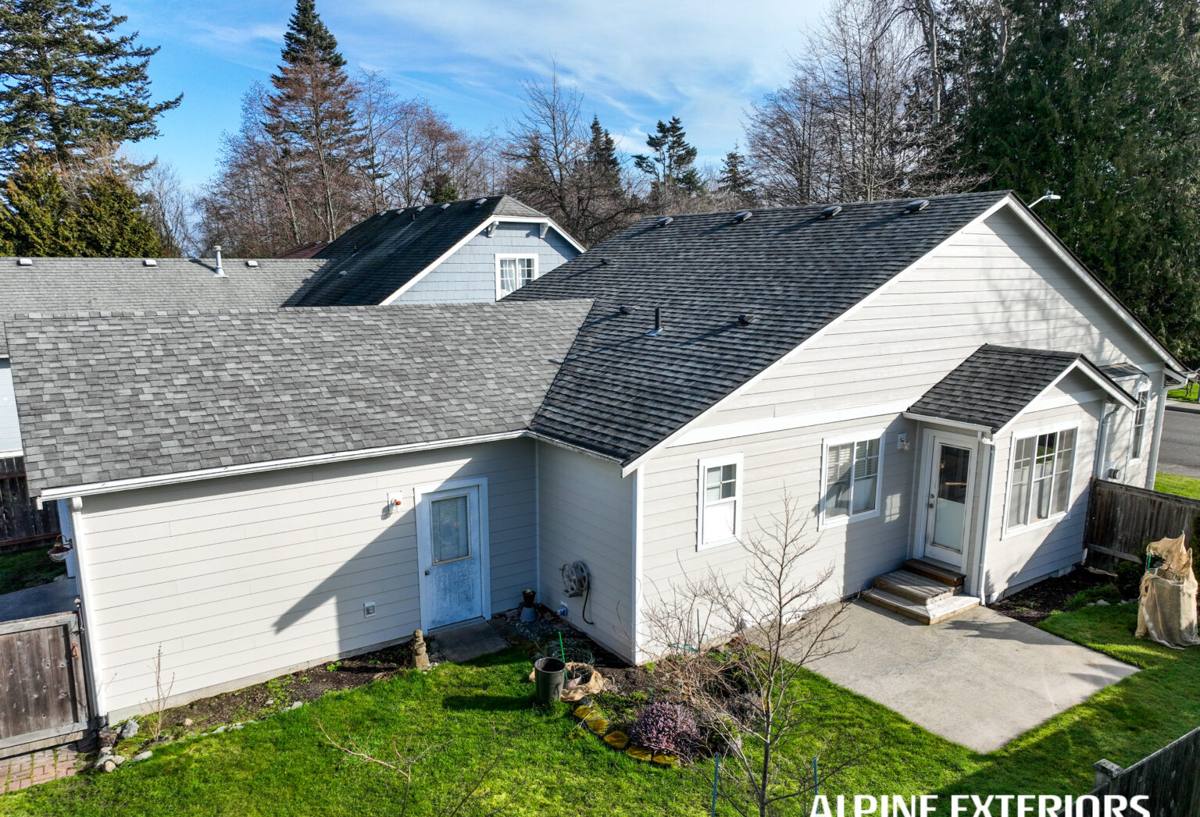
How Driving Rain and Moss Season Actually Damage Siding
Wind-driven rain doesn't just fall on a wall — it gets pushed sideways and upward into laps, joints, and fastener points. On siding that isn't dimensionally stable, that moisture gets absorbed into the material itself, not just into the surface. Over repeated cycles, that leads to swelling, cupping, and eventually rot at the panel edges and butt joints, especially anywhere caulk has started to fail.
Moss adds a second layer of trouble. It thrives in the shaded, slow-drying corners that every Everson lot seems to have — under eaves, along fence lines, on north walls that rarely see direct sun. Moss holds moisture directly against the siding surface for weeks at a time, which keeps wood-based products damp far longer than a simple rain event would. It also works its way into laps and butt joints, prying them open millimeter by millimeter.
The Compounding Effect
Rain plus moss plus a long, mild wet season is worse than any one factor alone. A siding product that can handle occasional heavy rain might still fail if it's also sitting damp under moss for half the year. That combination is exactly why we're selective about what goes on a home in this region.
Why We Only Install James Hardie Fiber Cement
We install James Hardie fiber cement siding exclusively. We don't install vinyl, LP SmartSide, cedar, primed spruce, or other fiber cement brands — not because those products have no legitimate use anywhere, but because after years of exterior work in this climate, we standardized on the one product line that consistently holds up to what Whatcom County throws at a house.
Fiber cement is made from cement, sand, and cellulose fibers. It doesn't absorb water the way wood-based siding can, and it won't soften or swell the way engineered wood products can when a seam opens up. It's also non-combustible, which matters increasingly as wildfire smoke and dry-season risk become part of the conversation even in wetter parts of Washington.
James Hardie's ColorPlus factory-applied finish is baked on under controlled conditions rather than field-painted, which gives it better adhesion and more consistent coverage than a job-site paint job, especially in laps and cut edges where field-applied finishes tend to fail first. Hardie also engineers regional product lines (their HZ5 line is built for harsher, wetter climates), so the product specification itself accounts for exactly the rain and moisture exposure Everson homes deal with. Backed by a strong transferable warranty, it's the product we're comfortable standing behind on a house that has to survive decades of this weather, not just look good on installation day.
Beyond Siding: Roofing, Windows, and Decks Built for the Same Climate
Siding doesn't work in isolation. The same rain and moss pressure that affects wall cladding affects everything else on the exterior, so we treat the whole envelope as one system rather than a set of separate projects.
Roofing
A roof with failing flashing or moss buildup in the valleys sends water downhill toward the siding and trim below it. Roof inspections and moss treatment matter as much for what they prevent lower on the house as for the roof itself.
Windows
Window flashing and sealant are common failure points where wind-driven rain finds its way behind the cladding. Properly integrated window flashing, tied correctly into the siding's water management plane, is one of the most important — and most often rushed — parts of an exterior job.
Decks
Decks take the same driving rain and moss exposure as siding, but horizontally, which is harder on fasteners, ledger connections, and board spacing. Deck work that ignores drainage and airflow underneath tends to show rot and moss growth years before it should.
Handling siding, roofing, windows, and decks together means fewer gaps where one trade assumes another handled the water management, and fewer callbacks down the road.
What to Look For When Hiring a Siding Contractor in Whatcom County
Everson homeowners don't have an unlimited number of contractors to choose from, and that makes vetting more important, not less. A few things worth checking before signing anything:
- Active Washington contractor license and current liability insurance — ask to see the license number and verify it, don't just take a business card at face value
- Manufacturer training or certification specific to the siding product being installed, not just general carpentry experience
- A written scope that specifies flashing details, house wrap or weather-resistive barrier, and fastener schedule — not just "install siding"
- References or completed local work you can actually see in person, given the climate here punishes bad installation faster than drier regions
- A clear warranty explanation covering both materials and labor, in writing, before work starts
- Willingness to explain why they use the products they use, rather than defaulting to whatever is cheapest that week
A crew that works in Whatcom County regularly understands things a traveling or out-of-area contractor won't — how far moss season really runs here, which wall orientations need extra attention, and how local building department expectations for flashing and drainage planes get enforced.
Siding Options Compared
| Material | Moisture Behavior | Moss Resistance | Typical Maintenance | Finish Durability |
|---|---|---|---|---|
| James Hardie Fiber Cement | Doesn't absorb and swell like wood-based products | Doesn't feed moss growth; surface sheds and cleans well | Periodic washing; repaint only when the owner chooses a color change | Factory-baked ColorPlus finish resists fading and chalking |
| Vinyl | Doesn't absorb water, but seams and panels can warp or gap over time | Can trap moisture and debris behind panels where moss and mildew take hold | Low, but panels can crack in impact or extreme cold | Color is through-body but can fade and chalk over many years |
| LP SmartSide (engineered wood) | Wood-based core is vulnerable at cut edges and failed seams | Prolonged dampness at seams can accelerate deterioration | Requires diligent caulking and repainting on a maintenance schedule | Field or factory finish depends on product; edges need ongoing attention |
| Cedar / Primed Spruce | Absorbs moisture readily; needs consistent airflow and sealing | Highly susceptible; organic material moss can actively colonize | High — regular refinishing, sealing, and moss treatment | Field-applied finishes wear fastest of the group |
This isn't a claim that every alternative product fails — it's why, for the specific conditions Everson homes face, fiber cement is the material we're willing to warranty and stand behind.
A Homeowner's Seasonal Exterior Checklist
Between professional inspections, a few simple habits catch problems while they're still small and cheap to fix:
- Walk the perimeter each fall and look for moss starting on north-facing walls, fences, and roof valleys
- Check caulking at window and door trim for cracking or gaps, especially on walls that take direct wind-driven rain
- Clear gutters before the heavy fall rains so water isn't overflowing directly onto siding below
- Look at deck ledger boards and fastener heads for rust staining or soft spots
- Note any siding panels that feel soft, look swollen, or show dark staining at the bottom edge
- Trim back vegetation and tree limbs that keep a wall shaded and slow to dry
Catching any of these early is usually a small repair. Left through another wet season, they tend to turn into a full section replacement.
Why a Local Crew Actually Matters Here
Exterior work in Everson isn't the same job as the same product installed in a drier climate. A crew that works Whatcom County year-round knows which details actually get tested by this weather — where flashing has to be nearly perfect, which wall orientations need extra drying time between rain events, and how long moss season really runs here versus what a general contractor's schedule might assume. That local knowledge shows up in the small decisions made on-site, not just in the materials on the invoice.
If you're weighing a siding, roofing, window, or deck project for your Everson home, we're glad to come take a look and talk through what your house actually needs — no pressure, no upsell script. A free estimate is a good way to find out where you stand before committing to anything.