 Blaine Siding
 Why This Decision Gets Harder Near the Water
Every siding system eventually reaches a point where patching stops making sense. In most of the country, that point is easy to see coming. In Blaine, it isn't. Salt-laden air off the Strait of Georgia, long stretches of driving rain, and a moss season that can run from October into May all work on siding faster than homeowners expect, often hiding damage behind boards that still look presentable from the sidewalk. That's what makes this decision genuinely tricky here in Whatcom County: the visible clues and the actual condition of the wall behind the siding don't always match up.
This page walks through how to tell the difference between a repair situation and a replacement situation, what's usually happening underneath when siding starts to fail, and what it actually costs to go one route versus the other.
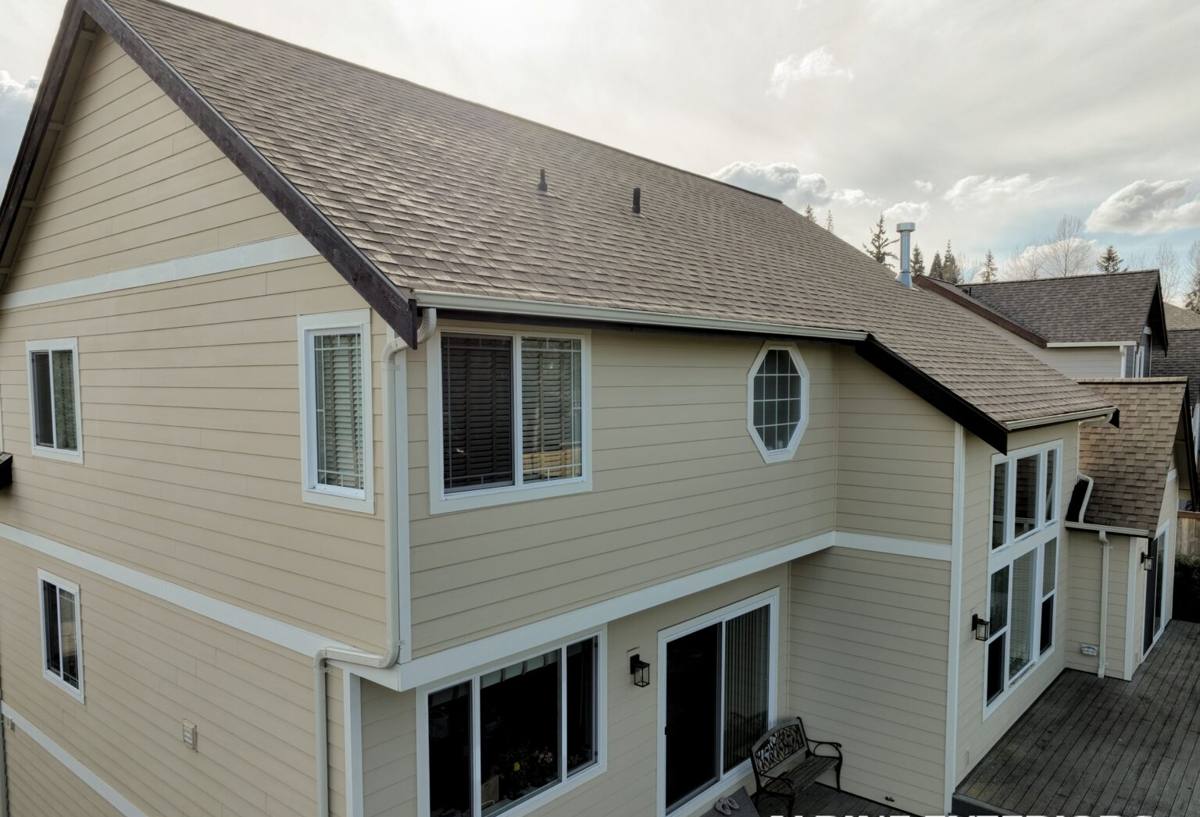
When Repair Is the Right Call
Repair still makes sense in a lot of situations, and a straight-shooting contractor should tell you when it does, not just push replacement because it's the bigger job. Good candidates for repair include:
- A single damaged board or a small cluster of boards from an isolated impact, not general wear
- Failed caulking or trim that's letting water in but hasn't yet reached the sheathing
- Cosmetic fading or chalking on a system that's structurally sound and under 10-15 years old
- Moss or algae growth that's surface-level and hasn't compromised the material underneath
- A recent siding install (under warranty) with an isolated installation defect
If the problem is contained, the underlying material is sound, and the rest of the siding has years of life left, repair is the honest recommendation. Replacing an entire wall over one bad board isn't good stewardship of a homeowner's money.
When You're Past the Repair Point
The harder cases are the ones where damage looks localized but isn't. Siding failure on the coast tends to spread underneath the surface before it shows up visibly in more than one spot. Signs that you've moved from "repair" to "replace" territory include:
- Soft, spongy, or crumbling siding in more than one area of the house, especially on the north and west-facing walls that take the brunt of driving rain
- Persistent moss or algae staining that returns within a season or two of cleaning
- Visible cupping, warping, or delamination across multiple boards rather than one section
- Paint that won't hold for more than a couple of years no matter how it's prepped
- Soft spots in the wall when you press on it, or a hollow sound when you knock on it
- Interior signs — musty smells, peeling interior paint near exterior walls, or visible staining on interior drywall
- Siding that's simply reached the end of its expected service life for its material type
Once damage shows up in more than one location, the odds are good that moisture has been moving behind the siding for a while, and patching individual spots just delays a bigger repair bill later.
What's Actually Happening Behind the Boards
Siding's real job isn't decoration — it's managing water. When a seam opens, paint fails, or a board cups, water starts finding its way behind the cladding and onto the weather-resistive barrier and sheathing. In a dry climate, an occasional gap might dry out before it causes damage. In Blaine, where rain is frequent and humidity stays high for long stretches, that drying window often doesn't exist. Water gets in, doesn't fully evaporate, and the sheathing, framing, and insulation behind the siding start absorbing moisture cycle after cycle.
This is why so many replacement jobs turn up rot at the sheathing or framing level that wasn't visible from the outside. It's also why a contractor who only looks at the siding itself, without checking what's happening underneath in a few probe spots, can't give you a fully honest answer about whether repair will hold.
Repair vs. Replacement: A Side-by-Side Look
| Factor | Repair | Full Replacement |
|---|---|---|
| Upfront cost | Lower, scoped to the damaged area | Higher, covers the whole exterior |
| Addresses hidden moisture damage | Only if sheathing is opened and inspected | Yes — sheathing and framing are exposed and can be corrected |
| Color and texture match | Can be imperfect on older, faded siding | Fully uniform, no patch lines |
| How long the fix lasts | Depends on cause; can be short-lived if underlying moisture issue isn't found | Full product lifespan, backed by manufacturer warranty |
| Best suited for | Isolated, recent, cosmetic damage | Widespread wear, moisture intrusion, or siding near end of service life |
Material Matters More Than People Expect
The decision between repair and replacement is also shaped by what the siding is made of. Some materials age gracefully and are easy to spot-repair for years. Others start failing in ways that make patch jobs a losing proposition — cupped or delaminated boards that won't sit flush again, or color mismatches that make a repair obvious no matter how careful the work is.
This is part of why we standardized on James Hardie fiber cement for every full replacement we do. It's not the only siding product on the market, and we won't pretend otherwise — but between its non-combustible composition, its ColorPlus factory finish that resists fading far longer than field-applied paint, and its HZ5 formulation engineered specifically for wet, moderate coastal climates like ours, it holds up to the conditions we actually deal with in Whatcom County. When we replace a wall, we want it to be the last time that homeowner deals with a moisture-driven siding failure.
If you're weighing repair against replacement and the existing siding is a material that's already showing systemic issues rather than isolated damage, that's usually a sign the smarter long-term move is a full replacement with a product built for this climate, not another round of patches.
A Note on Partial Replacement
Sometimes a full tear-off isn't necessary, but a single elevation — usually the side that takes the worst of the wind-driven rain — needs to come off and be redone while the rest of the house is repaired or holds steady a while longer. This is a legitimate middle path, but it only works when the siding being kept is genuinely sound, not just less visibly damaged.
Blaine and Whatcom County Climate Factors Worth Knowing
A few things about this area specifically change the math on repair versus replacement:
- Salt air: Proximity to the water accelerates finish breakdown and corrodes fasteners and trim faster than an inland home would experience
- Driving rain: Wind-driven storms push water into laps, seams, and butt joints that would stay dry in calmer weather, which is why north and west walls often fail first
- Long moss season: Shaded, north-facing walls and anything near overhanging trees stay damp for months at a time, giving moss and algae a long runway to take hold and hold moisture against the siding
- Humidity without much summer heat: Without long dry, hot stretches, siding here doesn't get the annual "reset" that dries out minor moisture intrusion in other climates
None of this means every home needs replacement. It means a repair decision made here should factor in a lower margin for error than the same decision would in a drier region.
A Practical Pre-Decision Checklist
Before you commit to either path, walk the exterior and check for these:
- Press on several spots per wall, not just where damage is visible — soft spots indicate moisture, not just cosmetic wear
- Check north and west-facing walls separately from south and east — they age at different rates here
- Look at trim, corner boards, and window flashing, not just field siding — these are common entry points for water
- Note whether moss or staining returns quickly after cleaning
- Check the attic and interior walls for staining, musty odor, or peeling paint that might correspond to exterior problem areas
- Ask any contractor you're considering whether they'll open a section of siding to check the sheathing before quoting, rather than guessing from the surface
Making the Call
The short version: if the damage is isolated, recent, and the material underneath is sound, repair it and move on. If damage shows up in multiple spots, keeps coming back, or the siding is old enough that one problem is likely a preview of the next, it's usually more cost-effective in the long run to replace rather than keep chasing individual failures.
The only way to know for certain is a hands-on look at your specific home — how the walls have weathered, what's happening at the sheathing level, and what makes sense for your budget and timeline. We're happy to walk your property, give you a straight answer on which side of that line your siding falls on, and provide a free, no-pressure estimate either way.