 Blaine Siding
 Why Decks on the Semiahmoo Peninsula Wear Out Faster
Homes on the Semiahmoo peninsula sit about as close to the water as a house in Whatcom County can get. That waterfront position is why people love it, but it's also why decks out here fail years before a deck of the same age would in a more sheltered part of Blaine. Salt-laden air off Drayton Harbor and the Strait of Georgia works on fasteners, flashing, and any exposed metal around the clock, not just during storms. Add in driving rain that comes in sideways off the water during fall and winter, plus a moss and algae season that can run eight or nine months out of the year in the Pacific Northwest, and you have a structure that's under near-constant moisture pressure.
Most decking materials can handle rain. Very few can handle rain, salt spray, and shade-driven moss growth all at once, year after year, without some part of the system giving out first. On Semiahmoo, it's almost never the decking boards themselves that fail first — it's the framing underneath, the ledger connection to the house, or the fasteners holding it all together. A deck replacement done for this specific location has to treat those hidden components as seriously as the walking surface.
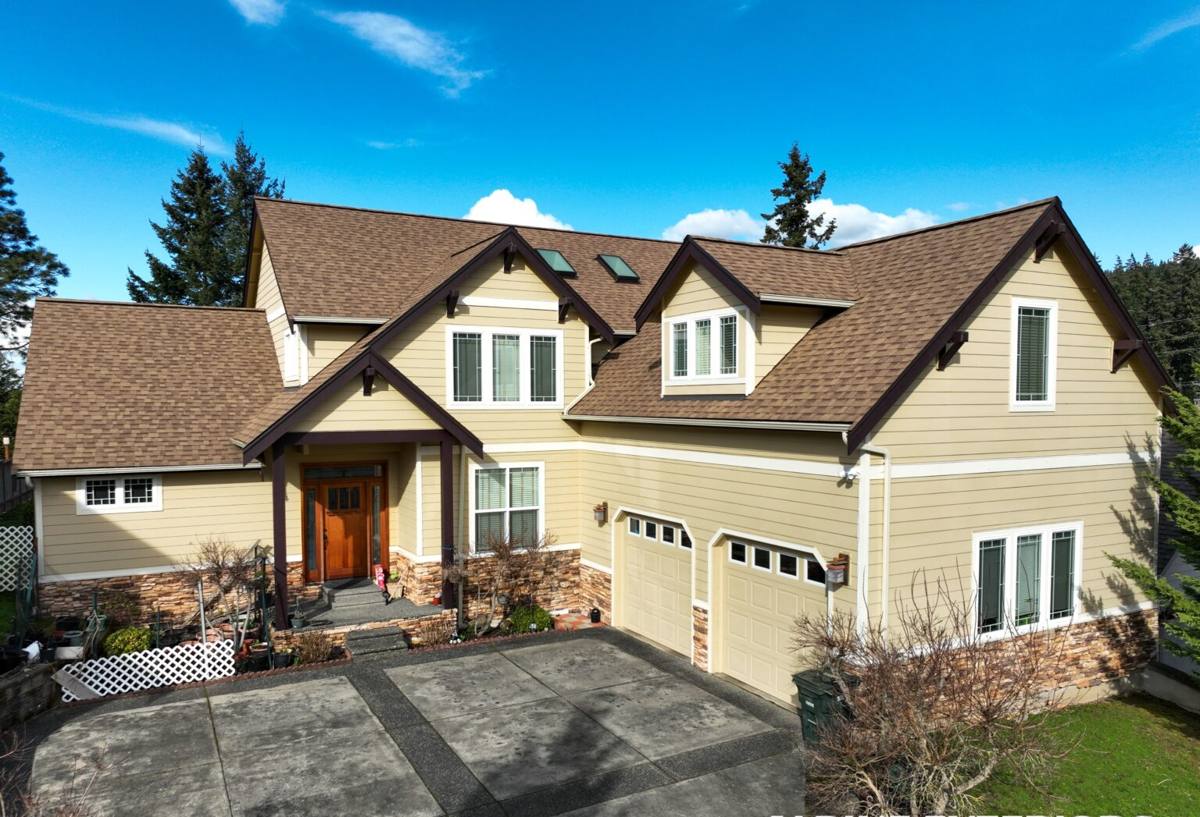
Signs a Semiahmoo Deck Needs Replacement, Not Just Repair
Not every tired-looking deck needs a full teardown. But there are a handful of signs that tell us repair would just be delaying the inevitable, and that a full replacement is the more honest recommendation:
- Soft, spongy, or spring-y decking boards, especially near the house or along the rim joist
- Rust staining or streaking below fastener heads or around post bases
- Visible gaps opening up at the ledger board where the deck meets the house
- Persistent moss or dark algae staining that comes back within weeks of cleaning
- Wobble or movement in the railing posts when you push on them
- Any sign of rot, soft wood, or discoloration in the framing you can see from underneath
If it's just the surface boards that are cupping or graying while the framing underneath is still sound, repair or a resurfacing can make sense. But once the framing, ledger, or posts are compromised, patching the surface is just putting new paint on a structural problem — and on a waterfront lot, that problem gets worse fast, not slow.
What a Correct Deck Replacement Involves
A deck replacement is more than pulling up old boards and screwing down new ones. On a site exposed to salt air and heavy rain the way Semiahmoo is, the parts you don't see matter more than the parts you do.
Framing and Substructure
We inspect and, where needed, replace the joists, beams, and posts that carry the deck's weight. Pressure-treated lumber rated for ground contact is the standard here, but rating alone isn't enough — every cut end, notch, and drilled hole needs to be re-sealed with an appropriate end-cut sealer, because that's exactly where treated lumber loses its protection and rot gets started.
Ledger Board and Flashing
The ledger — the board that attaches the deck to the house — is the single most common failure point we find on older Blaine-area decks, and it's the one homeowners can least see for themselves. Proper flashing (typically a combination of metal flashing and a self-adhering waterproof membrane) has to direct water up and away from the ledger-to-house connection, not into it. On a house catching driving rain off the water, a ledger without correct flashing is a slow leak waiting to happen, and it often does its damage inside the wall before it shows up on the deck.
Fasteners and Hardware
Standard galvanized fasteners corrode faster in coastal salt air than most homeowners expect. We use stainless steel or coated fasteners and connector hardware rated for the treated lumber and the coastal exposure, and we match every hanger, bolt, and screw to what the framing actually needs rather than mixing whatever is on hand. Mismatched metals in a salt environment accelerate corrosion in both directions.
Choosing the Right Decking Material for a Salt-Air, High-Rain Site
There's no single "best" decking material for every home — it depends on how much maintenance you want to do, your budget, and how close the deck sits to open water. Here's how the common options actually perform in Semiahmoo's climate:
| Material | Moisture & Salt Performance | Moss/Algae Resistance | Maintenance |
|---|---|---|---|
| Pressure-treated wood | Good if properly sealed and re-sealed; end cuts are the weak point | Needs regular cleaning and treatment to resist moss buildup | Annual cleaning, periodic sealing/staining |
| Cedar | Naturally rot-resistant but softer; still needs sealing near the water | Moderate — better than untreated wood, still stains over time | Regular cleaning, periodic oiling/sealing |
| Composite decking | Very good — doesn't absorb moisture into the board itself | Good, though surface can still host moss in shaded, damp spots | Occasional washing, no sealing or staining |
| PVC/capped decking | Excellent — fully sealed surface, no wood fiber to hold moisture | Best of the group; least hospitable surface for moss | Occasional washing only |
We install all of these depending on what a homeowner wants, but we're upfront about the trade-offs. Wood costs less up front and looks great, but it demands real annual upkeep to survive this climate — skip a season of sealing and salt air will find the gaps. Composite and PVC cost more initially but shift the maintenance burden way down, which matters most on decks that get heavy exposure to wind-driven rain and salt spray, like most of what we see on the peninsula.
Our Deck Replacement Process
Every Semiahmoo deck replacement we do follows the same sequence, because skipping steps is exactly how hidden problems get built back into a "new" deck:
- Assessment: We inspect the existing deck from top to bottom — surface, framing, ledger, footings, and posts — and tell you honestly what's driving the need for replacement.
- Design and material selection: We talk through decking material, railing style, and layout based on your budget and how exposed the site is to wind, rain, and salt.
- Permitting: We handle the permit application with Whatcom County or the City of Blaine, whichever applies to your property, before any demolition starts.
- Demolition: Full removal of the old deck, decking, framing, and any compromised ledger or flashing, hauled off site.
- Framing and flashing: New substructure, ledger, and flashing installed to current code, with attention to drainage away from the house.
- Decking and railing installation: Boards and railing installed with corrosion-resistant fasteners appropriate to the material and site.
- Final inspection and walkthrough: We confirm the work passes any required inspection and walk the finished deck with you before we call the job done.
Permits and Local Considerations
Deck replacement in Blaine typically requires a permit, especially when the deck is attached to the house or elevated above a certain height — the exact threshold depends on the jurisdiction and the specifics of the project. Properties right on the Semiahmoo peninsula can also fall under additional shoreline or setback considerations because of the proximity to Drayton Harbor and the water. We pull the appropriate permits and build to the current code requirements rather than cutting corners to save time, because a deck that isn't permitted correctly can become a real problem when you go to sell the house or file an insurance claim.
What Affects the Cost of a Deck Replacement
We don't post fixed prices because every deck is different, but the main factors that move the number up or down are consistent:
| Factor | Why It Matters |
|---|---|
| Deck size and shape | More square footage and more complex layouts (multiple levels, angles, built-in seating) mean more material and labor |
| Decking material | Wood costs less upfront; composite and PVC cost more but need far less long-term maintenance |
| Condition of the substructure | If framing, posts, or footings need full replacement rather than reuse, that adds cost but is not optional if they're compromised |
| Height and railing requirements | Taller decks and code-required railing systems add material and labor |
| Site access | Waterfront lots with tighter access or steep grades can add time for material handling and demolition removal |
| Permitting requirements | Shoreline-adjacent properties may need additional permit review, which affects timeline more than cost |
As a broad range, a straightforward deck replacement runs from the low thousands for a smaller wood deck up to considerably more for a larger composite or PVC deck with multiple levels and full railing systems. The only way to get a real number is a walkthrough of your specific deck and site.
Maintaining Your New Deck in a Salt-Air, High-Moss Climate
A correctly built deck still needs some seasonal attention to get its full lifespan out of a Semiahmoo location. This applies whether we built it or someone else did:
- Rinse salt spray and debris off the surface periodically, especially after storms with onshore wind
- Clean moss and algae buildup before it stains or gets slick, particularly in shaded areas under trees or overhangs
- Keep gutters and downspouts near the deck clear so roof runoff isn't dumping extra water onto or under it
- Check railing posts and stair connections once a year for looseness or movement
- Re-seal or re-stain wood decking on the schedule the product calls for — don't wait until it looks bad
- Keep planters and furniture feet off the decking surface where moisture can pool underneath
Composite and PVC decking cut this list down considerably, but even those benefit from an occasional wash to keep moss from getting a foothold in shaded corners.
Why a Crew That Already Works Semiahmoo Makes a Difference
Deck replacement isn't exotic work, but building one correctly for this specific stretch of coastline is different from building one in a dry inland climate. A crew that already works the Semiahmoo peninsula and the rest of Blaine knows which flashing details actually hold up against driving rain off the water, which fastener grades survive the salt air without staining or failing early, and how the moss season here changes material choice and maintenance advice. That's knowledge built from doing this work on this coastline repeatedly, not from a general contracting checklist. It also means someone local who can respond quickly if a problem shows up after the fact — not a crew that has to drive in from out of the area.
If your deck is showing the signs of coastal wear — soft boards, rust streaking, a ledger pulling away from the house, or moss that keeps coming back no matter how often you clean it — it's worth having someone look at it before the damage spreads into the framing or the house itself. We offer a free, no-pressure estimate: we'll walk the deck, tell you honestly whether it needs replacement or just repair, and lay out material and cost options in plain terms. Fill out the form below to get started.