 Blaine Siding
 Grandview's Exterior Climate: What Homes Are Really Up Against
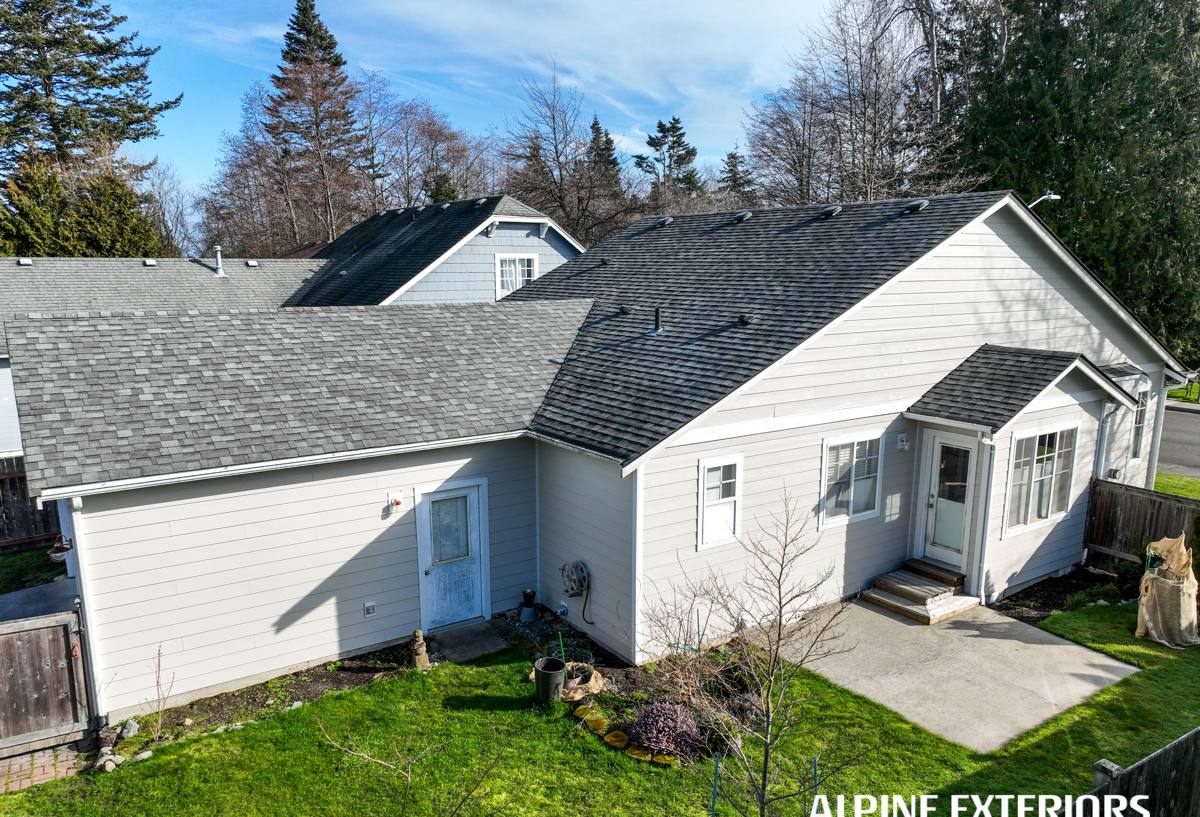
Grandview sits in the far northwest corner of Washington, close enough to the water that salt air is a daily fact of life for anyone's siding, trim, and roofing. Add in Whatcom County's long, wet fall-through-spring stretch, driving rain off Georgia Strait and the Salish Sea, and a moss season that can run eight months or more, and you have an exterior environment that punishes the wrong materials quickly. This isn't a place where you can install whatever siding is cheapest and expect it to look good in ten years.
Salt-laden air corrodes fasteners and metal trim faster than an inland climate would. Wind-driven rain doesn't just fall straight down here — it gets pushed sideways into wall assemblies, which means seams, caulk joints, and butt joints matter more than they would somewhere drier. And moss and algae don't need much encouragement once humidity stays high for months at a time; they'll colonize any surface that holds moisture or stays shaded, which on a typical Grandview lot includes north-facing walls, areas under eaves, and anywhere landscaping crowds the house.
Why the Siding Product You Choose Matters More Here Than Most Places
In a mild, dry climate, a homeowner can get away with a mediocre siding choice for a long time. Grandview doesn't offer that margin. The combination of salt exposure, sustained moisture, and moss pressure means the material on your walls needs to resist water intrusion, hold paint or factory finish without chalking or peeling, and not feed the organic growth that thrives in this air. Products that perform fine in Eastern Washington or the Midwest can struggle here — not because they're poorly made, but because they weren't engineered for this specific combination of salt, rain, and moss.
This is the core reason we standardized on one product line rather than offering a menu of siding options. When we've seen a house 12, 15, or 20 years after installation, the material on the wall tells the story of whether it was built for this climate or just installed in it.
What We See on Older Homes in This Area
- Wood and wood-composite siding that has absorbed moisture at butt joints and started to swell, cup, or delaminate
- Vinyl that has faded or gone brittle on south and west exposures, with visible gaps where panels have shrunk in cold snaps
- Caulk joints that failed years before the siding itself, letting water behind the cladding unnoticed
- Moss and green staining concentrated on shaded, north-facing walls and under roof overhangs
- Fastener corrosion and staining where the wrong hardware was used near the water
Why We Install Only James Hardie Fiber Cement
We install James Hardie fiber cement siding exclusively — not vinyl, not LP SmartSide, not Cemplank or Allura, not primed spruce or cedar. That's a deliberate professional standard, not a sales preference, and it's worth explaining honestly.
Fiber cement is a blend of cement, sand, and cellulose fibers, engineered to resist moisture absorption far better than wood-based products and to hold its shape and finish far better than vinyl in temperature swings. James Hardie in particular builds region-specific "HZ" formulations — including a version engineered for the wetter Pacific Northwest — which matters in a place like Grandview where the material sits in near-constant humidity for large stretches of the year.
It's also non-combustible, which is a real consideration for insurance and for wildfire-adjacent risk that has become more relevant across Washington in recent years. The factory-applied ColorPlus finish is baked on under controlled conditions rather than field-painted, so it resists the chalking, fading, and peeling that field-applied paint struggles with in this level of moisture and salt exposure. And the warranty structure is transferable to a future homeowner, which matters if you ever sell — a strong, documented warranty on the exterior is something buyers and their inspectors notice.
We're not going to tell you that other products are junk — vinyl, wood, and engineered wood siding all have their place, and plenty of houses are sided in them successfully. What we will say is that after years of installing and repairing exteriors in this specific climate, fiber cement is what we're willing to put our name behind, and it's the only product we install.
What a Grandview Siding Project Typically Involves
Every house is different, but a properly done siding replacement in this area generally follows the same sequence, and skipping steps here is exactly how you end up with the moisture problems we described above.
The Process
- Assessment — we look at the existing siding, sheathing, and any signs of water intrusion or rot before quoting anything
- Removal — old siding comes off so the wall assembly can actually be inspected, not just resided over
- Sheathing repair — any water-damaged sheathing or framing gets addressed before new material goes up
- Weather-resistive barrier — a proper house wrap or building paper, correctly lapped and sealed, is what actually keeps wind-driven rain out
- Flashing detail — windows, doors, and penetrations get flashed correctly, since this is where the majority of real-world leaks start
- Hardie installation — installed to manufacturer spec, including proper fastening, clearances, and joint treatment
- Trim and finish — trim, corners, and caulking finished to shed water rather than trap it
The flashing and weather barrier work matters as much as the siding itself. A Hardie installation done over a poorly wrapped wall will still leak; it's the whole assembly that keeps a Grandview home dry, not just the product on the outside.
Beyond Siding: Roofing, Windows, and Decks
Siding rarely fails in isolation. Roofing, windows, and decks all face the same salt air, rain, and moss pressure, and problems in one often show up as damage in another — a failing roof edge can rot the siding beneath it, and a leaking window can look like a siding problem until you trace it back. We handle all four so the whole exterior gets looked at as one system rather than a patchwork of separate contractors pointing fingers at each other.
| Exterior Component | Main Local Stressor | What to Watch For |
|---|---|---|
| Siding | Wind-driven rain, salt air, moss | Swelling, gaps at joints, green staining on shaded walls |
| Roofing | Moss growth, prolonged wetness | Moss buildup on the north slope, granule loss, soft spots |
| Windows | Wind-driven rain at flashing points | Staining below sills, fogging between panes, drafts |
| Decks | Standing water, freeze-thaw, UV | Soft or spongy boards, gaps at ledger board, fastener rust |
What Affects the Cost of a Siding Project in This Area
We won't quote a price without seeing the house, but a few factors consistently drive cost up or down on Grandview-area projects, and it's worth understanding them before you start getting estimates.
| Factor | Why It Matters |
|---|---|
| Existing wall condition | Rotted sheathing found during removal adds repair scope you can't price sight unseen |
| House complexity | Dormers, multiple gables, and cut-up wall lines take more labor and material waste than a simple rectangle |
| Siding profile | Lap width, shingle-style panels, and trim details all affect material and labor cost |
| Access | Tight lots, steep grades, or limited staging area near the water can slow work |
| Trim and finish scope | Full trim replacement versus reusing sound existing trim changes the bid significantly |
Why a Local Crew Matters in Grandview
A crew that only works inland doesn't always plan for what a house this close to the water actually needs — the fastener corrosion resistance, the flashing detail at wind-driven rain angles, the moss-prone north walls. Working in Whatcom County and along the Blaine waterfront regularly means we're not guessing at how a wall assembly performs here; we've seen it hold up and we've seen it fail, and we build accordingly.
What to Look For When Vetting an Exterior Contractor Here
- Manufacturer-recognized installation training on the specific product they're proposing
- A written scope that specifies weather-resistive barrier and flashing details, not just "install siding"
- Proper licensing and insurance for work in Washington
- Willingness to inspect and repair sheathing found during tear-off, not just reside over it
- A clear, transferable manufacturer warranty explained in plain terms
- Local references or a track record of work in similar coastal Whatcom County conditions
Maintaining a Fiber Cement Exterior in a Wet, Salty Climate
Even the right product benefits from basic upkeep in this environment. A rinse-down once or twice a year knocks back salt residue and early moss growth before it takes hold, particularly on shaded north walls. Keeping gutters clear prevents overflow from running down the siding face and staining or feeding moss growth. Trimming back landscaping that shades or presses against walls helps those surfaces dry out between rain events instead of staying damp for weeks. None of this is heavy maintenance — it's the difference between a siding job that still looks sharp at year fifteen and one that needed attention it never got.
Ready to Talk About Your Grandview Home?
If you're dealing with aging siding, moss buildup, or just want a straight answer on what your exterior actually needs, we're happy to take a look. Fill out the form below for a free, no-pressure estimate — we'll walk the house, tell you honestly what we find, and give you a clear picture of your options.