 Blaine Siding
 Blaine Harbor Is a Different Climate Than "Blaine"
Ask anyone who's lived near the water in Blaine Harbor for more than a winter or two, and they'll tell you their siding takes a beating that homes even a mile inland don't see. It's not your imagination. Proximity to the harbor changes the physics of what's hitting your exterior walls every day: salt-laden air, wind-driven rain coming almost sideways off the water, and long stretches of damp, low-sun weather that keep everything from siding to fence posts perpetually green with moss and algae. Whatcom County as a whole deals with a wet Pacific Northwest climate, but homes closer to the harbor get an accelerated version of it.
We've built our whole approach to exterior work around that reality. Siding that performs fine in a dry inland subdivision can fail early on a harbor-adjacent lot, and we'd rather tell you that up front than sell you something we know won't hold up.
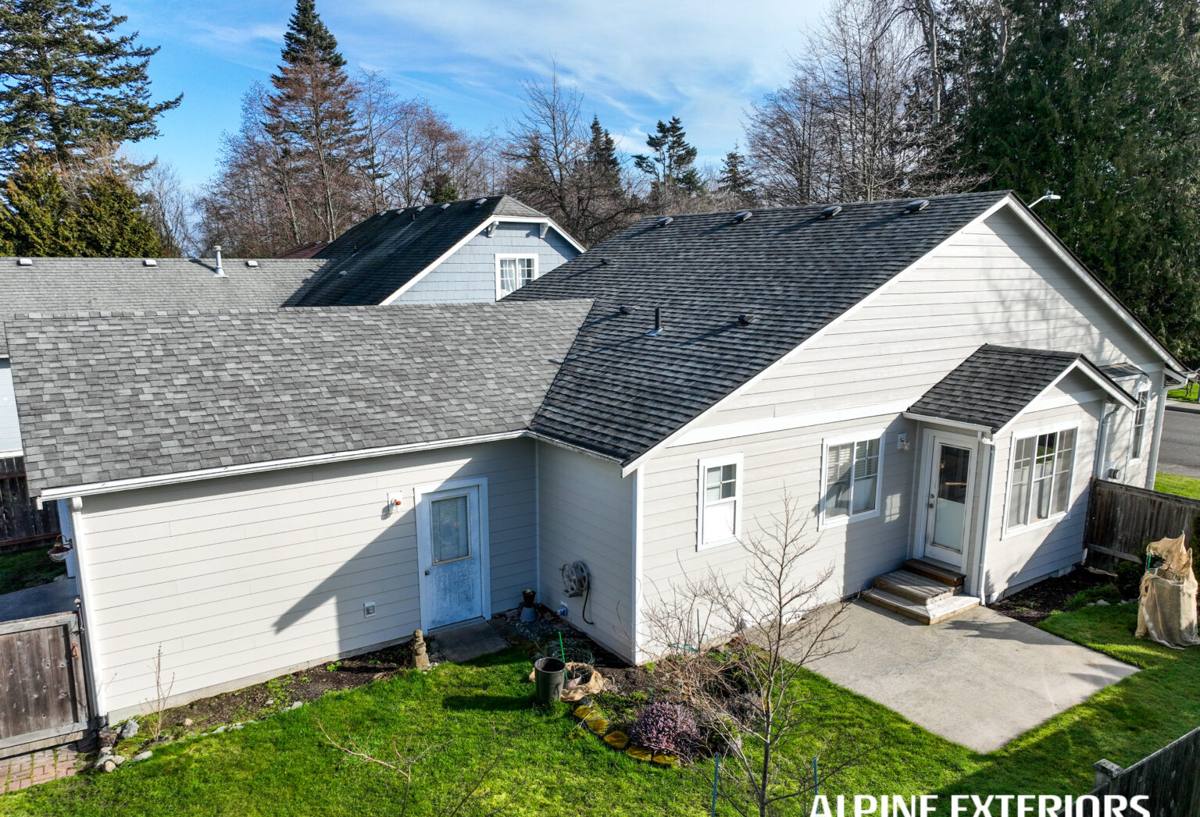
What Salt Air, Rain, and Moss Actually Do to a House
Salt Air and Metal Corrosion
Airborne salt doesn't just affect boats and dock hardware. It settles on siding, trim, fasteners, and flashing, and over years it accelerates corrosion on anything metal that isn't properly rated or protected. Nail heads bleed rust streaks down the face of siding, cheap trim coil fails early, and unprotected fasteners can lose grip long before the siding itself wears out. This is one of the most overlooked failure points on coastal homes — the siding looks fine, but what's holding it up isn't.
Wind-Driven Rain
Open water means fewer windbreaks, and rain near the harbor often arrives horizontally rather than straight down. That pushes moisture into laps, seams, and butt joints that would stay dry on a more sheltered lot. Every seam, corner, and penetration on a harbor-facing wall needs to be treated like it will get tested by weather, because it will.
Moss, Algae, and the Long Wet Season
Whatcom County's marine layer and extended cloud cover keep exterior surfaces damp for long stretches, especially on north- and west-facing walls that don't get much direct sun. That constant moisture is exactly what moss and algae need to take hold. On some siding materials, that's mostly cosmetic. On others, it's an entry point for moisture intrusion and slow material breakdown.
Why We Only Install James Hardie Fiber Cement
We made a deliberate decision years ago to install James Hardie fiber cement siding exclusively — not LP SmartSide, not vinyl, not Cemplank or Allura, not primed spruce or cedar. On a job like a Blaine Harbor home, that decision matters more than it would somewhere drier.
It's Non-Combustible and Doesn't Rot
Fiber cement is made from cement, sand, and cellulose fibers. It doesn't feed moisture into wood the way engineered wood siding can if a seam fails, and it isn't fuel for fire the way wood-based products are. In a damp, salt-exposed environment, not having wood fiber to swell, rot, or delaminate at the panel level is a real advantage, not a marketing point.
Climate-Engineered Product Lines
James Hardie makes region-specific formulations (their HZ5 line is engineered for wetter, harsher climates like ours) rather than one generic product sold everywhere. For a harbor-exposed home, that's the right starting point, not an upgrade.
ColorPlus Factory Finish
Standard field-painted siding is only as good as the paint job and the maintenance schedule that follows it. ColorPlus finish is baked on at the factory under controlled conditions, with UV-cured layers designed to resist fading and hold up against the kind of weather cycling a harbor property sees. It also comes with its own finish warranty, separate from the substrate warranty, which matters on a house that's going to get more sun-and-rain cycling than an inland home.
A Warranty Built for the Real World
James Hardie backs its siding with a strong, transferable limited warranty. That transferability is worth noting for waterfront and near-waterfront properties specifically, since they tend to change hands with buyers who are already asking hard questions about exterior durability.
Signs Your Siding Is Struggling With the Harbor Climate
Some warning signs show up early enough that a repair or targeted replacement is still on the table, before it turns into a full re-side. Worth walking your exterior for these, especially on walls facing the water or prevailing wind:
- Rust streaking below nail heads or trim fasteners
- Persistent green or black staining that comes back within weeks of cleaning
- Soft, spongy, or visibly swollen spots, particularly near the bottom courses or window trim
- Paint that's peeling, bubbling, or chalking faster than it should for its age
- Visible gaps opening up at seams, corners, or butt joints
- Warping or cupping panels, especially on the harbor- or wind-facing elevation
- Caulk that's cracked, shrunk, or pulled away from trim and window edges
How We Install for a Marine Environment
The product is only half of it. A lot of siding failures near the water trace back to installation details that were fine for a sheltered inland lot but not aggressive enough for wind-driven rain and salt exposure. On Blaine Harbor jobs, we pay particular attention to:
- Weather-resistive barrier and flashing: Proper house wrap, correctly lapped flashing at every window, door, and penetration, and attention to the sequencing that keeps water moving out and down instead of behind the siding.
- Fastener selection: Corrosion-resistant fasteners rated for the exposure, driven to Hardie's spec rather than over- or under-driven, which affects both holding power and water resistance at the nail line.
- Ground and grade clearance: Maintaining proper clearance between siding and grade, decks, and roof lines so splashback and standing moisture don't sit against the bottom courses.
- Joint and seam treatment: Sealing and shimming joints correctly so wind-driven rain can't force its way through seams that would stay dry in calmer weather.
How Fiber Cement Compares to Other Products in This Climate
| Material | Salt Air / Corrosion | Wind-Driven Rain / Moisture | Moss & Algae Resistance |
|---|---|---|---|
| James Hardie fiber cement | Not affected directly; fasteners rated for exposure | Non-combustible cement substrate doesn't absorb and swell | Factory finish resists staining better than field paint |
| Vinyl siding | Panels stable, but trim and fastener corrosion still occurs | Panels can flex and gap under sustained wind pressure | Prone to surface staining, especially in shaded areas |
| LP SmartSide / engineered wood | Wood-based substrate more sensitive to sustained moisture at seams | Seam and edge sealing is critical; failure points if breached | Wood fiber substrate more vulnerable if moisture gets behind coating |
| Cedar / primed spruce | Requires ongoing sealing and refinishing to manage moisture | Natural wood movement with wet/dry cycling | Most susceptible; needs regular treatment and cleaning |
This isn't a claim that other products fail outright — many perform reasonably well in moderate climates with regular maintenance. Our point is narrower: on a harbor-exposed lot, the maintenance burden and margin for installation error are both higher, and we'd rather build to the tougher standard from day one than manage a maintenance schedule for the life of the house.
Siding Is One Piece of the Envelope
We don't just do siding. We handle roofing, windows, and decks too, and on a Blaine Harbor property those systems are under the same stress as your siding — the same salt air, the same wind-driven rain, the same moss season. A new siding job installed against a failing roof edge or leaking window flashing doesn't solve the underlying moisture problem; it just moves where it shows up next. When we look at a harbor-area home, we're looking at how the whole exterior sheds water, not just one wall system in isolation. That's especially relevant for decks near the water, where the same corrosion and moisture pressure affects fasteners, ledger boards, and framing.
Why a Local Crew Matters Here
A crew that mostly works drier, inland jobs doesn't always think about flashing sequencing, fastener corrosion resistance, or clearance details the same way a crew that works Whatcom County's coastal properties regularly does. We're not saying every contractor from outside the area does bad work — we're saying the harbor punishes shortcuts faster than most neighborhoods do, and it's worth hiring people who install here often enough to know exactly where those shortcuts tend to show up first.
Get a Straight Answer for Your Home
If you're weighing a repair against a full re-side, or you just want an honest read on how your current siding is holding up against the harbor climate, we're happy to take a look. Reach out for a free, no-pressure estimate — we'll tell you what we actually see, not just what's easiest to sell.