 Blaine Siding
 Semiahmoo Sits Right at the Edge of the Weather
Semiahmoo occupies one of the most exposed residential stretches in Whatcom County — a narrow spit and shoreline community with Semiahmoo Bay on one side and the open weather of the Strait of Georgia rolling in on the other. Homes here take on a combination of stresses that inland Blaine properties simply don't see in the same intensity: salt-laden air moving off the water, driving rain that hits siding at an angle instead of falling straight down, and a moss season that can stretch for most of the year in the shaded, damp conditions typical of this part of the Pacific Northwest.
Siding that works fine in a drier, more sheltered part of Whatcom County can fail early here. We install fiber cement siding for Semiahmoo homeowners because it's the one exterior cladding system that holds up to all three of these conditions at once — and we install James Hardie products specifically, for reasons we'll walk through below.
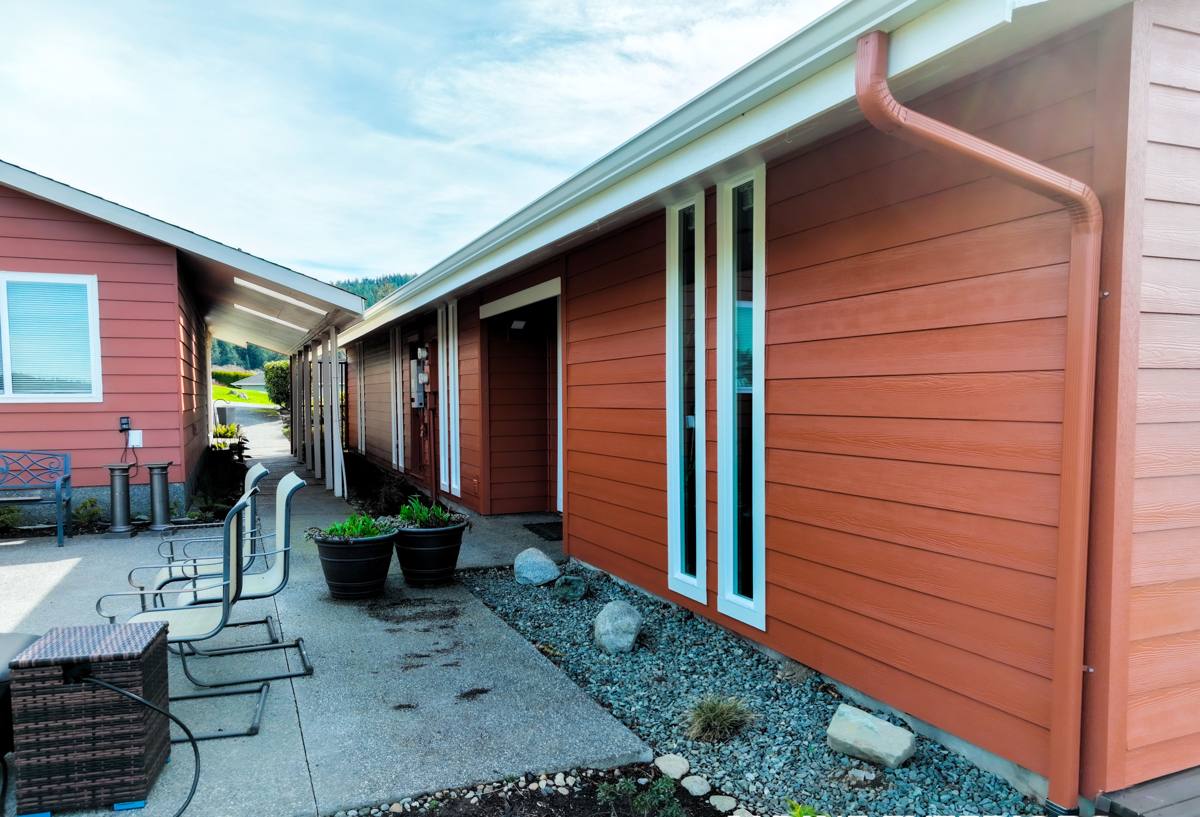
What Salt Air, Rain, and Moss Actually Do to Siding
Salt air and metal corrosion
Airborne salt from Semiahmoo Bay doesn't just sit on the surface of a house — it works its way into fasteners, flashing, and any exposed metal trim. Over years, that accelerates corrosion in materials that aren't rated for coastal exposure. It also degrades some paint finishes faster than inland exposure would, causing chalking, fading, and adhesion failure well ahead of the manufacturer's stated service life.
Driving rain and wind-driven moisture
Semiahmoo's shoreline exposure means rain frequently arrives sideways, pushed by wind off the water. That's a different load than vertical rainfall — it drives moisture up under laps, into seams, and behind trim in ways a standard rain-screen assumption doesn't always account for. Siding systems with weak seams, poor flashing details, or materials that swell when wet are the first to show problems: cupping, staining, and soft spots.
Moss, algae, and organic growth
The combination of shade, moisture, and mild temperatures common around Semiahmoo creates ideal conditions for moss and algae to colonize exterior surfaces. On siding materials that absorb moisture or provide organic material for growth to root into, this isn't just cosmetic — sustained moss coverage holds water against the surface far longer than open air exposure would, which accelerates whatever underlying moisture damage is already occurring.
Why We Install Only James Hardie Fiber Cement in Semiahmoo
We don't install vinyl, LP SmartSide, primed wood, cedar, or other fiber cement brands. That's a deliberate standard, not a limitation of what we're capable of installing. In a marine-exposed community like Semiahmoo, the trade-offs of those other materials show up faster and cost homeowners more over time:
- Vinyl can warp and become brittle with UV and temperature cycling, and its seams and J-channels give wind-driven rain more opportunities to find a path behind the cladding.
- LP SmartSide is an engineered wood product — well-made, but wood-based products are more sensitive to sustained moisture exposure than cement-based ones, which matters in a spot that stays damp as long as Semiahmoo does.
- Cedar and primed spruce require an ongoing maintenance commitment (staining, sealing, moisture checks) that most homeowners underestimate until the first signs of rot show up.
- Other fiber cement brands may use similar core materials, but James Hardie is the only one we've found with a factory finish system, climate-specific engineering, and warranty structure built for exactly this kind of exposure.
James Hardie fiber cement is non-combustible, doesn't provide a food source for moss or insects the way wood-based products do, and its ColorPlus factory finish is baked on and warranted separately from the substrate — which matters when salt air is actively working against paint adhesion.
What a Correct Installation Involves in a Coastal Setting
Fiber cement siding is only as good as the installation behind it. In a low-tolerance environment like Semiahmoo, shortcuts that might go unnoticed in a sheltered inland neighborhood tend to surface within a year or two here. A correct job includes:
Weather-resistive barrier and rain-screen detailing
A properly lapped and sealed weather-resistive barrier behind the siding, with attention to how water is meant to drain if it does get behind the cladding — not just an assumption that the siding alone will keep everything out.
Fastening to manufacturer spec
Correct fastener type, spacing, and penetration depth matter more in high-moisture zones because under- or over-driven fasteners create entry points for water and accelerate corrosion at the fastener itself.
Clearances and flashing
James Hardie specifies minimum clearances from grade, roofing, decks, and other transitions for a reason — those gaps give bulk water somewhere to go instead of wicking up into the bottom edge of the siding. Flashing at windows, doors, and butt joints needs to shed water outward, not funnel it inward.
Caulking discipline
Caulk is a backup, not a primary water barrier — but where it's specified, it needs to be the right product, applied correctly, on a system that isn't relying on it to do more than it should.
Choosing the Right Hardie Line for a Semiahmoo Home
James Hardie engineers its products by climate zone. Whatcom County, including Semiahmoo, falls in the HZ5 zone — the product line built for regions with significant moisture exposure and freeze-thaw cycling, as opposed to the HZ10 line engineered for hot, humid southern climates. That distinction affects the composition of the board itself, not just the surface finish.
| Product | Typical Use | Why It Fits Semiahmoo |
|---|---|---|
| HardiePlank HZ5 lap siding | Primary wall cladding | Most common choice; engineered core for moisture-heavy, freeze-thaw climates |
| HardieShingle HZ5 | Accent gables, dormers | Adds texture without introducing a different, less durable material |
| HardiePanel HZ5 | Modern vertical sections, garages | Clean lines with the same core durability as lap siding |
| HardieTrim | Corners, window/door casing | Matches expansion behavior of the field siding, reducing gap and joint stress |
ColorPlus factory-applied finishes are worth prioritizing over field painting in this location specifically — the factory process bonds finish to substrate more consistently than paint applied on-site, and it comes with its own finish warranty, which matters when salt air is working against paint adhesion year-round.
Our Process for a Semiahmoo Project
- On-site assessment of current siding condition, moisture entry points, and exposure severity based on the home's orientation to the water and prevailing wind.
- Product and finish recommendation — HZ5 lines, profile, and color, matched to the home's exposure and the owner's maintenance preferences.
- Removal of old siding and inspection of sheathing for hidden moisture damage before anything new goes on — this step gets skipped by crews trying to move fast, and it's the single most common source of "surprise" costs later.
- Weather-resistive barrier, flashing, and fastening per James Hardie's HZ5 installation specifications.
- Final walkthrough covering caulking lines, trim details, and clearance points so the homeowner understands what to check on periodically.
Cost Factors for Semiahmoo Homes
Every home is different, but the variables that most affect a Semiahmoo project's scope and cost are consistent:
| Factor | Why It Matters Here |
|---|---|
| Sheathing condition under old siding | Coastal moisture exposure increases the odds of hidden rot that needs repair before new siding goes on |
| Wind/water exposure of the specific lot | Homes with direct bay exposure may need more aggressive flashing and clearance detailing than a more sheltered lot |
| Product mix | Combining lap siding with shingle accents or panel sections adds material and labor complexity |
| Trim and finish carpentry scope | Corner boards, window casing, and fascia work are often bundled with a siding replacement |
| Access and site conditions | Waterfront and hillside lots can add setup and staging time |
We provide a written estimate after seeing the home in person — broad ranges without an on-site look aren't useful to a homeowner trying to plan a real project.
Maintaining Fiber Cement in a Moss-Prone, Salt-Air Environment
James Hardie siding is low-maintenance compared to wood or vinyl, but "low-maintenance" isn't "no-maintenance," especially this close to the water. A simple seasonal routine keeps it performing the way it's designed to:
- Rinse the siding gently once or twice a year to clear accumulated salt residue, pollen, and organic debris — a garden hose is usually enough; avoid high-pressure washing directed at seams and joints.
- Check gutters and downspouts before the wet season to make sure water is being carried away from the siding rather than overflowing onto it.
- Trim back vegetation and tree cover where practical to reduce the shade and dampness that feed moss growth on north- and west-facing walls.
- Inspect caulk lines at trim, windows, and butt joints annually and have any cracked or separated caulk replaced before the rainy season sets in.
- Watch for moss establishing at the bottom edge of boards or in shaded corners and remove it early — soft brushing rather than scraping, to avoid damaging the factory finish.
Why a Crew That Already Works Semiahmoo Matters
Installation quality is what determines whether fiber cement siding delivers on its durability in a place like this — and installation quality depends heavily on whether the crew understands the specific conditions they're building for. A crew that regularly works Semiahmoo and the surrounding Blaine shoreline already knows where wind-driven rain tends to concentrate on a given lot orientation, how aggressive the moss growth gets on shaded elevations, and which flashing and clearance details actually matter here versus in a drier inland neighborhood. That local pattern recognition is hard to substitute for, no matter how good the product is.
If you're weighing a siding replacement or repair for a Semiahmoo home, we're glad to come take a look and walk you through what your specific property needs. The estimate is free, there's no pressure, and you'll leave the conversation with a clear, honest picture of the work involved — use the form below to get started.