 Blaine Siding
 Why Semiahmoo Siding Wears Differently Than Siding Ten Miles Inland
Semiahmoo sits right on the water, and that changes what siding has to survive. Homes here take a steady dose of salt-laden air off the bay, wind-driven rain that hits walls sideways instead of falling straight down, and a moss and mildew season that runs long into the year thanks to the marine humidity. None of that is dramatic on any single day. It's cumulative. A siding system that would coast for twenty years in a drier, more sheltered part of Whatcom County can start showing real problems here in half that time if it wasn't built or installed with this exposure in mind.
That's the lens we use on every repair call in Semiahmoo: not just "what's broken," but "why did it break here, and what will stop it from happening again."
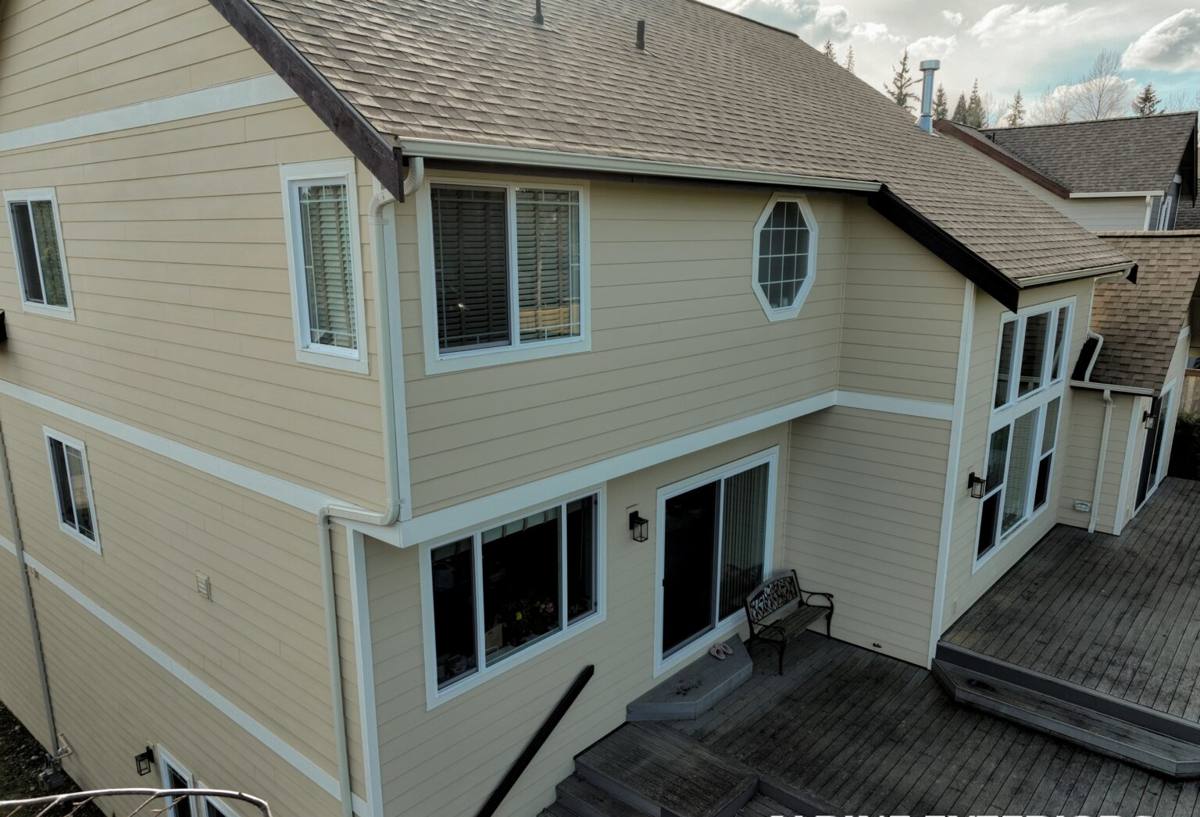
What Salt Air, Driving Rain, and Moss Actually Do to Siding
Salt air
Airborne salt is corrosive to fasteners and hard on painted or coated surfaces. Nails, screws, and trim flashing that aren't rated for coastal exposure can corrode faster than they would a few miles inland, and once a fastener starts to fail, the siding panel it's holding starts moving, which opens gaps for water.
Driving rain
Wind off Semiahmoo Bay doesn't just wet the siding surface — it drives water sideways and upward into laps, seams, and butt joints that were designed to shed water falling straight down. Any joint that's caulked instead of properly lapped and flashed, or any panel with a gap at a seam, becomes an entry point under these conditions.
Extended moss and mildew season
Constant marine humidity plus shade from mature trees, common in this part of Blaine, keeps siding surfaces damp longer after every rain. Moss and algae get a foothold in that dampness, and on porous or absorbent siding materials, that surface moisture doesn't stay on the surface — it works into the material itself over time.
Signs a Semiahmoo Home Needs Siding Repair, Not Just a Wash
- Soft or spongy spots when you press on the siding, especially near the bottom courses and around window sills
- Paint that's bubbling, peeling, or alligatoring in patches rather than evenly across a wall
- Visible gaps opening up at panel seams, corners, or where siding meets trim
- Persistent black or green staining that comes back quickly after cleaning
- Nail heads popping out, streaking rust down the siding face, or visibly corroded fasteners
- Warping, cupping, or panels that no longer sit flat against the wall
- Interior signs — a musty smell, discoloration on interior drywall near exterior walls, or peeling interior paint on an exterior-facing wall
Any one of these on its own might be minor. Several together, especially on the water-facing side of the house, usually mean moisture has been getting behind the siding for a while.
What a Correct Repair Actually Involves
A siding repair that only replaces the visibly damaged piece and stops there is a temporary fix if the cause of the damage isn't addressed. Our approach on Semiahmoo homes is to treat every repair as a small investigation first:
- Confirm the cause. Is this fastener corrosion, a failed seam, missing or damaged flashing, a caulk joint that was never a real water barrier, or moisture trapped by the house wrap and drainage plane behind the siding?
- Check what's behind the siding. Damaged siding at a coastal home often means the sheathing or house wrap underneath has also taken on moisture. Repairing the face without checking what's underneath risks papering over rot that keeps spreading.
- Match the repair to the original material correctly. Mismatched panel profiles, thicknesses, or finishes stand out visually and can create new water paths at the transition. Where an exact match isn't available, we plan the repair boundary at a natural break — a corner, a trim line — rather than mid-wall.
- Re-flash and re-seal properly. Any opening created by the repair — around a window, at a butt joint, at a corner — gets flashed and sealed to shed water the way the original installation should have, not just caulked over.
- Use fasteners and flashing rated for coastal exposure. Given the salt air here, this isn't optional — standard interior-grade fasteners are a repeat-repair waiting to happen this close to the bay.
Repair vs. Replacement: How We Help You Decide
Not every problem area needs a full re-side, and not every "small" repair should stay small. The honest answer depends on how much of the wall is affected and what's happening underneath.
| Factor | Leans toward targeted repair | Leans toward fuller replacement |
|---|---|---|
| Extent of damage | Isolated to one or two areas | Recurring problems across multiple walls |
| Sheathing condition | Dry, sound wood underneath | Soft, discolored, or rotted sheathing found |
| Age of existing siding | Siding is mid-life and otherwise sound | Siding is near or past its expected service life |
| Material match | Compatible replacement material available | Discontinued profile or material no longer made |
| Underlying cause | One-off event (impact damage, single failed flashing) | Systemic issue (original install error, wrong material for this exposure) |
We'll tell you plainly which category your situation falls into, and we won't recommend a full replacement just because it's a bigger job. Plenty of Semiahmoo repairs really are contained, one-time fixes.
Why We Only Repair With — and Recommend — James Hardie Fiber Cement
When a repair calls for new panels, or when a homeowner asks us to look at whether it's time to move past patch repairs altogether, we work in James Hardie fiber cement, and that's the only siding system we install. It's a deliberate standard, not a default.
Fiber cement doesn't absorb moisture the way wood-based products can, which matters directly in a place where surfaces stay damp longer between rains. It's also non-combustible, holds paint and factory-applied ColorPlus finishes well under UV and salt exposure, and James Hardie's HZ product lines are engineered for specific climate zones rather than built as one generic product for the whole country. For a coastal Blaine property, that climate-specific engineering, combined with a strong transferable warranty, is why we don't offer vinyl, LP SmartSide, primed wood, or cedar alternatives — we've made the call that fiber cement is what holds up here without repeat callbacks.
That standard applies to repairs too: when we patch or replace a section, we're not introducing a weaker material into a wall that's otherwise going to outlast it.
Our Process for a Semiahmoo Repair Call
- On-site assessment. We look at the damaged area and the surrounding wall, not just the spot you called about, since coastal damage often extends further than what's visible from the ground.
- Plain explanation of cause. Before we talk about fixing anything, we tell you what we think caused it and why, so the repair actually solves the problem.
- Written estimate. A clear scope and price before any work starts — no surprise add-ons once the wall is open.
- Repair with coastal-appropriate materials and fasteners. Matched profiles where possible, corrosion-resistant hardware, and flashing detail that accounts for wind-driven rain off the bay.
- Cleanup and a final walk-through. We show you the completed work and explain any maintenance that will help it last, given the local conditions.
Simple Maintenance That Extends the Life of Siding Near the Water
- Rinse salt residue and grime off siding a couple of times a year, more often on walls facing the bay directly
- Trim back vegetation and tree cover that keeps siding shaded and damp longer than necessary
- Check and refresh caulking at windows, doors, and trim annually — coastal exposure breaks down sealants faster
- Walk the exterior after major windstorms and check for loosened panels, popped fasteners, or new gaps
- Address small issues — a single warped board, a corroded nail head — before the next wet season rather than after
Why It Matters That We Already Work in Semiahmoo
Repairing siding correctly on a waterfront property isn't the same job as repairing siding on a sheltered inland lot, even if the visible damage looks identical. A crew that regularly works Semiahmoo and the rest of the Blaine waterfront already knows which fastener specs hold up to this air, which flashing details actually stop wind-driven rain, and which parts of a wall tend to fail first given the sun exposure, shade patterns, and prevailing wind on a given lot. That local pattern recognition is what keeps a repair from becoming a repeat visit twelve months later.
If you're seeing damage, staining, or soft spots on your siding, we're glad to take a look. We'll give you a straight answer on what's causing it and what it will take to fix it right — with a free, no-pressure estimate and no obligation to move forward. The form below is the easiest way to get started.