 Blaine Siding
 Allura Is a Legitimate Fiber Cement Product — Here's Our Honest Take
We get asked about Allura often enough that it's worth a straight answer. Allura is a real fiber cement siding manufacturer, not a knockoff or a vinyl product dressed up to look like something better. It's made from the same basic recipe as most fiber cement — Portland cement, sand, cellulose fiber, and water, cured under pressure — and it holds up far better than wood, vinyl, or engineered wood panel siding in a wet coastal climate like ours. If a homeowner in Blaine already has Allura on their house and it was installed correctly, we're not going to tell them it's falling apart or that they need to rip it off. That's not honest, and it's not our style.
What we will say is that after years of installing and specifying fiber cement siding across Whatcom County, we made the decision to install James Hardie products exclusively. That's not a marketing gimmick — it's a standard we hold because of how these two manufacturers differ in the details that matter once the siding is actually on a house facing salt air, driving rain, and a moss season that runs most of the year here.
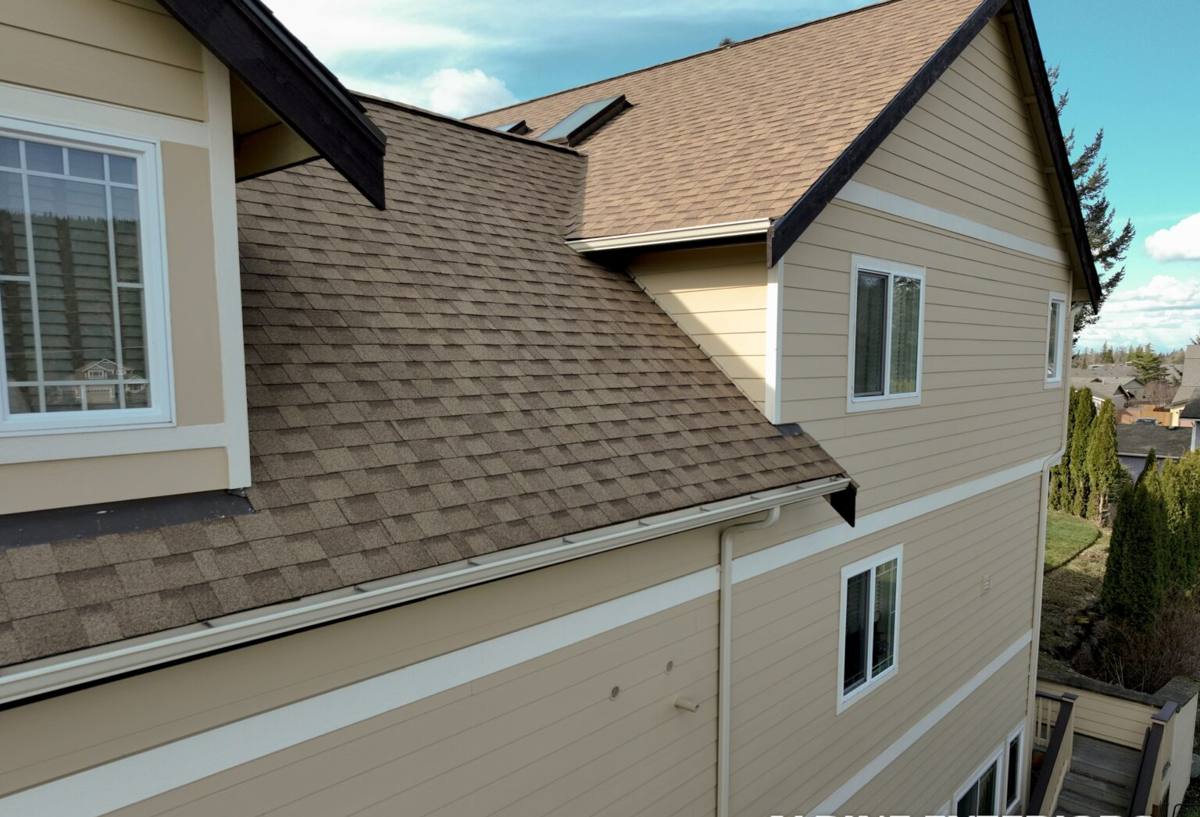
What Allura Does Well
To be fair to the product: Allura fiber cement is non-combustible, resists rot and pest damage far better than wood or LP SmartSide, and doesn't have the expansion/contraction problems that plague vinyl siding in temperature swings. It's a reasonable step up from engineered wood or cedar for a homeowner who wants a lower-maintenance exterior. Allura has also expanded its factory-finish offerings in recent years and produces lap, panel, and shingle profiles that are visually comparable to what Hardie offers.
If Allura were the only fiber cement option available, it would still beat most of the alternatives on this coast. It just isn't the product we've chosen to stand behind, and here's why.
Climate Engineering: Built for Here vs. Built for Everywhere
This is the biggest factor for us. James Hardie engineers its siding by climate zone — the HZ5 formulation used in the Pacific Northwest is manufactured differently than the product sold in Arizona or Florida, specifically accounting for moisture cycling, freeze-thaw behavior, and prolonged damp exposure. Blaine sits right on the water at the top of Whatcom County, which means salt-laden air off the Strait of Georgia, long stretches of driving rain in the fall and winter, and a moss and algae season that can run eight or nine months out of the year on north-facing walls and anything shaded by fir trees.
Allura does not offer the same region-specific engineering. Its formulation is more uniform across climate zones nationally. That doesn't mean it fails here — plenty of Allura siding is holding up fine on homes in this area — but it does mean the product wasn't specifically formulated around the moisture load our climate puts on a wall assembly year-round. When we're the ones warrantying our labor and standing behind the finished product, we'd rather install something engineered for exactly these conditions than something engineered as a general-purpose national product.
Why Moisture Behavior Matters More Here Than Almost Anywhere
Fiber cement is dimensionally stable and doesn't rot, but it's not immune to moisture problems if it's installed wrong or if the underlying water management is poor. In a climate with this much sustained rain exposure, small installation errors — tight caulk joints instead of proper clearances, missing kick-out flashing, panels installed too close to grade or a roofline — show up as real problems within a few years instead of a decade or more. That makes the installation system and the manufacturer's published detailing just as important as the raw material.
Factory Finish and Warranty Structure
Both companies offer factory-applied color finishes rather than requiring field painting, which is the right way to buy fiber cement siding — a factory finish is more consistent and more durable than anything applied on site. Where the two diverge is warranty structure and how long that finish is expected to perform without fading or needing attention.
| Factor | James Hardie (ColorPlus) | Allura (factory finish) |
|---|---|---|
| Finish warranty | Non-prorated coverage for the stated term on both finish and product | Warranty terms vary by product line and can include prorated coverage after early years |
| Climate-specific formulation | Yes — HZ5 zone product for Pacific Northwest | Not offered as a distinct regional product line |
| Regional installer network | Established PNW contractor base with manufacturer training programs | Smaller regional presence, fewer local installers with manufacturer-specific training |
| Product availability | Widely stocked through regional distributors | More limited distribution in Western Washington |
Warranty terms change over time and homeowners should always read the current documentation for whatever product they're considering — we're not going to quote exact years or percentages here because manufacturers revise these terms. The pattern that's held consistent, though, is that Hardie's non-prorated structure gives a homeowner clearer protection later in the warranty period, when a claim is more likely to actually happen.
Installation Sensitivity
Fiber cement siding, as a category, is less forgiving to install than vinyl or engineered wood. Fastener placement, joint treatment, clearances above rooflines and decks, and caulking practices all affect how the siding performs over a 20-, 30-, or 40-year window. James Hardie publishes detailed, product-specific installation instructions and backs them with a contractor training and certification structure that we've built our crews' practices around. That consistency matters to us because it's the difference between a warranty claim getting honored cleanly and a homeowner getting stuck arguing that installation, not product defect, caused a problem.
Allura publishes installation guidance as well, but our crews have simply built their muscle memory, tooling, and quality-control checklists around one system. Running two separate fiber cement installation standards side by side increases the chance of a mistake — a fastener schedule from one product's spec sheet applied to the other, for example. Standardizing on a single manufacturer removes that risk entirely.
Regional Support When Something Goes Wrong
If a siding problem shows up five or ten years after installation — a finish issue, a manufacturing defect, a warranty question — the manufacturer's regional support structure determines how fast that gets resolved. James Hardie has a long-established presence in the Pacific Northwest, with distributors, technical reps, and a large enough installed base in Whatcom County and the greater Puget Sound region that warranty and product questions rarely turn into a drawn-out process. Allura's footprint here is thinner, which can mean longer resolution times simply because there's less regional infrastructure behind the product.
What to Ask Any Siding Contractor Before You Hire
Whether you go with us or another contractor, and whether you end up with Hardie, Allura, or something else, these are the questions worth asking before signing a contract:
- Is the installer certified or specifically trained on the manufacturer's current installation system?
- What clearances will be used above rooflines, decks, and grade, and do they meet the manufacturer's published minimums?
- Is the warranty non-prorated, and for how long does full coverage apply?
- Who handles a warranty claim if one comes up — the contractor, the manufacturer, or both?
- Does the product line have a formulation or system specifically suited to a wet, coastal climate, or is it a general-purpose national product?
- Can the contractor show you real installations they've completed with this specific product?
Why We Standardized on James Hardie
We install one fiber cement brand because it lets us do the job the same way every time, train our crews against one set of specifications, and stand fully behind the warranty without hedging. James Hardie's HZ5 product line was engineered for exactly the conditions Blaine and the rest of Whatcom County deal with — sustained rain, coastal salt air, and a moss and algae season that punishes anything installed with poor water management. Combined with the ColorPlus factory finish and a non-prorated warranty structure, it gives homeowners the clearest, most defensible protection we can offer on a product that's going to be on their home for decades.
That's the whole reason for this page. We're not telling you Allura is a bad product — we're telling you why, after weighing the climate engineering, warranty structure, installation systems, and regional support, we chose to put our name behind one manufacturer instead of two.
If you're planning a siding project in Blaine or anywhere in Whatcom County, we're happy to walk your home, talk through what we'd recommend and why, and give you a free, no-pressure estimate.