 Blaine Siding
 Siding Built for Life Near the Water in California Creek
California Creek sits close enough to Semiahmoo Bay and Drayton Harbor that the weather off the water shapes how a house ages here. Homes in this part of Blaine deal with a steady flow of marine air, long wet stretches through fall and winter, and shaded, damp corners where moss and algae get a foothold and never really let go. It's a beautiful place to live, but it's not an easy place to be a house exterior. Whatever siding, roofing, or trim is on a home here is working against salt-laden humidity and driving rain nearly every month of the year.
We work this stretch of Whatcom County regularly, and the pattern is consistent: houses close to the creek corridor and shoreline show wear years before comparable homes further inland. That's not bad luck — it's exposure. The right materials and the right installation details matter more here than in a lot of other places, which is why we're selective about what goes on the walls we install.
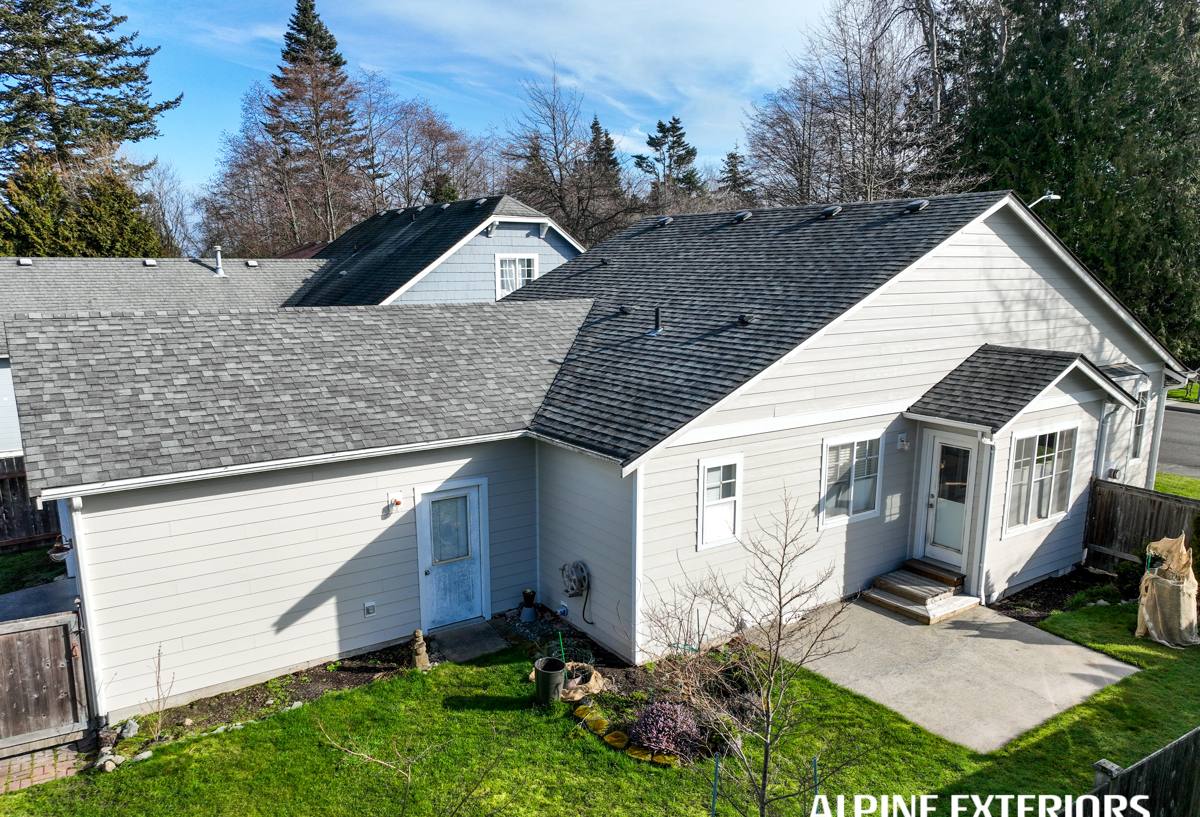
What Salt Air, Rain, and Moss Season Actually Do to a House
Salt Air
Airborne salt from the bay doesn't just affect metal fasteners and hardware — it accelerates the breakdown of paint films and finishes on wood-based and composite sidings, and it speeds corrosion on anything ferrous that isn't properly rated for coastal exposure. Over years, that means chalkier finishes, earlier repainting, and fastener staining bleeding through the surface.
Driving Rain
Storms coming off the Strait of Georgia don't fall straight down — wind-driven rain gets pushed sideways into wall assemblies, especially on west- and southwest-facing elevations. Siding materials that swell, or seams and butt joints that aren't properly flashed and caulked, let moisture behind the cladding. That's where rot starts, usually invisibly, behind a wall that still looks fine from the driveway.
Moss and Algae Season
Whatcom County's wet season runs long — realistically eight or nine months of the year with enough moisture and shade for moss, algae, and mildew to take hold on north-facing walls, under eaves, and anywhere air doesn't move well. On porous or absorbent siding materials, that growth digs into the surface. On a dense, factory-finished material, it mostly stays on top and washes off.
Why We Only Install James Hardie Fiber Cement
We don't install LP SmartSide, vinyl, Cemplank, Allura, primed spruce, or cedar siding. That's a deliberate standard, not a lack of options — we've made a call about what holds up correctly in this climate when it's installed right, and what tends to create maintenance headaches or premature failure for homeowners a few years down the road.
Vinyl is affordable and low-maintenance in mild climates, but it softens and can warp in sustained heat, becomes brittle in cold snaps, and its seams and panels are prone to moisture intrusion behind the cladding during the kind of wind-driven rain events this area sees. It also can't be painted to a durable, factory-grade finish if a homeowner wants to change color down the road.
Wood siding — cedar or primed spruce — looks great initially, but it's an organic material in a climate that stays wet for most of the year. That combination means an ongoing cycle of recoating, caulking, and moisture monitoring, and it's genuinely vulnerable to the same moss and mildew growth we described above.
Engineered wood products like LP SmartSide use strand-based substrates that resist moisture better than solid wood, but they're still wood-based at the core, which means the cut edges, seams, and any finish breach are places water can get in and cause swelling over time — something that matters a lot in a location with this much annual rainfall.
Fiber cement competitors like Cemplank and Allura are legitimate products in the same general category as James Hardie, but we've standardized on one manufacturer for consistency: matched trim systems, one factory finish warranty, one installation spec our crew knows cold, and one point of accountability if anything needs to be addressed under warranty.
James Hardie fiber cement is non-combustible, dimensionally stable in wet-dry cycling, and comes with a factory-applied ColorPlus finish that's baked on and warrantied against fading and peeling — which matters when a wall is getting hit with salt air and UV for years without a repaint. Hardie also engineers specific product lines for different climate zones (their HZ5 and HZ10 systems), which is directly relevant to a coastal Whatcom County property.
How Common Siding Materials Compare in This Climate
| Material | Moisture behavior near the coast | Maintenance burden | Typical lifespan here |
|---|---|---|---|
| James Hardie fiber cement | Dimensionally stable, resists swelling and moisture intrusion when properly installed | Occasional wash; factory finish reduces repainting | Decades, backed by transferable warranty |
| Vinyl | Seams and panel joints vulnerable to wind-driven rain intrusion | Low, but limited repair/color options | Moderate; earlier replacement common near water |
| Cedar / primed spruce | Absorbs moisture; prone to rot, moss, and swelling | High — regular recoating and caulk maintenance | Shorter without diligent upkeep |
| Engineered wood (e.g. LP SmartSide) | Better than solid wood but still wood-based; edges/cuts are vulnerable | Moderate — finish and edge maintenance | Moderate, installation-sensitive |
What a Hardie Siding Project Looks Like for a California Creek Home
Assessment First
Before we talk product lines or colors, we look at the house: which elevations take the worst of the weather off the water, where moss and staining are already showing, and whether the existing water-resistive barrier and flashing details are doing their job. In this area, that assessment often turns up moisture issues at trim, window flanges, and butt joints before it shows up as visible siding damage.
Product Selection
For most homes in this part of Blaine, we're looking at Hardie's HZ5 climate-engineered line, formulated for the wetter, cooler weather common to the Pacific Northwest. Depending on the home's exposure, lap siding, panel systems, or a shingle-style Hardie product might make the most sense — we walk through the options based on the house, not a one-size answer.
Installation Details That Matter Here
Correct installation is what actually determines how a fiber cement job performs over time, and it's where a lot of shortcuts happen on lower-bid jobs. In a marine climate, the details we won't skip include:
- Proper rainscreen or drainage gap behind the siding so incidental moisture can drain and dry
- Correctly lapped and sealed water-resistive barrier and flashing at every window, door, and penetration
- Manufacturer-specified fastener type and placement, rated for coastal/corrosive exposure
- Proper clearance between siding and grade, decks, and roof lines to avoid wicking moisture
- Factory-finished cut edges sealed per Hardie's installation guidelines
Beyond Siding: Roofing, Windows, and Decks
Siding doesn't work in isolation — it's one part of a building envelope that also includes the roof, windows, and any attached decks, and all of it needs to work together to keep a house dry in this climate. We handle roofing, window replacement, and deck construction as well, which matters in a place like California Creek because water intrusion problems rarely respect the boundary between one exterior trade and another. A roof leak at a wall intersection, a failed window flange, or a deck ledger board tied into the siding without proper flashing can all undo good siding work. Having one crew look at the whole envelope, rather than coordinating separate contractors who never talk to each other, tends to catch those interactions before they become expensive.
Signs Your Current Siding May Be Struggling
A lot of siding damage in this climate develops slowly and out of sight. Worth checking for, especially heading into another wet season:
- Persistent moss or dark streaking on north-facing or shaded walls that returns quickly after cleaning
- Soft spots, bubbling, or visible swelling, especially near the bottom courses or around windows
- Paint that's chalking, peeling, or needing repainting more often than it used to
- Visible gaps at seams, trim, or butt joints where caulking has failed
- Rusty streaking around fastener heads
- A musty smell or soft drywall on interior walls that back up to exterior siding
None of these automatically mean full replacement is necessary, but they're worth a professional look before they turn into structural repair.
Why a Local Crew Matters Here
A siding contractor who only works inland, or who splits time across a wide region, doesn't necessarily know how differently a house near the water in Blaine needs to be built compared to one twenty minutes east. We're in Whatcom County working this coastal weather pattern regularly, which means we're not guessing at flashing details or fastener specs for a climate we don't normally deal with — we're applying what consistently holds up on homes exposed to the same salt air, rain, and moss conditions your house faces.
Get a Straightforward Look at Your Siding
If you're noticing moss, staining, soft spots, or just want an honest read on how your current siding is holding up against California Creek's weather, we're happy to take a look. There's a form below for a free estimate — no pressure, no sales script, just a clear assessment of what your home actually needs.