 Blaine Siding
 Why Siding Quotes Vary So Much in Blaine
If you've called around for siding quotes in Blaine, you've probably noticed the numbers don't line up. One contractor's estimate is half another's, and it's rarely because someone is trying to take advantage of you. Siding pricing is a sum of several independent variables — material, labor, tear-off, substrate condition, and design complexity — and every one of those can swing a project total by thousands of dollars. Understanding what's actually driving the number helps you compare quotes on equal footing instead of just picking the lowest one and hoping for the best.
This page walks through the real cost factors homeowners in Blaine and the rest of Whatcom County should understand before they sign anything, plus why we've standardized our own installs on one product line instead of offering the full menu.
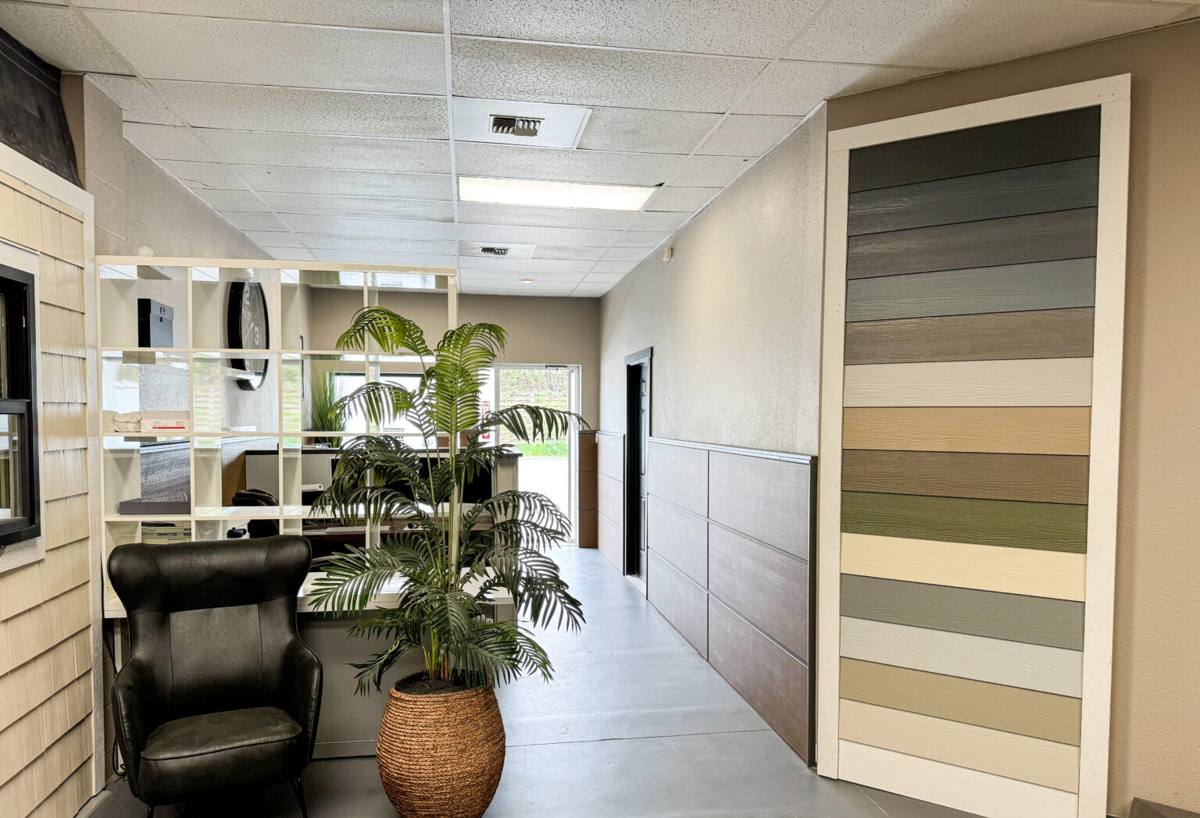
Material Choice: The Biggest Single Variable
Material is usually the largest line item, but it's not just about the price per square foot of the siding itself. Different materials carry very different labor requirements, trim needs, and long-term maintenance costs — all of which belong in the "true cost" conversation, not just the sticker price.
Vinyl
Vinyl is the cheapest material up front and the fastest to install, which is why it dominates budget quotes. It doesn't rot, but it flexes and gaps at fastener points over time, fades unevenly on sun-exposed elevations, and becomes brittle and crack-prone in cold snaps — a real consideration here given how many nights in Blaine drop below freezing in winter. It also can't be painted to refresh a faded look without voiding the warranty on most product lines.
Wood — Cedar and Primed Spruce
Wood siding costs more than vinyl and less than premium fiber cement in most cases, but the real cost shows up after installation: repainting or restaining every few years, caulk maintenance at every joint, and vulnerability to moisture intrusion if that maintenance schedule slips. In a marine climate with salt air and driving rain off the Strait of Georgia, wood's maintenance clock runs faster than it would inland.
Engineered Wood (LP SmartSide and similar)
Engineered wood products sit in the middle of the cost range and install faster than fiber cement because the panels are lighter. The trade-off is that they're wood-based, so the cut edges and any breach in the factory coating are an entry point for moisture — and once moisture gets into engineered wood, it swells and doesn't recover the way solid wood sometimes can.
Fiber Cement
Fiber cement costs more than vinyl and is comparable to or somewhat above wood and engineered wood, but the gap is smaller than most homeowners expect once you factor in installation labor and the maintenance those other materials require over a 20-30 year ownership window. Not all fiber cement is the same, though — brand, plank thickness, and factory finish quality all affect both price and performance, which is why we'll only put James Hardie on a home (more on that below).
Tear-Off and What's Underneath Matters More Than People Expect
Every estimate should account for what happens when the old siding comes off, because nobody knows what's under it until it's off the wall. In Blaine's older neighborhoods — and especially homes near the water or in low, shaded lots where moss and moisture linger longest — it's common to find:
- Water-damaged or delaminated sheathing that needs to be cut out and replaced before new siding goes on
- Missing or degraded weather-resistive barrier (house wrap) that no longer sheds water properly
- Old, non-code flashing around windows and doors that's been letting moisture in for years without visible signs
- Insulation gaps or fully saturated insulation that needs to come out, not just cover over
A contractor who quotes a flat per-square-foot number without ever inspecting the sheathing is either assuming best-case conditions or planning to charge you as a change order once the walls are open. Either way, that's a conversation worth having up front, not after demolition has already started.
Labor and Installation Complexity
Labor cost isn't just a function of square footage — it's a function of how difficult the house is to side correctly. A simple one-story rectangular home costs less per square foot to side than a two-story home with dormers, multiple roof lines, and lots of window and door trim, because complexity multiplies cutting, fitting, and flashing detail work. Steep or difficult-access rooflines also add scaffolding or lift costs that a flat quote might not clearly break out.
Correct installation matters more with fiber cement than with vinyl or engineered wood, because fiber cement is less forgiving of shortcuts — proper fastening pattern, clearance from grade and roof lines, and joint treatment all affect how the product performs over decades, not just how it looks on install day. That precision takes more time on the wall, and it should show up as labor hours in the estimate, not get skipped to hit a lower number.
Rough Cost Comparison by Material
| Material | Relative Upfront Cost | Typical Lifespan | Ongoing Maintenance |
|---|---|---|---|
| Vinyl | Lowest | 15-25 years | Low, but limited repair/refinish options |
| Primed Spruce / Cedar | Moderate | Varies widely with upkeep | High — regular painting/staining, caulk checks |
| Engineered Wood | Moderate | 20-30 years with intact coating | Moderate — coating and edge sealing matter |
| Fiber Cement (Hardie) | Moderate-High | 30-50+ years installed to spec | Low — factory finish, occasional caulk/inspection |
These are general industry patterns, not a quote — actual numbers depend on your home's size, condition, and design. The point of the table is to show that upfront cost and total cost of ownership aren't the same ranking.
How Blaine's Climate Changes the Math
Blaine sits right on the water at the top of Whatcom County, which means homes here deal with a specific combination of stresses that inland Washington siding doesn't face as heavily: salt-laden air off Semiahmoo Bay and the Strait, wind-driven rain that gets pushed sideways into wall assemblies rather than just falling straight down, and a long, damp moss season that keeps north- and shade-facing walls wet longer than sun-exposed ones. All three of these accelerate whatever weakness a given material has.
Salt air corrodes exposed metal fasteners and fittings faster than it would further inland, which is why fastener quality and flashing detail matter more here than in a drier climate. Driving rain finds any gap in a weather barrier or trim joint that a calmer climate might never test. And prolonged moss and moisture exposure punishes any product that depends on an intact painted or coated surface to keep water out — the moment that surface is compromised, whatever's underneath starts absorbing water on a schedule that doesn't let up for months. This is exactly the environment where the difference between a well-engineered, factory-finished fiber cement product and a lower-cost alternative shows up over years, not days.
Trim, Details, and What Estimates Often Miss
The siding field itself is usually the easy part of a quote to compare. Where estimates diverge is in the details:
- Trim material and thickness — matching trim quality to the siding, not using thin composite trim on a premium job
- Corner treatment — mitered corners versus corner boards, which affects both looks and water management
- Window and door flashing — whether it's being replaced and integrated with new house wrap, or just worked around
- Caulking and sealant quality — a cheap sealant fails years before a quality one, regardless of the siding above it
- Paint or factory finish — field-painted siding versus factory-applied finish, which affects both upfront cost and how it weathers
Two quotes with the same "per square foot" number can represent very different jobs once these details are accounted for. Ask any contractor to itemize trim, flashing, and sealant separately from the field material — a vague, bundled number is often where corners get cut.
A Practical Checklist Before You Compare Quotes
- Does the quote specify the exact siding product and line, not just "fiber cement" or "vinyl" generically?
- Does it include a sheathing inspection allowance, or assume the walls underneath are in good shape?
- Is house wrap/weather barrier replacement included, or is the old barrier being reused?
- Are window and door flashing details specified?
- Is trim material and thickness called out, or left vague?
- What's the warranty structure — manufacturer's product warranty versus the installer's labor warranty — and are they separate documents?
- Is the crew installing to the manufacturer's written installation instructions, which most warranties require for coverage?
Why We Only Install James Hardie
We don't offer vinyl, LP SmartSide, Cemplank, Allura, or bare wood siding — not because those products can't be installed well by someone, but because we've made a professional decision to standardize on one system we can stand behind completely, in this climate, without hedging. James Hardie's fiber cement is non-combustible, engineered in HZ product lines for different climate exposures, and finished at the factory with ColorPlus technology rather than relying on field-applied paint that has to be reapplied on a schedule. That factory finish is a meaningful advantage in a marine climate like Blaine's, where field-painted surfaces take a beating from salt air and driving rain.
Hardie also backs the product with a strong, transferable warranty — useful if you sell the home before the siding's functional life is up. None of this means other products are without merit; it means that after installing siding on homes across Whatcom County, we decided we'd rather be excellent at one system installed correctly than average across five. That's the trade we've made, and we think it's the right one for homes that have to hold up against salt air, wind-driven rain, and a long moss season year after year.
Getting a Number for Your Home
The only way to get an accurate cost for your specific house is a look at the current siding, the wall condition underneath where visible, and the design complexity of the home. Square footage from a listing or a rough guess never tells the whole story. If you'd like a straightforward, no-pressure estimate for your Blaine home, the form below is the fastest way to get one.