 Blaine Siding
 An Honest Answer to a Question We Get a Lot
Homeowners in Blaine ask us why we don't install LP SmartSide. It's a fair question — SmartSide is a well-known engineered wood siding product, it's less expensive than fiber cement up front, and plenty of contractors in Whatcom County install it every year. We're not going to tell you it's a bad product. What we will tell you is why, after years of doing siding and re-siding work on homes along the Semiahmoo Bay shoreline and inland toward the county line, we made the decision to only install James Hardie fiber cement — and why that decision matters more here than it might somewhere drier.
This page is meant to be useful whether you end up hiring us or not. If you're comparing siding materials for a Blaine home, you deserve a straight answer about trade-offs, not a sales pitch dressed up as "education."
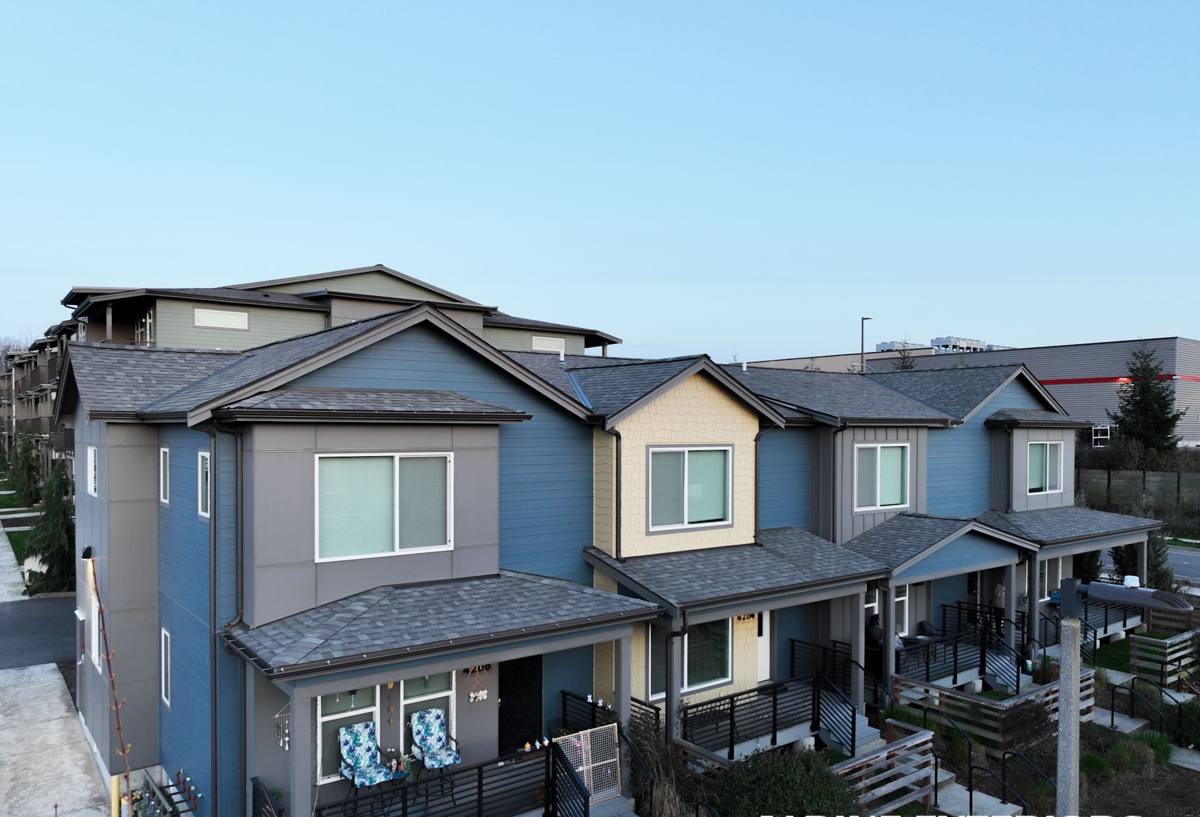
What LP SmartSide Actually Is
LP SmartSide is an engineered wood siding — strand-based wood fiber, resin, wax, and zinc borate treatment, pressed into panels or lap boards and coated with a factory primer or finish (SmartSide also offers a prefinished ExpertFinish option in some markets). It's a genuine step up from old-school OSB siding products that gave engineered wood a bad name decades ago. LP has put real engineering into moisture resistance, and the product carries a legitimate manufacturer warranty when installed correctly.
It's also lighter and easier to cut than fiber cement, which is part of why it's popular with builders working on a schedule and a budget. None of that is in dispute. The question for us isn't "is it a decent product" — it's "is it the right product for this specific climate, on this specific coastline, for the next 30-plus years."
Where SmartSide Gets Used Successfully
To be fair to the product: in drier interior climates, or on homes with generous roof overhangs and good gutter maintenance, SmartSide performs reasonably well over its warranty period. The failures we've seen and heard about from other crews in this region tend to cluster around specific conditions — and Blaine happens to have most of those conditions in one place.
Why Blaine's Climate Is a Tougher Test
Blaine sits at the very northwest corner of Washington, right on Semiahmoo Bay and the Strait of Georgia, with the Canadian border a few blocks from downtown in places. That location stacks three things on top of each other that engineered wood siding has to survive year after year:
- Salt air. Homes near the bay and along Marine Drive take on salt-laden moisture that settles into any exposed wood fiber or seam, accelerating swelling and finish breakdown faster than it would inland.
- Driving rain off the water. Wind-driven rain off the Strait doesn't just wet the face of the siding — it pushes moisture into laps, seams, and butt joints, which is exactly where wood-based siding is most vulnerable.
- A long moss and algae season. Whatcom County's wet, mild, shaded conditions (especially on north-facing walls under mature trees, common in Blaine's older neighborhoods) keep siding surfaces damp for long stretches of the year, feeding moss and mildew growth on any surface that isn't fully vapor-permeable and well-ventilated behind the cladding.
Any one of those on its own is manageable. Together, over a 20-30 year ownership period, they add up to a maintenance burden that most homeowners underestimate when they're comparing sticker prices at the buying stage.
Where Engineered Wood Struggles in This Environment
Edge and Seam Vulnerability
Engineered wood siding is manufactured with a protective resin-and-wax treatment throughout the panel, but the factory finish and edge sealant are what actually keep water out day to day. Field cuts, nail penetrations, and butt joints all expose fresh material that has to be sealed correctly and maintained — caulked, re-primed, or capped — for the life of the siding. Miss a maintenance cycle, or have a seam open up slightly as the house settles, and that's an entry point for the kind of sustained moisture Blaine's rain delivers.
Swelling and Buckling at Joints
When wood-fiber siding does take on moisture at a seam or a poorly flashed penetration, it swells. Unlike fiber cement, which doesn't expand when wet, engineered wood panels can buckle, telegraph waviness through the finish, or develop soft spots at the affected joint. This is precisely the failure mode manufacturers try to engineer against, and modern SmartSide is far better at resisting it than older wood composite products — but "better at resisting" isn't the same as "immune to," especially under repeated wet-dry cycling.
Maintenance Discipline Requirements
SmartSide's warranty coverage generally depends on the homeowner keeping up with caulking, touch-up painting, and prompt repair of any damage. That's a reasonable ask in a moderate climate with a shorter wet season. In Blaine, where the rainy season runs long and moss growth is a near year-round concern on shaded walls, that maintenance schedule gets more demanding, not less — and skipped maintenance is the single most common thread in engineered wood siding problems we get called out to look at.
How This Compares to James Hardie Fiber Cement
We install exclusively James Hardie fiber cement siding — not because we're indifferent to cost, but because fiber cement's core material properties line up with what this climate actually demands.
| Factor | LP SmartSide (engineered wood) | James Hardie (fiber cement) |
|---|---|---|
| Core material response to moisture | Wood fiber base can swell/buckle if water reaches it at seams or damage | Cement-based composite does not swell or rot when wet |
| Combustibility | Wood-based, combustible | Non-combustible |
| Moss/algae resistance on shaded walls | Dependent on finish coating and upkeep | Dense composite holds finish well over long damp periods |
| Salt air / coastal exposure | Manageable with diligent maintenance | Widely used in coastal climate-engineered HZ product lines |
| Factory finish | Factory primer or ExpertFinish coating, field touch-up needed at cuts | ColorPlus baked-on finish with long finish warranty |
| Upfront material cost | Generally lower | Generally higher |
| Typical maintenance cycle | Regular caulk/paint touch-up per warranty terms | Occasional wash, minimal recoating over decades |
James Hardie makes climate-engineered "HZ5" product lines specifically formulated for the wetter, harsher weather patterns found in the Pacific Northwest — which is a direct acknowledgment from the manufacturer that not all US climates put the same stress on siding. That's the kind of product-to-climate matching we want backing every job we do in Whatcom County.
The Warranty Difference Matters More Than It Looks
Every siding warranty is really two things: a materials warranty and a set of conditions that have to be met to keep it valid. James Hardie's ColorPlus finish warranty is strong and transferable, which matters for resale — Blaine has a mix of longtime residents and newer buyers drawn to the waterfront and border-town lifestyle, and a transferable warranty is a real selling point when that home eventually changes hands. Engineered wood warranties are typically solid too, but they lean more heavily on documented maintenance compliance, which can get complicated for a homeowner who bought the house years after installation and doesn't have the paper trail.
What We Actually Recommend for Blaine Homes
If you're re-siding a home in Blaine — whether it's a place near the marina and Semiahmoo Spit, a house tucked into the trees off Peace Portal Drive, or something further out toward the county line — our standard recommendation is James Hardie fiber cement, matched to the wall's sun and wind exposure:
- Water-facing and wind-exposed walls: prioritize proper flashing, weather-resistant barrier detailing, and Hardie's climate-engineered panel or lap products.
- Shaded, moss-prone walls: fiber cement's resistance to sustained dampness reduces the ongoing battle with algae and moss compared to wood-based alternatives.
- Homes near the water: factor in salt air exposure when choosing trim and fastener materials, not just the field siding.
- Older homes being re-sided: use the project as an opportunity to correct any existing moisture or ventilation issues behind the old siding before the new cladding goes up.
A Quick Homeowner Checklist Before You Choose a Siding Material
- Ask what climate zone or exposure rating the specific product line is engineered for — not just the brand name.
- Ask what ongoing maintenance the warranty actually requires, and get it in writing.
- Check how the product performs specifically in wet, low-sun, shaded wall conditions — that's the toughest test in this county, not the sunny south wall.
- Ask whether the warranty is transferable if you sell the home.
- Get the contractor's honest opinion on trade-offs, not just a quote — a straight answer here tells you a lot about who you're hiring.
Why We Chose to Specialize Instead of Offering Everything
We could install LP SmartSide, vinyl, or several other products alongside Hardie. We chose not to. Installing one material well — understanding its flashing details, its fastening schedule, its trim and joint treatment inside and out — produces a better result than installing five materials adequately. For a climate that includes salt air, driving rain, and a moss season that runs longer than most of the country's, we decided that focus, not variety, was what actually served homeowners here.
If you're weighing your options for a Blaine home, we're happy to walk your house with you, point out the wall exposures that matter most, and give you a straightforward estimate — no pressure, no hard sell, just a clear look at what your home actually needs.