 Blaine Siding
 Siding Built for Sumas Weather
Sumas sits at the far northern edge of Whatcom County, hard against the Canadian border, in a stretch of the Pacific Northwest that takes weather seriously. Homes here deal with a long wet season, damp air moving in off the Salish Sea and up the Fraser Valley corridor, and enough shade and moisture in the cooler months to keep moss and algae in business most of the year. Add in the salt-tinged air that reaches inland from the Strait of Georgia and Puget Sound on windier days, and you have a climate that is genuinely hard on exterior building materials, not just inconvenient.
We're a siding, roofing, window, and deck contractor based in Blaine, and Sumas falls inside the area we treat as home turf, not a drive-to job. That matters more than it sounds like it should. A crew that works this corner of Whatcom County regularly knows what driving rain does to a north-facing wall, how fast moss can take hold on a shaded roofline, and which detailing mistakes show up as callbacks two winters later instead of two months later.
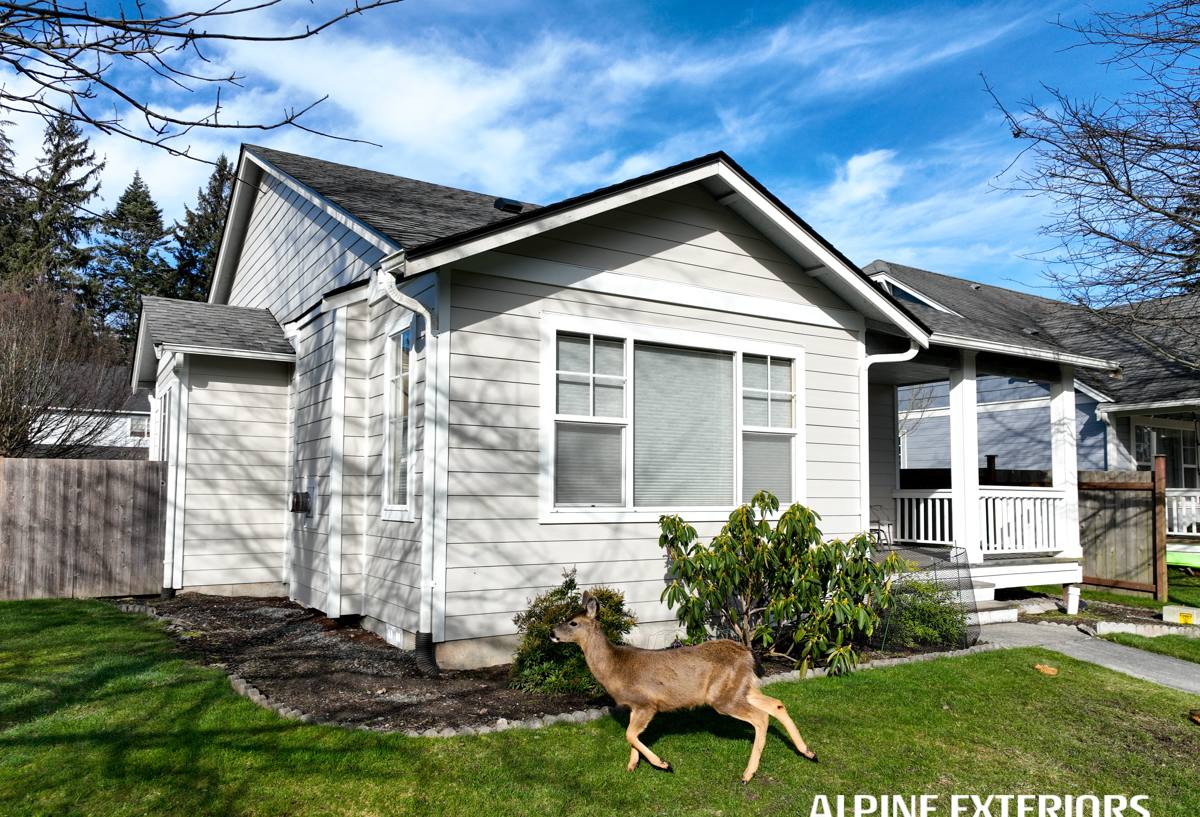
What Sumas Homes Are Up Against
Driving Rain and Wind-Driven Moisture
Sumas doesn't just get rain — it gets rain pushed sideways by wind funneling through the valley. That matters for siding because wind-driven rain doesn't behave like a gentle drizzle running down a wall. It gets forced into laps, seams, and fastener points that would stay dry in a calmer climate. Siding systems and installation details that aren't built for that kind of exposure tend to show it first at butt joints, trim intersections, and anywhere caulking was asked to do a job flashing should be doing.
Salt Air
Sumas is inland compared to Blaine's waterfront, but this part of Whatcom County still sees salt-laden air moving through on a regular basis. Salt exposure accelerates corrosion on fasteners and metal trim, and it's harder on paint films and caulking than most homeowners expect. It's a slow, cumulative effect — not something that shows up in year one, but something that separates materials and finishes that were engineered for coastal-adjacent climates from ones that weren't.
Moss Season
Between the shade from mature trees common in this area, consistent moisture, and mild temperatures, moss and algae growth is close to a year-round concern rather than a seasonal one. Moss holds moisture against a surface longer than open air would, and on the wrong siding material that translates into softening, staining, or accelerated wear over time — especially on north- and west-facing walls that don't get much direct sun to dry out between rain events.
Why We Only Install James Hardie Fiber Cement
We made a deliberate decision to install one siding system — James Hardie fiber cement — and nothing else. Not vinyl, not LP SmartSide, not Cemplank or Allura, not primed spruce or cedar. That's not a marketing gimmick; it's a standard we hold because of what we've seen this climate do to exterior materials over years and decades, not just the first winter after installation.
Fiber cement is a mix of cement, sand, and cellulose fiber, engineered specifically to resist the things that punish siding in a wet Pacific Northwest climate: moisture absorption, swelling, rot, and pest damage. It's also non-combustible, which matters in a region where wildfire smoke and dry-season fire risk have become a bigger part of the conversation even in historically wet areas. James Hardie's ColorPlus factory-applied finish is baked on and warranted separately from the panel itself, which means the paint job isn't left to weather and job-site conditions the way field-applied finishes on other products are.
James Hardie also engineers specific product lines (HZ5 and HZ10) for different climate zones, which is the kind of detail that tells you a manufacturer is thinking about actual regional performance rather than a one-size-fits-all product. For a town like Sumas, that climate-specific engineering isn't a nice-to-have — it's the whole point.
Why Not the Alternatives
Vinyl Siding
Vinyl is inexpensive and easy to source, and for some budgets and climates it's a reasonable choice. In a climate with driving rain and real temperature swings, though, vinyl's weaknesses show up: it can warp or distort with heat and cold cycling, its seams and laps are more forgiving of water intrusion than a rigid material, and it doesn't offer the same fire resistance as fiber cement. We don't install it because we don't think it holds up to the standard we want to stand behind on a home in this region.
LP SmartSide
LP SmartSide is an engineered wood product — strand-based, with a resin binder and a treated surface. It performs reasonably well when installation is precise and maintenance is kept up, but it's still wood at its core, which means cut edges, fastener penetrations, and any breach in the surface treatment are places moisture can start doing damage. In a climate with Sumas's rain volume and moss pressure, that margin for error is thinner than we're comfortable working with.
Cemplank and Allura
Cemplank and Allura are also fiber cement products, and the base material shares real similarities with James Hardie's. Where we see the difference is in the finish systems, warranty structure, and the depth of climate-specific engineering behind product lines like Hardie's HZ system. We standardized on one manufacturer so our crews master one set of installation details rather than splitting attention across several similar-but-different systems — and we picked the one whose track record and warranty backing we trust most.
Primed Spruce and Cedar
Solid wood siding has real appeal — it's a traditional look with a warmth that manufactured products sometimes strain to match. But raw or primed wood in a climate like this one demands a maintenance commitment most homeowners don't sign up for knowingly: regular repainting or restaining, vigilant caulking, and fast repairs at the first sign of rot. Cedar has natural rot resistance, which helps, but it isn't immunity, and in a wet, moss-prone environment the long-term cost of upkeep is real.
Comparing the Options
| Material | Moisture Resistance | Maintenance | Fire Resistance | Typical Lifespan |
|---|---|---|---|---|
| James Hardie Fiber Cement | Engineered for wet climates | Low — factory finish, occasional wash | Non-combustible | Decades with proper install |
| Vinyl | Moderate — seam-dependent | Low but limited repair options | Combustible | Varies, shorter in harsh climates |
| LP SmartSide | Good if maintained | Moderate — surface upkeep matters | Combustible | Shorter than fiber cement |
| Cedar / Primed Spruce | Fair — needs ongoing protection | High — regular finish work | Combustible | Highly maintenance-dependent |
Beyond Siding: Roofing, Windows, and Decks
Siding doesn't work in isolation. A wall system is only as good as the roof drainage, flashing, and window details tied into it, which is why we handle roofing, windows, and decks alongside siding rather than treating them as separate trades. On a Sumas home, that usually means paying close attention to:
- Roof-to-wall flashing and kick-out flashing at roof-wall intersections, where a huge share of moisture intrusion actually starts
- Window flashing and integration with the new siding's water-management layer
- Gutter and downspout capacity sized for real regional rainfall, not just code minimums
- Deck ledger and post connections that keep wood-to-house contact points properly flashed and drained
- Roof surfaces and shaded rooflines prone to moss, which benefit from material choices and periodic maintenance that limit buildup
Coordinating these together means fewer gaps where two trades' work meets and neither one owns the detail.
What a Local Crew Actually Changes
A contractor based near Sumas isn't just a matter of convenience or a shorter drive. It means the crew has installed siding, roofing, and windows on homes exposed to this exact combination of driving rain, salt air, and moss pressure, and has seen — firsthand, over multiple seasons — which details hold up and which ones come back as warranty calls. It means faster response if something needs attention after a storm. And it means the estimate you get reflects what this specific climate actually requires, not a generic regional assumption.
What to Expect From a Siding Project
Every home is different, but a typical James Hardie siding project follows a similar sequence: an on-site evaluation of the existing siding and any moisture or rot issues underneath it, a plan for water-resistive barrier and flashing details specific to your home's exposure, removal of the old siding, correction of any sheathing or framing issues found along the way, then installation of the new Hardie panels or lap siding with proper fastening, joint treatment, and trim work. A few things worth asking about before you commit to any contractor:
- Whether the crew installing your siding is factory-trained on James Hardie products specifically
- How they handle flashing at windows, doors, and roof intersections — not just the field of the wall
- Whether the quote includes house wrap or water-resistive barrier replacement, or reuses what's there
- What the manufacturer's warranty covers versus what's covered by workmanship
- How they plan to protect landscaping and manage debris during the project
Get a Free, No-Pressure Estimate
If your Sumas home's siding is showing its age — fading, moisture staining, moss buildup, or soft spots near the bottom edges — it's worth having a local crew take a look before those issues get more expensive to fix. We offer free, no-pressure estimates for siding, roofing, window, and deck work, and we're happy to walk through what we're seeing on your home and why we'd recommend one approach over another. Use the form below to get started.