 Blaine Siding
 Cherry Point: A Tough Address for Exterior Materials
Cherry Point sits out on the Strait of Georgia in Whatcom County, and that waterfront position is exactly what makes it hard on a home's exterior. Properties here catch wind and moisture straight off the water, with little in the way of ridgelines or dense development to break it up before it reaches your siding. Add in the industrial and agricultural land uses common to the area, and you've got a mix of salt-laden air, sustained wind exposure, and near-constant seasonal dampness working against whatever is on your walls.
None of that is unusual for Whatcom County generally, but Cherry Point gets a more concentrated version of it than homes tucked further inland around Blaine. That's the starting point for how we think about siding, roofing, windows, and decks out here — the material and installation choices that hold up fine in a sheltered subdivision don't always hold up the same way on an exposed waterfront lot.
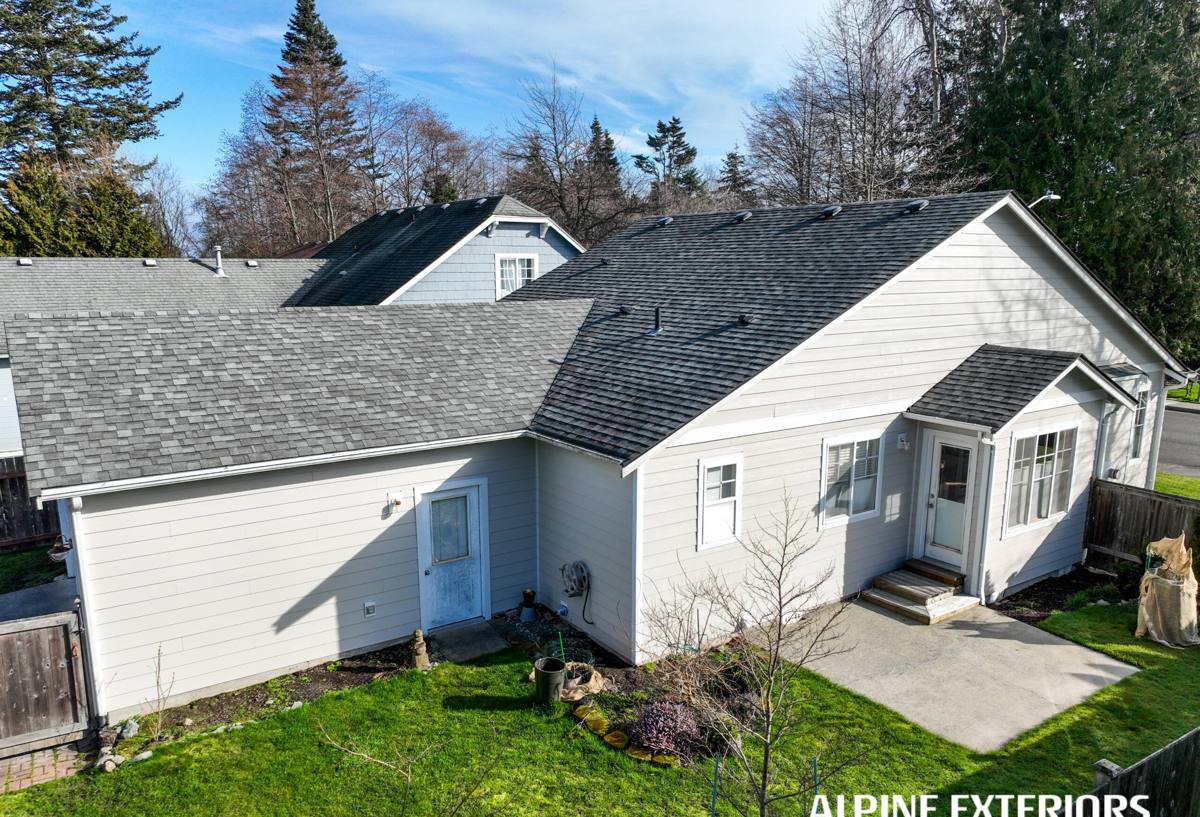
What Salt Air Actually Does to a House
Corrosion and Fastener Failure
Salt-laden air accelerates corrosion on anything metal — nails, screws, flashing, hardware, even HVAC components. On a siding job, that means fastener choice and flashing details matter more here than they would forty miles inland. Cut corners on corrosion-resistant fasteners near Cherry Point and you're looking at streaking, staining, and eventually failed attachment points years before they should happen.
Moisture That Doesn't Fully Dry Out
Salt air holds moisture differently than fresh air, and combined with the Pacific Northwest's long wet season, it means exterior surfaces here spend more time damp than dry for much of the year. Materials that absorb water, swell, or need to fully dry between rain events to avoid rot are working against the odds in this microclimate.
Moss, Mildew, and the Long Wet Season
Like most of Whatcom County, Cherry Point sees an extended stretch of overcast, drizzly weather where surfaces rarely get a real chance to bake dry in direct sun. That's ideal growing conditions for moss and mildew on anything with texture or porosity — wood grain, rough-sawn panels, and shingle products in particular. Once moss establishes on a siding surface, it holds moisture against the substrate and speeds up whatever decay process is already underway underneath.
Why We Standardized on James Hardie for This Kind of Exposure
We install James Hardie fiber cement siding exclusively — not vinyl, not LP SmartSide, not Cemplank or Allura, not primed wood or cedar. That's a deliberate standard, not a brand preference we picked out of a catalog. In an environment like Cherry Point's, the material differences aren't cosmetic — they show up in how a wall performs after five, ten, and twenty years of salt air and moss season.
Fiber cement is non-combustible and dimensionally stable, meaning it doesn't expand, contract, warp, or absorb moisture the way wood-based products can. James Hardie's ColorPlus factory finish is baked on under controlled conditions, which gives it better adhesion and fade resistance than field-applied paint holds up to in a marine environment. And Hardie's HZ5 product line is specifically engineered for climates with more moisture exposure — which is a real consideration for a site like Cherry Point rather than a marketing footnote.
We're not going to pretend other products are without merit — vinyl is inexpensive and low-maintenance in mild climates, engineered wood has a warmer look some homeowners want, and cedar has real aesthetic appeal. But on an exposed, salt-air, high-moisture site, the trade-offs of those products (heat distortion, moisture-sensitive edges, more frequent refinishing, shorter practical lifespan) are trade-offs we're not willing to install and then stand behind for the long term.
How the Common Alternatives Hold Up in This Climate
| Material | Salt air / moisture behavior | Moss & mildew resistance | Long-term maintenance |
|---|---|---|---|
| James Hardie fiber cement | Non-combustible, dimensionally stable, doesn't absorb and swell | Resists moisture retention that feeds growth; factory finish sheds dirt and biofilm better | Occasional wash; ColorPlus finish holds color for years without repainting |
| Vinyl siding | Doesn't rot, but can warp or crack under wind/temperature stress and fasteners still corrode | Smooth surface resists moss, but seams and laps trap grime | Low upkeep but limited repairability and shorter practical lifespan on exposed sites |
| LP SmartSide / engineered wood | Wood-based core is more moisture-sensitive; cut edges need diligent sealing | Textured finishes can hold moisture and organic growth longer | Requires consistent caulking/paint upkeep to protect edges and seams |
| Cedar / primed spruce | Natural wood absorbs and releases moisture constantly in a wet marine climate | Grain and texture are prone to moss and mildew without regular treatment | Needs recurring refinishing, sealing, and moss treatment to last |
Our Siding Process for Cherry Point Properties
Site Assessment First
Before we quote a job out here, we walk the exterior and look specifically at wind exposure, sun/shade patterns, existing moisture damage, and how the current siding and flashing have held up. A house set back from the water with tree cover behaves differently than one sitting exposed on open ground, even within the same general Cherry Point area.
Installation Details That Matter More on Exposed Sites
- Corrosion-resistant fasteners rated for the exposure level, not just whatever's standard elsewhere
- Proper rainscreen or drainage-plane detailing so incidental moisture has somewhere to go
- Correct flashing at windows, doors, and roof-to-wall transitions — the most common source of hidden rot
- Manufacturer-specified fastener spacing and clearances, which Hardie's warranty depends on
- Caulking and sealant choices rated for UV and salt exposure, not general-purpose product
These aren't upgrades we upsell — they're what correct installation actually requires on a site like this. Skipping them is exactly how a good product ends up with a short lifespan.
Roofing, Windows, and Decks Face the Same Conditions
Siding doesn't work in isolation, and neither does the rest of the exterior. Roofing systems on Cherry Point homes deal with the same wind-driven rain and need underlayment and flashing details sized for it, not just a base-code minimum. Windows in a salt-air, high-wind location benefit from good frame and seal quality since failed seals show up faster here than in sheltered inland neighborhoods. Decks — especially those with any water view or exposure — take a beating from the combination of UV, salt air, and sustained dampness, which affects fastener choice, board spacing for drainage, and finish selection.
We handle all four trades, which matters on a property like this because the exterior envelope works as a system. A roof leak that gets missed can show up as siding rot two walls over. A window with a failing seal can feed moisture into a wall cavity long before it's visible from outside. Having one crew responsible for the whole envelope means fewer gaps between trades and fewer excuses when something doesn't line up.
Why a Local Crew Matters Here
Cherry Point isn't a huge market, and it's easy for it to get treated as an afterthought by contractors based further south or inland who don't regularly work this specific stretch of coastline. A crew that's actually worked Whatcom County's waterfront and near-waterfront properties knows what wind exposure and salt air do to a building over time, not just in theory. That shows up in small decisions — fastener spec, flashing detail, where to add a drainage gap — that don't cost much more up front but make a real difference ten years down the line.
What to Ask Before Hiring Anyone for Exterior Work Here
- Have you worked on homes with this level of wind/salt exposure before, and can you explain what you'd do differently because of it?
- What fastener and flashing specs do you use on exposed sites versus sheltered ones?
- Are you licensed and insured to work in Washington, and can you provide proof?
- What's the manufacturer warranty, and does your installation method keep it intact?
- Will the same crew be handling siding, roofing, windows, or decks — or are trades subcontracted separately with no single point of accountability?
Cost Factors for Cherry Point Siding Projects
Pricing on any siding job depends on the specifics of the house, but a few factors tend to move the number more on exposed sites like Cherry Point than they would on a sheltered inland lot.
| Factor | Why it affects cost here |
|---|---|
| Existing moisture/rot damage | Long wet seasons and marine exposure mean underlying sheathing damage is more common on older homes and needs repair before new siding goes on |
| House exposure level | Fully exposed waterfront-facing walls may need additional drainage and flashing detail versus sheltered elevations |
| Existing siding removal | Tear-off complexity varies by what's currently installed and how it was attached |
| Trim and detail work | Windows, corners, and transitions require more precise flashing on exposed sites, adding labor time |
| Access and site conditions | Rural lots, longer driveways, or limited staging space can affect logistics and timeline |
Living With Hardie Siding in a Marine Climate
One advantage of fiber cement in a place like this is how little ongoing attention it needs compared to wood-based alternatives. An occasional rinse to clear salt residue, road dust, or early moss growth is generally enough — there's no recurring repainting or resealing cycle to keep up with the way there is with cedar or primed wood siding. The ColorPlus factory finish is designed to hold its color and resist the kind of chalking and fading that field-applied paint tends to show first in high-UV, high-salt conditions. That lower-maintenance profile matters more on a property where getting a painter or maintenance crew out isn't always a quick or convenient errand.
Get a Straight Answer for Your Property
Every lot around Cherry Point sits a little differently relative to the water, the wind, and the tree line, and that affects what your exterior actually needs. We'd rather walk your property and give you a specific, honest assessment than a generic quote. If you're weighing siding, roofing, windows, or deck work and want a straightforward read on what your home is facing, request a free, no-pressure estimate using the form below.