 Blaine Siding
 Windows on the Semiahmoo Coastline Work Harder Than Windows Anywhere Else
Homes in and around Semiahmoo sit close to the water, which means the windows on those homes deal with a different set of stresses than a house a few miles inland in Blaine or elsewhere in Whatcom County. Salt-laden air, wind-driven rain coming straight off the water, and a wet season that stretches for months all put extra load on window frames, seals, and glazing. A window that's rated fine for a typical suburban install can still underperform here if it wasn't chosen and installed with this specific exposure in mind.
This page covers what we look at, what materials hold up, and how we install windows on Semiahmoo-area homes so they actually perform for the long haul — not just on install day.
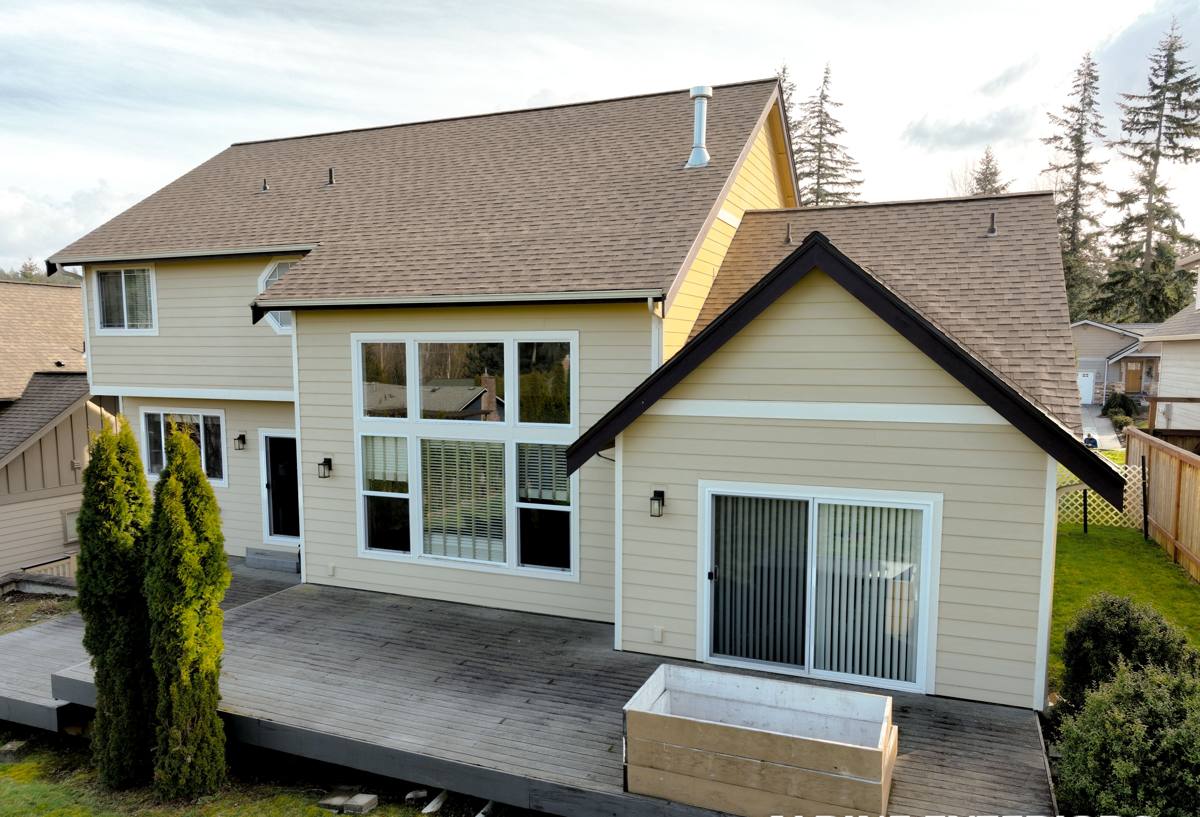
What Salt Air, Driving Rain, and Moss Season Actually Do to a Window
Salt Air
Airborne salt is corrosive to a lot of the hardware that makes a window work — hinges, locks, cranks, and especially aluminum components that aren't properly finished or protected. Over years, untreated or poorly finished metal parts can pit, corrode, or seize up, which is how you end up with a window that's hard to open or won't latch tight anymore.
Driving Rain
Wind off the water doesn't just drop rain straight down — it pushes it sideways and up under trim, sills, and poorly sealed joints. A window installation that would pass fine in a calmer inland setting can still leak here if the flashing and sealant details weren't built for wind-driven water specifically.
Moss and Sustained Moisture
Whatcom County's long wet season keeps humidity and surface moisture around for extended stretches. That's good growing conditions for moss and algae on sills, trim, and anywhere water sits instead of draining. Beyond looking bad, sustained moisture against wood trim or an imperfect seal is exactly what leads to slow rot and hidden water intrusion around a window opening.
Choosing a Window That's Actually Suited to This Exposure
Not every window on the market is a good fit for a waterfront or near-waterfront property. Material choice matters more here than it does a few miles inland.
| Frame Material | How It Handles Salt Air & Coastal Exposure | Maintenance Trade-Off |
|---|---|---|
| Vinyl (quality, welded corners) | Doesn't corrode, resists salt exposure well | Low maintenance; color/finish can fade over many years of sun and salt |
| Fiberglass | Very stable, resists corrosion and moisture-driven expansion | Higher upfront cost, minimal upkeep |
| Wood (unclad) | Beautiful but vulnerable to sustained coastal moisture without diligent upkeep | Highest maintenance burden in this climate — repainting, sealing, moss control |
| Aluminum (uncoated or poorly finished) | Prone to pitting and corrosion in salt air over time | We're cautious recommending this here unless it's a high-grade, properly finished coastal product |
| Clad wood (vinyl or aluminum-clad exterior, wood interior) | Exterior face resists weather; interior keeps the wood look | Moderate — cladding needs to be properly sealed at every joint |
Our general standard for Semiahmoo-area installs is quality vinyl or fiberglass for most homes, with clad-wood as a solid option when a homeowner wants a natural interior look. We're honest about wood's maintenance demands in this climate rather than talking anyone into a product that'll fight the weather for the next twenty years.
Glass and Weatherstripping Details That Matter Here
- Dual-pane, low-E glass as a baseline — helps with both energy performance and condensation control in a humid climate
- Marine-grade or corrosion-resistant hardware finishes, not standard-grade hardware that wasn't built for salt exposure
- Quality compression weatherstripping that stays flexible through repeated wet-dry cycles instead of hardening and cracking
- Sills and tracks designed to shed water outward rather than pooling it against the frame
What a Correct Installation Actually Involves
The window unit itself is only part of the equation. Most window failures we get called out to fix — leaks, drafts, rot in the surrounding wall — trace back to installation details, not the window product itself. On a Semiahmoo-area home, we treat these details as non-negotiable:
Flashing and Water Management
Every opening gets flashed so that any water that does get behind the trim is directed back out, not trapped against the sheathing. This is the single most important thing separating a window that lasts decades from one that causes hidden rot in five years — and it matters more here than in a sheltered inland location.
Sealing and Air/Water Barrier Continuity
The house wrap or weather-resistant barrier around the opening has to tie into the window's flanges correctly, with sealant and tape at every seam. Wind-driven rain finds any gap in that system, so we don't treat sealing as a quick caulk-and-done step.
Proper Shimming and Level Set
A window that's not shimmed level and square will bind, won't seal evenly, and puts uneven stress on the frame — which shows up later as operational problems or corner leaks.
Insulation Around the Frame
The gap between the window frame and the rough opening needs to be filled with the right low-expansion insulating material — not stuffed with excess spray foam that can bow the frame, and not left with gaps that create cold spots and drafts.
Our Window Installation Process
- On-site assessment — we look at your current windows, the condition of the surrounding trim and sheathing, and your home's specific exposure to wind and water.
- Product selection — we walk through material options honestly, including trade-offs, based on your home and budget, not a one-size-fits-all recommendation.
- Removal and opening inspection — old windows come out carefully so we can check for hidden rot or water damage before anything new goes in.
- Repair as needed — any soft or damaged framing gets addressed before the new window goes in, not covered over.
- Flashing, install, and seal — the new window goes in plumb, level, and square, with full flashing and sealing detail.
- Interior and exterior finish — trim work is completed and finished to match your home.
- Final walkthrough — we check operation, seal, and finish with you before we call the job done.
Signs Your Current Windows Are Already Losing the Battle
- Fogging or moisture between the panes (a failed seal on dual-pane glass)
- Windows that are hard to open, close, or lock — often a sign of corroded or seized hardware
- Visible moss or algae buildup on sills or trim that keeps coming back
- Soft or discolored trim around the window frame
- Noticeable draft or a cold spot near the window in windy weather
- Water staining on the interior wall below or beside a window
- Paint or finish that's bubbling or peeling near the frame
Any one of these on its own isn't necessarily an emergency, but on a Semiahmoo-area home they tend to compound quickly given the exposure — worth having looked at sooner rather than later.
What Window Installation Typically Costs and What Drives the Price
| Factor | Why It Affects Cost |
|---|---|
| Frame material | Vinyl is typically the most budget-friendly; fiberglass and clad-wood cost more upfront |
| Number and size of openings | More windows and larger openings mean more material and labor |
| Condition of the existing opening | Hidden rot or damage found during removal adds repair time before the new window goes in |
| Glass package | Upgraded low-E coatings or gas fills add cost but improve performance |
| Trim and finish work | Matching existing interior/exterior trim details takes more labor than a standard finish |
Every home is different, so we give real numbers after we've actually looked at your windows and openings — not a blind estimate over the phone.
Why a Crew That Already Works Semiahmoo Homes Makes a Difference
Window installation isn't one-size-fits-all, and a crew that's spent time working homes along this stretch of Whatcom County coastline already knows the questions to ask before removal even starts: how exposed is this wall to wind-driven rain, what's the sun and salt exposure done to the existing hardware, is there moss buildup that points to a drainage problem behind the trim. That's the kind of thing you only really learn by doing the work on homes with this exact exposure, repeatedly, and it shows up in fewer callbacks and windows that hold up through the wet season instead of failing early.
If you're planning a window replacement or a full-home upgrade on a Semiahmoo-area property, we're happy to come take a look and give you a straight, no-pressure estimate — just fill out the form below.