 Blaine Siding
 Why Color Choice Is a Bigger Decision Than It Looks
Picking a siding color feels like the fun part of a project, right up until you realize it's also one of the most permanent decisions you'll make about your home's exterior. Paint can be redone. A factory-applied color system on fiber cement siding is meant to last for decades, which means the choice you make now is one your house will wear through a lot of Whatcom County winters. Get it right and you get a low-maintenance, good-looking home for 15-plus years. Get it wrong and you're either living with a color you regret or paying to have it repainted well before you should have to.
This is doubly true here in Blaine. Homes near the water take a different kind of beating than homes fifty miles inland — salt-laden air, near-constant moisture, and a stretch of gray months long enough that algae and moss have plenty of time to take hold on north-facing walls and shaded trim. Color and finish quality aren't cosmetic details in this climate. They're part of how well your siding actually performs.
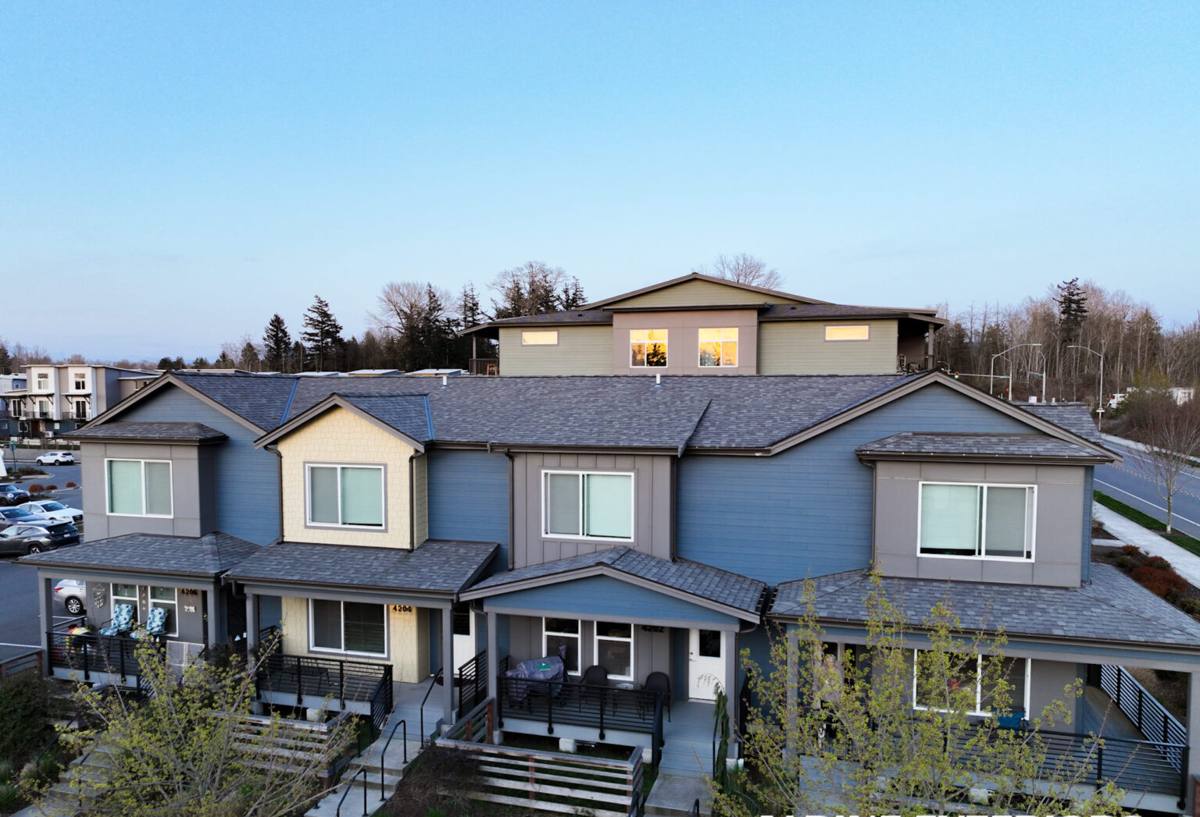
What ColorPlus Technology Actually Is
James Hardie's ColorPlus finish is not paint applied on a job site. It's a multi-coat color system baked onto the siding at the factory, then cured before the boards ever leave the plant. The process typically involves several coats — primer, color, and a protective topcoat — applied under controlled conditions and cured with heat, which produces a bond and consistency that's very difficult to replicate with a brush and a ladder in the field.
The practical difference shows up in three places:
- Adhesion — the finish is baked into the fiber cement substrate rather than sitting on top of it, so it resists peeling and chipping far better than field-applied paint.
- Consistency — every board comes out of the same controlled process, so color match across a whole elevation (or between an addition and the original house) is far more reliable than trying to match a hand-mixed batch years later.
- Warranty backing — ColorPlus finishes carry their own dedicated finish warranty separate from the substrate warranty, covering fading, cracking, and peeling of the factory finish itself, not just the board underneath it.
Compare that to standard primed Hardie boards, which are gray or tan primer only and require full field painting after installation. Primed boards are a legitimate option and Hardie backs the substrate the same way either way — but the finish itself is now your responsibility, and it's now subject to whatever your painter's prep, primer choice, and weather conditions were on the day they worked.
ColorPlus vs. Field-Painted Primed Board
| Factor | ColorPlus (factory finish) | Primed Board (field painted) |
|---|---|---|
| Application method | Multi-coat, factory-controlled, heat-cured | Site-applied, weather-dependent |
| Color consistency | Uniform across every board | Depends on painter's technique and batch mixing |
| Finish warranty | Dedicated finish warranty from Hardie | Paint manufacturer warranty only, if any |
| Typical repaint interval | Often 15+ years before touch-up needed | Commonly 5-10 years depending on exposure |
| Upfront cost | Modest premium over primed | Lower material cost, added labor cost for painting |
| Touch-up matching | Factory-matched touch-up kits available | Depends on retaining exact paint formula |
The Blaine and Whatcom County Climate Factor
Blaine sits right on the water, which means the air itself carries salt. Salt-laden air accelerates the breakdown of lower-quality finishes and metal fasteners, and it's harder on paint film than the drier air you'd get thirty miles inland. A factory-cured finish with a real topcoat holds up to that exposure noticeably better than a field-applied coat, because the bond to the substrate is stronger and the topcoat is formulated to resist UV and moisture cycling rather than just look good on day one.
Then there's the rain. Driving rain off the strait doesn't just wet the siding — it drives moisture sideways into laps, seams, and trim joints, which is exactly where a weak finish starts to fail first. And the long, overcast stretch from fall through spring gives moss and algae months of damp, shaded conditions to establish themselves, particularly on north- and east-facing walls, under eaves, and near landscaping that keeps siding shaded.
None of this means color is purely a performance decision — it's still your house and your taste should win. But it does mean two things worth knowing before you pick:
- Darker colors show water spotting and streaking differently than lighter colors, and they absorb more heat, which matters for panel expansion (more on that below).
- Matte and low-sheen finishes tend to hide the fine texture changes that moss and mildew growth cause better than high-gloss finishes, which show contrast more starkly once anything starts growing on the surface.
How the ColorPlus Palette Is Organized
Hardie's ColorPlus colors are grouped into curated collections rather than an open-ended paint deck. That's a deliberate choice — the colors in each collection are selected to work well together across siding, trim, and accent boards, and to perform consistently through the factory finishing process. Broadly, you'll see:
- Neutral and traditional tones — whites, grays, and warm neutrals that read as classic Pacific Northwest exteriors and tend to have the broadest resale appeal.
- Deeper statement colors — navy, charcoal, deep green, and similar tones used increasingly on modern coastal and farmhouse-style homes.
- Historic and regional palettes — muted, heritage-style colors that suit older homes or neighborhoods with a particular architectural character.
Availability by exact shade can shift over time and isn't identical across every Hardie product line, so the right move is always to look at current physical color samples rather than a screen — color rendering on a monitor is never reliable enough to commit to for something this permanent.
Matching Color to Board Type and Trim
Color decisions don't happen in isolation from the products they go on. Hardie's HZ5 line, engineered for the kind of wet, moderate coastal climate Blaine sits in, comes in lap siding, vertical panel, and shingle-style profiles, plus matching trim boards. A few practical points that come up on almost every project:
- Trim contrast matters more than people expect. A field color that looks great alone can read flat without a trim color that actually separates from it — window and door trim, fascia, and corner boards typically get their own ColorPlus color chosen specifically to contrast or complement.
- Texture changes how a color reads. The same color looks different on a smooth lap board than on a cedar-textured shingle profile, because texture scatters light differently. Always look at the sample in the actual texture and profile you're installing, not just a flat paint chip.
- Mixed materials need coordination. If you're keeping any existing trim, stone, or roofing material, bring those into the color conversation early rather than picking siding color in a vacuum.
Dark Colors, Heat, and Panel Behavior
Fiber cement expands and contracts with temperature the way most building materials do, and dark colors absorb more solar heat than light ones, which means darker siding runs hotter on sunny exposures. This isn't a reason to avoid dark colors — they're popular for good reason and Hardie's engineering accounts for normal thermal movement. But it is a reason correct installation matters: proper fastening, gapping, and flashing details become more important on darker colors and on south- and west-facing walls that see the most direct sun. This is an installation-quality issue more than a color-quality issue, but it's worth knowing that the color you choose and the way your siding is installed aren't fully separate decisions.
A Practical Checklist Before You Commit to a Color
- View physical ColorPlus samples outdoors, in both direct sun and shade, not under indoor lighting.
- Look at the color in the actual board profile and texture you're planning to install.
- Check the color against your roofing, stonework, and any trim or fixtures that will stay.
- Ask what the touch-up process looks like if a board is ever damaged years down the road.
- Confirm which collection the color belongs to and whether it's available across all the board types your project needs (lap, trim, and any shingle or panel accents).
- Consider how the color will read from the street relative to neighboring homes, especially in an established Blaine neighborhood.
- Factor in maintenance reality — lighter, matte finishes tend to show less contrast if moss or mildew develops before a cleaning.
Maintenance and the Long Run
A factory-cured ColorPlus finish reduces maintenance, but it doesn't eliminate it. Coastal homes in Whatcom County still benefit from periodic gentle washing to keep salt residue and organic growth from building up, particularly on shaded and north-facing walls. Avoid pressure washing directly into seams and laps — a soft wash with a garden hose and mild detergent is usually enough. Because the color is baked into the board rather than layered paint, cleaning doesn't strip or dull the finish the way it can with older painted siding.
If a board is ever damaged, factory touch-up products are formulated to match ColorPlus colors closely, which is a meaningfully different repair experience than trying to hand-match a discontinued paint color from a decade-old can.
Choosing a Color You Won't Regret
The best approach we've found is simple: narrow to two or three finalists using outdoor samples, then live with large sample boards on the actual house — in different light, over a few days — before ordering. Color decisions made quickly under indoor lighting are the ones people second-guess later. Given how long a ColorPlus finish is designed to last, a few extra days of looking at samples on your own walls is worth it.
If you're weighing colors for a Blaine or Whatcom County home and want to see real ColorPlus samples against your own siding, trim, and roofline, we're glad to walk through options with you. Reach out for a free, no-pressure estimate — the form below gets you started.