 Blaine Siding
 Board & Batten Siding for Sandy Point Homes
Sandy Point sits close enough to the water that the siding on these homes works harder than siding almost anywhere else in Whatcom County. Salt-laden air moves off the Strait, wind-driven rain hits gable ends and exposed walls at an angle instead of straight down, and the tree cover that gives the neighborhood its character also keeps moisture on north- and west-facing walls longer than it should sit there. Board and batten siding — with its narrow vertical boards and raised battens covering the seams — is a style a lot of Sandy Point owners want for the look: clean vertical lines, deep shadow reveals, a cabin-meets-modern feel that suits the setting. Done right, in the right material, it also happens to be a smart technical choice for this exact environment. Done wrong, it's one of the faster ways to get moisture trouble on a coastal lot.
This page is about that one job, in this one place: what board and batten needs to do differently in Sandy Point than it does ten miles inland, what a correct installation actually involves, and why we only install it in James Hardie fiber cement.
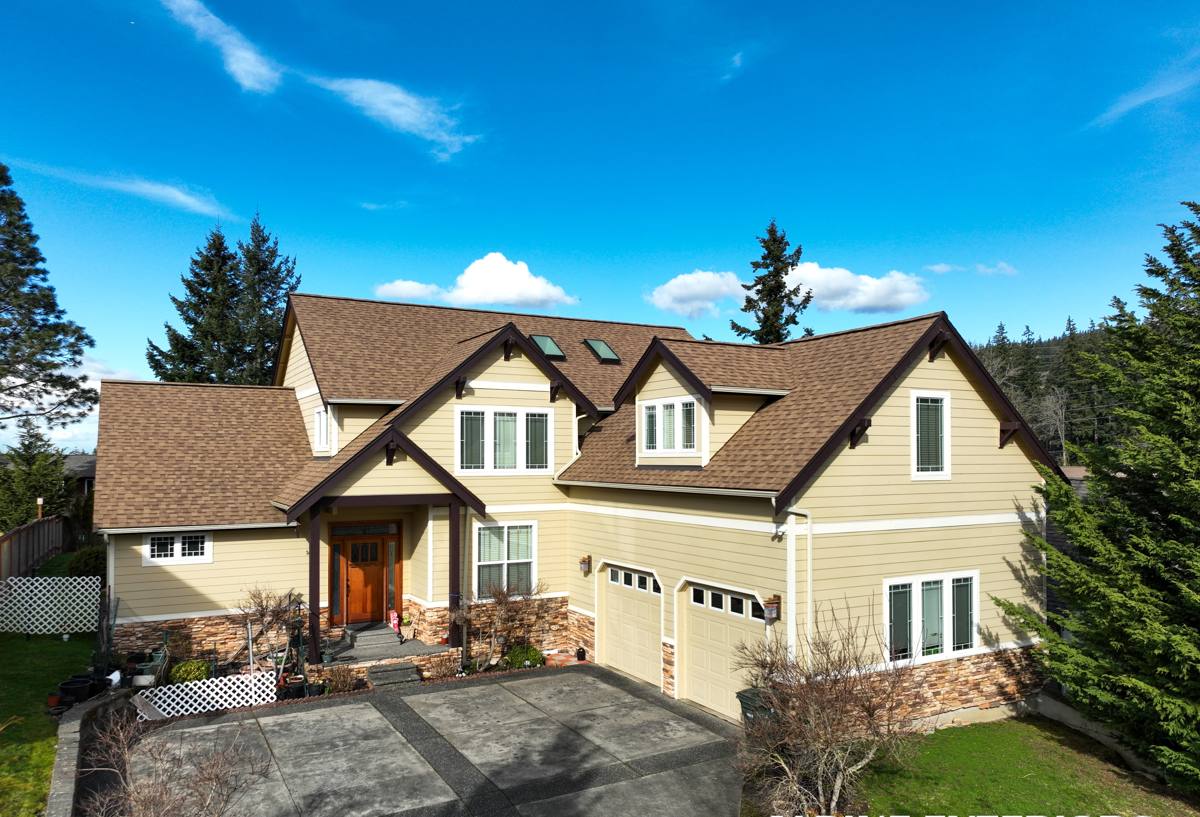
Why Sandy Point's Climate Changes the Job
Salt air and fastener corrosion
Board and batten relies on a lot of exposed fastener heads — battens are typically face-nailed or blind-nailed through the boards beneath, and every one of those penetrations is a spot where the wrong fastener starts corroding early in a salt-air environment. Inland, a marginal fastener choice might go unnoticed for a decade. A few hundred yards from Semiahmoo Bay, it shows up faster — streaking, loosening battens, and eventually a batten that's no longer doing its job of shedding water off the seam.
Driving rain on vertical seams
Board and batten has more vertical seams per square foot than horizontal lap siding, and every one of those seams is a potential water path if the batten spacing, fastening pattern, or flashing behind it is off. Whatcom County storms coming off the water don't fall straight down — they push rain sideways into gable ends, dormers, and any wall with limited eave overhang, which describes a good number of Sandy Point homes built close to their lots.
Moss and shaded walls
Sandy Point's tree cover is part of the appeal, but it also means longer shade windows on north and west walls, slower drying after rain, and moss and algae that establish faster on any siding material that holds surface moisture. That's a cosmetic issue on a factory-finished fiber cement board. It's a structural one on a material that absorbs water into its face.
Why We Only Install James Hardie for This Style
Board and batten is a style, not a material — you can build it out of vinyl, engineered wood, cedar, or fiber cement. We install it exclusively in James Hardie fiber cement, and in a coastal, high-moisture setting like Sandy Point, that's not a brand preference, it's a moisture-management decision.
- Non-combustible core: fiber cement doesn't feed a fire the way wood-based sidings can, which matters given the dry-season wildfire risk that reaches even coastal Washington.
- Dimensionally stable: Hardie boards don't swell and shrink with humidity swings the way engineered wood or cedar can, so battens stay tight over seasons of salt-air moisture cycling.
- Factory-applied ColorPlus finish: the finish is baked on before the boards reach the job site, so cut edges and touch-up are the only field-applied paint, which holds up far better against driving rain and UV than a field-primed product.
- HZ5 formulation: Hardie's HZ5 product line is engineered for the freeze-thaw and moisture demands of the Pacific Northwest, which is the right spec for this coastline.
- Warranty backing: a real, transferable manufacturer warranty on both the substrate and the finish, which matters more on a coastal property that will change hands eventually.
We don't install LP SmartSide, vinyl, or cedar in this style. Each has real strengths elsewhere, but none of them holds up the way we want to see over a full ownership cycle in a salt-air, high-rain, shaded-wall environment like Sandy Point. That's a standard we hold across every job, not a sales pitch for this one.
What "Correct" Board & Batten Actually Requires
The style is simple to look at and easy to get wrong underneath. A correct install in this environment includes:
- A weather-resistive barrier and rainscreen gap behind the siding, so any water that gets past the battens has somewhere to drain and dry instead of sitting against sheathing.
- Correct batten spacing over the board seams with enough overlap to shed wind-driven rain, not just cosmetic coverage.
- Stainless or hot-dip galvanized fasteners rated for coastal exposure — not the standard fastener spec used further inland.
- Proper flashing at every window, door, and roof-to-wall intersection, since board and batten's vertical lines make flashing details more visible if they're done sloppily.
- Factory-cut and factory-primed board ends wherever possible, with field-cut edges properly sealed before installation.
- Manufacturer-specified clearance from grade, decks, and roof lines so moss and splash-back moisture don't sit against the bottom course.
Our Process for a Sandy Point Board & Batten Job
1. On-site assessment
We walk the exterior looking specifically at wall orientation relative to prevailing wind and rain, existing moss or algae patterns, current siding condition behind trim, and drainage at grade. On a coastal lot, the west- and north-facing walls usually get flagged for extra attention.
2. Tear-off and sheathing check
Old siding comes off and sheathing gets inspected before anything new goes up. This is the point where hidden moisture damage from a prior installation — a common finding on older Whatcom County coastal homes — gets caught and addressed rather than sealed back in.
3. Weather barrier and rainscreen
A proper weather-resistive barrier goes down first, followed by a rainscreen furring system that creates a drainage and drying gap behind the boards. This step matters more in Sandy Point than in a drier inland location, and it's not optional on our jobs.
4. Board and batten installation
Hardie boards and battens go up to manufacturer nailing and spacing specs, with corrosion-resistant fasteners and factory-primed cut ends sealed in the field. Flashing gets installed and checked at every penetration before trim goes on.
5. Finish and walkthrough
Trim, caulking, and touch-up finish out the job. We walk the exterior with the homeowner before calling it done, and go over basic care specific to a salt-air, shaded-lot property.
Cost Factors Specific to This Job
| Factor | Why It Affects This Job |
|---|---|
| Wall exposure to wind-driven rain | West- and north-facing walls often need extra flashing detail and rainscreen attention, adding labor |
| Existing moisture damage | Sheathing repair or replacement, common on older coastal homes, adds material and labor cost |
| Fastener spec | Coastal-rated stainless or hot-dip galvanized fasteners cost more than standard-grade fasteners |
| Board and batten pattern complexity | More seams and cuts than plain lap siding, especially around windows and gables |
| Tree cover and access | Established landscaping near the home can affect staging, cleanup, and drying time between steps |
| Trim and window detail | Vertical siding shows off (or exposes flaws in) trim work more than horizontal lap does |
What to Watch For If You Already Have Board & Batten
- Loose, corroded, or bleeding fastener heads along battens
- Dark streaking or moss buildup concentrated on shaded or west-facing walls
- Gaps opening up between boards and battens as the material ages
- Soft spots or discoloration around window and door trim
- Paint or finish failing faster on one side of the house than another
Any of these on a Sandy Point property is worth a closer look sooner rather than later — coastal moisture problems tend to move faster once they start than they would further inland.
Why a Local Crew Matters Here
Sandy Point isn't a typical inland Whatcom County lot, and siding work here benefits from a crew that already knows the difference — where the wind-driven rain actually hits hardest on a given lot orientation, which walls hold moss the longest, and what fastener and flashing spec actually holds up a few hundred yards from the water. That's not something you get from a general contractor working from a standard inland spec sheet. It's built from doing this specific job, in this specific stretch of coastline, repeatedly.
If you're considering board and batten siding for a home in or near Sandy Point, we're glad to walk the property, look at your specific exposure and conditions, and give you a straight answer on what the job actually needs — no pressure, no inflated scope. Reach out for a free estimate using the form below.