 Blaine Siding
 Building Decks for Sandy Point's Waterfront Conditions
Sandy Point sits right up against the water on the Blaine side of Whatcom County, and that location is exactly what makes deck building here different from a typical inland project. Homes in this stretch face a steady diet of salt-laden air off the water, wind-driven rain that finds its way into joints and connections a inland deck would never see, and a wet, shaded season long enough to grow moss on almost any horizontal surface that isn't detailed to shed water fast. A deck built to a generic spec sheet will show its age in Sandy Point years before it would somewhere drier and more sheltered. A deck built for these specific conditions holds up the way it should.
This page covers what we look at when we build or replace a deck for a Sandy Point property — the framing decisions, material trade-offs, hardware choices, and maintenance realities that matter most in this particular environment.
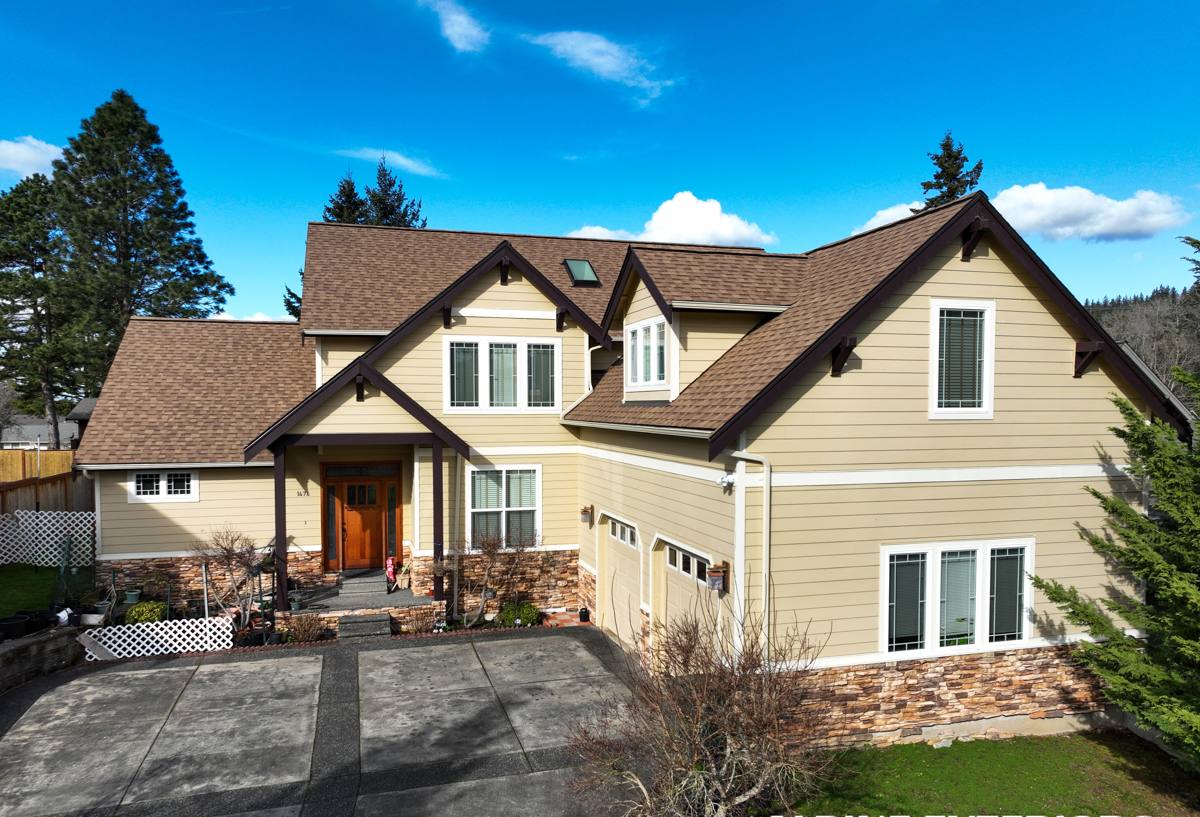
What Salt Air and Driving Rain Actually Do to a Deck
It helps to be specific about the failure modes we're building against, rather than just saying "the weather is tough here."
Salt Air and Corrosion
Airborne salt accelerates corrosion on any exposed metal — fasteners, joist hangers, post bases, railing brackets. Standard hot-dip galvanized hardware that would last decades in a dry inland yard can start showing rust streaks and pitting much sooner this close to the water. Once a fastener starts to corrode, it loses holding strength long before it looks obviously bad, which is part of what makes this a structural issue and not just a cosmetic one.
Wind-Driven Rain and Water Intrusion
Rain that comes in at an angle, pushed by wind off the water, gets into places vertical rain never reaches — behind ledger boards, into end-grain cuts, under poorly lapped flashing, around railing posts where they meet the decking. Wood and composite decking both handle top-surface water fine; the damage almost always starts at an edge, a cut end, or a fastener penetration that wasn't sealed correctly.
Moss and Prolonged Dampness
Whatcom County's long wet season, combined with shade from mature trees and neighboring structures common around Sandy Point, means many deck surfaces stay damp for extended stretches. Moss and algae take hold on surfaces that don't drain and dry quickly, and a mossy deck surface isn't just unattractive — it holds moisture against the decking material and becomes genuinely slick and unsafe underfoot.
Getting the Framing and Structure Right
The framing is the part of a deck nobody sees once it's finished, which is exactly why it's the part most likely to get shortcut. For a Sandy Point property, we treat the substructure as the priority, not an afterthought under the decking material.
- Ledger attachment flashed and sealed so water is directed away from the house band joist, not toward it
- Joist hardware and fasteners rated for the corrosion exposure this location actually sees, not just what's typically stocked for inland jobs
- Post bases set to keep wood posts off standing water and away from direct soil contact
- Beam and joist spacing sized to the actual span and load, not stretched to save a few boards
- Cut ends of pressure-treated framing lumber field-sealed, since factory treatment doesn't penetrate a fresh cut
None of this is exotic. It's standard good practice applied consistently, in a location where skipping any one of these steps shows up as a problem years sooner than it would elsewhere.
Decking Material: What Actually Holds Up Near the Water
There's no single "best" decking material for every situation — it depends on budget, maintenance appetite, and how much sun versus shade the deck gets. What we can do is lay out the honest trade-offs for a salt-air, high-moisture environment specifically.
| Material | How it handles this climate | Maintenance reality |
|---|---|---|
| Pressure-treated wood | Affordable and strong, but end grain and fastener holes need attention or moisture gets in | Needs periodic cleaning, sealing, and moss removal to look and perform its best |
| Cedar | Naturally more rot- and insect-resistant, ages to a gray patina, but softer and can show wear near ground contact | Benefits from occasional cleaning and, if a stained look is wanted, periodic refinishing |
| Composite decking | Resists rot and doesn't absorb moisture like wood, though cheaper composites can still trap surface algae in shaded, damp spots | Low maintenance — occasional washing to keep the surface clear of grime and moss |
| PVC / capped composite | Fully sealed surface handles standing moisture and salt exposure very well | Lowest maintenance of the common options, though it carries the highest upfront cost |
Our default recommendation for exposed, shaded, or ground-level Sandy Point decks leans toward composite or capped composite, simply because the maintenance burden of a wood deck in this specific environment is real and ongoing. That said, plenty of homeowners want the look and feel of real wood, and a well-detailed wood deck with a realistic maintenance plan is a legitimate choice — we'll walk through both honestly rather than push one option.
Fasteners, Flashing, and Hardware — Not an Upsell, a Requirement
This is the part of a deck build that's easiest for a homeowner to overlook when comparing quotes, because it rarely shows up as a line item people ask about. In a marine air environment it matters more than almost anything else in the build.
- Fasteners: stainless steel or coated fasteners rated for coastal/high-corrosion exposure, matched to whatever decking material is used
- Joist hangers and structural hardware: corrosion-rated to the same standard as the fasteners — mismatched metals can accelerate corrosion at the contact point
- Flashing: ledger and post flashing detailed to shed water away from the structure, lapped correctly, not just caulked as an afterthought
- Railing hardware: posts and brackets that will be handled and leaned on for years need to resist loosening from corrosion, not just look good on day one
Cutting corners here doesn't fail on installation day — it fails three, five, or eight years later, quietly, as hardware weakens. That's a hard thing for a homeowner to inspect for themselves, which is exactly why it needs to be right the first time.
Cost Factors Worth Understanding Before You Get Quotes
| Factor | Why it moves the price |
|---|---|
| Decking material | Pressure-treated wood is the least expensive up front; capped composite and premium wood species cost more but shift maintenance costs down the road |
| Height and access | Elevated decks or decks over sloped, water-adjacent lots need more substructure and safety work |
| Corrosion-rated hardware | Marine-grade fasteners and connectors cost more than standard hardware, but this is not the place to economize |
| Railing style | Cable, glass, and custom rail systems cost more than standard baluster railing |
| Demolition of an old deck | Replacing an existing deck adds tear-out and disposal, and can reveal ledger or framing damage that needs repair before rebuilding |
Moss, Drainage, and Keeping a Deck Looking Right Long-Term
A properly built deck still needs a bit of ongoing attention in this climate — that's just the reality of Whatcom County's wet season stacked on top of salt air. The goal of good design is to minimize that burden, not pretend it away.
Deck boards spaced and installed to allow water to drain through rather than pool on the surface make a real difference in how quickly moss establishes. Keeping vegetation trimmed back from the deck edges so more light and air reach the surface helps too, as does an annual or twice-yearly wash-down before moss gets a foothold rather than after. For wood decks specifically, a sealant reapplied on a reasonable schedule keeps water from soaking into the grain where moss and rot both get their start.
None of this is complicated, but it does need to actually happen. We'll tell you upfront what your specific deck design and material choice will realistically require, rather than overselling a "maintenance-free" deck that still needs seasonal care.
Our Process for a Sandy Point Deck Project
- On-site assessment. We look at sun and wind exposure, drainage patterns on the lot, existing structure if there's a deck to replace, and how the space is actually used.
- Honest material conversation. We walk through the real trade-offs above based on your budget and how much maintenance you want to take on, not a one-size answer.
- Clear written estimate. Framing, hardware, decking, railing, and any demolition spelled out so you know what you're paying for and why.
- Correct build order. Framing and structural connections first, flashed and fastened to the standard this environment requires, before decking ever goes down.
- Walkthrough and care guidance. Before we leave, you'll know exactly what upkeep — if any — your specific deck needs going forward.
What to Ask Any Deck Contractor Before You Hire
- Do you use corrosion-rated fasteners and hardware as standard, or only on request?
- How do you flash and seal the ledger board connection to the house?
- What's your experience building decks specifically in waterfront or high-salt-exposure settings?
- Can you explain the maintenance difference between the decking materials you're quoting?
- Will cut ends of treated lumber be field-sealed during the build?
- What's actually included in the written estimate versus what could come up as an add-on later?
A contractor who answers these plainly and specifically, without hedging, is telling you something useful about how they actually build.
Why Local Experience in Sandy Point Matters
A crew that has already built and repaired decks in Sandy Point isn't guessing about how this stretch of coastline treats a deck — they've seen which hardware holds up, which decking surfaces stay slick longest in the shade, and where wind-driven rain tends to find a way in. That experience shows up in the small decisions made throughout a build, the ones that don't appear on a materials list but determine whether a deck is still solid and good-looking in ten years or needs early repair. Blaine and the broader Whatcom County coastline share this same climate profile, and building decks across that area the right way, consistently, is what informs how we approach every Sandy Point project.
If you're planning a new deck or need to replace one that's showing its age, we're glad to take a look and put together a straightforward, no-pressure estimate — just fill out the form below to get started.