 Blaine Siding
 Siding Replacement Built for Sandy Point
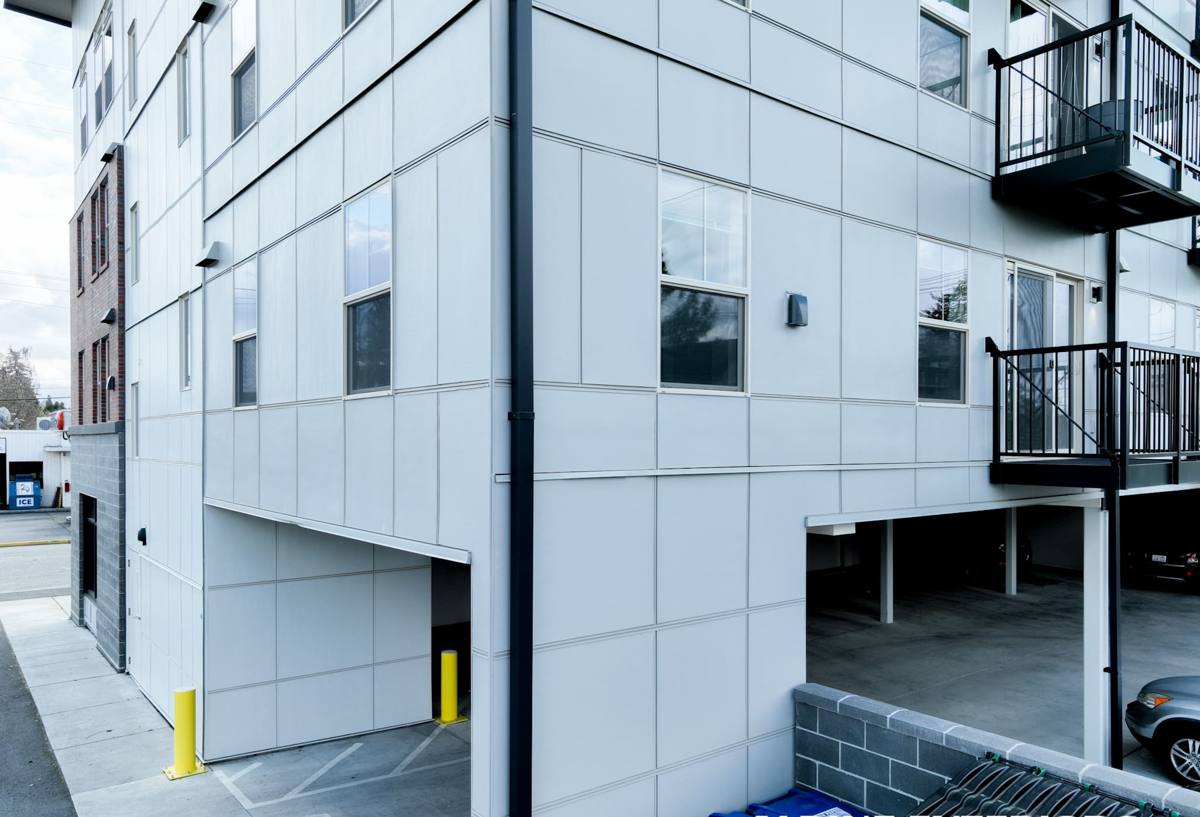
Sandy Point sits out on the water at the edge of Blaine, in Whatcom County, which means the homes here take a different kind of weathering than houses set back from the coast. Salt air moves through the neighborhood year-round, storms off the water push rain sideways into wall assemblies, and a mild, damp climate keeps moss and mildew active for most of the year. Siding here doesn't fail the way it does in a drier, more sheltered inland town — it fails at the seams, behind the trim, and wherever moisture had a way in and no way back out. A siding replacement in Sandy Point has to account for that from the first estimate, not as an afterthought once the old siding is off the wall.
We're a local exterior crew that already works this stretch of Whatcom County, and Sandy Point is regular territory for us. That matters more than it might seem, because a crew that's replaced siding here before already knows what a tear-off usually reveals, which details tend to have failed, and what it actually takes to get a new install to hold up to another few decades of salt and rain. We install James Hardie fiber cement siding exclusively — it's the one system we've found holds up to this kind of exposure when it's installed correctly, and correct installation is most of what separates a siding job that lasts from one that doesn't.
Why Sandy Point Wears Out Siding Faster
Salt Air, Close to the Water
Being this close to the water means a steady dose of salt-laden air on every wall, not just the ones facing the shoreline. Salt is corrosive to fasteners, flashing, and any exposed metal trim, and it breaks down lower-quality paints and coatings faster than a dry inland climate ever would. On a siding replacement, that pushes fastener and flashing choices to the front of the conversation instead of treating them as an afterthought — a beautiful new siding panel installed with the wrong hardware is a problem waiting to surface.
Driving Rain Off the Water
Open water exposure means storms don't just drop rain straight down on Sandy Point homes — wind drives it sideways into siding joints, window and door flashing, and the transitions where trim meets wall. That sideways-moving water finds any gap a rushed or careless installation leaves behind, and it does so more often here than in more sheltered parts of the county. Getting water management right — proper flashing, correct lap and joint details, and a drainage plane behind the siding — matters more in Sandy Point than almost anywhere else nearby.
A Long Moss and Mildew Season
Mild temperatures combined with near-constant moisture give moss and mildew a growing season that can run most of the year on shaded or north-facing walls. Any siding material with surface porosity becomes a growth surface over time, and once moss or mildew takes hold, it holds moisture against the wall and accelerates whatever damage is already happening underneath. Homes on tree-covered Sandy Point lots, or walls that don't get much winter sun, tend to see this earliest and worst.
What a Correct Siding Replacement Looks Like Here
Replacing siding is not just removing old panels and nailing up new ones. In a coastal environment like Sandy Point, the work that happens underneath the visible siding is what determines whether the job lasts fifteen years or fifty. A correct replacement includes:
- A full tear-off and inspection of the sheathing and framing underneath, since hidden rot or moisture damage is common on older coastal homes and has to be repaired before anything new goes up
- A weather-resistive barrier installed as a continuous drainage plane, not just stapled on and forgotten, so any water that gets past the siding has somewhere to go
- Corrosion-resistant fasteners and flashing rated for coastal exposure, not the standard hardware that's fine in a drier climate but corrodes faster here
- Correct flashing at every window, door, and roofline transition — the exact spots where wind-driven rain concentrates
- Manufacturer-spec fastening, clearances, and joint treatment for the specific Hardie product line being installed, since fiber cement performs the way it's rated to only when installed to spec
- A factory-finished product on the outside, so the coating doing the work against salt and UV was cured under controlled conditions rather than brushed on in the field
Skipping any one of these doesn't usually show up right away. It shows up in three to five years, as staining, soft spots, or a finish that's fading unevenly — by which point the fix is a lot more involved than it would have been at install time.
Why We Install Only James Hardie Fiber Cement
We used to work with a broader range of siding products. We narrowed to James Hardie fiber cement exclusively, and the reason came from what we kept finding on tear-offs and service calls in coastal, high-moisture towns like the ones around Blaine — not from a supplier arrangement or a marketing angle.
Hardie's fiber cement is non-combustible and dimensionally stable in a way that matters in a marine climate — it doesn't swell, cup, or rot the way wood-based products can when they take on repeated moisture. The HZ5 product line is engineered specifically for climates with heavy moisture exposure, which fits Sandy Point's conditions directly. ColorPlus, Hardie's factory-applied finish, is baked on under controlled conditions rather than brushed on at the job site, and it holds color and resists fading against salt air and UV exposure better than field-applied paint typically does. Hardie also backs its products with a strong transferable warranty, which matters on a coastal home where the siding is doing more work than it would be almost anywhere else in the region.
None of that replaces correct installation — a Hardie install done wrong will still fail early, and a well-installed lesser product will outperform a badly-installed premium one. But starting with a material engineered for this kind of exposure gives a correctly installed job a much longer runway than starting with a product that was never built for salt air and driving rain in the first place.
How Hardie Compares to Other Common Siding Choices
| Factor | James Hardie Fiber Cement | Vinyl Siding | Cedar / Primed Wood |
|---|---|---|---|
| Moisture behavior | Dimensionally stable, engineered HZ5 line for wet climates | Doesn't rot, but can warp and gap in heat/cold cycling | Absorbs moisture; prone to rot without diligent upkeep |
| Salt air resistance | Strong with correct fasteners/flashing | Fair, but seams and clips are a weak point over time | Weak; finish breaks down faster near salt exposure |
| Finish durability | Factory-cured ColorPlus finish, long fade resistance | Color molded in, but can chalk and fade in UV over years | Field-applied paint/stain, needs recoating every few years |
| Fire resistance | Non-combustible material | Combustible, can melt or deform near heat | Combustible |
| Maintenance burden | Low when installed to spec | Low, but repairs can be hard to color-match later | High — regular sealing, staining, and rot inspection |
Our Process for a Sandy Point Siding Replacement
1. On-Site Assessment
We walk the exterior with you, look at the current siding's condition, note any areas of visible staining or soft spots that suggest hidden moisture, and talk through what we expect to find once the old siding comes off. Because we already work Sandy Point, we usually have a good sense going in of which details on a given home's age and orientation are most likely to need attention.
2. Tear-Off and Inspection
Old siding comes off in sections so the sheathing and framing underneath can be inspected properly rather than rushed. Any rot or moisture damage found at this stage gets addressed before new siding goes up — this is the point in the job where the extra care pays off most, because it's the last time that wall assembly will be fully exposed for a long while.
3. Weather Barrier and Flashing
A continuous weather-resistive barrier goes on as the drainage plane, with flashing detailed carefully around every window, door, and roofline transition. This is where a rushed job and a correct one diverge most, and it's invisible once the siding goes up — which is exactly why it has to be done right the first time.
4. Hardie Installation to Spec
Siding goes up following James Hardie's fastening, clearance, and joint specifications for the product line chosen. This is not a place to improvise — Hardie's warranty and performance are both tied to installation matching the manufacturer's documented requirements.
5. Final Walkthrough
We walk the finished job with you, check trim and joint work up close, and answer any questions about care or what to expect from the new siding going forward.
Cost Factors to Expect
Every Sandy Point home is different, so exact numbers depend on the specifics of your house, but a few factors consistently move the price on a siding replacement here:
| Factor | Why It Matters |
|---|---|
| Condition of sheathing/framing underneath | Coastal homes more often need repair work discovered during tear-off, which adds labor and material |
| Home size and wall complexity | More corners, dormers, and trim details mean more flashing and cutting time |
| Hardie product line and profile chosen | Lap siding, shingle-style panels, and board-and-batten differ in material and install time |
| Access and site conditions | Tight lots, decks, or landscaping close to the walls can affect staging and labor time |
| Existing paint or trim work | Trim that's being replaced or repainted alongside the siding adds scope |
We give straightforward, itemized estimates so you can see what's driving the number rather than a single lump figure — that's especially important on a coastal home where tear-off can turn up work nobody could have priced sight unseen.
Questions Worth Asking Before You Hire
- Is the contractor licensed and insured to work in Washington, and can they show it without hesitation?
- Do they have experience specifically with coastal or waterfront homes, not just general siding work?
- What's their plan if they find rot or hidden damage once the old siding is off?
- What fastener and flashing materials do they use, and are those materials rated for salt air exposure?
- Do they install to the manufacturer's documented specifications, and will they explain what that involves?
A contractor who answers these plainly and specifically, without dodging into generalities, is usually the safer bet — especially on a job where most of what determines longevity ends up hidden behind the finished wall.
Why a Crew That Already Works Sandy Point Matters
Siding replacement in a coastal neighborhood isn't the same job as siding replacement fifteen miles inland, even though the materials and basic steps look similar on paper. A crew that's worked Sandy Point before has already seen which details tend to fail first on homes exposed this directly to salt air and open water, and that experience shows up in the small decisions made throughout the job — which fasteners to use, how much flashing overlap is enough, where to expect hidden damage before the tear-off even starts. That's the kind of judgment that's hard to fake and easy to miss on a first-time job in an unfamiliar coastal setting.
If your Sandy Point home needs new siding, we'd be glad to take a look and give you a straightforward, no-pressure estimate — fill out the form below and we'll get in touch.