 Blaine Siding
 Roofing in Sandy Point Isn't the Same Job as Roofing Inland
Sandy Point sits right on the water, and that changes what a roof has to survive. Homes here take a steady dose of salt-laden air, wind-driven rain that comes in sideways off the Strait, and a wet, shaded moss season that runs longer than it does even a few miles inland. A roof system spec'd for a typical Whatcom County subdivision doesn't always hold up the same way out here. When we install a new roof in Sandy Point, we're building for this specific exposure, not a generic Pacific Northwest roof.
That doesn't mean the job requires exotic materials or a wildly different approach. It means paying close attention to the details that actually fail first in a salt-air, high-moisture environment: fastener corrosion, underlayment quality, ventilation, and how water is shed at the edges, valleys, and penetrations. Get those right and a roof in Sandy Point can perform just as well as one anywhere else in the county. Skip them and you'll see problems years before you should.
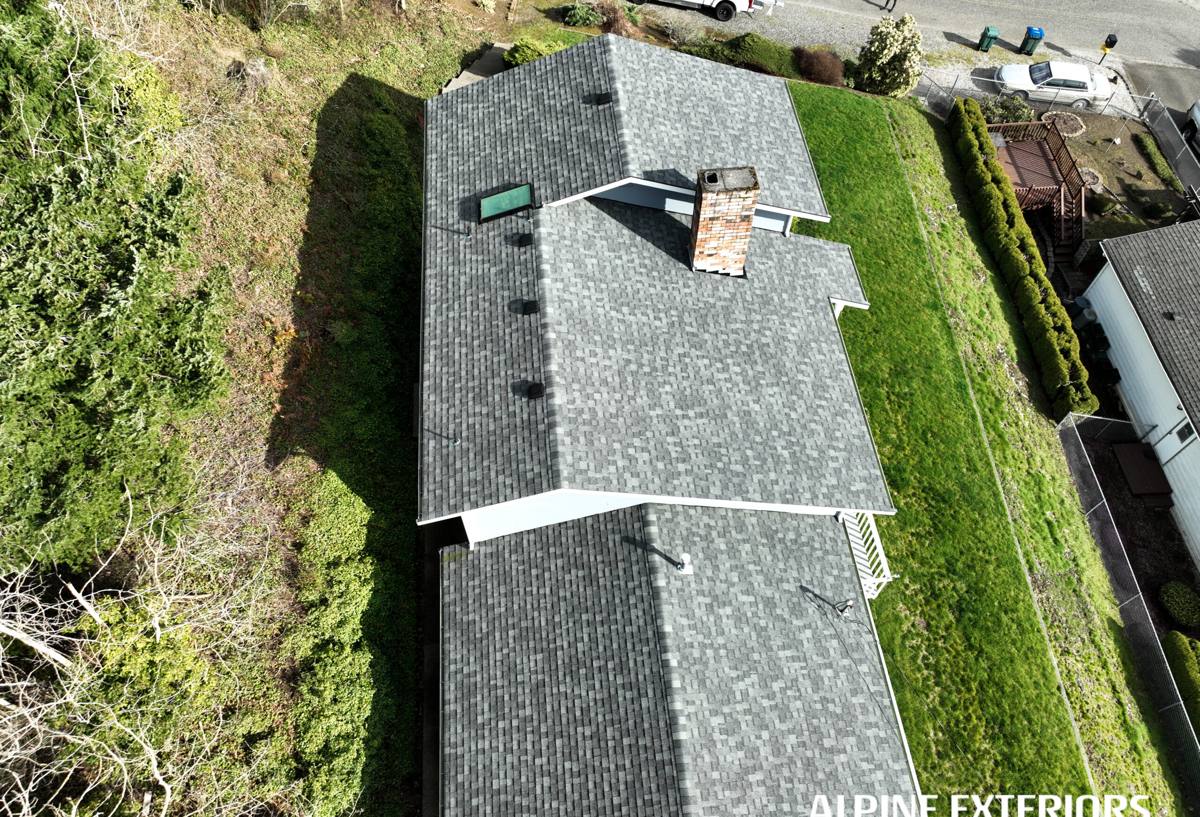
What Sandy Point's Climate Actually Does to a Roof
Salt Air and Corrosion
Proximity to saltwater accelerates corrosion on anything metal that isn't rated for it — nails, flashing, drip edge, and roof vents. Standard electro-galvanized fasteners can start rusting years ahead of schedule this close to the water. We use corrosion-resistant fasteners and flashing on coastal jobs like this one because a roof is only as durable as its weakest metal component, and it's almost always the fasteners that fail first, not the shingles.
Wind-Driven Rain
Storms coming off the water don't just drop rain straight down — they push it sideways and up under laps, shingle tabs, and flashing edges that would stay dry in a calmer setting. This is where sealed shingle strips, properly lapped underlayment, and correctly installed step and counter-flashing around chimneys and walls matter more than they would on a more sheltered inland lot.
Extended Moss Season
Shade, moisture, and cooler temperatures near the water let moss establish earlier in the fall and hang on later into spring. Moss isn't just cosmetic — it holds moisture against the roofing material, works its way under shingle edges, and can lift tabs enough to let water in. Roof design choices like ridge and edge metal, plus material selection, can meaningfully slow how fast moss takes hold after installation.
What a Correct New Roof Installation Includes
A new roof is more than laying new shingles over what's there. On a coastal property, cutting corners on any of the following is what turns a 25-30 year roof into a 12-15 year roof.
- Full tear-off: we remove existing roofing down to the deck rather than layering over it, so we can inspect and address what's underneath
- Deck inspection and repair: any soft, rotted, or delaminated sheathing gets replaced before anything new goes down
- Ice-and-water shield at vulnerable areas: eaves, valleys, and around penetrations, where wind-driven rain is most likely to find a way in
- Synthetic underlayment across the field: a durable, water-resistant layer between deck and roofing material
- Corrosion-resistant fasteners and flashing: matched to the coastal exposure, not just whatever's standard elsewhere
- Proper ventilation: balanced intake and exhaust so moisture from inside the house doesn't get trapped in the attic
- Correct flashing at all transitions: chimneys, walls, skylights, and any roof-to-roof intersections
- Ridge, hip, and edge detailing: done to manufacturer spec so warranty coverage stays intact
Material Choices for a Sandy Point Property
There's no single "right" roofing material for coastal Whatcom County — it depends on the home, the budget, and how much long-term maintenance the owner wants to take on. Here's how the common options stack up specifically against salt air, wind-driven rain, and moss.
| Material | Salt Air / Corrosion | Wind-Driven Rain | Moss Resistance | Typical Lifespan |
|---|---|---|---|---|
| Architectural asphalt shingle | Good, with corrosion-rated fasteners and flashing | Good when properly sealed and lapped | Moderate; benefits from copper or zinc strips at the ridge | 25-30 years |
| Standing seam metal | Very good with coastal-rated coatings and fasteners | Excellent — few horizontal laps for water to find | High — smooth surface sheds moss more easily | 40-50+ years |
| Composite/synthetic shake | Good, doesn't corrode itself but check fastener spec | Good with correct installation | Moderate to good depending on product | 30-50 years |
| Cedar shake | Fair — needs regular maintenance in salt air | Fair; more prone to wind lift if not detailed well | Lower — organic material, needs active upkeep | 20-30 years with maintenance |
We'll walk through these trade-offs honestly during your estimate. Metal costs more up front but shrugs off moss and wind better than anything else on the list. Asphalt shingle remains the most common choice because it balances cost, appearance, and performance well when the installation details are done right — which is really the deciding factor more than the material itself.
Our Process for a New Roof in Sandy Point
1. On-Site Assessment
We look at the existing roof, deck condition, ventilation setup, and specific exposure of your property — how close to the water, how much shade, prevailing wind direction. This shapes the recommendation, not a one-size-fits-all package.
2. Written Scope and Estimate
You get a clear breakdown of what's being done, what materials are being used, and what it costs — no vague line items. If we find deck damage once we open things up, we'll show you before proceeding, not after the invoice.
3. Tear-Off and Deck Prep
Old roofing comes off, the deck gets inspected and repaired as needed, and the site is protected so your landscaping and gutters aren't left buried in debris.
4. Underlayment, Flashing, and Installation
This is where coastal detailing happens — ice-and-water shield, correct flashing, corrosion-resistant fasteners, and installation to manufacturer spec so your warranty is valid.
5. Final Walkthrough
We inspect the completed roof with you, clean up the site, and go over any maintenance notes specific to your home — including what to watch for given the moss season out here.
Cost Factors on a Coastal Roof Job
Every roof price is specific to the house, but a few factors move the number more than people expect on a Sandy Point property:
| Factor | Why It Matters Here |
|---|---|
| Roof pitch and complexity | Steeper roofs and more valleys/hips mean more labor and more flashing detail — important where wind-driven rain finds weak points |
| Deck condition | Coastal moisture exposure can mean more sheathing replacement than an inland home of the same age |
| Material choice | Metal and premium composite cost more upfront but need less maintenance against moss and salt over time |
| Fastener and flashing spec | Corrosion-resistant hardware costs somewhat more than standard but is not optional this close to the water |
| Access and site conditions | Waterfront lots sometimes have tighter access, mature landscaping, or setbacks that affect staging |
Signs Your Sandy Point Roof May Need Replacing
- Granule loss showing up in gutters or at the base of downspouts
- Curling, cupping, or cracked shingles, especially on wind-exposed slopes
- Persistent moss growth that keeps coming back within a season of cleaning
- Rust staining running down from flashing, vents, or fasteners
- Daylight visible through the attic roof deck, or damp insulation after storms
- Interior ceiling stains that appear after wind-driven rain events specifically
- A roof approaching or past 20-25 years old that hasn't had a full replacement
Why Local Experience in Sandy Point Matters
A crew that hasn't worked this stretch of Whatcom County coastline will spec a roof the same way they would for a home ten miles inland — and that's how corrosion, wind-driven leaks, and repeat moss problems show up early. Working in and around Blaine and Sandy Point regularly means we already know which fastener grades hold up here, how much ice-and-water shield coverage the wind-driven rain actually calls for, and which ridge and edge details slow moss down instead of just delaying it a season.
It also means we're not guessing at permitting, disposal logistics, or site access on waterfront lots — we've worked through those specifics before on similar properties nearby. That local familiarity translates into a smoother job and a roof that's actually built for the conditions it has to survive, not a textbook version of one.
Get a Straightforward Estimate
If your roof in Sandy Point is showing its age or you're planning ahead of the next wet season, we're glad to take a look and give you an honest read on what it needs. There's no pressure and no obligation — just a clear assessment and a straightforward estimate using the form below.