 Blaine Siding
 Sandy Point's Waterfront Exposure Is a Different Siding Problem
Sandy Point sits right on the water outside Blaine, and that changes what a home's exterior has to deal with compared to a house a few miles inland in Whatcom County. Homes here face onshore wind, salt-laden air off the bay, and rain that doesn't fall straight down so much as get driven sideways into walls, trim, and corner boards. Add the shade and moisture that come with mature trees and low-lying, water-adjacent lots, and you get a long moss season that keeps siding damp for stretches most inland neighborhoods never experience. None of that is a reason to panic about your siding — it's just the reason a generic siding job doesn't hold up the same way out here as it does elsewhere.
We install James Hardie fiber cement siding, and only James Hardie, for homes in this area. This page walks through why that product and a correctly done installation matter specifically for a waterfront community like Sandy Point, not siding in general.
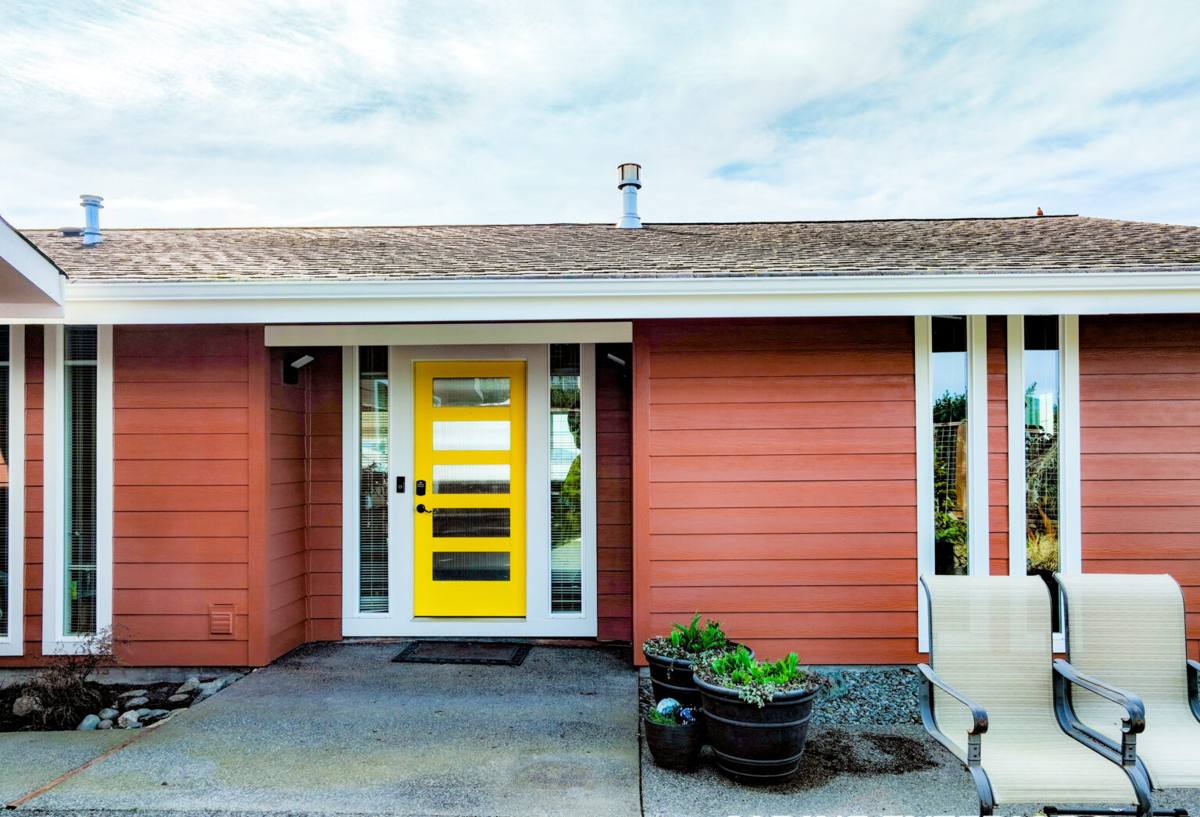
What Salt Air, Driving Rain, and Moss Actually Do to Siding
Salt Air
Airborne salt is corrosive to metal fasteners, flashing, and trim, and it accelerates the breakdown of finishes that aren't formulated to resist it. Over years, salt exposure is part of why some siding materials chalk, fade, or develop surface degradation faster near the water than they do a few miles inland.
Driving Rain
Wind-driven rain doesn't just wet the face of a wall — it pushes water sideways and upward into laps, seams, and any gap around windows, doors, or penetrations. A siding system that isn't detailed correctly for this kind of exposure will eventually let water behind the cladding, and once moisture gets behind siding it can sit there far longer than most homeowners realize, working on the sheathing and framing out of sight.
Moss and Shade
Shaded, moisture-retentive lots near the water grow moss on siding, trim, roofs, and decks for a much longer stretch of the year than sunnier, more exposed sites. Moss holds moisture against a surface and, if it's allowed to spread into seams and laps, can contribute to the same behind-the-siding moisture problems as driving rain.
Why We Only Install James Hardie Fiber Cement Here
We don't install vinyl, LP SmartSide, Cemplank, Allura, primed spruce, or cedar. That's a deliberate standard, not a lack of options. Each of those products has legitimate strengths, but each also has a real-world trade-off — moisture sensitivity in engineered wood products, seam and expansion behavior in vinyl under UV and temperature swings, or the ongoing maintenance burden of natural wood siding — that we think is a poor match for the sustained salt air and rain exposure a Sandy Point home lives with year-round. James Hardie fiber cement is non-combustible, doesn't rot or feed insects the way wood-based products can, and holds its factory-applied ColorPlus finish for years without the fading and chalking that plague some other claddings in coastal exposure. That's the whole reason we standardized on it rather than carrying multiple product lines.
The HZ5 Product Line: Built for This Climate
James Hardie engineers its siding by climate zone, and the Pacific Northwest falls under the HZ5 line — formulated specifically for regions with sustained moisture, rain, and freeze-thaw cycling rather than hot, dry conditions. That matters more in a place like Sandy Point than it does further inland, because the product's engineering is doing real work against the exact conditions this location produces: near-constant humidity, salt exposure, and long stretches of damp weather that don't let up for months.
ColorPlus factory finish is the other half of the equation. It's baked on under controlled conditions rather than field-applied on site, which gives it better adhesion and UV resistance than a job-site paint job, and it comes with its own finish warranty separate from the substrate warranty. In a coastal environment where standard paint jobs on other materials often need touch-up within a handful of years, that factory finish is a meaningful part of why we recommend it.
What a Correct James Hardie Installation Involves in Sandy Point
The product only performs as designed if it's installed to spec, and in a driving-rain, salt-air environment the details matter more than they would somewhere drier. A correct installation on a Sandy Point home includes:
- Proper water-resistive barrier and flashing at every window, door, and penetration, lapped correctly so water sheds outward rather than behind the cladding
- Correct fastener type and spacing — using fasteners rated for the exposure, not just whatever is fastest to run
- Manufacturer-specified gapping and clearance at trim, corners, and ground level so the assembly can drain and dry rather than trap moisture
- Caulking and sealant only where James Hardie's install guide calls for it — over-caulking a fiber cement assembly can trap moisture instead of keeping it out
- Careful cut-edge sealing on any field-cut panels, since an unsealed cut edge is a weak point for water intake
Skipping or rushing any of these steps is how a good product ends up with a bad outcome. It's also why we'd rather quote a job correctly than quote it fast.
Our Process, Start to Finish
We start with an on-site look at the home — checking the current siding and sheathing condition, identifying trouble spots around windows, decks, and grade-level transitions, and talking through which Hardie profile and ColorPlus color fit the house and the site. From there we handle tear-off, sheathing repair where needed, correct water-resistive barrier and flashing installation, and the Hardie install itself to manufacturer specification. We walk the finished job with the homeowner before we consider it done, and we stand behind our installation work in addition to the manufacturer's product and finish warranties.
Cost Factors for a Sandy Point James Hardie Project
Every home is different, but the factors that move a project's cost up or down are consistent. We don't quote firm numbers on a page like this, but here's what drives the estimate:
| Factor | Why It Matters |
|---|---|
| Existing wall condition | Rot or moisture damage behind old siding needs repair before new siding goes on — this is common near the water and worth planning for |
| Siding profile and texture | Lap width, shingle-style panels, and board-and-batten each price differently in material and labor |
| Trim and detail work | Corner boards, window trim, and fascia detailing add labor time beyond the flat wall area |
| Home height and access | Multi-story or hard-to-access walls take longer and require more equipment |
| Color and finish | Factory ColorPlus finish versus field-applied primer siding affects both cost and long-term maintenance |
Why Hiring a Crew That Already Works Sandy Point Matters
A crew that hasn't worked waterfront homes before can install James Hardie siding perfectly well on a dry, inland lot and still get it wrong here — not because the product changed, but because the exposure did. Flashing details that are optional inland aren't optional a few hundred feet from the water. Gapping tolerances that "probably" work in a drier climate need to actually be right when moss and driven rain are a normal part of the year, not a rare storm. Before you hire anyone for a Sandy Point siding job, it's worth asking:
- Have you installed James Hardie siding on homes in this specific area before, and can you speak to how you handle salt air and wind-driven rain exposure?
- Are you a certified or trained James Hardie installer, and do you follow their published install specifications rather than a generic approach?
- What's your plan for flashing and water management at windows, doors, and grade level on this particular house?
- What does your warranty cover beyond the manufacturer's product warranty?
- Can you walk me through why you'd recommend one Hardie profile over another for this lot?
If a contractor can't answer those clearly, that's worth noticing before they're on your roofline.
Maintenance: What Sandy Point Homeowners Should Expect
James Hardie siding installed correctly is low-maintenance, not no-maintenance. In this environment, that means an occasional rinse to keep salt residue and moss spores from building up on the surface, keeping gutters and downspouts clear so water isn't sheeting down the wall, and a periodic visual check of caulking and trim, especially after a hard winter. None of that compares to the sanding, priming, and repainting cycle that wood siding demands, but a few minutes of attention once or twice a year goes a long way toward getting the full life out of the installation.
If you're weighing a siding project for a Sandy Point home, we're happy to take a look and walk you through what your specific house needs — no pressure, no obligation. Use the form below to request a free estimate.