 Blaine Siding
 Sandy Point's Roofs Work Harder Than Most
Sandy Point sits right up against the water on the Whatcom County coastline, and that location is exactly why roofs here don't age like roofs ten miles inland. Salt-laden air corrodes exposed metal faster, wind off the strait drives rain sideways up under shingle tabs and around flashing, and the shade and moisture from surrounding trees keep roof decks damp enough for moss to take hold for a good chunk of the year. None of that means asphalt shingle roofing is a bad choice for a home this close to the water — it's still one of the most cost-effective, repairable roofing systems available. It does mean the installation details matter more here than they would in a drier, calmer part of the county.
We've done enough roofs in and around Sandy Point to know which failure points show up first in this microclimate, and we build every job to address those specific weak spots rather than following a generic install checklist. That's the difference this page is about.
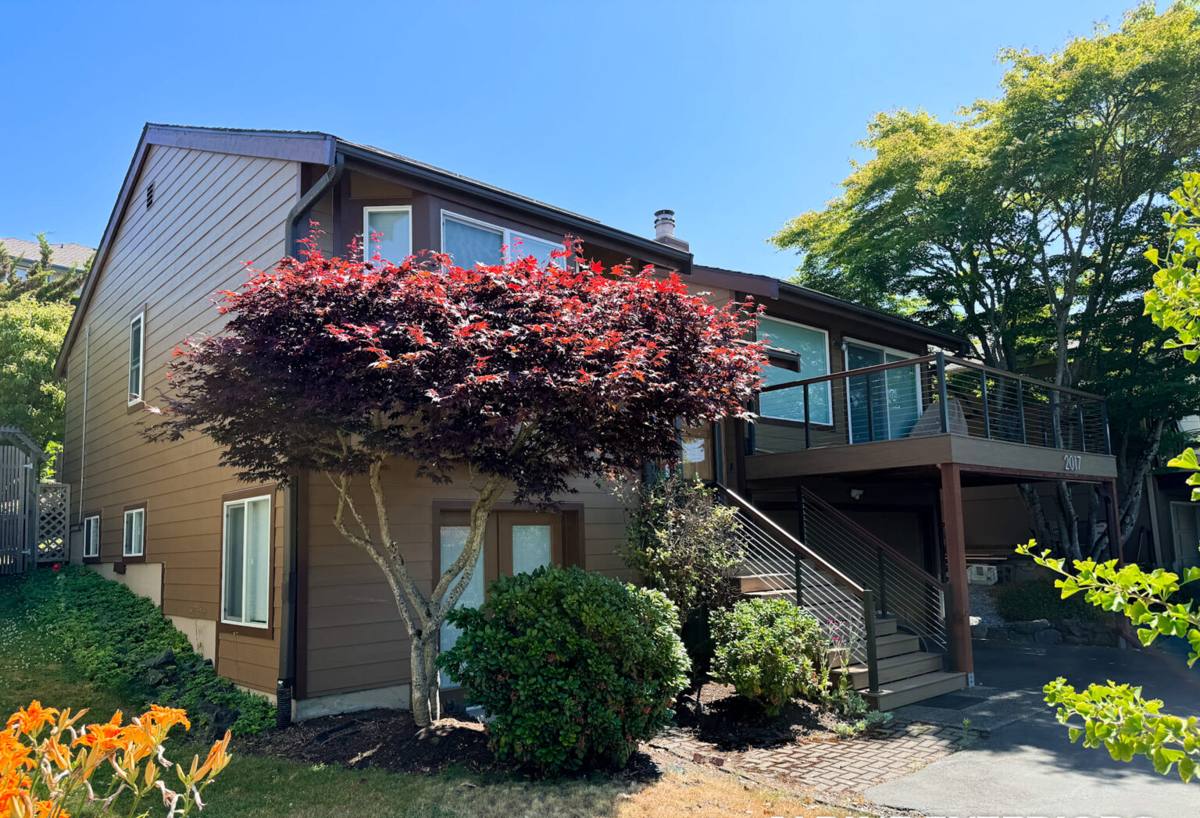
What "Correct" Actually Means on a Coastal Roof
A shingle roof that's installed to code will pass inspection almost anywhere. A shingle roof that's installed for a site like Sandy Point needs to go beyond code minimums in a few specific places. Here's what we focus on.
Underlayment and Water Management
Wind-driven rain doesn't just land on a roof — it gets pushed uphill and sideways under the shingle field, especially at eaves, valleys, and any low-slope section. We use synthetic underlayment across the full deck rather than felt, and we run self-adhered ice-and-water membrane at eaves, valleys, and any roof-to-wall transition, even though this area doesn't see the ice-dam problems that membrane was originally designed for. On this coast, that membrane earns its keep as a wind-driven-rain barrier instead.
Ventilation That Actually Fights Moss
Moss doesn't grow because a roof is old — it grows because the roof deck and shingle surface stay damp longer than they should between rain events. Shade, north-facing exposure, and the moisture-heavy marine air around Sandy Point all extend that damp window. Balanced intake-and-exhaust ventilation keeps the underside of the deck drier and lets the shingle surface dry out faster after rain, which is the single biggest thing you can do to slow moss regrowth after a treatment or a re-roof. We check attic ventilation on every estimate, not just the shingles.
Fasteners, Flashing, and Metal in Salt Air
Salt air accelerates corrosion on anything that isn't rated for it. Standard electro-galvanized nails and cheap step flashing can start showing rust streaks and losing holding power years before they would inland. We fasten with hot-dip galvanized or stainless roofing nails, use corrosion-resistant flashing at every wall, chimney, and vent penetration, and avoid mixing dissimilar metals that can set up galvanic corrosion when they're both getting salted by the same air. It costs a little more upfront in material. It's cheap insurance against the flashing being the reason a roof leaks at year eight instead of year twenty.
Choosing a Shingle for This Location
Not every asphalt shingle product handles a marine, moss-prone environment the same way. The table below is how we talk through the trade-offs with Sandy Point homeowners.
| Shingle Type | How It Handles This Climate | Trade-Offs |
|---|---|---|
| 3-tab standard | Adequate wind rating for most exposures; lowest cost | Shorter service life, less algae/moss resistance in granule formulation |
| Architectural / laminated | Heavier, better wind uplift rating, more common choice near open water | Higher material cost, still needs algae-resistant granules to matter here |
| Algae-resistant (copper/zinc granules) | Slows the dark streaking and moss anchoring that this climate accelerates | Slightly higher cost; doesn't eliminate moss without good ventilation and shade management |
| High wind-rated / impact-rated | Best holding power in driving coastal wind; some carry stronger warranties | Premium pricing; only worth it if the site is genuinely exposed |
For most Sandy Point homes we recommend an architectural shingle with algae-resistant granules as the baseline, and we'll flag when a higher wind rating actually makes sense based on how exposed a given roof plane is — a roof tucked behind trees doesn't need the same wind spec as one facing open water.
Our Process for a Sandy Point Re-Roof
We keep the process the same on every job because skipping steps is how coastal roofs fail early. Here's the order we work in:
- On-site inspection — deck condition, existing ventilation, flashing condition, and how exposed the roof is to wind and salt spray.
- Tear-off and deck check — we don't re-roof over rot. Any soft or delaminated decking gets replaced before anything else goes down.
- Underlayment and membrane — synthetic field underlayment plus ice-and-water membrane at eaves, valleys, and wall transitions.
- Ventilation correction — intake and exhaust balanced to the attic's actual size, not just whatever was there before.
- Flashing and metal work — corrosion-resistant flashing at every penetration, chimney, and wall intersection.
- Shingle installation — fastened per manufacturer spec with corrosion-resistant nails, hand-checked at hips, ridges, and valleys.
- Final walkthrough — we go over the finished roof and the maintenance timeline with you before we leave.
Why Hiring a Crew That Already Works Sandy Point Matters
A contractor unfamiliar with this stretch of coast will often quote and install the same spec they'd use anywhere else in Whatcom County — standard fasteners, standard underlayment, no extra attention to ventilation. That roof may look fine at handoff and still fail early because the site conditions weren't accounted for. A crew that's worked Sandy Point roofs before knows to check for salt corrosion patterns on existing flashing, knows which roof orientations hold moss longest, and doesn't need to relearn coastal wind exposure on your job. We also know how weather windows work on this part of the coast — scheduling tear-off and dry-in around the marine forecast rather than a generic regional one matters when a storm can roll in with less notice than it does further inland.
Maintenance That Extends the Life of a Coastal Shingle Roof
A correctly installed roof still needs upkeep in this environment. Here's what we tell every Sandy Point client to stay on top of:
- Keep gutters and valleys clear of needles and debris — clogged water backs up under shingles faster in wind-driven rain
- Have moss treated (not power-washed) as soon as it appears, before it lifts granules or shingle edges
- Trim back overhanging branches to cut down on shade and debris buildup on north-facing slopes
- Check attic ventilation isn't blocked by insulation, storage, or debris — this is easy to overlook and directly affects moss regrowth
- Have flashing and exposed metal inspected every couple of years for early corrosion, especially after a wind event
- Address small leaks immediately — coastal moisture finds its way into deck rot fast once it gets past the shingle layer
Cost Factors for a Sandy Point Roof
Every roof is priced on its own specifics, but these are the factors that move the number most on this coast:
| Factor | Why It Matters Here |
|---|---|
| Deck condition under old shingles | Moisture intrusion from wind-driven rain can rot decking that a drier inland roof wouldn't lose |
| Roof complexity (valleys, dormers, penetrations) | Every intersection is a place wind-driven rain can get in — more of them means more flashing work |
| Access and site conditions | Waterfront lots can mean tighter staging, longer material carries, or seasonal weather windows |
| Shingle class and granule type | Algae-resistant and higher wind-rated products cost more per square but reduce moss and blow-off risk |
| Ventilation corrections needed | Adding proper intake/exhaust adds labor but is often the highest-value line item for moss control |
Rough ranges vary widely by roof size and condition, which is exactly why we walk every roof in person before quoting rather than pricing off a phone call.
Signs a Sandy Point Roof Needs Attention Now
Some issues can wait for a planned re-roof; others shouldn't. Granule loss showing up in gutters, dark streaking across the whole slope, shingle edges curling or lifting, soft spots on the deck when walked, and daylight visible around flashing are all signs we'd want to look at sooner rather than later — especially heading into the wetter months when wind-driven rain does the most damage to an already-compromised roof.
If you're in Sandy Point or anywhere else along this stretch of Whatcom County coastline, we're happy to come take a look and give you a straight read on where your roof stands. There's a form below for a free, no-pressure estimate.