 Blaine Siding
 Why Sandy Point Decks Wear Differently Than Inland Builds
Sandy Point sits close enough to the water that every deck out here is doing double duty: it's outdoor living space, and it's a structure that has to shrug off salt-laden air, wind off the water, and a wet season that runs longer than most of Whatcom County. A deck built the same way you'd build one a few miles inland tends to show its age faster in Sandy Point — corroded fasteners, soft spots at the ledger, moss creeping across boards that never quite dry out. None of that is inevitable. It's a product of which materials and connection details get used, and whether the person building it has actually dealt with this specific exposure before.
This page covers what a custom deck built for Sandy Point conditions actually needs, where builds typically fail out here, and how our process addresses it. It's not a general "how to build a deck" page — it's specific to this stretch of coastline.
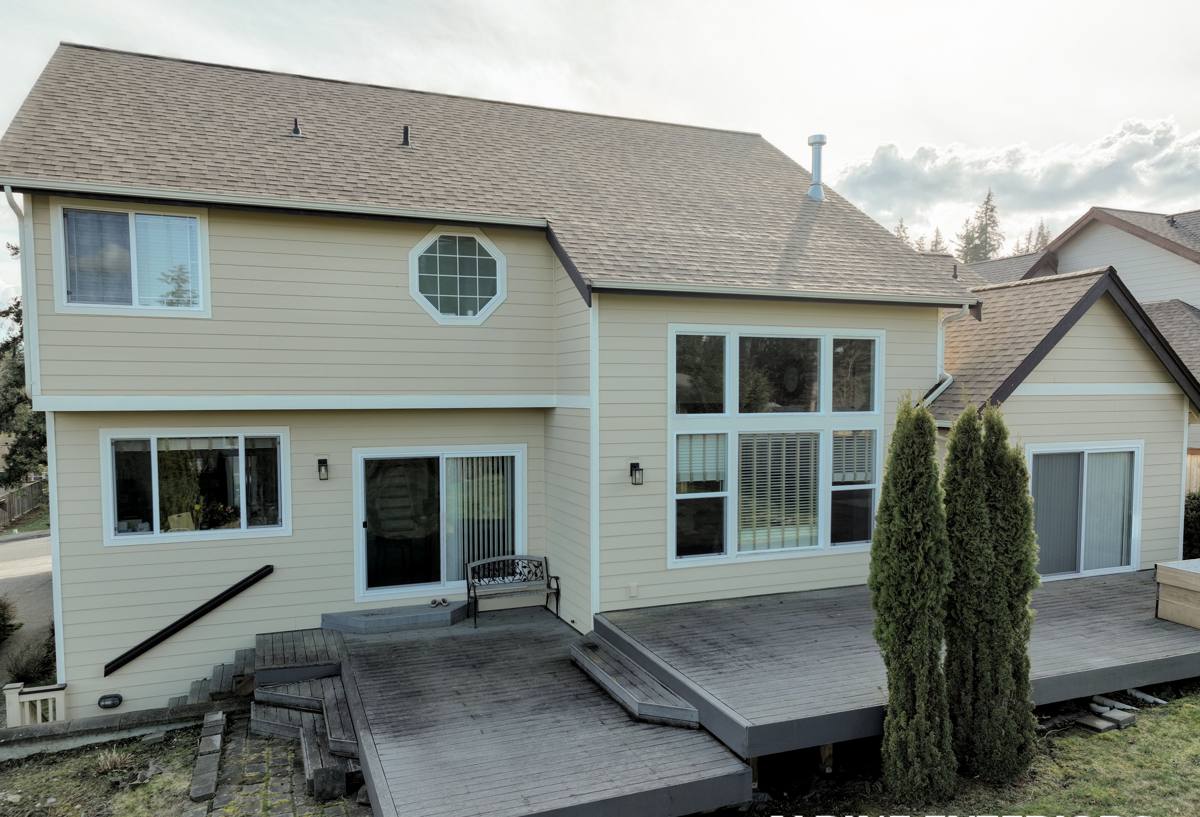
What Salt Air Actually Does to a Deck Over Time
Salt air isn't just a coastal cliché — it's a chemical reality that shows up in the hardware before it shows up anywhere else. Airborne salt accelerates corrosion on any metal that isn't rated for it, and a deck has a lot of metal: joist hangers, structural screws, post bases, railing brackets, and every fastener holding decking down.
Fasteners and Hardware
Standard exterior-rated hardware is built for general weather exposure, not sustained salt exposure. In a marine or near-marine environment like Sandy Point, that hardware can start showing rust and pitting well before it would inland — and once a fastener starts corroding, it loses holding strength quietly, long before it looks obviously bad. We spec stainless steel or marine-grade coated fasteners and connectors for anything within reach of salt air, which is essentially the whole structure out here.
Wood vs. Composite Decking
Salt air affects wood and composite decking differently. Untreated or lower-grade wood can gray and check faster under salt exposure combined with UV and rain cycling. Composite decking generally holds up well against salt itself, but the aluminum or steel substructure underneath it still needs the same corrosion-resistant hardware — composite decking doesn't protect the frame beneath it.
Driving Rain, Ledger Boards, and Flashing
If a deck is going to fail structurally, the ledger board — where the deck attaches to the house — is usually where it starts. Driving rain off the water pushes water sideways and upward in ways vertical siding details don't always anticipate, and a ledger that isn't properly flashed will let water track behind it and into the house framing. This is slow, hidden rot, and it's the single most common serious defect we find on older or poorly built decks in this area.
A correct ledger installation means proper flashing above and behind the ledger board, a gap or drainage plane so water doesn't pool against the house, and fasteners sized and spaced to carry the deck's actual load — not just enough to hold it up on a calm day. We treat the ledger connection as the most important detail on the entire project, because it's the one homeowners can't see once the deck is built.
Driving rain also matters for how a deck's guardrails, stair stringers, and any attached structures like pergolas are flashed and fastened. Anywhere two materials meet is a place water can get in if it isn't detailed correctly.
Moss, Shade, and Drainage on Horizontal Surfaces
Whatcom County's wet season is long, and any horizontal wood or composite surface that doesn't dry out between rains is a candidate for moss and algae growth. On a deck, that's not just cosmetic — moss holds moisture against the board surface, and on wood decking that moisture retention speeds up rot. On composite decking, built-up moss and grime can make boards genuinely slick and unsafe underfoot.
A few build decisions make a real difference here:
- Proper board spacing so water drains through rather than sitting on top
- Correct joist spacing and slope so the deck sheds water instead of pooling
- Decking material and finish chosen with the site's actual sun/shade pattern in mind
- Avoiding designs that trap debris — tight corners, un-vented skirting, dead air pockets under stairs
- A realistic cleaning schedule the homeowner can actually keep up with
Shaded, tree-covered lots hold moisture longer and grow moss faster than open, sun-exposed ones. We look at each lot's actual exposure before recommending a decking material, rather than defaulting to whatever's easiest to install.
Footings, Framing, and Wind Exposure
Sandy Point's proximity to open water means more sustained wind loading on taller decks, railings, and any roof or pergola structure attached to a deck, compared to a similarly sized deck built in a more sheltered inland yard. Footing depth and post sizing need to account for that load, not just the deck's own weight.
Soil conditions near the water can also differ from a typical inland lot — sandier, more variable drainage. We don't guess on footing design; we size footings to the actual soil and load conditions on your specific lot, not a generic template.
Material Comparison for Sandy Point Conditions
| Material | Salt Air Behavior | Moss/Moisture Behavior | Maintenance |
|---|---|---|---|
| Cedar | Naturally rot-resistant but still needs sealing; hardware corrosion is the bigger risk | Can gray and grow moss in shaded, wet areas without regular cleaning | Periodic sealing/staining; annual cleaning recommended |
| Pressure-treated wood | Wood itself holds up, but standard fasteners corrode faster than the lumber lasts | Prone to moss in shaded spots if not cleaned | Sealing, occasional board replacement |
| Capped composite | Resists salt well; substructure hardware still needs to be corrosion-rated | Can get slick with built-up algae/moss film; cleans off easier than bare wood | Periodic washing, low sanding/sealing needs |
| PVC decking | Very resistant to salt and moisture | Low moisture absorption; still needs surface cleaning in shaded areas | Washing only, no sealing required |
There's no single "correct" material for every Sandy Point lot — a sunny, open waterfront lot and a shaded, tree-lined one call for different decisions. What matters is matching the material to the specific site and being honest about the maintenance each option actually requires, rather than overselling a low-maintenance claim that doesn't hold up in this climate.
Our Process for a Sandy Point Deck Build
- Site assessment — sun/shade exposure, wind exposure, existing drainage, soil conditions, and how the new deck will tie into the house
- Design and material selection — sized for actual structural loads and wind exposure, with decking and hardware matched to salt air and moisture conditions on your lot
- Permitting — pulling the required permit and building to current code before any framing goes in
- Ledger and flashing detail — the connection to your home gets built and flashed correctly the first time, since it's the hardest part to fix later
- Framing and footings — sized to the load and soil conditions on site, not a generic minimum
- Decking, railing, and stair installation — with corrosion-rated fasteners throughout
- Final walkthrough — covering how the deck was built, what maintenance it needs, and what to watch for over the first year
Permits and Whatcom County Requirements
Most new deck construction and many deck replacements require a permit in Whatcom County, and inspections typically cover footings, framing, and guardrail construction before the project is signed off. Skipping this step is a common shortcut on older or DIY decks in this area, and it shows up later as a problem during a home sale or insurance review. We handle the permitting on our projects so the deck is built to code from the ground up, not retrofitted to pass an inspection after the fact.
Maintenance a Sandy Point Deck Actually Needs
The maintenance a deck needs out here depends on the material, but a few things apply across the board:
- Rinse or sweep debris off the deck surface regularly, especially in shaded areas prone to moss
- Check fastener heads and visible hardware periodically for early signs of corrosion
- Keep gutters and downspouts near the deck clear so water isn't dumping directly onto it
- Reseal or restain wood decking on the manufacturer's recommended schedule, not "when it looks bad"
- Inspect the ledger flashing area and any wall penetrations annually for signs of water intrusion
- Address moss buildup promptly rather than letting it establish — it's much easier to remove early
Why a Crew That Already Works Sandy Point Matters
Building a deck that holds up in Sandy Point isn't about a different skill set than building one anywhere else — it's about knowing which details actually matter for this exposure and not treating them as optional. A crew that's worked this stretch of coastline knows where driving rain tends to find gaps in a ledger detail, which decking materials handle a shaded, moss-prone lot versus an open waterfront one, and what footing and fastener specs actually hold up rather than just meeting the bare minimum. That's the difference between a deck that needs real repair work in five years and one that's still solid in twenty.
If you're planning a new deck, a replacement, or want an honest look at what's driving problems on an existing one, we're happy to come take a look. Fill out the form below for a free, no-pressure estimate — we'll walk your lot, talk through the material and design options that make sense for your exposure and budget, and give you a straight answer, not a sales pitch.