 Blaine Siding
 Windows Built for Sandy Point's Waterfront Exposure
Sandy Point sits right up against the Strait of Georgia, and that location comes with a specific set of problems for windows that homes a few miles inland in Blaine simply don't deal with as severely. Salt-laden air corrodes hardware and finishes faster. Wind-driven rain gets pushed sideways into gaps that would stay dry elsewhere in Whatcom County. And the long, damp moss season here keeps wood trim and sills wet for weeks at a stretch. Custom windows for a Sandy Point home aren't just about picking a style you like — they're about choosing materials, seals, and installation details that hold up to this specific exposure, year after year.
We work on homes in this neighborhood regularly, and the patterns repeat: failed seals on the ocean-facing side of a house, corroded hardware on windows that face the water directly, and sills that have taken on moisture damage from years of driving rain finding its way past worn weatherstripping. None of that is unusual for the location — it's just what happens when windows aren't matched to the exposure they're actually living in.
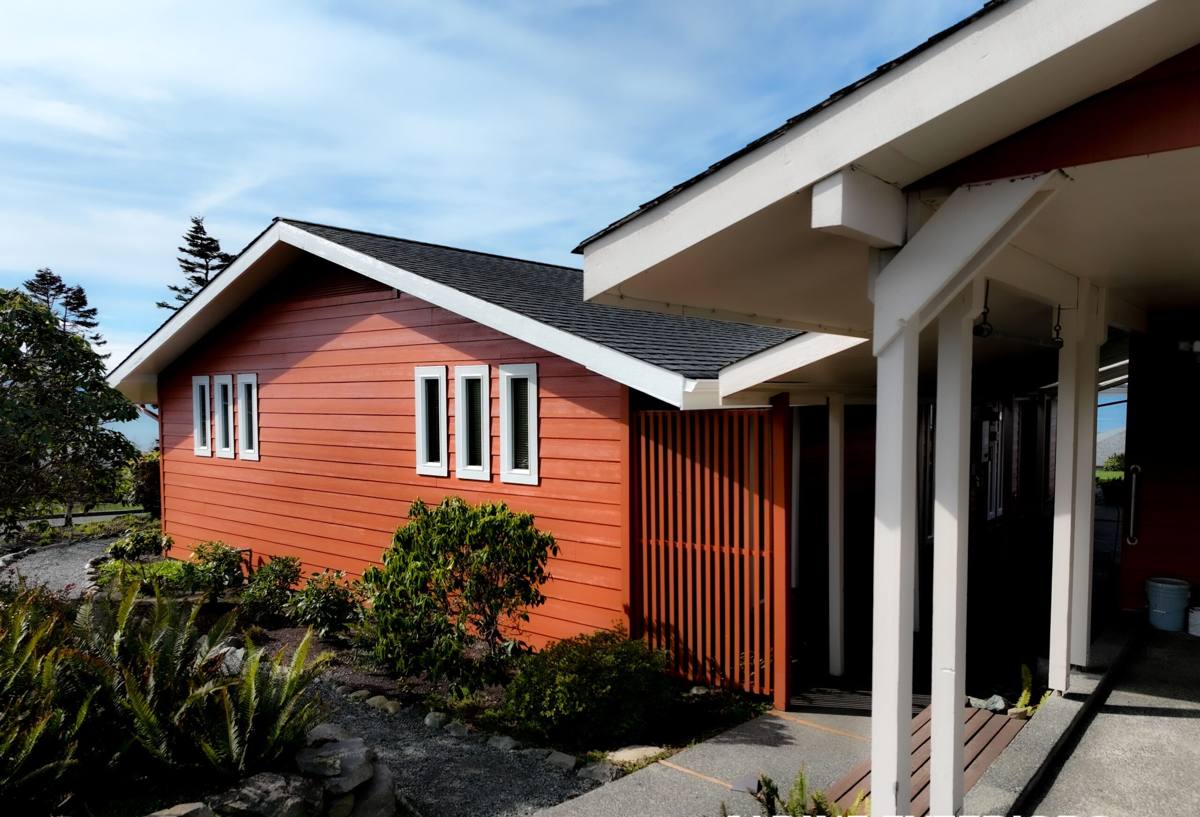
What "Custom" Actually Means Here
Custom windows doesn't mean expensive or fancy. It means the window is sized, framed, and specified to fit your actual opening and your actual exposure, rather than forcing a stock size into a rough opening and packing the gaps with trim. On older Sandy Point homes especially, openings are rarely a perfect match to modern standard sizes. A custom-built window (or a manufacturer's true custom line, built to your measurements) closes those gaps properly instead of relying on extra caulk and shims to make up the difference.
For waterfront and near-waterfront homes, custom sizing also lets us address orientation directly. A window facing the water needs a different glazing package, frame material, and sealing approach than one on the sheltered side of the same house. Treating every opening the same way is how you end up with one wall of windows that performs fine and another that starts failing in five or six years.
Where Custom Sizing Matters Most
- Older Sandy Point homes with non-standard or settled rough openings
- Water-facing walls that take direct wind-driven rain
- Additions or remodels where the opening doesn't match a current stock size
- Replacing multiple windows of different ages that need to match visually
- Homes where the original windows were installed without proper flashing
Material Choices for Salt Air and Driving Rain
Frame material matters more here than it does further inland. Salt air accelerates corrosion on hardware and fasteners, and constant damp keeps wood trim vulnerable to rot if it isn't detailed and finished correctly. We talk through trade-offs honestly rather than pushing one option:
| Frame Material | Salt Air / Moisture Behavior | Maintenance | Best Fit |
|---|---|---|---|
| Vinyl | Won't rot or corrode; hardware quality varies by manufacturer | Low — occasional cleaning | Most Sandy Point homes, budget-conscious replacements |
| Fiberglass | Very stable in temperature swings and damp; resists corrosion well | Low | Direct water-facing exposures, long-term durability priority |
| Wood (clad exterior) | Interior wood look with a weather-resistant exterior shell | Moderate — clad side is low-maintenance, interior finish still needs care | Homes prioritizing interior appearance over exterior wood |
| Solid wood | Most vulnerable to salt air and prolonged damp without diligent upkeep | High — regular refinishing needed | Historic-accuracy projects where upkeep is planned for |
We're upfront when a material choice is going to create a maintenance burden a homeowner isn't expecting. Solid wood on a direct water-facing wall in Sandy Point can look great, but it needs a real maintenance commitment to hold up — that's a trade-off we'll explain plainly rather than gloss over.
Glass and Weatherstripping Specifics
Standard double-pane glass works fine on sheltered walls, but on exposures that take direct wind-driven rain, the seal integrity of the insulated glass unit and the quality of the weatherstripping matter more than the glass coating itself. We look at:
- Warm-edge spacer systems — reduce condensation risk at the glass edge, which matters in a consistently damp climate
- Compression weatherstripping — holds up better than friction-fit seals under sustained wind pressure off the water
- Multi-point locking hardware — pulls the sash tight against the frame evenly, reducing the chance of a gap forming on the windward side
- Corrosion-resistant hardware finishes — standard hardware finishes can pit or discolor faster this close to salt water
None of this shows up in a showroom sample. It shows up three winters later, which is why we ask about a home's specific orientation before recommending a glass and hardware package rather than defaulting to whatever's standard.
Flashing and Installation: Where Most Failures Actually Start
In our experience, most window problems in this area aren't glass problems — they're installation problems. A quality window installed without proper flashing, sealant, and integration into the existing wall assembly will leak eventually, no matter how good the window itself is. This is especially true on Sandy Point's exposed sides, where wind-driven rain will find any weak point in the water management detailing.
What a Correct Installation Includes
- Removing the old window down to the rough opening and inspecting the sheathing and sill for hidden moisture damage before installing anything new
- Installing sill pan flashing so any water that does get past the window drains back out, rather than sitting on the sill
- Properly lapped flashing tape integrated with the house wrap or building paper, in the correct shingle-style order so water sheds outward
- Backer rod and quality exterior sealant at the perimeter, sized and installed correctly rather than just caulked over gaps
- Shimming and squaring the unit so it operates correctly and doesn't rack over time, which is what causes seals to fail early
If a contractor skips the sill pan or reuses old flashing tape because "the window is the important part," that's the shortcut that shows up as a leak two or three years down the road — often after the rot has already started inside the wall.
Our Process for a Sandy Point Window Project
1. On-Site Assessment
We look at each opening individually — orientation, current condition, existing flashing (if any is visible), and any signs of past water intrusion around the sill or trim. This tells us which openings need extra attention and which are more straightforward.
2. Honest Material and Product Discussion
We walk through frame material, glass package, and hardware options based on that specific opening's exposure, with real trade-offs explained — not just the upsell option.
3. Accurate Measurement and Ordering
Custom or true-to-size windows are ordered to the actual opening, accounting for any settling or irregularity in older construction.
4. Removal and Inspection
Old windows come out carefully so we can inspect the sheathing and framing underneath for hidden moisture damage before anything new goes in.
5. Correct Flashing and Installation
Sill pan, properly lapped flashing, sealant, and squared installation — the details that determine whether the window performs for the next twenty years or the next five.
6. Final Check and Walkthrough
We test operation, check seals, and walk the homeowner through anything they should know about care or warranty coverage.
Why Local Experience in This Specific Area Matters
A contractor who mostly works inland doesn't see the same failure patterns we see on a regular basis in Sandy Point. Knowing which walls in this neighborhood tend to take the worst of the wind-driven rain, which older homes commonly have non-standard openings, and how fast salt air can degrade the wrong hardware finish isn't something you get from a spec sheet — it comes from doing this work in this specific location, on this stretch of Whatcom County coastline, repeatedly.
That experience shows up in small decisions: recommending fiberglass over vinyl on a direct water-facing wall, catching a rotted sill before it becomes a bigger problem, or knowing that a particular hardware finish won't hold up here even though it's rated fine on paper. Those are the calls that separate a window job that lasts from one that needs revisiting in a few years.
Cost Factors to Expect
Every home and opening is different, so we don't quote a blanket price without seeing the job, but the factors that move cost up or down are consistent:
| Factor | Impact on Cost |
|---|---|
| Frame material selected | Vinyl is typically the most economical; fiberglass and clad-wood cost more upfront |
| Standard size vs. true custom | Custom sizing costs more than stock but avoids costly gap-filling shortcuts |
| Number of water-facing openings | These often warrant upgraded glass/hardware packages, adding cost per unit |
| Condition of existing sheathing/framing | Hidden rot found during removal adds repair scope before the new window goes in |
| Number of windows done at once | Bundling multiple openings in one project typically reduces per-window cost |
If you're weighing custom windows for a home in Sandy Point, we're happy to take a look, walk you through what your specific openings need given their exposure, and put together a straightforward, no-pressure estimate — just fill out the form below to get started.