 Blaine Siding
 Why Windows Take a Beating in Sandy Point
Sandy Point sits right on the water, and that location is exactly what makes window replacement here a different job than it is a few miles inland in Blaine proper. Homes with open water exposure catch weather that inland houses simply don't — steady salt-laden air, wind driving rain sideways into the wall, and a wet season that runs long even by Whatcom County standards. Windows are one of the first components to show it, usually years before siding or roofing problems show up.
Salt Air and Corrosion
Airborne salt doesn't need a storm to do damage — it settles quietly on glass, frames, and hardware every day the wind comes off the water. Bare aluminum frames and cheap fasteners pit and corrode steadily in this environment. Vinyl and fiberglass don't rust, but the hardware inside them — hinges, cranks, locks, balance systems — still needs to be rated for a marine or coastal environment, or it will seize up and fail well before the glass does.
Moss, Mildew, and the Long Damp Season
Whatcom County's damp stretch runs long, and Sandy Point's exposure keeps surfaces wet even longer than most of Blaine. Moss and algae take hold on sills, exterior trim, and anywhere water sits instead of shedding. On windows, that usually shows up first as green or black staining at the bottom rail and corners, and eventually as soft, swollen wood underneath painted trim.
Wind-Driven Rain at the Waterline
Rain that's being pushed horizontally by wind behaves differently than a straight vertical rain — it gets forced up and under trim, into gaps that would stay dry in a calmer setting. A window that's watertight in a sheltered yard can still leak on a waterfront lot if the flashing details weren't built for wind-driven rain specifically. This is the single biggest difference between a window install that looks fine and one that actually holds up here.
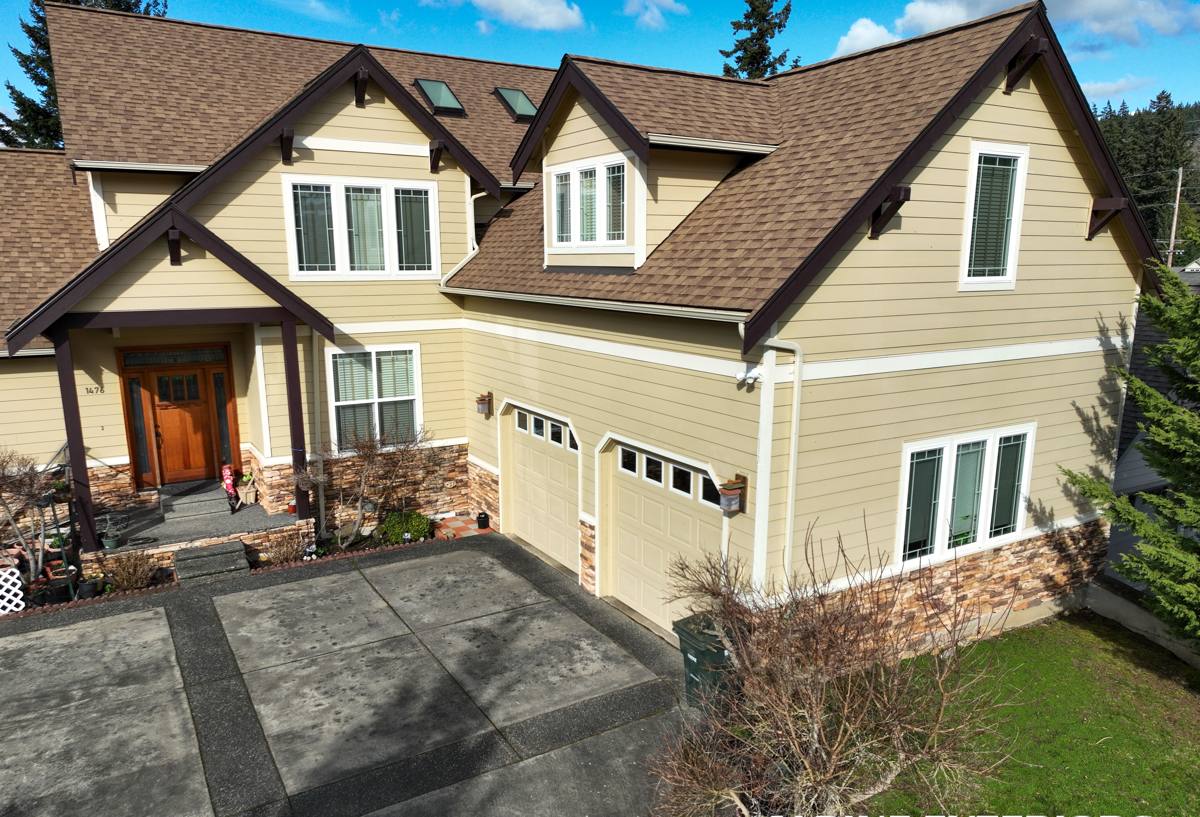
Signs Your Windows Are Already Losing the Fight
Most window failures in this environment are gradual, so homeowners often live with early warning signs for a season or two before calling anyone. Watch for:
- Fogging or a milky haze between the panes of a double-pane window — the seal has failed and the insulating gas is gone
- Sills or bottom corners that feel soft, spongy, or crumble slightly when pressed
- Corroded, stiff, or hard-to-turn locks and cranks, especially on windows facing the water
- Green or black growth on the exterior trim or sill that comes back within weeks of cleaning
- A cold draft at the frame edge even when the window is fully latched
- Visible daylight or a whistling sound around the sash during windy weather
- Paint that's peeling or bubbling only around the window opening, not the rest of the wall
- Condensation forming on the interior glass or frame most mornings, even with normal ventilation
Any one of these on its own might just need a repair. Two or three together, especially on a window with real water exposure, usually means the frame or seal integrity is gone and replacement is the honest answer.
Frame Material: What Actually Holds Up Near the Water
We get asked constantly which frame material is "best" for a waterfront property, and the honest answer depends on the specific window's exposure and your maintenance appetite. Here's how the common options actually perform in a salt-air, high-moisture setting:
| Frame Material | Salt Air Behavior | Maintenance | Trade-offs |
|---|---|---|---|
| Vinyl | Won't corrode; UV and salt-stable formulations hold color well | Low — occasional rinse | Frame can flex on very large openings; color is baked in, not paintable |
| Fiberglass | Very stable in salt air; expands and contracts close to glass | Low | Higher upfront cost than vinyl |
| Aluminum (bare, uncoated) | Pits and corrodes over time in direct salt exposure | High — needs regular attention | We don't recommend it for water-facing openings here |
| Wood, aluminum-clad | Clad exterior resists weather; interior wood needs protection from any leaks | Moderate to high | Best on sheltered elevations, not full wind-driven-rain exposure |
Hardware matters as much as the frame. Locks, hinge pins, balance systems, and even screws should be stainless steel or coated for coastal use — a great frame with bargain hardware still fails early out here.
Full-Frame Replacement vs. Insert Replacement
There are two basic ways to replace a window, and the right choice depends on the condition of what's behind the trim, not just the glass:
Insert (pocket) replacement keeps the existing exterior frame in place and fits a new window unit inside it. It's faster and less invasive, and it works fine when the surrounding frame, sill, and wall structure are still sound and dry.
Full-frame replacement removes the window down to the rough opening, including the old frame, sill, and flashing. It costs more and takes longer, but it's the only correct option when there's rot, water staining on the framing, or damaged flashing behind the trim — which we see often on Sandy Point's water-facing walls.
We won't recommend an insert replacement over a wet or compromised frame just because it's cheaper. Sealing new glass into a bad frame on a wind-exposed wall just hides the problem for a season or two before it comes back worse.
What a Correct Installation Involves
The window unit itself is only part of the job. On a wind-driven-rain wall, the installation details around it determine whether it stays dry for the next twenty years or leaks within two winters. A proper install includes:
- Removing the old unit and inspecting the rough opening, sill, and sheathing for hidden rot or moisture damage before anything new goes in
- Repairing or replacing any compromised framing or sheathing found during removal
- Installing a sloped sill pan to direct any water that gets past the window back out, not into the wall
- Integrating flashing tape and the window's nailing flange with the house's weather-resistive barrier in the correct shingle-lap order, so water sheds down and out at every layer
- Setting the window level, plumb, and square, with shims at load points — not just wedged into the opening
- Sealing with a quality exterior sealant rated for the surface and for coastal UV exposure, applied at the right joints only (not everywhere, which can trap water instead of releasing it)
- Insulating the gap between frame and rough opening without overpacking, which can bow the frame
- Finishing interior and exterior trim and confirming smooth, correct operation before we call it done
Skip the sill pan or get the flashing lap order backward, and a window can look perfect from the yard while quietly feeding water into the wall behind it — exactly the kind of failure that shows up as rot two or three years later, once it's expensive to fix.
How We Approach a Sandy Point Project
We treat every waterfront window job as a moisture-management project first and a glass-and-frame upgrade second. On-site, we look at each opening's actual exposure — a window on the water side of the house needs a different level of flashing and sealant detail than one tucked on a sheltered wall — and we spec accordingly rather than treating every opening the same. We schedule around weather windows where we can, since starting a full-frame replacement right before an incoming system isn't good for the house or the crew. Old units, packaging, and job-site debris are hauled off as we go, and we walk the finished openings with you before we consider the job complete, checking operation, locks, and any sightlines that matter to you.
Permits and Coastal Building Requirements
Window replacement projects can require a permit depending on scope — a like-for-like insert swap is often treated differently than a full-frame replacement that changes the rough opening size, and some jurisdictions exempt straightforward replacements while others don't. Whether your Sandy Point property falls under City of Blaine or unincorporated Whatcom County jurisdiction affects which building department you'd apply through, and we help sort that out as part of the estimate rather than leaving you to figure it out.
There's also a technical side specific to open-water exposure: Washington's adopted building code assigns wind exposure categories based on terrain, and a lot with unobstructed water frontage typically falls into a higher exposure category than a sheltered inland lot. That affects the design pressure (DP) rating a replacement window needs to meet — a window that's perfectly fine on a protected street in Blaine may not be rated for the wind load on an open Sandy Point waterfront wall. We check this against your specific site rather than assuming a generic "coastal-rated" label is automatically sufficient.
Cost Factors for Sandy Point Window Replacement
Every project is priced on its own specifics, but the factors that move the number the most are consistent:
| Factor | Why It Matters |
|---|---|
| Full-frame vs. insert replacement | Full-frame costs more but is required when the existing frame or sheathing is compromised |
| Frame material | Vinyl is typically the most affordable; fiberglass and clad-wood cost more upfront |
| Wind/DP rating required for the opening's exposure | Higher-rated units for open water exposure cost more than standard-rated windows |
| Number and size of openings | Larger units and multi-window projects benefit from some economy of scale |
| Hidden repair needed behind old trim | Rot or moisture damage found during tear-out adds material and labor before the new window goes in |
| Glass package | Low-E coatings and upgraded glass add cost but improve comfort and energy performance |
We'd rather give you an honest range up front and adjust after we've actually opened up the wall than lowball a number and surprise you mid-project. If we find rot behind the trim, we'll show it to you and explain the cost before doing the work, not after.
Why Hire a Crew That Already Works Sandy Point
A window installer who mostly works sheltered inland streets and a crew that regularly works open waterfront exposure will make different calls on the same job — sealant choice, flashing detail, hardware spec, even how they sequence the tear-out around weather. We work across Blaine and Whatcom County, including the wind and salt exposure that comes with waterfront properties like Sandy Point, so those calls aren't guesswork for us. As a siding contractor first, we also look at the wall the window sits in, not just the opening — how the flashing ties into the surrounding siding and weather barrier is part of what actually keeps water out, and treating windows and the envelope around them as one system is where a lot of leaks either get prevented or get missed.
If your windows are showing any of the wear signs above, or you're planning ahead for a full-frame replacement on a water-facing wall, we're happy to take a look and give you a straightforward, no-pressure estimate — just fill out the form below.