 Blaine Siding
 Building New in Sandy Point Means Building for the Water and the Salt
Sandy Point sits right up against the Strait of Georgia, and that location shapes everything about how a house should be built here. When you're framing a new home or a major addition in this neighborhood, the windows aren't just a finish detail you pick out of a catalog at the end of the job. They're one of the first lines of defense against a marine climate that doesn't let up. Salt-laden air, wind-driven rain coming in almost sideways off the water, and the long stretch of gray, damp months that Whatcom County residents call "moss season" all put steady stress on a window system from day one.
New construction gives you an advantage that a retrofit never fully does: the chance to get the window opening, the flashing, and the water management right before the siding and trim ever go on. Get it right at this stage and you won't be chasing leaks or replacing hardware five years down the road. Get it wrong, and the problems get buried behind finished walls where they're expensive to find and fix.
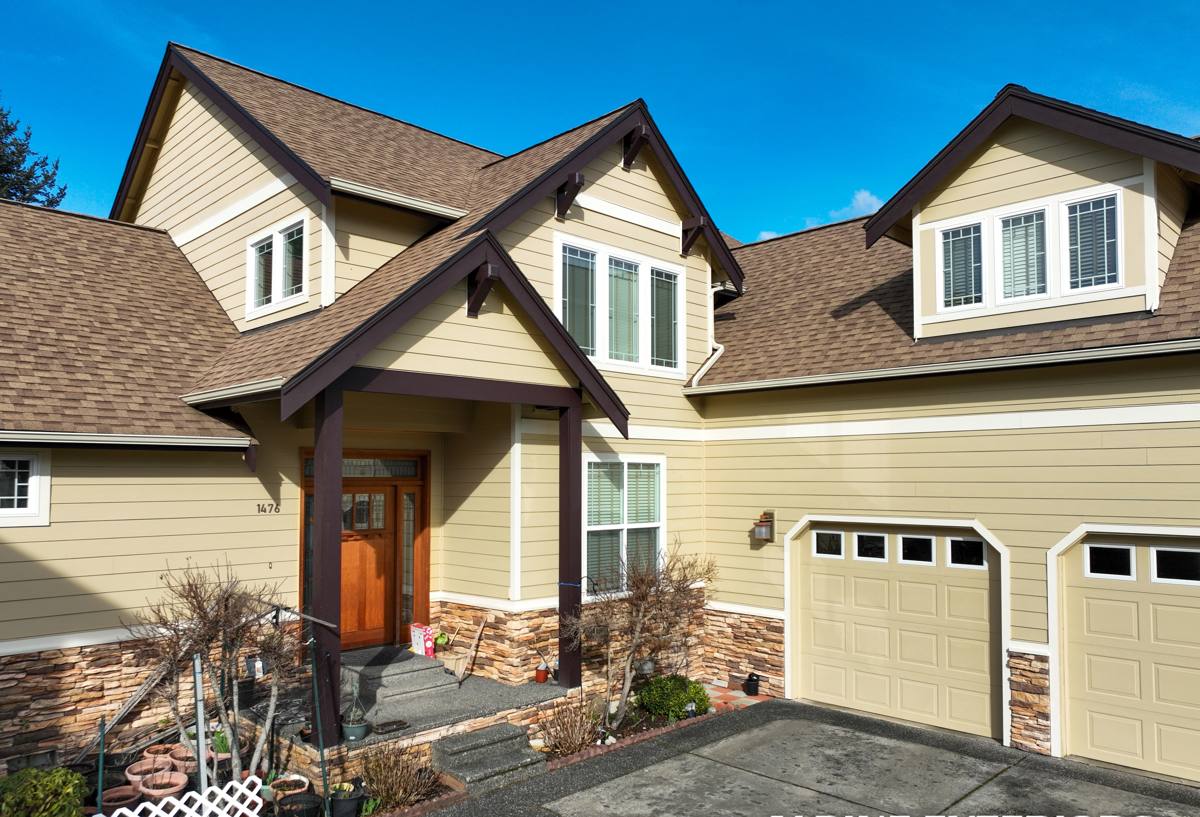
What Salt Air, Driving Rain, and Moss Season Actually Do to a Window
It helps to understand the specific ways this climate wears on window systems, because it explains why we make the choices we do on Sandy Point jobs.
Salt Air
Airborne salt settles on every exterior surface near the water, including window frames, hardware, and fasteners. Over time it accelerates corrosion on lower-grade metal components — hinges, cranks, locks, and screws — and can dull or pit certain finishes faster than you'd see even a few miles inland. This is why fastener and hardware selection matters as much as the glass package.
Driving Rain
Wind off the strait doesn't just fall on a house, it pushes rain sideways and up under trim, sills, and poorly lapped flashing. A window opening built for a calmer inland site can be undersized on water protection here. Every seam, joint, and flashing lap needs to be built assuming rain will hit it at an angle, not just from above.
Moss and Sustained Dampness
Whatcom County's long wet season keeps humidity high around the building envelope for months at a time. Wood trim and sills that stay damp are what moss, mildew, and eventually rot need to get established. Good detailing keeps water moving away from the window instead of sitting against it.
Choosing Window Materials and Glazing That Belong on This Site
There's no single "best" window brand for every house, but there are material and glazing choices that hold up better in a coastal, high-moisture environment like Sandy Point.
- Frame material: Vinyl and fiberglass frames generally resist salt-driven corrosion and moisture absorption better than bare wood exposed to this climate. Wood-clad options can still work well when the exterior cladding is a durable material and detailing is done correctly.
- Hardware and fasteners: Corrosion-resistant hardware and stainless or coated fasteners are worth the modest upcost this close to salt water — it's one of the cheapest ways to avoid a callback in a few years.
- Glazing package: Dual-pane, low-E glass with an appropriate gas fill helps with both energy performance and condensation resistance during our wet, cooler months. For west- and northwest-facing walls that take the brunt of storms off the water, a slightly upgraded glazing spec is often worth discussing.
- Weatherstripping and seals: Quality compression seals matter more here than in a drier climate, since they're being tested by wind-driven rain far more often.
We don't push a single manufacturer as "the only option." Different product lines make different tradeoffs between price, warranty structure, and maintenance needs, and we'll walk you through those tradeoffs honestly rather than steering you toward whatever is easiest for us to install.
Where New-Construction Installs Actually Go Wrong
Most window failures in coastal new construction don't come from a bad window unit — they come from installation shortcuts around the opening. The window itself is usually the easy part. The parts that determine whether it stays watertight for decades are the ones nobody sees once the siding is on.
Flashing Sequence
Flashing has to be layered correctly — sill pan first, then side flashing, then head flashing — so that water is always directed out and down, never trapped behind a layer above it. In a driving-rain climate, a flashing sequence installed out of order or with gaps is often where leaks start, sometimes years later.
Sill Pans
A proper sloped sill pan under every new-construction window gives any water that gets past the exterior seal a way out instead of a place to pool. This is a small detail that's easy to skip and very hard to fix after the wall is closed up.
Sealant Selection and Placement
Not every sealant is rated for the movement and moisture exposure a coastal window opening sees. Sealant also needs to go in the right joints — and be left out of others — so the assembly can still drain and dry if moisture does get in.
Nailing Fin and Rough Opening Fit
An opening that's slightly out of square, or a nailing fin that's not fully and evenly fastened, creates small gaps that driving rain will eventually find. This is a place where careful, unhurried work pays off far more than it costs.
Our Process for New-Construction Window Installs
On new builds and additions in Sandy Point, we follow the same sequence every time, because skipping steps is how coastal homes end up with hidden water damage.
- Rough opening check: We verify every opening is square, correctly sized, and structurally ready before a window ever arrives on site.
- Sill pan installation: A sloped, sealed pan goes in first so any incidental moisture has a path out.
- Window set and level: The unit is set, shimmed, and checked for level, plumb, and square — an out-of-square window stresses seals and hardware from day one.
- Flashing, in the correct order: Side flashing, then head flashing, layered to shed water downward and outward, tied properly into the house wrap.
- Sealant and fastening: Appropriate sealant in the right joints, corrosion-resistant fasteners set to the manufacturer's pattern and torque.
- Interior and exterior trim-out: Finished once we've confirmed the water management layers underneath are complete and correct.
- Final walkthrough: Operation, locks, and seals checked on every window before we call the job done.
Window Styles That Suit Sandy Point Homes
Style choice on new construction is partly aesthetic and partly practical, especially with wind and rain exposure to consider.
| Window Style | Good Fit For | Considerations in This Climate |
|---|---|---|
| Casement | Walls facing the wind or water | Compression seal when latched tends to resist driving rain well |
| Awning | Bathrooms, low walls, ventilation while it's raining | Can stay cracked open in light rain without letting water in |
| Single/Double-Hung | Traditional coastal cottage look | Relies more on weatherstripping quality; choose a well-sealed line |
| Fixed/Picture | View walls facing the strait | No moving parts to seal, generally the lowest maintenance option |
| Sliding | Lower-wind-exposure walls | Track and seal quality matters more here than on sheltered inland sites |
Cost Factors for New-Construction Window Packages
Every new build is different, and we're not going to quote a number without seeing the plans and the site, but these are the main factors that move the price on a Sandy Point job.
| Factor | Why It Matters |
|---|---|
| Number and size of openings | Larger view windows and more total openings raise both material and labor cost |
| Frame material | Vinyl, fiberglass, and wood-clad options carry different price points and maintenance profiles |
| Glazing upgrades | Upgraded low-E coatings or gas fills add cost but can pay back in comfort and energy use |
| Wind/rain exposure of each wall | Higher-exposure elevations may warrant a stronger install detail package |
| Site access and building stage | Coordinating with the framing and siding schedule affects labor efficiency |
A Maintenance Checklist Worth Keeping
Even a well-installed window benefits from a little seasonal attention in this climate. This is the routine we recommend to Sandy Point homeowners after their new windows are in.
- Rinse salt residue off frames and glass a few times a year, especially after storms
- Check and clear weep holes so any trapped water can drain
- Inspect exterior caulk lines annually and touch up before gaps widen
- Lubricate hardware — hinges, cranks, locks — to fight salt-air corrosion
- Look for early moss or mildew on sills and trim and address it before it spreads
- Confirm gutters and downspouts near windows are directing water away from the wall
Why Hiring a Crew That Already Works Sandy Point Matters
General contractors and window crews from outside the area sometimes treat a Blaine build the same way they'd treat a job in a drier, more sheltered part of Whatcom County. That approach can leave a new home under-protected against the specific combination of salt air, wind-driven rain, and prolonged dampness that Sandy Point sees more of than most inland neighborhoods. Knowing the exposure patterns for this particular stretch of coastline — which walls take the worst of a winter storm, how much salt exposure to plan hardware around — comes from having done the work here before, not from a general specification sheet.
If you're planning new construction or a major addition in Sandy Point, we'd be glad to walk the plans with you and talk through window selection and installation detailing before framing gets ahead of the decision. Reach out for a free, no-pressure estimate using the form below.