 Blaine Siding
 Why Sandy Point Siding Wears Differently Than Homes Inland
Sandy Point sits right on the water, and that changes what siding has to survive day to day. Homes a few miles inland in Blaine deal with the same wet Whatcom County winters, but a waterfront lot adds constant salt-laden air, near-daily wind exposure, and driving rain that hits siding at an angle instead of falling straight down. None of that is dramatic on any single day. It's the accumulation over years that shows up as chalky paint, soft trim, swollen panel edges, and streaks of moss creeping up from the ground line.
Siding repair in a location like this isn't just patching whatever's visibly broken. It's understanding why that spot failed in the first place, because if the underlying cause — moisture intrusion, a failed water-shedding detail, a material that was never suited to salt exposure — isn't addressed, the same failure comes back in the same place within a couple of seasons.
Salt Air and Metal Fasteners
Airborne salt accelerates corrosion on anything metal: nail heads, flashing, trim fasteners, even some staples used in older installations. Once a fastener starts corroding, it stains the siding around it and eventually loses its grip, which is one of the more common repair calls we get from homes near the water — small rust streaks that turn into a loose or popped board if left alone.
Wind-Driven Rain
Open water exposure means rain rarely falls straight down here. Wind pushes it sideways into seams, laps, and butt joints that were designed to shed water falling vertically. Over time, wind-driven rain finds its way behind poorly lapped siding or through gaps where caulking has failed, and the damage often starts on the inside of the wall before it's visible from the yard.
A Long Moss Season
Shaded, north-facing, and lower sections of a home stay damp for a large part of the year in this climate. Moss and algae take hold on that persistent moisture, and where they grow on siding, they hold water against the surface even longer — a slow cycle that softens wood-based products and can work its way into seams on any material if it's not kept in check.
Signs Your Siding Needs Repair, Not a Full Replacement
Not every problem means starting over. Most of what we see on Sandy Point calls is genuinely repairable if it's caught before moisture has spread behind the wall assembly. Here's what to look for:
- Soft or spongy spots when you press on the siding, especially near the bottom courses or under windows
- Visible gaps at seams, corners, or trim where caulking has cracked or pulled away
- Rust streaks running down from nail heads or metal flashing
- Bubbling, peeling, or chalking paint in isolated areas rather than across the whole wall
- Moss or dark algae growth concentrated in specific low-sun sections
- Boards that have pulled loose, warped, or show visible cupping at the edges
- Musty smell or slight staining on an interior wall that shares an exterior with a damaged section
If damage is limited to a few boards or a section around a window or door, targeted repair usually makes sense. If soft spots show up in multiple, unrelated areas of the house, that's often a sign the water management behind the siding has failed more broadly — worth a full inspection before committing to spot repairs.
What a Correct Repair Actually Involves
A repair that just covers the visible damage without checking what's underneath tends to fail again quickly, especially in a location this exposed. We treat every repair call as three separate questions: what's damaged, why it failed there, and what needs to happen underneath before new material goes back on.
Checking the Water-Resistive Barrier
Once damaged boards come off, we look at the house wrap or building paper behind them. If it's torn, degraded, or was installed with the laps running the wrong direction, replacing the siding without fixing that guarantees a repeat call. This step gets skipped by crews trying to do a fast patch — it's the single biggest reason repairs don't hold up on waterfront homes.
Flashing and Trim Details
Window heads, deck ledgers, and any place two roof or wall planes meet are common failure points. Correct repair means confirming flashing is intact and properly lapped, not just caulked over as a substitute for actual flashing.
Matching Existing Material
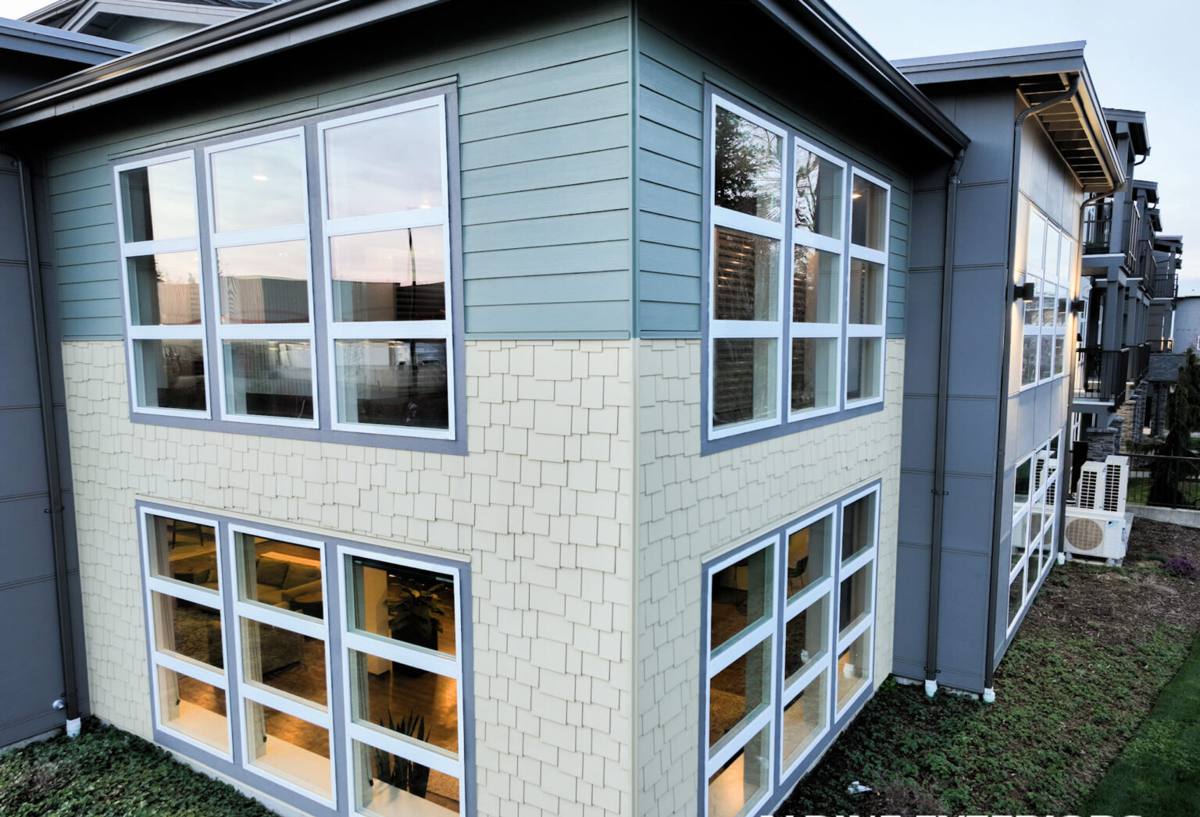
For a repair to look right, the replacement material needs to match the existing siding's profile, exposure, and finish as closely as possible. This is easier when the home already has James Hardie fiber cement, since the product line and factory finishes are consistent and available long-term. It's much harder on homes with discontinued vinyl profiles or weathered cedar, where an exact match may not exist anymore.
Repair vs. Replacement: How We Help You Decide
Homeowners often call assuming they need a full re-side when a repair would do, or the reverse — patching a symptom when the underlying material is past the point of spot fixes. We walk through the same factors on every visit:
| Factor | Leans Toward Repair | Leans Toward Replacement |
|---|---|---|
| Extent of damage | Isolated to one wall or a few boards | Recurring soft spots across multiple walls |
| Age of siding | Under 15-20 years, otherwise sound | Original siding near or past its service life |
| Water barrier condition | Intact once exposed and checked | Torn, missing, or improperly lapped throughout |
| Material match availability | Product still in production (e.g. Hardie lines) | Discontinued profile or badly weathered material |
| Underlying sheathing | Dry, solid when probed | Soft or delaminating sheathing found behind siding |
We'll give you a straight answer on which side of that table your home falls on, and we won't sell a full replacement when a repair is the honest call — or vice versa.
Why We Repair and Install Only James Hardie Fiber Cement
We install exclusively James Hardie siding, and that includes repair work. We don't stock or install vinyl, LP SmartSide, Cemplank, Allura, or primed wood species, and on a site like Sandy Point that's a practical decision as much as anything.
Fiber cement doesn't corrode, doesn't feed the rot that softer wood-based products are prone to, and holds up to the freeze-thaw and constant moisture cycle of a coastal Whatcom County winter without the swelling and cupping that engineered wood products can show over time in this kind of exposure. James Hardie's ColorPlus factory finish is baked on and warrantied against fading in a way field-applied paint can't match, which matters on a home that gets full sun and salt spray in the same afternoon. When we're called out to repair an older vinyl or wood-composite installation, we'll do the repair work honestly on the material that's there — but if a section is far enough gone to warrant replacement, we'll recommend Hardie and explain exactly why, not just because it's what we sell.
Our Process for a Sandy Point Repair Call
- On-site inspection. We look at the damaged area and probe the surrounding sections for soft spots that aren't yet visible from the outside.
- Diagnosis. We identify the actual cause — flashing failure, water barrier breach, fastener corrosion, or material degradation — not just the symptom.
- Written scope and estimate. You get a clear breakdown of what's being repaired, what's being checked underneath, and the cost, before any work starts.
- Removal and inspection behind the siding. We don't reinstall over a compromised water barrier or damaged sheathing without addressing it first.
- Repair and matched replacement. New material is fit, fastened correctly for the exposure, and finished to match as closely as the existing siding allows.
- Final check. We confirm caulking, flashing, and clearances are correct before calling the job done.
What Happens If Damage Goes Unaddressed
Deferred siding repair on a waterfront property tends to compound faster than it would inland, simply because the moisture load is higher and more constant. A small area of rust staining or a loose board left over a winter can become a soft sheathing panel by the following year, and soft sheathing means the repair scope — and cost — jumps from a few boards to a section of wall. Catching problems early is genuinely the difference between a modest repair bill and a much larger one, and it's the main reason we recommend a walk-around inspection every year or two for homes in this kind of exposure, even when nothing looks obviously wrong.
Why Local Experience in Sandy Point Matters
A crew that's worked this specific stretch of coastline knows which details fail first in this exposure — where flashing tends to get skipped on older builds, which orientations hold moss longest, and how far salt spray typically reaches up a wall. That's not something you get from a general contractor covering all of Whatcom County without a specific track record on the water. We're a Blaine-based crew, and Sandy Point is part of our regular service area, not a special trip.
Get an Honest Look at Your Siding
If you're seeing soft spots, rust streaks, loose boards, or persistent moss on your Sandy Point home, it's worth getting eyes on it before another wet season adds to the damage. We'll give you a straightforward assessment — repair or replace, no pressure either way — with a free estimate.