 Blaine Siding
 Why Peace Arch Homes Wear Siding Out Faster
Peace Arch sits about as close to saltwater and the international border as a Whatcom County neighborhood gets, and that location comes with a specific set of siding problems. Homes here take a steady diet of marine air, wind-driven rain off the Strait, and a moss season that can run from October well into spring. None of that is dramatic on any single day — it's the accumulation over years that breaks down the wrong siding material or a poorly installed correct one.
Salt-laden air corrodes fasteners and accelerates the breakdown of paint films faster than it would a few miles inland. Driving rain, pushed sideways by wind off the water, finds every gap in flashing, trim, and butt joints that a calmer climate would never test. And moss and algae don't just sit on the surface — given enough damp months in a row, they hold moisture against the siding face and behind poorly sealed seams, which is exactly the condition that rots wood-based products and lets water travel behind panels that weren't lapped or caulked correctly the first time.
None of this means Peace Arch homes need exotic materials. It means the installation has to be done correctly for this specific climate, with the right material underneath the paint.
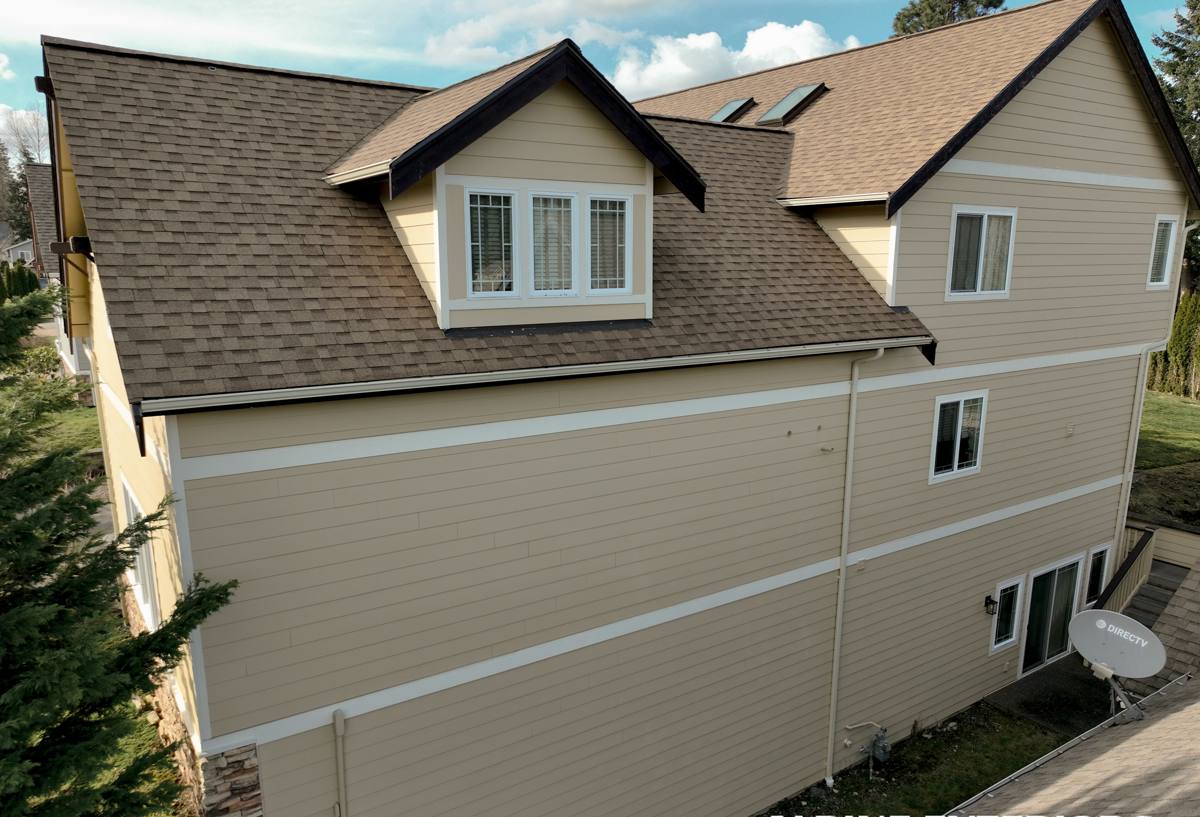
What a Correct Siding Replacement Actually Involves
Siding replacement is not just stripping old panels and nailing up new ones. Done right, it's a sequence of steps where each one protects the next, and skipping or rushing any step is what causes callbacks five or ten years later.
Tear-off and substrate inspection
Once the old siding is off, we look at what's underneath — sheathing, framing, window and door flashing — before anything new goes on. This is the point where hidden moisture damage from years of driving rain finally shows itself. Soft sheathing, rusted fasteners, or staining around window openings get addressed now, not covered up and left to keep spreading behind new siding.
Weather-resistive barrier and flashing
A house wrap or building paper goes on next, lapped correctly from the bottom up so water sheds outward instead of behind it. Every window, door, and penetration gets flashed and integrated into that barrier. This layer is what actually keeps wind-driven rain out of the wall assembly — the siding itself is the second line of defense, not the first.
James Hardie installation to manufacturer spec
We install fiber cement siding and trim to James Hardie's published installation instructions: correct fastener type and spacing, proper clearance at grade and roof lines, factory-cut ends caulked or capped, and butt joints backed and sealed. Installation errors — not the material itself — are the most common reason any siding product underperforms, and Hardie's own warranty coverage depends on the job being done to spec.
Why We Install Only James Hardie Fiber Cement
We don't install vinyl, LP SmartSide, primed wood, cedar, or other fiber cement brands. That's a deliberate standard, not a lack of options, and it's worth explaining why for a climate like this one.
Vinyl siding is affordable and low-maintenance in the sense that it doesn't need painting, but it's a thin, flexible plastic product that expands and contracts with temperature swings and can crack or warp under sustained wind loads — exactly the kind of gusty, wet weather Peace Arch gets off the water. Wood-based siding, whether cedar, primed spruce, or engineered wood products, depends entirely on paint film integrity and consistent maintenance to keep moisture out; in a climate with this much sustained dampness and moss growth, that maintenance window shrinks and the cost of falling behind on it is rot.
James Hardie fiber cement is non-combustible, dimensionally stable, and engineered specifically for wet coastal climates through its HZ5 product line, which is built for exactly the freeze-thaw and moisture conditions Western Washington sees. The factory-applied ColorPlus finish is baked on under controlled conditions, not brushed or sprayed on-site, which gives it better long-term color retention and adhesion than field-applied paint on wood or vinyl. It also carries a strong transferable limited warranty on both the substrate and the finish. That combination — a material that doesn't rot, doesn't need repainting on the same schedule as wood, and holds up to salt air and moss — is why it's the only siding we put on homes.
Signs Your Peace Arch Home May Need Siding Replacement
Some warning signs are obvious; others hide behind trim or under eaves where you don't look often. Walk your exterior and check for these:
- Soft or spongy spots when you press on siding, especially near the bottom courses and around window sills
- Visible moss, algae, or persistent green-black staining that keeps returning after cleaning
- Paint that's peeling, bubbling, or chalking heavily rather than fading evenly
- Warped, cupped, or separated panels, particularly on walls facing prevailing wind and rain
- Cracked or crumbling caulk at joints, corners, and around windows and doors
- Rust streaking from fasteners, or fastener heads that have backed out or corroded
- Musty odor or visible staining on interior walls that share an exterior wall with damaged siding
- Rising heating bills that track with visibly deteriorating siding, suggesting a compromised wall assembly
Any one of these on its own might just need a repair. Several together, or any sign of soft sheathing, usually means it's time to talk about full replacement rather than patching.
Our Process, Start to Finish
- On-site assessment: We walk the full exterior, check problem areas from the checklist above, and look at what's driving the wear — sun exposure, wind direction, roof drainage, grade clearance.
- Written estimate: You get a clear scope of work and price, including what Hardie product line and profile fits the home, before any commitment.
- Tear-off and inspection: Old siding comes off and we document substrate condition, flagging anything that needs repair before new siding goes on.
- Weather barrier and flashing: House wrap, window and door flashing, and any needed sheathing repair happen before a single piece of new siding is installed.
- Hardie installation: Panels, lap siding, or trim go up per manufacturer spec, with attention to fastening, clearances, and sealed joints.
- Final walkthrough: We review the finished work with you, cover care and warranty registration, and make sure every question is answered before we consider the job done.
What Drives the Cost
Every home is different, but the same handful of factors move the price up or down on most Peace Arch siding replacement jobs:
| Factor | Why It Matters |
|---|---|
| Home size and wall complexity | More corners, gables, and dormers mean more cutting, flashing, and labor time |
| Substrate condition | Rot or moisture damage found during tear-off adds repair scope before new siding can go on |
| Siding profile and trim detail | Lap siding, panel systems, and trim boards vary in material and install time |
| Access and site conditions | Steep grades, tight setbacks, or scaffolding needs affect labor and equipment costs |
| Existing paint or coating removal | Some tear-offs require extra care or disposal steps depending on the old material |
We don't quote a job until we've actually looked at these factors on your house — broad averages online rarely match what a specific home in a coastal wind-and-rain zone actually needs.
Why Local Experience in This Area Matters
A crew that already works this stretch of Whatcom County knows what to expect before the tear-off even starts: where moisture tends to collect on walls facing the water, how much moss buildup is normal versus a sign of deeper trouble, and which flashing details actually hold up against sustained wind-driven rain rather than just passing an inspection on a dry day. That familiarity shows up in fewer surprises mid-project and a finished install that's built for the weather it will actually face, not generic textbook conditions.
It also means we're not guessing at how James Hardie's climate-engineered HZ5 line performs locally — we've installed it in the same salt air and rainfall pattern your home sits in, and we stand behind that work with the same crew that's still working in the area afterward if you ever have a question.
Caring for Your Siding After Replacement
New Hardie siding is low-maintenance, not zero-maintenance. A little attention keeps it performing for decades in this climate:
- Rinse siding annually to keep salt residue and moss spores from building up, especially on shaded or north-facing walls
- Keep gutters clear so overflow doesn't run down the siding face repeatedly during heavy rain
- Trim back vegetation and tree cover that keeps walls damp and shaded longer than necessary
- Re-caulk joints and trim as needed over the years — caulk wears out well before the siding does
- Address any impact damage or fastener issues promptly rather than letting moisture find a way in
None of this is heavy work, but skipping it entirely is how even good material underperforms its potential lifespan.
If your Peace Arch home is showing any of the signs above, or you're just trying to plan ahead before the next wet season, we're happy to walk the exterior with you and give you a straight answer — no pressure, no obligation. Use the form below to request a free estimate.