 Blaine Siding
 Why Birch Point Siding Takes More Punishment Than Most
Birch Point sits close enough to the water that homes here deal with a combination most inland Whatcom County properties never see: salt-laden air moving off the Strait, wind-driven rain that hits siding sideways instead of straight down, and a moss and algae season that runs longer than almost anywhere else in the region. Any one of those factors will wear down a siding system over time. Together, they shorten the lifespan of the wrong product fast.
Salt air is corrosive to exposed metal fasteners and trim, and it accelerates the breakdown of finishes that aren't formulated to resist it. Driving rain doesn't just wet the surface of a wall — it drives moisture into laps, seams, and butt joints that a calmer climate would never test. And the moss that thrives in Blaine's damp, shaded, marine-influenced air holds moisture against the siding surface for weeks at a time, which is exactly the condition that rots wood-based products and stains poorly-finished ones.
None of this means siding on Birch Point is doomed to fail. It means the material and the installation both have to be chosen for this specific exposure, not for a generic Pacific Northwest climate. That distinction is the entire reason we standardized on James Hardie fiber cement and don't install anything else.
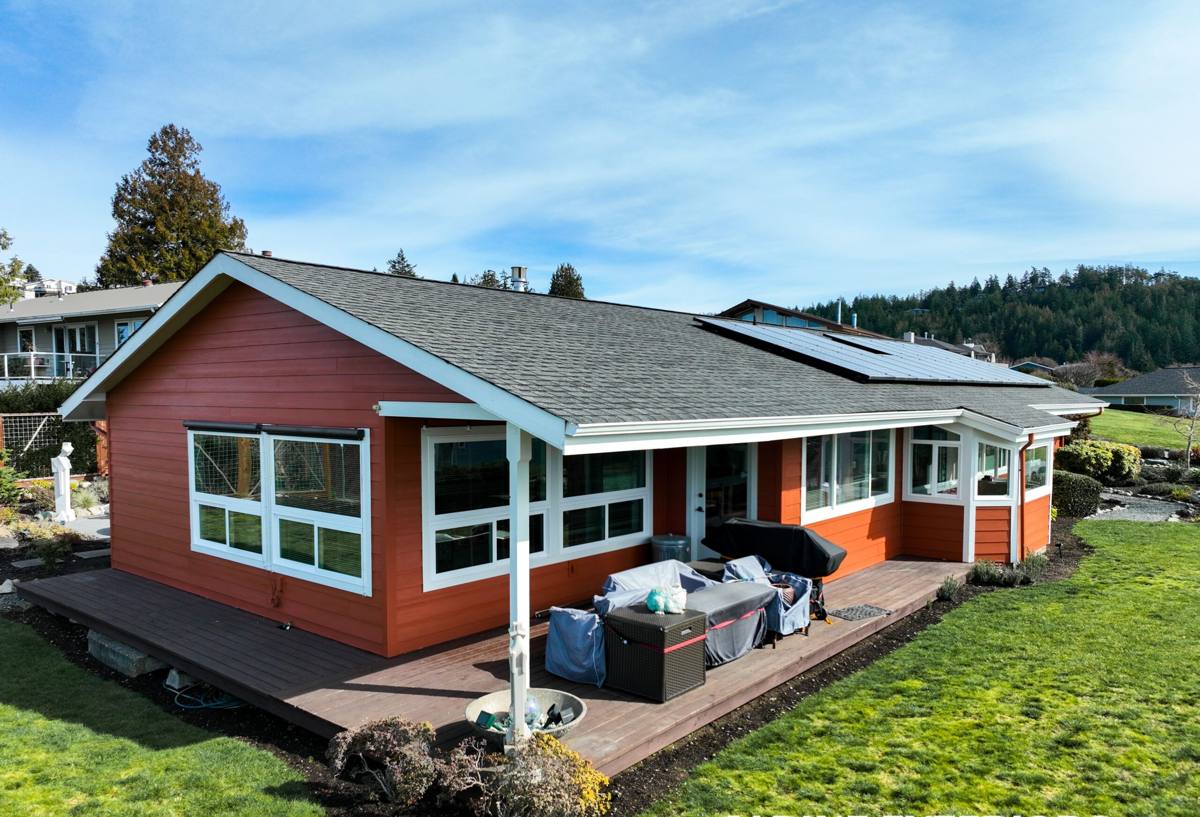
What Salt Air and Constant Moisture Do to Different Siding Materials
We get asked why we won't install vinyl, LP SmartSide, cedar, or primed spruce on a job this close to the water. The honest answer is that each of those products has a specific vulnerability that Birch Point's climate finds and exploits.
| Material | How it responds near salt air and long moss season |
|---|---|
| Vinyl siding | Panels expand and contract with temperature swings and can warp or bow; salt residue builds up in the panel grooves and is difficult to fully rinse off; color fades faster under coastal UV and salt exposure |
| LP SmartSide (engineered wood) | Wood-based substrate is vulnerable at cut edges and seams if caulking and field-priming aren't perfect and maintained every year; sustained moisture from moss and driving rain is the exact condition that causes swelling and edge failure |
| Cedar / primed spruce | Natural wood requires ongoing refinishing to stay sealed; any gap in the finish lets moisture in, and constant damp shade encourages rot and moss growth directly on the material |
| James Hardie fiber cement | Non-combustible cement-based composition doesn't swell, rot, or support moss growth the way wood does; factory-applied ColorPlus finish is baked on and engineered for UV and moisture resistance, not touched up by hand on site |
We're not saying every one of those other products is unusable everywhere — plenty of them perform fine in drier, more sheltered locations. We're saying that for a property exposed the way Birch Point homes are, we've seen enough of the trade-offs to only put our name on installations we're confident will hold up for decades, not years.
Why James Hardie's HZ Product Line Matters Here Specifically
James Hardie engineers its HardieZone products by climate exposure, and the HZ5 line is built for wetter, colder regions like the Pacific Northwest — including moisture-heavy coastal exposure like Birch Point sees. The fiber cement itself doesn't absorb water the way wood-based products do, and it won't provide the organic material moss and algae need to establish themselves the way untreated or under-maintained wood siding does.
The ColorPlus factory finish is a separate advantage worth understanding on its own. Field-applied paint on any siding material is only as good as the prep work and the number of coats — and it's the first thing to fail under sustained UV and salt exposure. ColorPlus finish is baked onto the board at the factory in a controlled process, which gives it more consistent coverage and adhesion than anything applied on a jobsite, and it comes with a separate finish warranty on top of Hardie's product warranty.
What This Means for Fastener and Trim Choices
Salt air doesn't just affect the siding panel — it affects everything holding it on. On Birch Point jobs we spec corrosion-resistant fasteners rated for coastal exposure, and we pay close attention to trim and flashing material for the same reason. A siding job can use the right board and still fail early if the fasteners or flashing behind it start corroding within a few years.
What a Correct Installation Actually Involves in This Location
The product is only half of what makes siding last near the water. Installation details that might be optional in a drier, calmer location are not optional here.
- Weather-resistive barrier and rain screen gap: A drainage plane behind the siding lets any moisture that gets past the surface drain and dry out instead of sitting against the wall sheathing.
- Correct fastener placement and type: Hardie's install specs on fastener spacing, embedment, and corrosion resistance exist for a reason — get this wrong and you create failure points years before the siding material itself would fail.
- Flashing at every horizontal joint, window, and penetration: Driving rain finds the smallest gap. Every horizontal surface and every wall penetration needs flashing detailed to shed water outward, not into the wall assembly.
- Proper clearance at grade and hard surfaces: Siding installed too close to soil, decking, or concrete stays damp longer and is more likely to wick moisture — a bigger issue in a climate that's already wet most of the year.
- Caulking only where Hardie's specs call for it — not as a substitute for flashing: Caulk is a maintenance item, not a waterproofing strategy. Installers who rely on it to cover installation shortcuts are setting the homeowner up for problems down the road.
Every one of these details takes longer to do right than to do fast. That's exactly where a lot of installation problems on coastal jobs come from — not the material, but shortcuts taken by crews rushing to move to the next job.
Moss and Algae: Managing a Long Season, Not Fighting It Every Year
Whatcom County's damp climate keeps moss and algae growth going for much of the year, and shaded, north-facing walls near tree cover — common on wooded coastal lots like the ones around Birch Point — stay damp longer than open, sun-exposed walls. Fiber cement doesn't feed moss growth the way wood does, but siding still needs airflow and drainage to stay dry, and gutters and downspouts still need to be kept clear so water isn't running down the wall face longer than it should.
ColorPlus finish resists staining better than field-applied paint, and it's easier to rinse clean than porous or textured surfaces. That doesn't mean zero maintenance — it means the maintenance that is required (periodic rinsing, keeping vegetation and irrigation off the wall, keeping gutters clear) is realistic for a homeowner to actually keep up with, instead of an annual refinishing project.
Our Process for Birch Point Jobs
We approach every Birch Point project the same structured way, adjusted for what we find on that specific home:
- On-site assessment: We look at existing siding condition, wall exposure to wind and salt-laden air, moss and moisture patterns, and any signs of water intrusion behind the current cladding.
- Substrate check: Before new siding goes up, we confirm the sheathing underneath is sound. Covering damaged sheathing with new siding just hides a problem that gets worse.
- Weather barrier and drainage plane installation: This step doesn't get skipped or shortcut, regardless of schedule pressure.
- Hardie board installation to manufacturer spec: Correct fastening, spacing, and flashing detail at every joint, window, and penetration.
- Trim, caulk, and touch-up: Finished to Hardie's specifications, not generic best-effort.
- Final walkthrough: We go over the finished work with the homeowner directly so there are no surprises.
Cost Factors on a Birch Point Siding Project
Every home is different, so we won't quote a number without seeing the property, but these are the factors that actually move the price on a job like this:
| Factor | Why it affects cost |
|---|---|
| Existing siding removal and disposal | Tear-off adds labor and disposal cost, and reveals sheathing condition that may need repair before new siding goes on |
| Wall exposure and access | Wind and salt exposure levels, plus difficult access points (steep grade, close tree lines), affect crew time and equipment needs |
| Siding profile and trim complexity | Lap siding, shingle-style panels, and detailed trim packages all install at different rates |
| Sheathing or framing repair | Any rot or moisture damage found once old siding is off has to be repaired before new siding is installed correctly |
| ColorPlus vs. field-painted finish | Factory-finished ColorPlus boards cost more upfront than unfinished, field-painted boards but remove an entire maintenance and refinishing cycle |
What to Ask Before You Hire Anyone for a Job Like This
- Are they James Hardie certified, and can they explain the HZ5 zone spec for this climate?
- Will they detail the rain screen and flashing plan before the first board goes up, not after you ask?
- What fastener and trim materials do they use, and are those materials rated for coastal exposure?
- Do they inspect and repair sheathing before covering it, or just install over what's there?
- Can they explain, specifically, why they'd use one Hardie product line over another for this house?
- Do they have ongoing work in this area, or is this a one-off job for them?
Why It Matters That We Already Work Birch Point
A crew that's worked other homes in this same stretch of Blaine already knows how the wind hits these lots, how long moss holds on north-facing walls here, and what kind of flashing detail actually holds up against driving rain coming off the water. That's not something you can fully substitute with a generic install checklist — it's pattern recognition built from doing the work in this specific place, on this specific coastline, more than once.
We install James Hardie fiber cement siding exclusively because, after weighing the trade-offs of every other product against what a Whatcom County coastal exposure actually demands, it's the system we're willing to stand behind for the long haul. If you're weighing a siding project for a Birch Point home, we're glad to come take a look and walk you through exactly what your specific home needs — no pressure, no generic pitch, just a straight assessment. Request a free estimate using the form below.