 Blaine Siding
 California Creek sits close enough to the water and the tree line that its homes take a particular kind of beating: salt-laden air rolling in off the Strait, driving rain that comes in sideways for days at a stretch, and a moss season that can run from October clear through April. Siding here doesn't fail because it's old — it fails because it was never matched to this specific mix of exposure. If you're planning a siding replacement in California Creek, the material and the installation details matter more than they would twenty miles inland.
Why California Creek Is a Tougher Environment Than "Coastal Whatcom County"
Every property in Blaine deals with Pacific Northwest weather, but California Creek has its own microclimate stacked on top of that. Homes closer to the water pick up airborne salt that settles on siding, trim, and fasteners, accelerating corrosion on anything not rated for it. Homes tucked under tree cover get less direct sun and more standing shade, which means siding stays damp longer after every rain — and that's exactly the condition moss, algae, and mildew need to take hold. Put those two factors together and you get a neighborhood where siding is working harder, more of the year, than a lot of the surrounding area.
That combination is why we look at every California Creek estimate a little differently than a standard in-town Blaine job. Sun exposure, tree cover, wind direction relative to the water, and how close a home sits to grade or landscaping all change what "correctly installed" looks like on that specific wall.
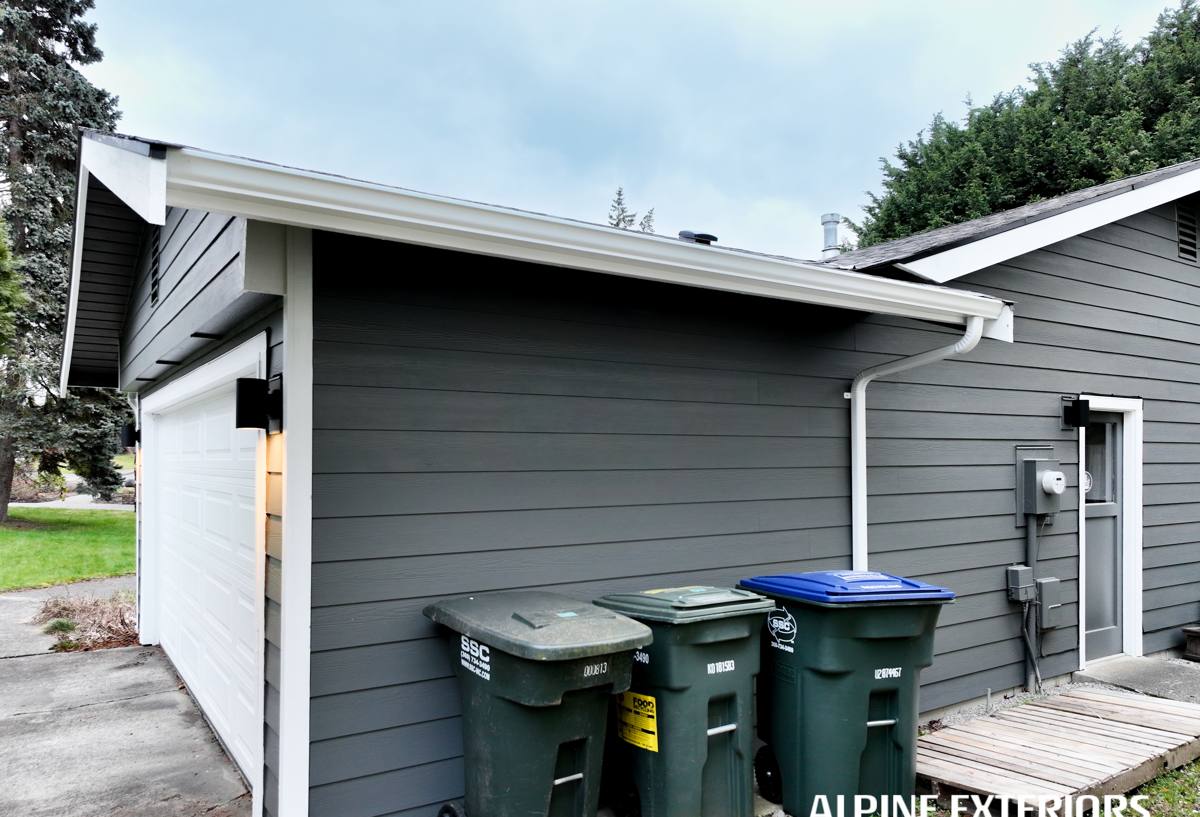
What California Creek Homes Actually Need From Their Siding
Moisture Management First
The single biggest driver of siding failure in this area isn't the siding material itself — it's what happens behind it. Rain that gets past the surface and has nowhere to drain sits against the sheathing, and that's where rot starts, whether the surface material is vinyl, wood, or fiber cement. A proper replacement means correct weather-resistive barrier installation, proper flashing at every window, door, and penetration, and rainscreen or drainage detailing where the site calls for it — not just a new skin nailed over old problems.
Salt and Corrosion Resistance
Fasteners, trim, and any exposed metal need to be rated for coastal exposure. Standard interior-grade fasteners will show rust bleed on lighter siding colors within a couple of seasons this close to the water. It's a small detail that gets skipped constantly and shows up as an ugly, avoidable problem five years later.
A Finish That Doesn't Feed Moss
Moss and algae need moisture and a surface they can grip. Some siding materials — particularly those with absorbent substrates or field-applied paint that thins over time — give moss exactly that. A factory-cured, non-porous finish sheds water instead of holding it, which starves out the growth that's constantly trying to establish itself on shaded, damp siding around here.
Why We Install James Hardie and Nothing Else
We standardized on James Hardie fiber cement siding for every job we take on, including California Creek, and we don't install vinyl, LP SmartSide, Cemplank, Allura, primed spruce, or cedar. That's not a marketing position — it's a decision based on what actually holds up in this exposure.
- Non-combustible core: Hardie's fiber cement doesn't burn, swell, or feed insects the way wood-based products can.
- ColorPlus factory finish: baked-on, not field-applied, so it resists the fading and chalking that leaves cheaper finishes looking tired within a few years — and gives moss less to hold onto.
- HZ5 / climate-engineered formulation: Hardie's HZ product lines are engineered for regional moisture exposure, which matters directly in an area with this much sustained wet weather.
- Dimensional stability: fiber cement doesn't expand and contract with moisture the way wood or wood-composite products do, so caulk lines and paint joints hold longer.
- Transferable warranty: backed by the manufacturer and structured to carry over to a new owner, which matters if you plan to sell.
We're upfront that other products have real strengths — vinyl is inexpensive, cedar has a look some homeowners love, LP SmartSide is lighter to handle. But every one of them asks the homeowner to accept a trade-off — more maintenance, more moisture sensitivity, more repainting, or a shorter realistic lifespan — that we don't think makes sense on a coastal, moss-prone lot like the ones in California Creek. Hardie is the one material we've found that holds its finish, its shape, and its warranty coverage under this specific combination of salt, shade, and rain without asking the homeowner to babysit it.
What a Correct Siding Replacement Involves Here
- Tear-off and inspection: full removal of old siding and trim, with the sheathing checked for rot, soft spots, and prior water damage before anything new goes up.
- Repair sheathing and framing: any compromised wood gets replaced — covering it over just locks the problem in.
- Weather-resistive barrier: a continuous, correctly lapped barrier installed to shed water down and out.
- Flashing at every penetration: windows, doors, hose bibs, vents, and light fixtures all get proper flashing, not just caulk.
- Rainscreen/drainage gap where appropriate: especially valuable on shaded or heavily wind-exposed elevations that stay damp longer.
- Hardie panel or lap installation to spec: correct fastener type and spacing, proper clearances from grade and roofing, and factory-recommended gaps and caulking.
- Trim, caulking, and touch-up: factory-matched ColorPlus touch-up product only, so repairs don't stand out or weather differently than the panel finish.
Skipping steps 2 through 5 is the most common shortcut in this trade, and it's the one that causes callbacks. New siding over an uninspected, unflashed wall just delays the same water problem by a few years.
Cost Factors for a California Creek Siding Job
| Factor | Why It Matters Here |
|---|---|
| Sheathing condition | Homes with prior moisture intrusion often need sheathing or framing repair before new siding goes on |
| Elevation exposure | Water-facing and shaded elevations may need extra drainage detailing that inland walls don't |
| Siding profile | Lap, panel, and shingle-style Hardie products carry different material and labor costs |
| Trim and accessory scope | Corner boards, window trim, and fascia replacement add to the total but should match the new siding's lifespan |
| Access and site conditions | Tree cover, slope, and setback distance from neighboring structures affect staging and labor time |
We give a firm, itemized quote after walking the actual property — not a phone estimate — because these factors vary house to house even within the same few blocks.
What to Check Before You Hire Anyone for This Job
- Do they inspect and repair sheathing before re-siding, or just cover what's there?
- Do they use coastal-rated fasteners and hardware, or standard-grade?
- Can they explain their flashing and drainage plan for your specific elevations, not just a generic answer?
- Are they licensed and insured to do exterior work in Whatcom County?
- Do they stand behind both the material warranty and their own installation work in writing?
- Have they actually worked in this part of Blaine, or is it their first job dealing with this exposure?
Why Local Experience in This Specific Area Matters
A crew that's replaced siding elsewhere in Whatcom County isn't automatically prepared for California Creek. The details that matter — where moss tends to establish first on a given lot, which elevations catch the worst of the wind off the water, how much salt exposure a north-facing wall gets versus a sheltered one — are learned by working the area repeatedly, not from a general contracting background. Contractors who already know this stretch of coastline plan the flashing, fastener selection, and drainage detailing correctly the first time, instead of learning it at the homeowner's expense.
Signs Your California Creek Home May Need Siding Replacement Soon
- Persistent moss or algae staining that returns within months of cleaning
- Soft spots, bubbling, or visible warping in the siding surface
- Paint that's peeling or alligatoring faster than a normal repaint cycle
- Visible gaps or separation at seams, corners, or trim joints
- Rust streaking below fasteners or trim
- Musty smell or discoloration on interior walls that share an exterior wall
Any one of these on its own might be minor. Two or three together, especially on a shaded or water-facing wall, usually means moisture has already gotten past the surface.
If you're seeing any of these signs on your California Creek home, or you'd simply like a straight answer on what your siding actually needs, we're happy to walk the property and give you a free, no-pressure estimate — no obligation, just an honest look at what's going on and what it would take to fix it right.