 Blaine Siding
 Windows Near Peace Arch Face a Tougher Job Than Most
Homes in and around the Peace Arch area of Blaine sit close to the water and close to the border, which means they take on a specific combination of weather that most window products aren't designed around out of the box. You've got salt-laden air rolling in off the bay, long stretches of driving rain through the fall and winter, and enough shade and moisture the rest of the year to keep moss and mildew active almost year-round. None of that is unique to any one house — it's the baseline for this stretch of Whatcom County. But it does mean that a window job done the way it might be done inland, or the way it's done in a drier climate, tends to show problems early here: swollen sashes, cloudy glass seals, corroded hardware, and trim that rots from the inside out before the paint even looks bad.
Custom windows for this area aren't about upgrading to something fancier. They're about matching the frame material, the glass package, and — most importantly — the installation details to what this specific microclimate actually does to a house over ten or twenty years.
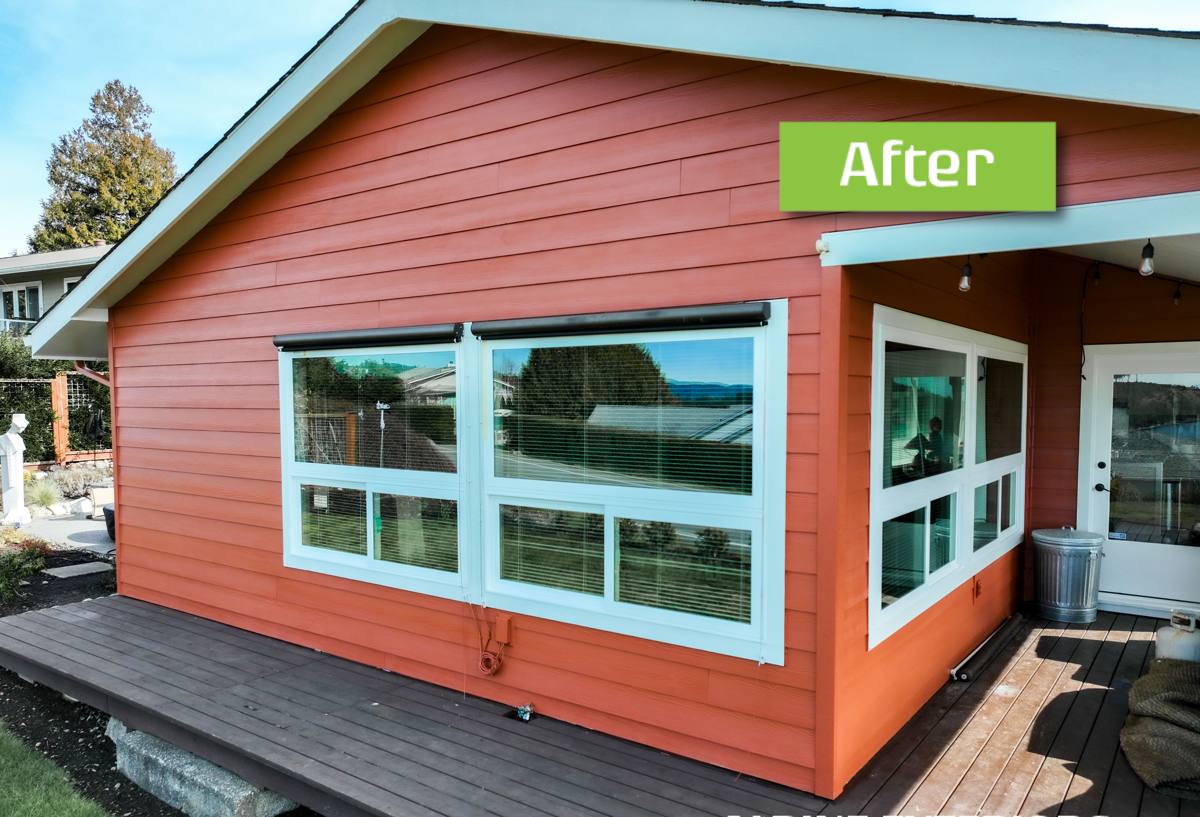
What Blaine's Climate Does to Windows Over Time
Salt Air and Corrosion
Proximity to Semiahmoo Bay and the Salish Sea means airborne salt is a real factor here, even a few blocks inland. Salt accelerates corrosion on window hardware — hinges, locks, balance mechanisms, and especially aluminum components that aren't rated for coastal exposure. Over time this shows up as stuck locks, windows that won't stay in their track, and pitting on exposed metal trim. It's a slow process, which is exactly why it gets ignored until a window that used to open smoothly suddenly doesn't.
Driving Rain and Water Intrusion
Rain here doesn't just fall straight down — wind off the water pushes it sideways into walls and window openings, especially on west- and southwest-facing elevations. A window that's watertight in calm conditions can still leak under wind-driven rain if the flashing and sealant details around it weren't built for that load. This is the single biggest cause of hidden rot we see in window replacement work: not the window itself failing, but water getting behind it through a gap in the flashing that was never sized for sideways rain.
Moss Season and Shaded Exposures
Whatcom County's wet season runs long, and a lot of Peace Arch-area lots have mature tree cover or north-facing walls that stay damp for weeks at a stretch. That's ideal for moss and algae growth on sills, trim, and cladding. Wood components that stay wet without a chance to dry become soft and start hosting rot, which then telegraphs into the window frame itself. Custom trim details and drainage paths matter more here than in a drier part of the state.
What "Custom" Actually Means for Peace Arch Homes
Housing stock near Peace Arch is a mix — older homes with openings that were never built to modern standard sizes, additions and remodels that created odd-shaped windows, and newer construction that still needs to match an existing architectural style. "Custom" in this context usually means one or more of the following:
- Non-standard rough openings that don't match current manufacturer stock sizes, common in homes built before modern window sizing became standardized
- Shaped or specialty windows — arched tops, angled bays, or picture windows sized to a specific wall
- Matching sightlines and grid patterns across a home when only some windows are being replaced now and others later
- Frame depth adjustments where old wood-frame openings are deeper or shallower than modern window units
- Exterior trim and casing built to match existing siding profiles rather than a generic factory trim kit
Custom work costs more in labor and sometimes in materials, but it's the difference between a window that looks and performs like it belongs in the house, and one that looks like an obvious retrofit with gaps that need caulk to hide.
Frame Material Comparison for a Marine, High-Moisture Climate
There's no single "best" frame material for every house — it depends on exposure, budget, and how the home is finished. Here's how the common options actually perform under Blaine's specific conditions:
| Frame Material | Moisture & Salt Air Behavior | Maintenance | Typical Lifespan |
|---|---|---|---|
| Vinyl | Won't rot or corrode; can flex slightly in temperature swings | Low — occasional cleaning | 20-30+ years |
| Fiberglass | Very stable in wet/salty exposure, minimal expansion or contraction | Low | 30-40+ years |
| Aluminum | Prone to corrosion and pitting near salt air unless marine-rated hardware is used | Moderate — hardware needs monitoring | 20-30 years, less in exposed spots |
| Wood-clad | Good performance if cladding stays intact; interior wood vulnerable if seals fail | Higher — periodic sealant and finish checks | 20-30 years with upkeep |
For fully exposed, west-facing walls near the water, we typically steer homeowners toward vinyl or fiberglass for the frame itself, simply because they don't give corrosion or rot a foothold. Wood-clad and aluminum aren't wrong choices — they just need more attention to hardware selection and sealant maintenance to hold up the same way in this specific exposure.
Glass and Performance Options Worth Considering
Beyond the frame, the glass package matters for comfort and condensation control in a marine climate:
- Low-E coatings help manage heat loss through our cool, wet winters without making the house feel like a greenhouse in the brief hot stretches of summer
- Argon or krypton gas fills between panes add a modest but real improvement to insulating value, useful given how much of the year this area runs cool and damp
- Dual or triple glazing reduces surface condensation on the interior glass, which matters in a climate where indoor humidity runs high much of the year
- Warm-edge spacers reduce the cold ring around the glass edge where condensation and eventual seal failure tend to start first
Homes closer to I-5 or the border crossing sometimes also ask about sound — a good dual-pane unit with proper installation cuts down a meaningful amount of traffic noise on its own, without needing specialty acoustic glass in most residential cases.
What a Correct Installation Actually Involves
The window unit itself is maybe half the job. The other half — the part that determines whether it leaks in year three — is the installation detailing. Given the driving rain this area gets, we don't cut corners on any of the following:
- Sill pan flashing under every opening, so any water that does get past the window drains back out instead of sitting on the framing
- Proper integration with the existing weather-resistive barrier (house wrap or building paper) so water sheds over each layer correctly, shingle-style
- Correct shimming and squaring before fastening, so the window operates smoothly and seals evenly for its full life
- Low-expansion foam or approved insulation in the gap between frame and rough opening — no gaps, no over-packing that bows the frame
- Weather-appropriate exterior sealant compatible with the siding and trim material
- Interior and exterior trim finished to shed water and match the home's existing lines
Skipping any one of these can still produce a window that looks fine on installation day. The problems show up later, usually behind the wall where nobody's looking until there's a soft spot in the drywall or a musty smell that wasn't there before.
Our Process From Estimate to Cleanup
- On-site assessment — we look at each opening, note any non-standard sizing, and check the current condition of trim, sills, and surrounding siding for existing moisture damage
- Measurement and material selection — exact custom sizing where needed, and a frame/glass recommendation based on that specific wall's sun and rain exposure
- Prep — protecting interior and exterior work areas, careful removal of old units, and inspection of the rough opening for hidden rot before anything new goes in
- Installation — flashing, setting, shimming, and sealing following the sequence above
- Finish work — interior and exterior trim, caulking, and touch-up to match the home's existing look
- Final walkthrough — we operate every window with you and check the seals before we consider the job done
Why a Crew That Already Works the Peace Arch Area Matters
Window work in a coastal, high-moisture climate is unforgiving of guesswork. A crew that regularly works homes near Peace Arch already knows which elevations in this pocket of Blaine tend to take the worst of the wind-driven rain, which lots hold moisture longest into the dry season, and how the local mix of older and newer construction typically frames its openings. That's knowledge that doesn't come from a manual — it comes from having pulled apart enough window openings in this specific area to know what's usually behind the trim before we even start.
There's also a practical side to hiring local: permitting and inspection requirements run through the City of Blaine and Whatcom County, and a crew that's worked here before knows what that process actually requires for a straightforward window replacement versus a structural change to an opening. And if a question comes up two years after installation — a seal that needs a look, a hardware adjustment — a contractor based nearby can get back to your house without the trip being a logistics problem.
Signs Your Peace Arch Home May Be Due for a Look
- Windows that feel drafty even when fully latched, especially on rainy, windy days
- Visible fogging or moisture between panes — a sign the seal has failed
- Locks or cranks that have gotten stiff, corroded, or hard to operate over the past few years
- Soft or discolored trim and sills, or moss/algae buildup that keeps coming back
- Visible gaps, cracked caulk, or daylight around the frame from outside
- A musty smell near a window that wasn't there in previous years
Any one of these on its own might just need a repair. Several together, especially on the same wall, usually points to a bigger moisture or installation issue worth having someone actually open up and look at.
If you're weighing window replacement for a home near Peace Arch, we're happy to come take a straightforward look and give you an honest read on what your house actually needs — no pressure, no upsell. Use the form below to request a free estimate.