 Blaine Siding
 Building New Near Dakota Creek Means Building for Water, Salt, and Shade
If you're framing a new home in the Dakota Creek area outside Blaine, the windows you choose and how they're installed will decide whether that house stays dry and comfortable for the next thirty years — or starts showing rot, fog, and staining inside of ten. This part of Whatcom County sits right up against Semiahmoo Bay and the Strait of Georgia, which means salt-laden air, wind-driven rain off the water, and tree cover along the creek corridor that keeps siding and trim damp long after a storm passes. New construction is actually the best time to get this right, because the window opening, the weather-resistive barrier, and the flashing sequence can all be built correctly the first time — no cutting into finished walls, no guessing what's behind the siding.
We install new-construction windows on homes being built in and around Blaine and the Dakota Creek area on a regular basis, and most of the callbacks we get asked to fix on other people's work trace back to the same handful of shortcuts: skipped sill pans, flashing tape lapped the wrong direction, or a window unit that simply isn't rated for the amount of wind-driven moisture this stretch of coastline sees every winter.
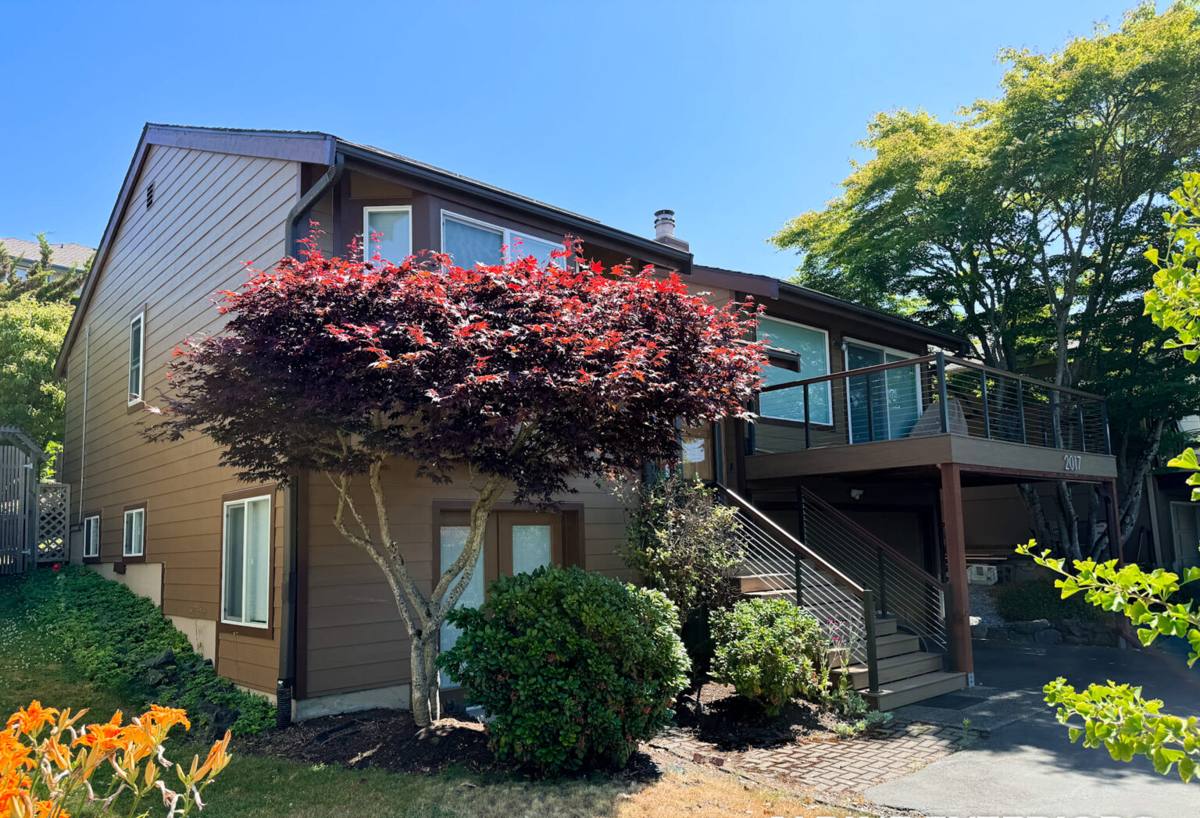
New-Construction vs. Replacement: Why the Distinction Matters
"New-construction" windows have a nailing fin (or flange) around the perimeter that gets fastened directly to the wall sheathing before siding goes on. That fin is what lets us build a proper flashing system in layers — like shingles — so water is always directed outward and downward, never trapped behind the cladding. Replacement windows, by contrast, get set into an existing opening with no fin, relying on the old frame and different sealing methods.
Trying to use a replacement-style window in new framing, or vice versa, is one of the more common mistakes we see from builders who don't specialize in this. On a new build, there's no excuse for it — you have full access to the sheathing, the WRB, and the rough opening, so there's no reason not to do the flashing sequence correctly from the start.
What a Correct Rough Opening Looks Like
- Rough opening sized to the manufacturer's spec, with a consistent shim gap on all four sides
- Sill sloped slightly toward the exterior — window sills should never be dead level
- Sheathing and WRB inspected and repaired before the window goes anywhere near the opening
- No fasteners, staples, or debris left in the opening that could puncture the sill pan later
Choosing a Window Material for a Marine Climate
Every window material handles salt air, humidity, and UV differently, and Dakota Creek's proximity to the water narrows the practical choices. We don't push one brand over another — we care about the frame material and the glass package holding up in this specific climate, not the label on the corner of the glass.
| Frame Material | Salt Air / Moisture Behavior | Maintenance | Best Fit |
|---|---|---|---|
| Vinyl | Won't corrode or rust; performs well in coastal air | Low — occasional cleaning | Most Dakota Creek new builds on a normal budget |
| Fiberglass | Excellent stability in wet/dry cycling, resists warping | Low | Larger openings, homes with more direct water exposure |
| Aluminum-clad wood | Good exterior durability if clad seams are sealed; wood interior needs the envelope to stay dry | Moderate | Homeowners who want a wood interior look and are committed to upkeep |
| Bare aluminum | Conducts cold, prone to condensation; coastal salt can pit unprotected finishes over time | Moderate to high | We generally steer new builds away from this near the water unless it's a specialty application |
We're not saying any of these materials are bad products — every one of them has a legitimate use case. The point is matching the frame to the exposure. A window on the water side of a Dakota Creek lot facing prevailing weather has different needs than one tucked under an eave on the leeward side.
The Installation Details That Actually Prevent Leaks
A window is only as good as its flashing. This is the part of the job that doesn't show up in a walkthrough but determines whether the wall assembly stays dry through twenty Whatcom County winters.
Our Sequence, In Order
- Sill pan flashing — a fully sealed pan under the rough sill with end dams, so any water that gets past the window has somewhere to go besides the framing
- Jamb flashing — self-adhered flashing tape up both sides, lapped over the sill pan
- Window installation — set in sealant per manufacturer instructions, fastened through the nailing fin, checked for square, level, and plumb before anything else touches it
- Head flashing — installed last, lapped over the jamb flashing and integrated with the WRB above so water sheds over the top, not behind it
- WRB integration — the housewrap or building paper is cut and taped back over all flashing in proper shingle-lap order before siding starts
Every one of those laps matters. Reverse a single lap and you've built a funnel instead of a drain. On homes exposed to driving rain off the bay, that mistake shows up as staining or soft trim within a couple of wet seasons — not immediately, which is exactly why it gets missed on final walkthrough and blamed on "just the weather" later.
Energy Performance for a Wet, Mild Coastal Climate
Blaine sits in a marine climate zone under the Washington State Energy Code, which sets minimum U-factor requirements for new construction glazing. Because winters here are wet and mild rather than deep-cold, the priority is usually a solid U-factor for heat retention paired with a moderate Solar Heat Gain Coefficient (SHGC) — you want to hold warmth without turning south-facing rooms into greenhouses on the handful of bright days we do get.
- U-factor: lower is better for retaining heat; this matters more here than in drier climates because damp air conducts cold more efficiently
- SHGC: moderate values usually work well for this region — you're not fighting extreme summer heat, but you don't want to give up all your winter solar gain either
- Air leakage rating: especially important on walls facing prevailing wind and rain off the water
We size and spec glass packages to the energy code and to the specific orientation of each opening on the plan, not a single blanket spec for the whole house.
How the Process Works on a Dakota Creek New Build
We work directly with your general contractor or, if you're owner-building, with you and your framer, so windows arrive and get set on the schedule the build actually needs — not before the opening is ready, and not so late that it holds up siding and interior trades.
- Plan review: we go through the window schedule with you before ordering, checking sizes, egress requirements, and glazing specs against the energy code
- Ordering and lead time: new-construction windows are typically special-ordered to size; we build lead time into the schedule so it doesn't become the bottleneck
- Rough opening check: we verify every opening before install day — square, sized correctly, sheathing sound
- Flashing and set: full sill pan, jamb, and head flashing sequence on every window, every time, regardless of how small the opening is
- Final inspection: we check operation, seal integrity, and squareness before we sign off, so nothing gets covered by siding with a problem hiding behind it
A Practical Checklist Before You Sign Off on Window Rough-In
- Every opening has a sloped, sealed sill pan — not just caulk
- Flashing tape is lapped shingle-style, sill to jamb to head
- WRB is taped back over all flashing before siding starts
- Windows operate smoothly and lock without forcing
- No visible gaps, unsealed fasteners, or exposed nailing fin
- Egress-required windows meet code clear opening dimensions
What Drives the Cost on a New-Construction Window Package
| Factor | Why It Affects Price |
|---|---|
| Frame material | Vinyl is the most budget-friendly; fiberglass and clad-wood run higher |
| Glass package | Higher-performance Low-E coatings and gas fills cost more but pay back in comfort and utility bills |
| Number and size of openings | Large fixed picture windows and multi-unit combinations cost more per opening than standard sliders or casements |
| Egress and code requirements | Bedroom egress windows have minimum size requirements that can push you to a larger, pricier unit |
| Site exposure | Openings facing direct wind and rain off the water may warrant a higher-spec frame or glass than a sheltered opening |
We give straightforward, itemized quotes broken out by opening, so you can see exactly where the budget is going and make informed trade-offs — like upgrading glass on the water-facing side while keeping standard specs on sheltered elevations.
Why It Matters That We Already Work in Dakota Creek
A crew that's worked new construction in and around Blaine knows what this specific stretch of coastline throws at a house — the direction the worst weather usually comes from, how much shade and moss buildup to expect under the tree cover near the creek, and what Whatcom County's inspectors and energy code enforcement actually look for at framing and final inspection. That local familiarity means fewer surprises mid-build: no re-orders because a spec didn't clear code review, no re-flashing because an inspector caught something a crew from out of the area didn't know to check for.
It also means we're easy to reach if something needs a second look after move-in. We're not driving in from out of town for a callback — we're already working in the neighborhood.
Long-Term Care in a Salt Air, Moss-Prone Climate
Even a correctly installed window needs a little attention in this climate. Salt air can leave a film on glass and hardware, and the shaded, damp conditions along the creek corridor encourage moss and algae growth on sills, trim, and nearby siding faster than in drier parts of the state.
- Rinse salt residue off glass and frames periodically, especially on wind-exposed elevations
- Keep weep holes at the base of the frame clear of debris, pollen, and moss so water can drain
- Trim back vegetation that shades windows and keeps trim from drying out between rains
- Re-check exterior caulk lines every couple of years — sealant is a wear item, not a lifetime fix
If you're planning a new build near Dakota Creek and want windows specified and installed to actually hold up to this coastline, we're glad to walk the plans with you and give you a free, no-pressure estimate — just fill out the form below.