 Blaine Siding
 Siding Built for Dakota Creek's Coastal Conditions
Dakota Creek sits close enough to the water that homes here take a different kind of weathering than siding a few miles inland. Between the salt-laden air coming off Semiahmoo Bay and Drayton Harbor, the near-constant marine humidity, and the driving rain that comes in sideways off the Strait during winter storms, exterior siding in this part of Blaine works harder than most manufacturers' spec sheets assume. Add in a moss season that can stretch from late fall well into spring, and you have a climate that punishes any siding product with a weak point in its finish, its seams, or its water management.
We install siding across Whatcom County, but Dakota Creek homes specifically need an installation approach that accounts for salt exposure and prolonged moisture contact — not just a product swap. This page covers what that actually looks like.
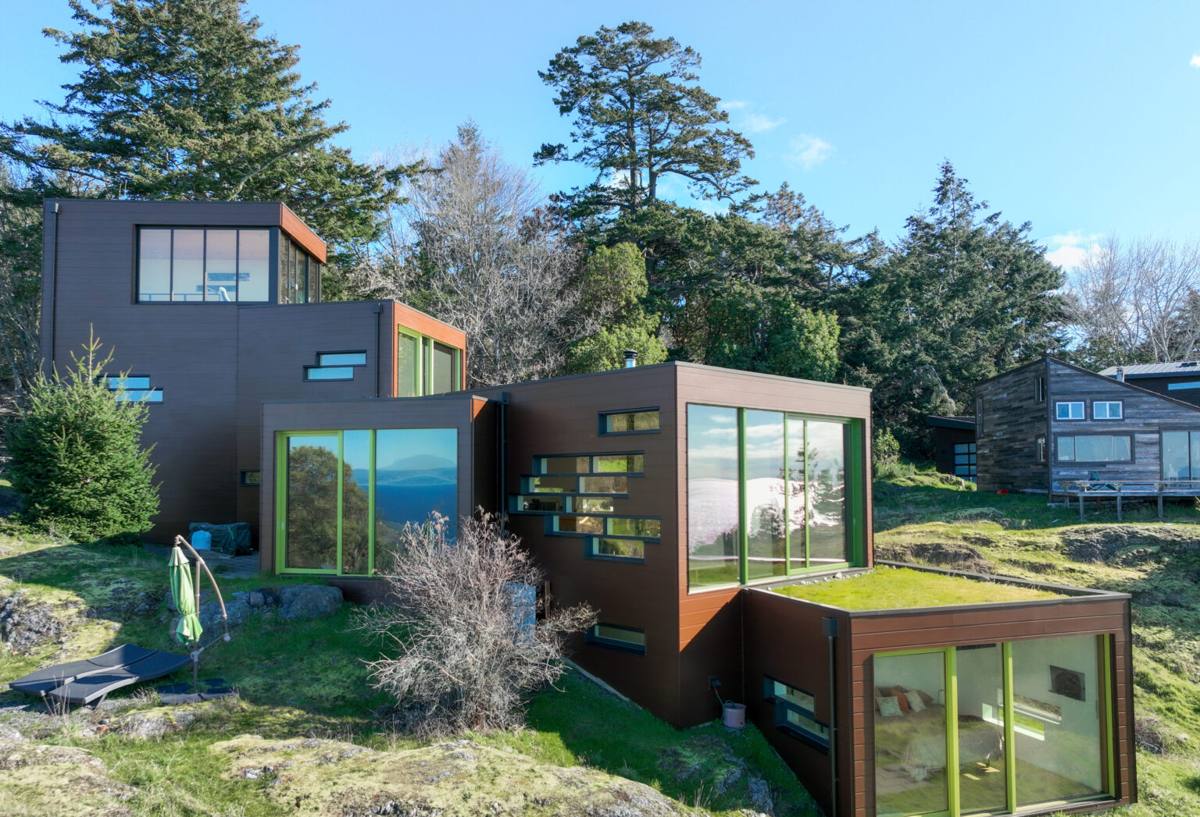
What Salt Air and Driving Rain Do to Siding Over Time
Salt air is corrosive to metal fasteners, flashing, and trim if they aren't rated and installed correctly, and it accelerates the breakdown of lower-grade paint finishes. On a home a short distance from the water, that means fascia, corner boards, and any exposed fastener heads are the first places you'll see chalking, rust bleed, or paint failure — often years before the siding field itself shows wear.
Driving rain is a different problem: it's not just how much rain falls, it's the wind pushing it horizontally into wall assemblies. That kind of exposure finds every gap in a house wrap, every under-flashed window, and every siding seam that wasn't lapped correctly. Water that gets behind siding in a driving-rain climate doesn't always show up as a visible leak — it shows up years later as soft sheathing, stained interior drywall, or a musty smell that only appears in certain weather.
Why Moss Season Matters More Here
Whatcom County's wet season is long, and Dakota Creek's proximity to water and tree cover means surfaces stay damp longer than they do in drier pockets of Blaine. Moss and algae don't just grow on roofs — they take hold on north-facing siding, in caulk lines, and around trim where sun exposure is limited. On products that absorb moisture or have a porous factory finish, that growth can work its way into the material itself, not just sit on the surface.
Why We Install Only James Hardie Fiber Cement
We standardized on James Hardie for every job we do, including here in Dakota Creek, because it's engineered around exactly the conditions this stretch of Blaine deals with. It's non-combustible, dimensionally stable in swings between soaked and dry, and finished with ColorPlus — a factory-baked finish that holds color and resists the chalking and fading that field-applied paint struggles with in salt air.
Hardie also builds region-specific product lines through its HZ5 engineering, which is formulated for climates with freeze-thaw cycles and sustained moisture exposure — the Pacific Northwest is squarely in that category. That's not marketing; it affects how the board is formulated to resist moisture-related swelling and cracking over decades, not just years.
What We Don't Install, and Why
We don't install vinyl, LP SmartSide, cedar, primed spruce, Cemplank, or Allura. Each of those products has genuine strengths — vinyl is inexpensive and low-maintenance in mild climates, cedar is genuinely beautiful, engineered wood siding has improved a lot — but each also has a real trade-off that shows up faster in a salt-air, high-moisture environment like Dakota Creek: vinyl can warp and fade under UV and thermal cycling and offers little fire resistance; wood-based products are vulnerable to moisture intrusion at cut edges and joints if maintenance lapses even briefly; and warranty structures on several of these products are prorated or conditioned in ways that leave homeowners with less protection than they expect once a claim actually comes up. We'd rather install one product correctly and stand behind it than offer five options and hedge on which one holds up.
What a Correct Siding Installation Involves
The siding board itself is only part of the system. In a driving-rain, salt-air environment, the water management behind the siding matters just as much as the material in front of it. A correct installation includes:
- A weather-resistive barrier installed with proper lapping, taped seams, and correct integration at every penetration
- Rainscreen or drainage gap detailing where conditions call for it, so any moisture that does get past the siding can drain and dry
- Correctly flashed windows, doors, and roof-to-wall transitions — the most common failure points in coastal homes
- Corrosion-resistant fasteners, driven to Hardie's specified depth and pattern (not gun-set, which cracks fiber cement)
- Proper board clearance from grade, decks, and roof lines to keep siding out of standing water and splash-back
- Factory-finished cut edges caulked and sealed per Hardie's install guide, particularly at corners and butt joints
Skipping any one of these doesn't fail immediately — it fails in three, five, or ten years, usually in a way that's expensive to trace back to its source once the siding is closed up.
Our Process for a Dakota Creek Job
1. On-Site Assessment
We walk the exterior and look at what's actually happening on your specific home — sun exposure, drainage paths, existing moss or algae staining, condition of trim and flashing, and any soft spots in the sheathing behind current siding. This tells us whether it's a straightforward re-side or whether there's water damage to address first.
2. Scope and Product Plan
We spec out the Hardie product line, plank exposure, and trim package for your home, and flag anything — like a north wall with heavy moss history or a section with poor roof drainage — that needs extra attention in the water management detailing.
3. Tear-Off and Substrate Check
Old siding comes off and we inspect the sheathing underneath before anything new goes up. This is the point where hidden moisture damage from years of driving rain often surfaces, and it needs to be addressed before new siding goes over it, not covered up.
4. Weather Barrier and Flashing
This is the step that determines how the house performs in a storm five years from now. We install and integrate the barrier and flashing system correctly the first time — it's the least visible part of the job and the most important.
5. Hardie Installation
Boards are installed to manufacturer spec: correct fastener pattern and depth, proper clearances, sealed joints, and factory-finish touch-up only where Hardie's guidelines call for it.
6. Final Walkthrough
We go over the finished exterior with you, including basic care — what to expect from the ColorPlus finish over time and what routine maintenance (if any) it'll need in this climate.
Cost Factors for Siding Installation Near Dakota Creek
Every home is different, but the factors that move price on a Dakota Creek job tend to be consistent:
| Factor | Why It Matters Here |
|---|---|
| Substrate condition | Homes closer to the water more often need sheathing repair from long-term moisture exposure before re-siding |
| Home size and complexity | More corners, gables, and roof-wall intersections mean more flashing detail work |
| Product line and trim package | HZ5 panel vs. lap siding, trim width, and accessory choices affect material cost |
| Existing siding removal | Tear-off complexity varies with layers of existing material and any hazardous material handling |
| Access and site conditions | Waterfront and wooded lots can affect staging, scaffolding, and equipment access |
We give you a real number after we've actually looked at the house — not a phone-quote estimate that changes once we open the walls.
Signs Your Dakota Creek Home May Need New Siding Soon
- Persistent moss or algae staining that returns shortly after cleaning, especially on north or shaded walls
- Soft or spongy siding when pressed, particularly near the bottom courses or below windows
- Paint or finish that's chalking, peeling, or fading noticeably faster than the rest of the house
- Visible gaps, warping, or separation at seams and corners
- Rust streaking from fasteners or trim, a common sign of corrosion in salt-air exposure
- Musty smell or interior staining on walls that back up to exterior siding
Why Local Experience Matters for This Job
A siding installer who mostly works dry, inland neighborhoods can still do competent work — but they may not default to rainscreen detailing, may under-spec flashing at roof transitions, or may not recognize early moss staining as a water management problem rather than a cosmetic one. Crews that regularly work Blaine's waterfront-adjacent neighborhoods build habits around the specific failure points that show up in this climate: salt corrosion, driving-rain intrusion, and sustained moisture from a long, wet Whatcom County winter. That local pattern recognition is the difference between a siding job that looks right for a year and one that performs correctly for decades.
Get a Free Estimate
If you're weighing a siding replacement or repair for a Dakota Creek home, we're glad to come take a look and give you a straight, no-pressure estimate — including an honest read on what your current siding and sheathing are telling us before we talk product and cost. Fill out the form below to get started.