 Blaine Siding
 Storm Damage Roof Repair for Everson Homes
Everson sits inland from Blaine but shares the same weather system that moves through all of Whatcom County — fast-moving fronts off the water, sustained wind events, and long stretches of low-pressure rain that soak a roof for days at a time. When a storm passes through, the damage isn't always obvious from the ground. A few lifted shingles, a dented vent cap, or a seam of flashing pulled loose can look minor but let water into the roof deck for weeks before a stain shows up on a ceiling inside. Our job is to find that damage early, repair it correctly, and leave the roof in a condition that holds up through the next storm — not just patched until the next one.
We work storm damage repairs throughout the Blaine and greater Whatcom County area, and Everson roofs see a specific mix of problems tied to the regional climate: driving rain that gets pushed sideways under shingles and flashing, salt-laden air that accelerates corrosion on fasteners and metal roof components, and a long moss season that keeps roofs damp and slowly lifts shingle edges even without a single storm event. Storm repair here has to account for all three, not just patch the visible break.
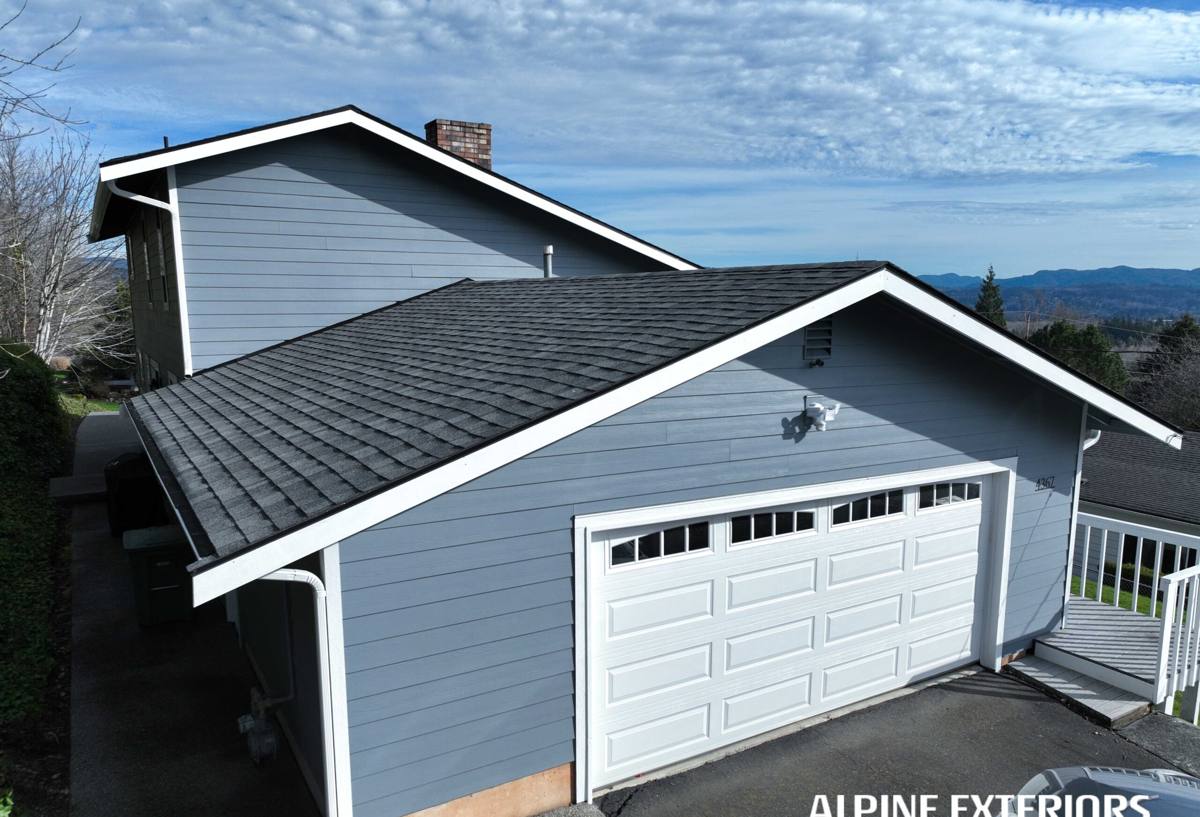
What Storm Damage Actually Looks Like on a Whatcom County Roof
Most homeowners picture storm damage as a hole or a missing section of roof, and sometimes it is. More often, it's subtler — the kind of damage that's easy to miss during a quick look from the yard but obvious to someone who gets up on the roof and checks the details.
- Shingles that are creased, cupped, or lifted at the edges, even if none are fully missing
- Granule loss showing up as dark streaks in gutters or grit collecting at downspout outlets
- Nail heads backed out or exposed where wind has worked a shingle loose
- Flashing around chimneys, vents, or roof-to-wall transitions that's bent, separated, or pulled away from the surface it seals
- Soft or spongy spots on the roof deck, usually found by walking the roof rather than looking at it
- Water stains, discoloration, or a musty smell in the attic after a storm, even without visible roof damage
- Debris impact marks — dents in metal flashing, vents, or gutters from wind-driven branches or hail
- Moss or standing moisture concentrated right at a damaged seam, since moss grows fastest where water is sitting rather than shedding
If you notice any of these after a storm, the roof is worth a proper inspection even if it looks fine from the driveway. Left alone, minor storm damage in this climate rarely stays minor — the combination of driving rain and near-constant moisture means small openings turn into rot and interior damage faster here than in drier parts of the state.
What a Correct Storm Damage Repair Involves
Inspection Before Anything Else
We start on the roof, not on a ladder looking up at it. A real storm damage assessment means walking the field of the roof, checking every flashing point, and, where there's any sign of water intrusion, checking the attic or roof deck from underneath as well. Wind and rain damage often shows up in more than one place, and repairing only the spot a homeowner noticed while missing a second lifted seam nearby is how roofs end up with repeat leaks.
Temporary Protection When It's Needed
If a storm has left a roof exposed — a torn-off section, a hole, or flashing that's completely failed — the first priority is stopping active water intrusion, usually with a properly secured tarp or temporary underlayment patch. This isn't the fix; it's what keeps the interior of the home dry while the permanent repair is scoped and materials are matched.
Deck, Underlayment, and Flashing — Not Just Shingles
A storm repair that only replaces the visible shingles and skips what's underneath is a repair that fails again in the next heavy rain. Correct work means:
- Checking the roof deck itself for soft spots or rot where water got underneath, and replacing damaged sheathing rather than covering it
- Installing new underlayment in the repaired section so the water barrier is continuous, not patched around
- Rebuilding flashing at any transition — chimney, skylight, sidewall, vent pipe — rather than just re-sealing old flashing with caulk, which is a short-term fix at best in this climate
- Matching fastening patterns and shingle exposure to the surrounding roof so the repaired section performs the same as the rest of the field
Material Matching
Shingle color and profile change over time with sun exposure and product runs, so a repaired section rarely matches perfectly, and we'll tell you that honestly up front rather than promise an invisible patch. What we do control is getting the closest reasonable match in brand, style, and exposure so the repair blends as well as possible and performs identically to the rest of the roof — that's the part that actually matters for keeping water out.
Repair or Replace? What Actually Drives That Decision
Not every storm-damaged roof needs full replacement, and not every roof that looks fine after a storm is actually fine underneath. The right call depends on a handful of concrete factors, not just the size of the visible damage.
| Factor | Leans toward repair | Leans toward replacement |
|---|---|---|
| Age of roof | Under 12-15 years, otherwise sound | Near or past expected service life |
| Extent of damage | Isolated to one section or slope | Spread across multiple slopes or widespread granule loss |
| Deck condition | Solid, dry sheathing under the damage | Rot or soft decking found in more than one area |
| Prior repair history | First real damage event | Roof already has several past patches |
| Material availability | Matching shingle still available | Discontinued product, poor match likely |
We'll give you a straight answer based on what we actually find on your roof, not a default push toward the bigger job. Plenty of storm damage in Everson is a legitimate, contained repair — the goal is fixing what's actually broken correctly, not selling a replacement a roof doesn't need yet.
Our Process, Start to Finish
- Contact and scheduling — describe what happened and what you've noticed; we prioritize active leaks and exposed roofs
- On-roof inspection — full assessment of the damage and anything else the storm may have affected nearby
- Temporary protection — tarping or emergency patching if the roof is currently exposed
- Written scope and estimate — what's damaged, what it takes to repair it correctly, and a clear price range before work starts
- Repair — deck, underlayment, flashing, and shingle work done to match the surrounding roof
- Cleanup and final check — site cleared of debris and materials, repair inspected once complete
We don't upsell during a storm repair visit. If your roof needs more than the storm damage repair — say, gutters that are failing separately, or siding that took wind damage in the same event — we'll point it out, but the estimate you get is for the storm repair itself.
Insurance Claims: What Homeowners Should Know
Many storm damage repairs in Whatcom County are covered under homeowners insurance, particularly wind and impact damage. A few practical points that save homeowners time:
- Document damage with photos before any temporary repair covers it up, where it's safe to do so
- A written inspection report and repair estimate from a contractor is typically what an adjuster wants to see alongside their own inspection
- We provide honest, itemized documentation of what we find — we work for the homeowner, not the insurance company, and we won't inflate or downplay damage to fit a claim
- Emergency tarping to stop active leaks usually needs to happen regardless of claim timing — insurance doesn't cover additional interior damage that occurred because a roof sat exposed
Why It Matters to Hire a Crew That Already Works in Everson
A contractor who works this area regularly knows what Whatcom County storms actually do to a roof — not in the abstract, but from having repaired dozens of them. That means recognizing the difference between damage from a single wind event and slow deterioration from a roof that's been fighting moss and driving rain for years, and it means knowing which flashing details tend to fail first in this climate so a repair addresses the actual weak point instead of just the symptom a homeowner can see.
It also means being available when storm damage happens — during and right after a weather event is when tarping and emergency response matter most, and a crew already working the area can respond faster than one dispatching from farther away. Local experience isn't a marketing line here; it changes what gets found during an inspection and how a repair is built.
Moss Season and Long-Term Roof Health
Storm damage repair and moss management aren't separate issues in this part of Washington — they compound each other. A roof with lifted shingle edges from wind damage collects moisture at that seam faster than the surrounding roof, and that moisture is exactly what moss needs to establish. Once moss gets a foothold at a damaged seam, it holds water against the shingle and roof deck continuously, which accelerates rot in a spot that was already compromised by the storm. That's part of why we don't consider a repair finished until the flashing and underlayment are properly rebuilt, not just patched — a rebuilt seam sheds water the way it's supposed to and doesn't give moss anywhere to start.
If your roof has visible moss buildup even without recent storm damage, it's worth having it looked at during a repair visit — moss removal and prevention done at the same time as a repair is far more efficient than two separate service calls.
Get a Straight Answer on Your Roof
If a recent storm has left your Everson roof with missing shingles, damaged flashing, or a leak you can't quite place, we're glad to come take a look. We'll give you a clear, no-pressure estimate based on what we actually find — use the form below to get in touch and we'll get a repair scheduled.