 Blaine Siding
 Windows Built for Grandview's Coastal Conditions
Grandview sits close enough to the water around Blaine that homes here take a different kind of weathering than houses further inland in Whatcom County. Salt-laden air moves through on a regular basis, driving rain off the Strait pushes moisture sideways into wall assemblies rather than straight down, and the long gray stretch of fall through spring keeps everything damp long enough for moss and algae to get a foothold on anything that doesn't drain and dry properly. Windows are one of the first places all three of those show up as real problems — corroded hardware, swollen sashes, soft sills, and seals that give out years before they should.
Installing a window correctly in this environment isn't fundamentally different from installing one anywhere else, but the margin for error is smaller. A flashing detail that would be a minor oversight in a dry climate becomes a path for water intrusion here. That's the lens we bring to every window job in Grandview: build it the way this specific climate demands, not the way a generic install guide describes.
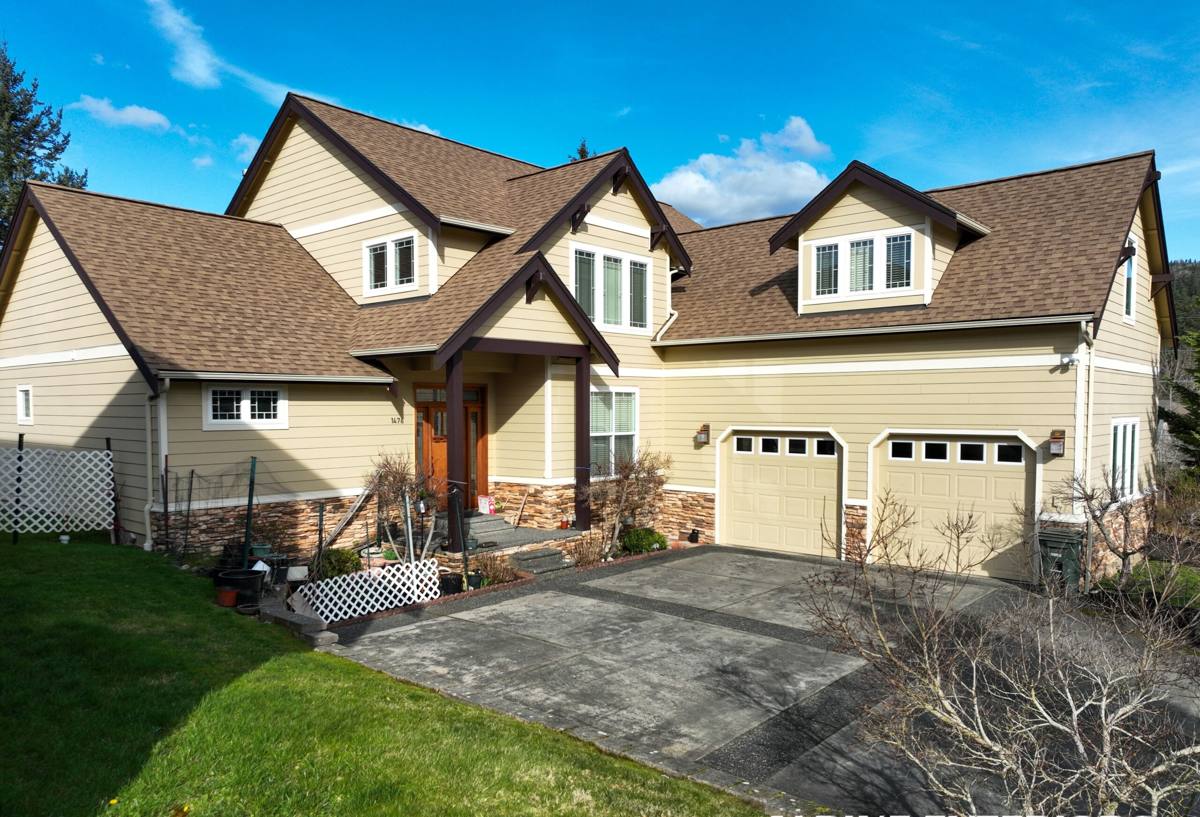
How Salt Air, Rain, and Moss Actually Damage Windows
Salt Air
Airborne salt is corrosive to exposed metal — hinges, cranks, balance systems, and screen frames all take a hit over time. Cheaper hardware finishes break down faster, hinges start to stick or bind, and locking mechanisms can seize. It's rarely dramatic; it's a slow degradation that homeowners notice as "the window doesn't open as easily as it used to."
Driving Rain
Wind-driven rain off the water doesn't just fall on a window, it gets pushed into every gap and seam. Where flashing, sill pans, and sealant weren't installed with that in mind, water works its way behind the trim and into the wall framing. This is usually invisible until there's staining, soft drywall, or a musty smell — by which point the damage has been happening for a while.
Moss and Algae Season
Whatcom County's wet season runs long, and anywhere moisture sits — window sills, the tops of trim boards, low-slope sill areas — moss and algae will eventually colonize it. Beyond looking bad, organic growth holds moisture against wood and painted surfaces, which accelerates rot and paint failure. Windows with poor drainage or flat sill profiles are the ones that grow it fastest.
Signs a Grandview Home May Need New Windows
- Visible gaps, drafts, or cold spots around the frame when it's windy
- Sashes that are difficult to open, close, or lock — often a sign of hardware corrosion or frame swelling
- Soft, spongy, or discolored wood at the sill or bottom corners of the frame
- Condensation forming between panes (a sign the seal on a double- or triple-pane unit has failed)
- Visible moss, algae, or black staining collecting on the sill or exterior trim
- Paint that's peeling or bubbling specifically around the window opening, not the whole wall
- A noticeable rise in heating costs with no other explanation
- Noise transmission that seems louder than it used to be, suggesting seal or glazing failure
Any one of these on its own might just mean a repair or re-caulk. Several together, especially on a window that's original to an older home, usually points to full replacement being the more cost-effective long-term move.
What a Correct Installation Actually Involves
A window installation lives or dies on the details most homeowners never see once the trim goes back on. In a climate like Blaine's, we treat these as non-negotiable, not optional upgrades:
| Step | Why It Matters Here |
|---|---|
| Removing old unit and inspecting the rough opening | Catches hidden rot or water damage from years of driving rain before it's sealed behind a new window |
| Sill pan flashing | Creates a drainage path so any water that gets past the window has somewhere to go besides the wall cavity |
| Proper flashing integration with the weather-resistive barrier | Directs wind-driven rain out and away rather than letting it wick behind the siding |
| Corrosion-resistant fasteners and hardware | Salt air degrades standard hardware faster; the right materials hold up over decades, not years |
| Continuous, correctly sequenced sealant beads | Gaps or skipped sections are exactly where wind-driven rain finds its way in |
| Insulation of the gap between frame and rough opening | Prevents drafts and condensation without over-packing, which can bow the frame |
| Interior and exterior trim reinstalled with drainage in mind | Sill and trim profiles that shed water instead of pooling it resist moss and rot longer |
Choosing a Window for This Climate
Frame material and glass package both matter more here than in drier parts of the state. This is a general comparison, not a recommendation of one brand over another — the right choice depends on the specific home, its exposure, and the homeowner's priorities.
| Frame Material | Coastal Considerations |
|---|---|
| Vinyl | Doesn't corrode or rot, low maintenance, widely available in energy-efficient packages; a common, practical choice for coastal replacement work |
| Fiberglass | Very stable in temperature swings and moisture, holds paint well if a custom color is wanted, generally a higher up-front cost |
| Aluminum-clad wood | Attractive interior wood look with an exterior shell, but the wood core still needs the cladding and seals to stay intact to avoid moisture problems over time |
| Solid wood | Classic look, but demands the most ongoing maintenance in a wet, salty environment — we're upfront with homeowners about that maintenance burden before they commit |
For glass, we generally recommend dual-pane units with a low-E coating and argon fill as the baseline for this area — the insulating value pays off against the region's long heating season, and the coating helps with both comfort and fading protection from the amount of overcast, diffuse daylight the Pacific Northwest gets.
Hardware and Finish
Whatever frame material is chosen, we pay close attention to hardware quality — locks, cranks, and hinges rated for coastal or marine-adjacent use hold up noticeably longer than standard-grade hardware once salt air gets into the equation.
Our Process for Grandview Window Installation
- On-site assessment — we look at each window individually, not just the house as a whole, since sun exposure, wind direction, and drainage vary window to window
- Honest scoping — we tell you which windows genuinely need replacement now, which can wait, and which just need a repair or re-seal
- Product selection — we walk through frame and glass options suited to the home's exposure and your budget, without pushing a single "house brand"
- Removal and opening inspection — old units come out carefully so we can check the framing underneath before anything new goes in
- Installation with full flashing and drainage detailing — the steps outlined above, done the same way on every job, not just the ones that are easy to see
- Interior and exterior finish work — trim, caulking, and paint-matching so the finished opening looks intentional, not patched
- Final walkthrough — every window opens, closes, and locks the way it should before we consider the job done
Why Working With a Crew That Knows Grandview Matters
A window installer who mostly works inland doesn't necessarily think about sill pan drainage or hardware corrosion the same way — because their jobs don't usually demand it. Crews who regularly work Blaine and the surrounding Grandview area see the same failure patterns repeatedly: hardware seizing from salt exposure, sills rotting from trapped moisture, moss building up on flat trim profiles. That repetition is what makes the difference between an installation that looks fine on day one and one that's still performing correctly ten winters from now.
We also know the practical side of working in this area — permitting expectations, typical home ages and construction styles around Blaine, and the kind of exposure a given lot faces depending on how open it is to wind off the water. None of that replaces a proper on-site look at your specific home, but it means we're not learning the region on your project.
Maintenance After Installation
A correctly installed window in a good frame material needs relatively little upkeep, but "little" isn't "none" in this climate. A few habits go a long way:
- Rinse salt residue and debris off frames and glass periodically, especially after storms
- Clear moss or algae from sills and trim before it builds up and holds moisture
- Check and clean weep holes so water can drain out rather than pool
- Operate hardware occasionally through the year so hinges, cranks, and locks don't seize from disuse combined with salt exposure
- Re-caulk exterior joints if you notice cracking or separation, rather than waiting for a leak to show up inside
What Affects the Cost of a Window Installation
| Factor | Why It Changes the Price |
|---|---|
| Number and size of windows | More openings and larger units mean more material and labor |
| Frame material chosen | Vinyl, fiberglass, and clad-wood options carry different material costs |
| Condition of the existing opening | Rot or framing damage found during removal adds repair work before the new window goes in |
| Glass package | Low-E coatings, gas fills, and impact-resistant glazing add cost but also performance |
| Access and home layout | Second-story or hard-to-reach windows take more time and equipment |
| Trim and finish work required | Matching existing interior trim or custom exterior detailing adds labor |
We give a firm, itemized quote after seeing the actual windows and openings in person — broad online estimates rarely hold up once the specifics of a home are factored in.
If windows in your Grandview home are drafty, hard to operate, showing rot at the sill, or just past their useful life, we're happy to take a look and give you a straightforward, no-pressure estimate. Use the form below to get started.