 Blaine Siding
 A Peninsula With Its Own Weather Problems
Point Roberts sits on its own piece of land — a small peninsula hanging off the bottom of the Tsawwassen headland, surrounded by water on three sides and separated from the rest of Whatcom County by the international border. That geography matters more than most homeowners realize when it comes to siding. A house here doesn't just deal with typical Pacific Northwest rain; it takes on near-constant marine air off Boundary Bay and the Strait of Georgia, wind-driven rain that hits siding at an angle instead of running straight down, and a wet season that stretches long enough to keep exterior surfaces damp for weeks at a time.
That combination — salt-laden air plus prolonged moisture plus limited direct sun on shaded and north-facing walls — is exactly the environment that wears out the wrong siding material fastest and rewards the right one for decades.
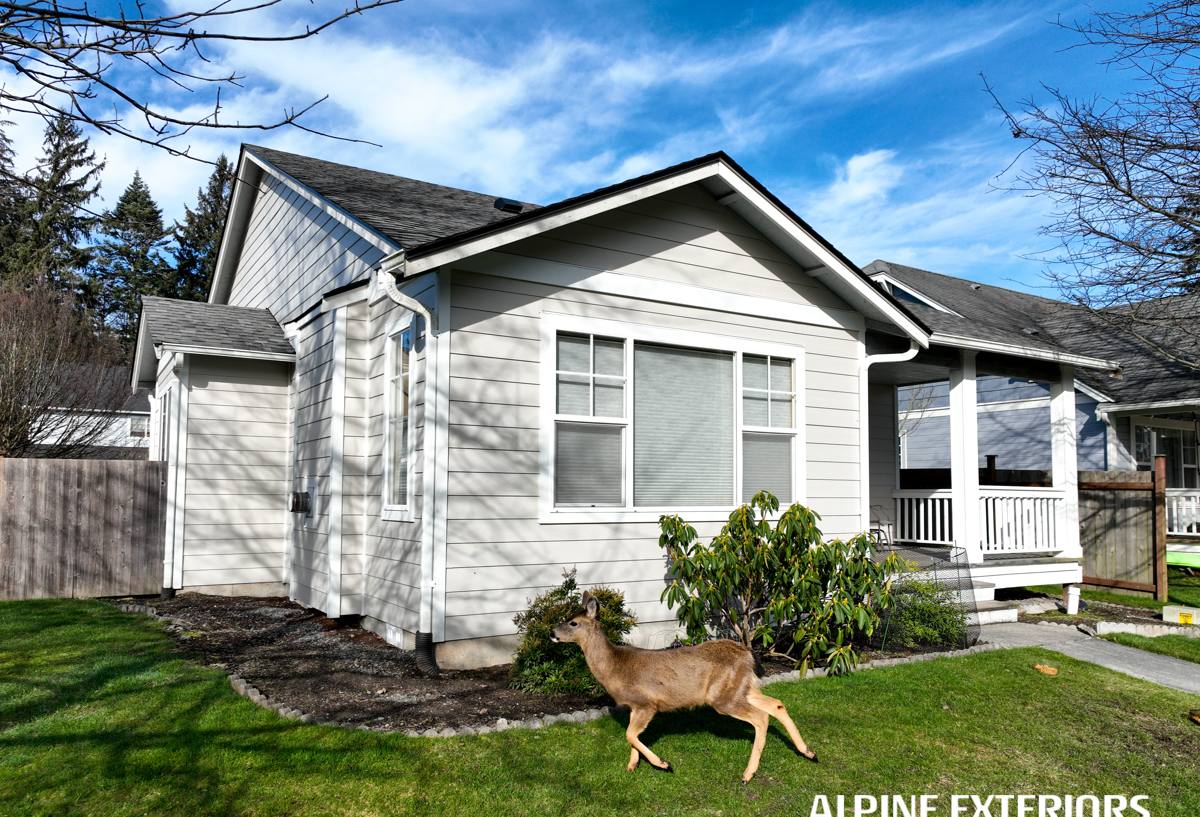
What Salt Air and a Long Moss Season Actually Do to Siding
Salt air doesn't just sit on the surface of a house — it works into any exposed seam, fastener, or coating weakness and accelerates corrosion and finish breakdown. On siding materials that rely on a painted or primed surface to keep moisture out, salt exposure shortens the repaint cycle and makes peeling and cracking show up sooner, especially on walls facing the water or open exposure.
Moss and algae are the other half of the problem. Whatcom County's wet season gives moss months of steady moisture and mild temperatures to establish itself on roofs, fences, and siding — particularly on shaded north and east elevations that don't get enough sun to dry out between rain events. Moss holds water against the siding surface far longer than open air would, which matters a lot for any material that isn't dimensionally stable or fully sealed. Over years, that trapped moisture is what turns a cosmetic moss problem into a structural one underneath.
Why We Install Fiber Cement — and Only James Hardie — Here
We install James Hardie fiber cement exclusively. We don't install vinyl, LP SmartSide, primed wood, cedar, or other fiber cement brands, and in a climate like Point Roberts' that's not a marketing position — it's a practical one based on how these materials actually hold up under salt air and sustained moisture.
Fiber cement is a mix of cement, sand, and cellulose fibers, engineered to be dimensionally stable in a way wood-based and vinyl products aren't. It doesn't swell, rot, or delaminate the way engineered wood siding can when moisture gets past a seam, and it doesn't warp or crack in temperature swings the way vinyl can over a long service life. James Hardie's HZ product lines are specifically engineered for different climate zones, and the HZ5 line used in this region is built for wetter, harsher exposure — which is the right starting point for a peninsula getting driving rain and salt spray off two bodies of water.
Just as important is the factory-applied ColorPlus finish. Instead of relying on field-applied paint that has to fight moss, salt residue, and UV exposure from day one, ColorPlus is baked on under controlled conditions and backed by its own finish warranty — which matters enormously in an environment where repainting a house isn't a quick weekend job.
What a Correct Fiber Cement Installation Involves
Fiber cement is only as good as the installation behind it. The material itself resists moisture and salt exposure well, but the way it's flashed, fastened, and gapped determines whether that resistance actually protects the wall assembly. In a high-exposure location like Point Roberts, the details below are not optional upgrades — they're the baseline for a job that's supposed to last.
| Detail | Correct Approach | Risk of Shortcuts Here |
|---|---|---|
| Rain screen / drainage gap | Furring or a drainage wrap system behind the siding so water can drain and the wall can dry | Trapped moisture against sheathing accelerates rot behind salt-exposed walls |
| Flashing at windows, doors, penetrations | Properly lapped, sealed flashing integrated with the water-resistive barrier | Wind-driven rain finds any gap and drives moisture behind the siding |
| Fastening | Corrosion-resistant fasteners, correct spacing and setback per Hardie specs | Standard fasteners corrode faster in salt air, leading to staining and loose panels |
| Joints and caulking | Manufacturer-approved sealant at butt joints, gapped per spec for movement | Over-caulked or under-gapped joints crack and let water in within a few seasons |
| Clearance from grade and roofline | Minimum clearance maintained so splashback and roof runoff don't sit against the siding | Constant wetting at the bottom courses where moss and mildew take hold first |
Every one of these details is spelled out in James Hardie's installation instructions, and following them to the letter is also what keeps the manufacturer's warranty intact. A beautiful-looking install that skips the rain screen or flashing details isn't a shortcut you'll see — it's one you'll find out about in five to ten years when the sheathing behind it has already been compromised.
Panel, Lap, or Shingle — Choosing the Right Profile
Hardie offers several siding profiles — lap siding in various exposures, vertical panel systems, and shingle-style products — and the right choice depends on the home's architecture and exposure. On walls that take the brunt of wind-driven rain off the water, we pay close attention to lap exposure and panel orientation, since more horizontal seams generally mean more opportunities for water to find a way in if the details aren't executed correctly. That's a conversation we have on-site, looking at the specific elevations of a specific house, not a one-size answer.
Color and Finish Choices for a Marine Environment
ColorPlus finishes come in a range of tones, and homeowners in Point Roberts often lean toward colors that hide the fine dust, pollen, and light mineral residue that salt air and marine mist tend to leave on exterior surfaces over time. Darker, more saturated colors show water spotting differently than lighter ones, and it's worth discussing maintenance expectations by color before finalizing a choice — not after the siding is up.
How We Handle Point Roberts Projects
Point Roberts' geography adds a logistics layer that a typical siding job elsewhere in Whatcom County doesn't have — material deliveries, crew scheduling, and equipment all have to account for the drive through Canada to reach the peninsula. We plan for that from the start of a project: material staging, crew timing, and daily logistics are built into the schedule up front rather than treated as a surprise partway through the job. Homes here also fall under Whatcom County's building and permitting requirements even though the community itself is geographically separated, and we account for that in project planning as well.
Because we've done work in this specific area before, we're not learning these logistics on your project. That translates into fewer schedule surprises and a crew that shows up already understanding the exposure conditions your specific elevations are dealing with.
Living With Fiber Cement Siding in This Climate
Correctly installed Hardie siding is low-maintenance, not no-maintenance. In a salt-air, high-moss environment, a little seasonal attention goes a long way toward protecting the investment:
- Rinse siding periodically to remove salt residue and airborne debris, especially on water-facing elevations
- Keep gutters clear so roof runoff isn't sheeting down onto siding below
- Trim back vegetation and tree cover that keeps shaded walls damp and encourages moss growth
- Inspect caulking at joints and trim annually and re-seal if it's cracked or pulling away
- Address any moss or algae growth promptly with a gentle wash rather than pressure-washing, which can force water behind panels
- Watch for any staining around fasteners or trim, which can signal a flashing or sealant issue worth checking early
Why Local Experience With This Specific Area Matters
A siding crew that's only ever worked inland jobs can still install Hardie correctly on paper, but they haven't necessarily seen what two straight weeks of wind-driven rain off Boundary Bay does to an improperly flashed window, or how fast moss re-establishes on a shaded wall three blocks from the water. Working in Point Roberts and the surrounding Blaine area regularly means we size up exposure on each elevation of a house with that specific climate in mind — not a generic Pacific Northwest checklist, but the more extreme version of it that a peninsula community actually experiences.
If you're planning a siding project on a Point Roberts home, we're happy to walk the exterior with you, point out what your specific exposure is doing to the current siding, and talk through what a correctly detailed James Hardie installation would look like for your house. Reach out for a free, no-pressure estimate — there's no obligation, just an honest look at your home.