 Blaine Siding
 Siding Built for the Peace Arch Corner of Whatcom County
The Peace Arch area sits about as close to the water and the border as a Washington neighborhood gets. That location is part of what makes it a great place to live, and it's also exactly why siding here takes more abuse than siding fifteen miles inland. Homes in this part of Blaine deal with a near-constant mix of salt-laden air off the Strait of Georgia, wind-driven rain that comes in sideways more often than straight down, and a wet season that stretches long enough to give moss and algae months to get established on anything that stays damp. Siding installation in this pocket of the county isn't a different product than what we'd use anywhere else — it's the same James Hardie fiber cement system installed with a lot more attention to the details that keep water and salt from winning.
What "Coastal" Actually Means for a Wall Assembly
Salt air is corrosive to metal fasteners, flashing, and trim in ways that inland homeowners rarely think about. Driving rain doesn't just wet a wall — it pushes water up and under laps, seams, and penetrations that would stay dry in a calmer climate. And moss doesn't need much: shade, moisture, and time are all it takes, and Blaine's long gray stretch of fall through spring provides plenty of both. None of this means siding fails fast here. It means the margin for error in the installation is smaller, and the products and fasteners that just barely get by in a drier climate show their weaknesses sooner near the water.
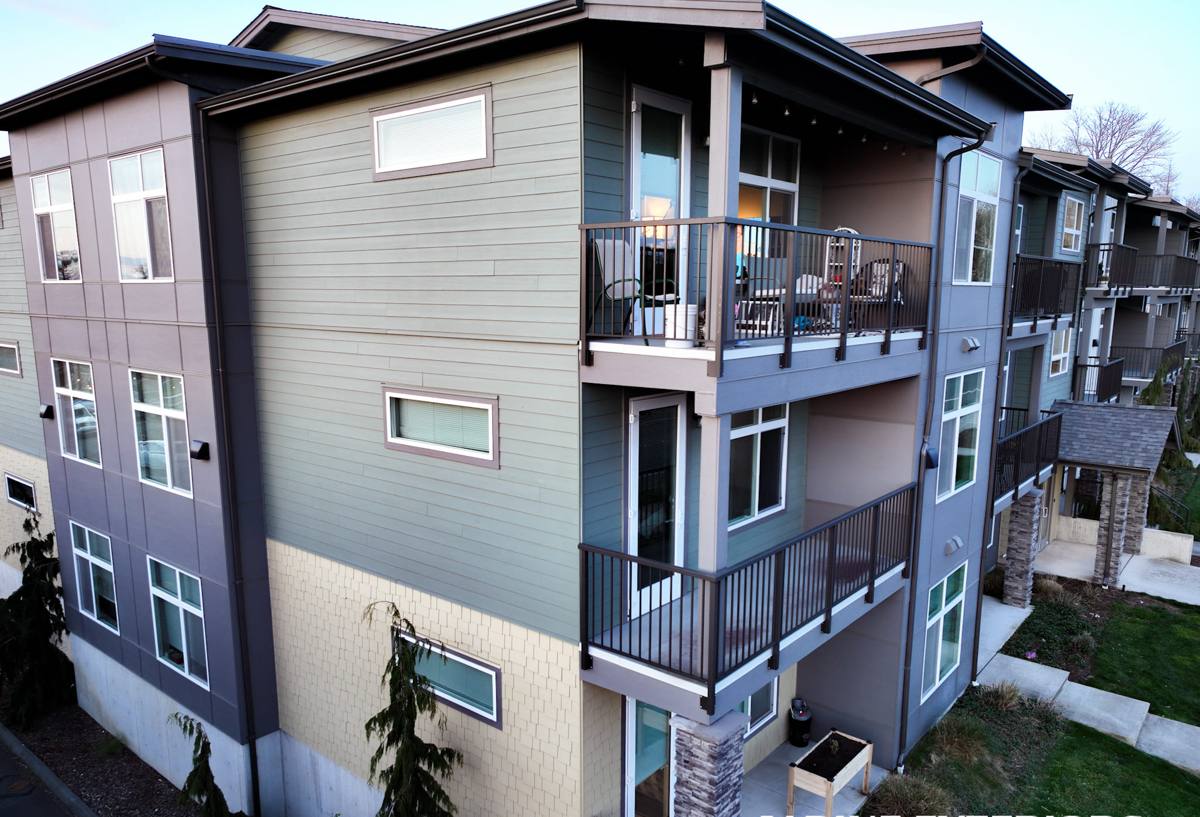
Why Peace Arch Homes Need More Than a Standard Install
A siding job that would be perfectly adequate in eastern Whatcom County can fall short a few miles from the water. The differences aren't dramatic — they're a handful of decisions that add up over the life of the siding.
- Fastener selection: in coastal exposure, stainless or hot-dip galvanized fasteners rated for the exposure matter more than they would inland, where a lower-grade fastener might go unnoticed for years longer.
- Flashing and drainage detailing: housewrap laps, window and door flashing, and the water-resistive barrier behind the siding all need to be sequenced correctly so wind-driven rain has a way out instead of a place to collect.
- Clearance and ventilation: siding held too tight to grade, decks, or roof lines traps moisture and gives algae and moss a head start. Proper clearances aren't optional in a climate like this — they're the difference between siding that sheds water and siding that holds it.
- Caulking and joint treatment: the right sealant, applied at the right joints (and skipped where it shouldn't be used at all), keeps water managed instead of trapped behind the cladding.
These are all things a competent crew should get right anywhere. Near the water, getting them wrong shows up faster — sometimes within a couple of wet seasons instead of a couple of decades.
Why We Install Only James Hardie Fiber Cement Here
We don't install vinyl, LP SmartSide, or primed wood siding on any home we work on, and that standard matters even more in a salt-air, high-moisture pocket like the Peace Arch area. Vinyl expands and contracts more with temperature swings and can become brittle over time, and its seams are a weak point for wind-driven rain to exploit. Engineered wood products depend on an intact factory coating to keep moisture out — any breach, and the substrate is vulnerable to swelling and rot, which is a bigger risk in a climate that rarely gives a wall assembly a long dry stretch to recover. Cedar and primed spruce need real maintenance discipline — recoating, caulking, and inspection on a schedule — to hold up against moss and moisture, and that upkeep burden only grows heavier this close to the Strait.
James Hardie fiber cement is non-combustible, doesn't rot, and holds its factory-applied ColorPlus finish without the recoating cycle that wood siding demands. Hardie's HZ5 product line is engineered specifically for climates with more moisture exposure, which describes Blaine about as well as any city in the state. That combination — a material that doesn't feed on moisture, a finish that doesn't need repainting every few years, and a manufacturer warranty that's actually meaningful — is why it's the only siding we put on homes, here or anywhere else we work.
Our Installation Process for This Area
1. On-Site Assessment
We walk the exterior and look specifically at exposure: which walls take the brunt of the prevailing wind and rain, where moss and staining already show, where the water-resistive barrier or flashing may already be compromised, and where grade, decks, or landscaping are holding moisture against the wall.
2. Prep and Water Management
Before any siding goes up, we confirm the housewrap or weather-resistive barrier is intact and correctly lapped, flashing is installed at every window, door, and penetration, and any rot or damage from prior moisture intrusion is addressed — not covered over.
3. Installation to Spec
Hardie panels and lap siding are installed per manufacturer specification: correct fastener type and spacing, proper clearances from grade and roof lines, and factory-mitered or properly caulked joints. This is where an install either earns the coastal exposure or doesn't.
4. Final Walkthrough
We check caulking, trim, and touch-up paint at cut edges, and walk the finished job with the homeowner so there's a clear record of what was done and how it should be maintained.
Comparing Siding Options for a Coastal Blaine Home
| Factor | James Hardie Fiber Cement | Vinyl | Engineered Wood / Cedar |
|---|---|---|---|
| Moisture resistance | Does not rot or swell; engineered for wet climates (HZ5 line) | Won't rot, but seams and panel edges can let water track behind | Vulnerable once the coating or paint is breached |
| Salt air / corrosion exposure | Fiber cement itself is unaffected; correct fasteners protect the assembly | Panels hold up; fasteners and trim still need corrosion resistance | Metal trim and fasteners face the same risk; substrate is more exposure-sensitive |
| Moss and algae resistance | Factory finish resists staining; proper clearances limit growth | Textured surfaces can hold moss and grime | Textured wood grain is a common moss and algae host |
| Maintenance cycle | Occasional wash; no repainting needed for the life of the ColorPlus finish | Low maintenance but can fade, warp, or crack over time | Recoating/repainting on a recurring schedule |
| Fire resistance | Non-combustible | Combustible | Combustible |
What to Check Before Hiring a Crew Near the Water
Not every siding crew treats a coastal job any differently than an inland one, and that gap is where problems start. Before hiring anyone to side a home in the Peace Arch area, ask about the specifics that actually matter here.
- Do they specify stainless or hot-dip galvanized fasteners for coastal exposure, and can they explain why?
- Do they inspect and correct the existing water-resistive barrier and flashing, or just cover what's there?
- Are they installing to the manufacturer's published clearances from grade, decks, and roofing — not just "close enough"?
- Do they have experience with homes specifically in this stretch of Whatcom County, versus siding jobs done inland where exposure is lighter?
- Is the warranty they're offering backed by both the manufacturer and the installer, in writing?
A crew that already works this area regularly isn't guessing at these answers — they've seen what happens when a fastener spec gets cut, or when clearances get ignored, because they've been called back to homes where it did.
Signs Your Current Siding Is Losing the Fight
Homeowners in this area often notice a few consistent warning signs before a bigger problem shows up:
- Persistent moss or dark streaking that returns quickly after cleaning
- Soft spots, bubbling, or visible swelling, especially near the bottom courses or around windows
- Caulking that's cracked, shrunk, or pulled away from trim and joints
- Rust staining running from fastener heads or trim
- Paint or finish that's chalking, peeling, or noticeably faded on the walls that face the prevailing weather
Any one of these is worth a look. Several at once usually means the water management behind the siding — not just the surface — needs attention.
Ready When You Are
If you're weighing a siding replacement or repair for a home in the Peace Arch area, we're happy to take a look and give you a straightforward, no-pressure estimate — what we'd recommend, why, and what it would involve for your specific home and exposure. Use the form below to get started.