 Blaine Siding
 New-Construction Windows in Everson: A Different Job Than a Window Replacement
If you're building new in Everson, the windows going into your walls right now are a different trade than swapping out an old window in a finished house. New-construction windows have a nailing flange (sometimes called a nail fin) that gets integrated directly into the wall's weather-resistive barrier and flashing system before siding ever goes on. Get that sequence wrong and you won't see a problem for years — until water finds its way behind the cladding and into the framing. Get it right, and the window becomes part of a continuous drainage plane that's built to shed water for the life of the house.
Everson sits inland along the Nooksack River, away from the direct salt air that coastal Whatcom County homes deal with, but that doesn't mean the exposure here is mild. River-valley humidity, heavy seasonal rain, and long stretches of damp, low-sun weather put just as much stress on a window's flashing and seal as the wind-driven storms closer to the coast — just in a different form. We treat every new-construction window install in Everson with the same flashing discipline we'd use on a coastal job, because the water doesn't care where it came from.
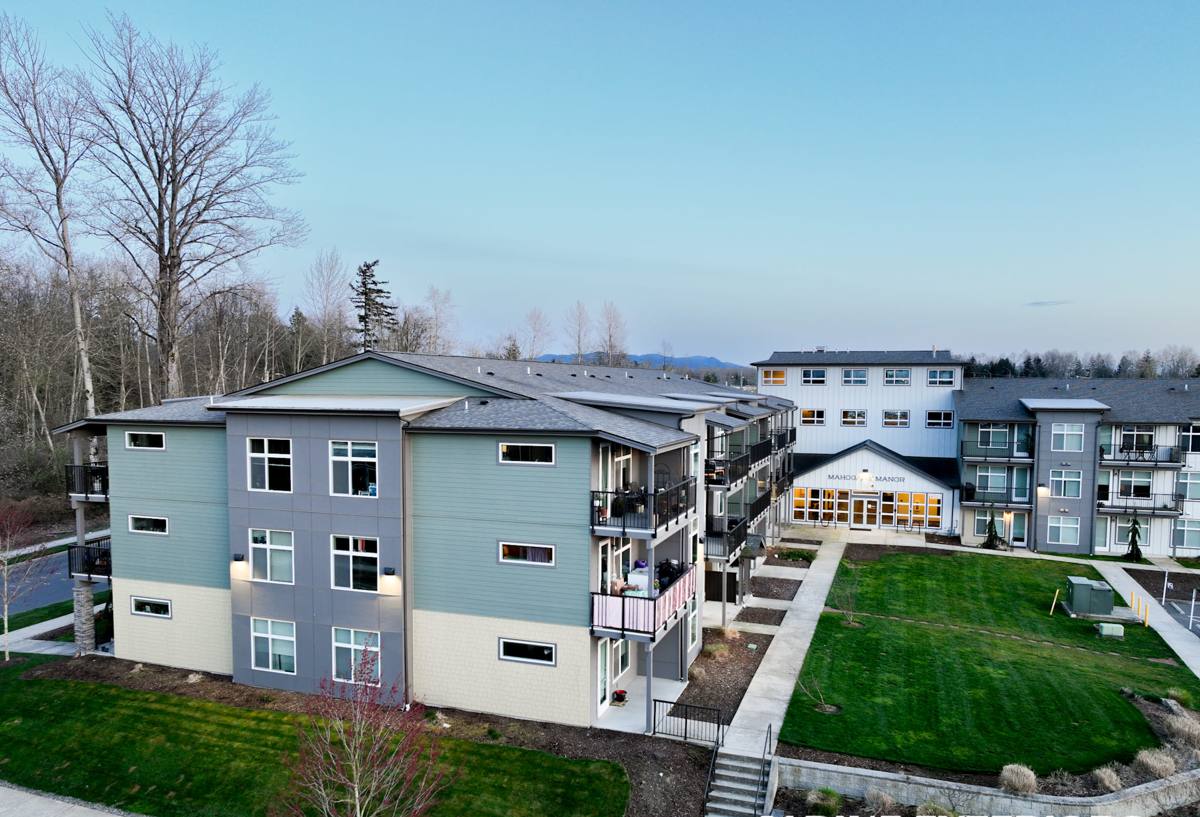
Why the Local Climate Changes How We Detail an Install
Whatcom County gets a lot of rain spread across a lot of months, and Everson's river-valley setting means humidity lingers even between storms. Add in a moss season that can stretch from fall into spring, and you've got conditions that will expose any shortcut in a window install faster than they would in a drier climate.
- Driving rain: Wind-driven rain doesn't just hit a window head-on — it can push up and sideways under poorly lapped flashing, which is why lap sequence (bottom to top, always shingle-style) matters more here than in dry climates.
- Prolonged dampness: Everson's river-valley air holds moisture longer than a coastal breeze does, which means any trapped water behind a window has more time to do damage before it evaporates.
- Moss and organic growth: Moss doesn't just grow on roofs — it takes hold on window sills, trim, and anywhere water sits instead of draining. A sill pan with proper slope is not optional here.
- Freeze-thaw cycling: Whatcom County gets enough cold snaps that trapped moisture behind a window can freeze, expand, and stress the flashing and sealant joints over multiple winters.
None of this means Everson is a uniquely brutal climate — it means the fundamentals of a correct install (proper flashing, drainage, and sealant placement) aren't optional shortcuts you can skip and get away with. This is a place where the difference between a correct install and an almost-correct one shows up as a warranty claim in five to ten years, not five months.
What a Correct New-Construction Window Install Actually Involves
A window is only as good as the opening it sits in and the flashing sequence around it. Here's what we consider non-negotiable on every new-construction install:
Rough Opening Prep
The opening needs to be square, plumb, and sized correctly before the window ever shows up on site. We check rough openings against the actual window schedule, not just the framer's measurements, because a fraction of an inch off in either direction causes shimming and sealing problems later.
Sill Pan Flashing
Every sill gets a sloped, sealed pan — either a manufactured pan flashing or a properly lapped flexible membrane — so that any water that does get past the window drains back out to the exterior instead of pooling on the sill and working its way into the framing below.
Weather-Resistive Barrier Integration
The house wrap or building paper has to be cut, lapped, and taped so water sheds over the window flange, never under it. This is the step that gets rushed most often on production builds, and it's the one that matters most in a wet climate.
Window Setting and Shimming
The window gets shimmed level, plumb, and square at the manufacturer's specified points, fastened per the installation instructions (not just "however many nails fit"), and checked for operation before the flashing is finished around it.
Head, Jamb, and Sill Flashing Sequence
Flashing tape goes on in the correct order — sill first, then jambs, then head — each layer lapping over the one below it, so water is always directed outward and down, never trapped behind the next layer.
Interior and Exterior Sealant
Low-expansion foam or backer rod and sealant around the interior perimeter for air sealing, and a proper exterior sealant joint where the trim meets the window — sized and tooled correctly, not just a bead run down the gap.
Window Types We Work With
New-construction homes in Everson typically spec one of a few window materials. We'll help you weigh them against your budget and your maintenance appetite rather than push one option.
| Material | Upfront Cost | Maintenance | Best Fit |
|---|---|---|---|
| Vinyl | Lowest | Minimal — no painting, won't rot | Budget-conscious builds, rental or spec homes |
| Fiberglass | Mid to high | Low — stable in temperature swings, holds paint well | Owners who want durability without wood upkeep |
| Wood-clad | Highest | Higher — exterior clad protects, but interior wood needs care | Traditional interior look, higher-end builds |
| Aluminum | Mid | Low, but poor thermal performance unless thermally broken | Modern aesthetic, larger openings |
Whatever material you choose, the flashing and installation detailing matters more than the window brand itself. A well-installed mid-range window will outperform a premium window that was flashed poorly.
Our Process, Start to Finish
- Plan review: We review the window schedule, elevations, and rough opening sizes against the actual framing before install day, so there are no surprises when the windows arrive.
- Rough opening check: Every opening gets measured and squared before we start — this is the step that prevents callback issues down the road.
- Sill pan and WRB prep: Sill flashing goes in first, and we confirm the house wrap is lapped correctly before setting a single window.
- Window setting: Windows are set plumb, level, and square, fastened to manufacturer spec, and operation-checked before flashing is finished.
- Flashing and sealing: Head, jamb, and sill flashing goes on in the correct shingle-lap order, followed by appropriate sealant at interior and exterior joints.
- Final inspection: We walk every opening again once flashing and trim are complete, checking operation, seal, and drainage before we call the job done.
We coordinate directly with your builder or general contractor on timing, since window installation on a new build has to happen in sync with the WRB and siding schedule — not before it's ready and not so late that the house sits exposed.
Mistakes We See on New-Construction Window Jobs
Most of the window failures we get called out to inspect in Whatcom County trace back to a handful of repeatable mistakes, not bad windows:
- Flashing taped in the wrong order, so water gets directed behind the barrier instead of over it
- Sill pans skipped or installed flat instead of sloped to drain
- Rough openings caulked shut instead of properly flashed — sealant is not a substitute for flashing
- Over-driven fasteners that bow the window frame and compromise the seal
- House wrap cut in an "X" pattern at the opening without being folded and taped back correctly
- Trim installed tight against the window with no room for a proper sealant joint
Any one of these can look fine on install day and still fail years later once moss, rain, and freeze-thaw cycles have had time to work on it.
Cost Factors for New-Construction Windows in Everson
Every new build is different, but the same handful of factors drive most of the cost variation we see on new-construction window jobs in this area:
| Factor | Why It Affects Cost |
|---|---|
| Window count and size | More openings and larger units (picture windows, sliders) mean more material and labor per opening |
| Material choice | Vinyl, fiberglass, wood-clad, and aluminum carry different unit costs and installation labor |
| Opening complexity | Standard rectangular openings install faster than bays, arches, or oversized openings |
| Height and access | Second-story and vaulted openings take longer and need staging or lift equipment |
| Flashing detail level | Full pan flashing and multi-layer WRB integration add labor time but reduce long-term risk |
We won't quote a job sight unseen — we look at the actual plans and rough openings before giving you a real number, and we're upfront if we think a spec on your plans is going to cost more than expected once you factor in Whatcom County's climate demands.
Why It Matters That We Already Work in Everson
A crew that's worked new construction across Whatcom County knows how the local building department reviews window and flashing details, knows what inspectors here are actually checking for, and has already seen how the region's rain and moss season expose bad flashing work in ways a drier climate never would. That's a different level of judgment than a crew installing windows the same way regardless of where the job is.
We also know how to work alongside a builder's schedule without becoming the bottleneck — coordinating window delivery, rough opening readiness, and WRB timing so your build keeps moving. On a new-construction job, the window installer isn't working in isolation; we're one link in a sequence that includes the framer, the siding crew, and the inspector, and being local means we already know how to fit into that sequence smoothly.
Timing New-Construction Windows With Your Build
Windows need to go in after the framing and WRB are ready but before siding starts, and ideally before the house sits exposed to weather for an extended stretch. In a climate like ours, an unprotected rough opening left open through a rainy stretch can lead to framing moisture problems before the window even goes in. We work with your builder to time delivery and installation so the house is weathered-in as quickly as the schedule allows, without rushing the flashing details that actually protect the home.
If you're framing a new build in Everson and want windows installed the way this climate actually requires, we're happy to take a look at your plans and walk the site. Reach out for a free, no-pressure estimate — the form below gets you started.